Ambulo x The Mindful Rambler: A Conversation Between Wanderers

Created by Matt Helders and James O’Hara, Ambulo is an all day café blurring the boundaries between cultural space and relaxed community hangout.

By Serena Ypelaar

Here at The Mindful Rambler, we talk a lot about interpretation, storytelling, and sharing experiences, often through cultural lenses. So naturally, as a museum/arts professional who cares a lot about engaging the public, I’m always thinking about more ways to explore the theme of visitor experiences. Last month, all day café Ambulo opened its first location in Sheffield, UK, and in following the café’s updates on social media, I was impressed by how successfully they’ve been sharing their story. Each of their Instagram posts is an invitation to the public – to everyone – to join them in the space and enjoy their visit.

Arctic Monkeys drummer Matt Helders and The Rockingham Group co-founder James O’Hara, who have been friends for years, conceptualized Ambulo and have seen it through to its opening. They collaborated with Museums Sheffield to launch two locations; the first at the Millennium Gallery, and the second opening soon at Weston Park Museum. Alongside its setting in a cultural space, Ambulo’s welcoming vibe makes it an ideal example of visitor engagement done right.

James O’Hara and Matt Helders at Ambulo. Photo: India Hobson, courtesy of Ambulo

Interestingly, “ambulo” means “to wander” in Latin, just like “ramble” means “to wander” in Middle English/Dutch. Ambulo and The Mindful Rambler seem to have an inquisitive outlook in common, and I was eager to explore this idea of learning and sharing in more depth. I recently spoke with James O’Hara, one half of the Ambulo duo, to hear more about the vision behind Ambulo, the significance of its location in museum/gallery sites, and how they’ve opened a café with inclusion as their priority.

Serena Ypelaar: What kind of visitor experience did you envision when you created Ambulo? Who is the space for?

James O’Hara: Our background with our previous ventures was very much more bar orientated and more focused on a late night offering. It was a very conscious decision with Ambulo to make a really light, open, inclusive space. There’s a definite feeling of responsibility that comes with providing a multi-faceted café in what is essentially the ground floor of a gallery.

The Millennium Gallery location. Photo: India Hobson, courtesy of Ambulo

SVY: Can you tell us about the partnership with Museums Sheffield and how Ambulo ended up in the Millennium Gallery?

JO: Essentially via a tender process. We were the only local independent to make it to the final 5, the rest were national operators with a much more experienced background in these sorts of spaces. However, I think our history of cultural engagement in the city (I’m the co-founder of Tramlines music festival) and our track record of transforming interesting, somewhat derelict buildings (Public is located in a former gents toilet) excited Museums Sheffield and our enthusiasm for the project balanced out the obvious risk element associated with choosing a smaller company like ours. 

Selections from Ambulo’s daytime menu. Photo: India Hobson, courtesy of Ambulo

SVY: You and Matt spent a couple of years wandering and testing food and drink to inform the creation of Ambulo’s menu. How was that creative process, and what did you learn?

JO: The idea for Ambulo started over 3 years ago – or at least the concept did – Ambulo means ‘to wander’ in Latin, and mine and Matt’s travels have formed a big part of the inspiration for the food and the brand. The main takeaway is that our favourite places and experiences don’t disguise themselves in pretension or opaque terminology. Our aim is to democratise the dining experience and provide great produce across our food and drink without all the associated nonsense that can often come with it.

Evening at Ambulo. Photo: India Hobson, courtesy of Ambulo

SVY: From food/drink to music to decor, there are many aspects to creating Ambulo as it exists now. Can you tell us about your collaborations with friends and local businesses?

JO: We have a core group of collaborators who we have worked with on almost all our projects. Rocket Design (Ben Pickup) make and build all our interiors, Totally Okay (Nick Deakin) has designed all the branding and associated imagery of this project and all our previous businesses, India Hobson takes all the photos, Swallows and Damsons have done all the beautiful floral displays and New Phase LED do all our lighting design. We’ve done so much together that we all have a real shorthand and understand how each party works. They’re an amazing group of people. 

SVY: What’s your favourite dish on the menu, and why?

JO: I would say the Kedgeree Soldiers. It feels like a very Ambulo dish – originally an imported breakfast dish from Victorian times, Exec Sheff has put this through a prism of modernity to come up with a really delicious and simple reinterpretation.

SVY: Thanks for taking the time to speak with us! I’m looking forward to following Ambulo’s future programming, and I can’t wait to check it out in person one day soon.

Ambulo is now open in the Millennium Gallery, 48 Arundel Gate, Sheffield, UK. The café’s second location is slated to open at Weston Park Museum, Western Bank, Sheffield.

Frontier: As Intersectional as Feminism Can Be in the 1770s

Netflix and Discovery series Frontier explores the pluralistic conflicts defining Canada’s fur trade in the late 18th century. How does the show treat women’s history in a time where their social roles were especially limited?

Warning: this article contains light spoilers about character development and thematic events depicted in Frontier

By Serena Ypelaar

Last week we discussed how Netflix and Discovery series Frontier interprets the history of the fur trade in Canada during the late 18th century. Since it’s International Women’s Day, I’m back with Part II of the Frontier series, this time to talk about women’s roles in the show.

As you probably know if you’re into history or women’s studies (or if you’re aware of women’s rights movements such as intersectional feminism), women’s social roles have been extremely restricted throughout history. In the 1770s, women couldn’t usually hold property and were most often made to marry to secure their future. With Indigenous women in North America, things were a bit different – certain Indigenous communities are matrilineal, meaning that women hold leadership positions rather than men. Indigenous groups still had/have gender-specific roles, but colonization marked a grim turn for women. Indigenous women were in many cases sold or “offered” to settlers as “country wives”, many being forced into non-consensual marriages.

Sokanon (Jessica Matten) dedicates her time to helping other women fight the effects of colonialism, such as forced marriages. The show tacitly parallels today’s ongoing issue of Missing and Murdered Indigenous Women. Photo: Hypable

So with these complexities in mind, how does Frontier interpret women’s history? With a great degree of respect and nuance, I’m happy to say.

Chaulk (Kathryn Wilder) poses as a man to survive on her own. Photo: TVMaze

Frontier explores new world realities for women in the 1770s without disempowering them. Characters with no income such as Clenna Dolan (Lyla Porter-Follows) and Chaulk (Kathryn Wilder) must adapt to survive, latching onto benefactors who prove to be manipulative; but they both demonstrate resilience and resourcefulness. On the other hand – I won’t drop a big spoiler, but there is one particular character whom I was indignant to see killed off before all her potential had been exercised. Yet for the most part in Frontier, we’re shown so many unique women with examples of strength and vulnerability (which are not mutually exclusive traits, I might add).

Prolific Indigenous actress Tantoo Cardinal plays Kamenna, chief of the Cree Lake Walkers who are integral trade partners to some of the fur traders. Elizabeth Carruthers (Katie McGrath) runs her own company after the death of her husband, and she is a shrewd and calculating businesswoman. Josephette (Karen LeBlanc) steers the Brown Bros.’ company better than they do.

Clockwise from left: Kamenna (Tantoo Cardinal), Josephette (Karen LeBlanc), Elizabeth Carruthers (Katie McGrath), Grace Emberly (Zoe Boyle).

Likewise, Grace Emberly (Zoe Boyle) owns a Fort James tavern and uses overheard intelligence as a form of power; she also literally wears the pants. I admit I underestimated her barmaid, Mary (Breanne Hill), thinking she’d be vapid, but she proves to be fierce as hell, going so far as to attack and kill rapists who try to sexually assault women and girls in the tavern. Sokanon (Jessica Matten) also goes on a personal quest to save Indigenous women from being forcibly married off, and she and Mary join ranks to achieve their honourable cause.

Mary (Breanne Hill) and Sokanon (Matten) fight to escape a Christian convent preparing North American women, many of them Indigenous, to marry European settlers. Photo: FatherSonHolyGore

Some viewers might say “how are these roles accurate?” but if you honestly believe that women have taken centuries of oppression lying down and didn’t fight back, you’re mistaken. Frontier could go even further to establish their female characters’ nuanced experiences, but to the show’s credit it portrays women’s entrepreneurial talent, compassion, integrity, and ambition.

I said this last week and I’ll say it again – Frontier is by no means perfect. Nor is any interpretation of history, when you think about it, but the bigger question to consider is: does it treat the subject matter responsibly? As a woman who loves history, I feel that Frontier does.

This article is part of a larger series discussing storytelling in the television show Frontier. As a mainstream adaptation of early Canadian history available worldwide, Frontier examines the pluralistic past and colonial legacies that still shape Canada today. Read the rest of the series here.

Long Story Short, You Can’t Control Everything

Though storytelling is highly personal, it thrives on human interaction and the sharing of experiences, making storytelling and interpretation inherently collaborative processes.

By Serena Ypelaar

“You can’t control what others think, but you can control what you put out there.”

This idea is something a lot of people carry around, and it has a special relevance when we think of how we’re surrounded by stories. As we enter a brand new year of The Mindful Rambler, I’d like to reframe the discussion on storytelling and interpretation – and the methods of both processes – which we’ve been examining here on the blog.

In telling a story, whether it’s for entertainment, healing, documentation, critical analysis, or otherwise, there’s always a lot of pressure around how it will be received. Will people like it? Will they get it? Will they take from it the information you’re hoping to impart?

Shakespeare definitely distilled some information down when he wrote his history plays, inciting a multitude of different interpretations.
Photo: Giphy

I experience that pressure whenever I write something. Anything I write can be interpreted, misinterpreted, and reinterpreted, and the truth is that my writing won’t exist entirely under my control once it’s out there. Every person who hears a story brings their own unique experience to it, creating something new. Two people who read the same book, for example, might see it in completely different ways, meaning that the result – the experience of storytelling – actually becomes a hybridization, a meeting place between the “teller” and the “listener”. Storytelling is the act of bringing one’s story, through words, images, sound, and other sensory outputs, into being outside of one’s self.

To avoid delving too far into the abstract, I’ll use an example. If someone is describing a place while telling a story, they’ll describe it as best they can noting features they feel are important to the story or of personal value to them. The person listening to the story will then construct their own interpretation of the event, incorporating their past experiences, feelings, biases, and assumptions. In short, the story is changed by the listener’s reception of it. Every single person hearing that story will have a different conceptualization of it, and a different understanding.

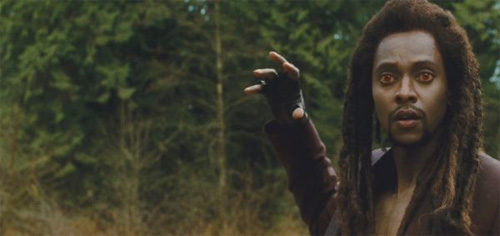
It’s the same with novel writing. Writers describe a character, for instance, and we, the readers, each construct a mental image of that person (and then get angry when the film casting doesn’t match that). I don’t know how many people I heard, back in middle school, ranting about how they definitely, totally did not picture Robert Pattinson when they dreamed up Twilight’s Edward Cullen in their heads. There are also race-based biases toward literary characters which often become clear when a person of colour is cast as a character many assumed would be white (like the vampire Laurent from the same franchise), racial prejudices becoming evident with readers’ indignation.

As demonstrated by their reaction to Edi Gathegi being cast as Laurent, Twilight‘s preteen fanbase did not want a diverse cast for the 2009 film adaptation… and, according to director Catherine Hardwicke, neither did the author (Stephenie Meyer) herself.

Irrespective of a story and its content, creators must become comfortable with the notion that each person who hears their story is going to see something different. There’s no way a storyteller can construct their tale in a way that guarantees uniform interpretation. Attempting to do so can result in over-describing something and alienating readers by unconsciously (or consciously) trying to harness control over their perceptions. It’s possible to use photographs to aid a visual picture, for instance, but these will still foster further imaginings on the part of the listener. Gaps in information will be filled independently – so the point is not to describe every single thing that is within you, but rather what is important to the story. That’s how we get such engaging stories, whether in literature, history, entertainment, art, memoir, or otherwise. Allow the listener to meet you halfway, and together you can share the experience while expressing trust in another person.

Maybe that’s why storytelling is so important to us – on an instinctual level, it allows us to connect with each other and find common ground.

Interpreting the Zapruder film

55 years after the assassination of U.S. President John F. Kennedy, we still have much to learn about the famous Zapruder film, which captured the incident in Dallas.

Warning: contains mention/images of graphic violence and may be disturbing for some readers.

By Serena Ypelaar

November 22, 1963. John F. Kennedy greets the public in the presidential motorcade as he heads toward Dealey Plaza and the Texas School Book Depository. As the car turns off of Elm Street, onlookers gathered along the side of the road cheer, clap, and wave to the President and his wife, Jacqueline.

The next few seconds would drastically change the future – and believe it or not, they were caught on film.

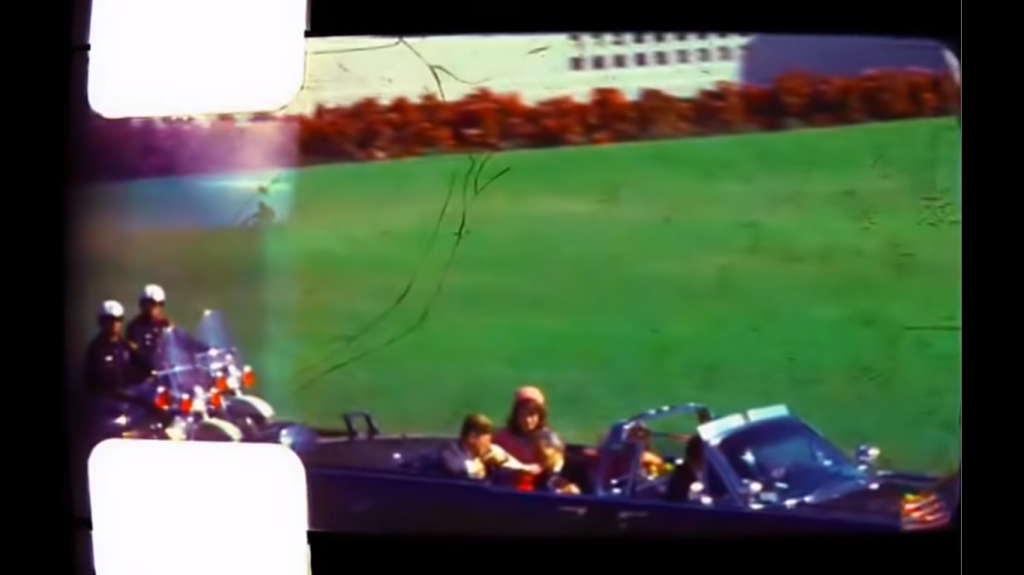
The Zapruder film (graphic content) preserves those moments when JFK was fatally shot, and it’s hence been scrutinized closely for decades. Abraham Zapruder was an ordinary U.S. citizen who happened to be in the right place at the right time, unknowingly documenting a tragic event that would go down in history.

zapruder2
Screencap taken from the Zapruder film.

You might think there’s nothing of value to gain from watching the murder of a political leader, but in this context that couldn’t be further from the truth. Zapruder wasn’t to know that the U.S. government would seize his short film when the Warren Commission was launched to investigate the assassination – he was merely recording the event for himself, on a Bell & Howell home movie camera.

There are others who filmed the assassination, but I want to focus on Zapruder’s close-range footage for its interpretive value.

zaprudercam
Abraham Zapruder’s camera, which is now held in the U.S. National Archives. Photo: Wikimedia Commons

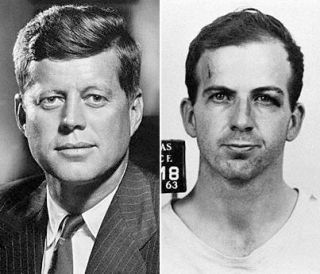
I mentioned that viewing the murder was crucial rather than gratuitous – and now I’ll explain why. JFK’s suspected killer, Lee Harvey Oswald, was shot dead by nightclub owner Jack Ruby before he could be extensively questioned or tried for the murder. This turn of events spawned boundless conspiracy theories, including ones in which Oswald was not the shooter, or that government(s) or other third parties were behind the assassination.

Oswald is alleged to have fired the shots from the sixth floor of the Texas School Book Depository. His own whereabouts and location have been intensely analyzed in order to place him at the scene of the crime: the source of the gunshots. To find and prove the source, the Zapruder film is an invaluable piece of evidence.

jfkoswald
President John F. Kennedy and Lee Harvey Oswald. Source: Psychology Today

Analysts and scientists have hypothesized on the trajectory of the bullets entering and exiting President Kennedy’s body. While many have opposing views on their path and therefore their source location, the point is that without Zapruder’s film, the investigation would have relied instead on subjective witness testimony.

However, discrepancies were perceived between witness testimony and the film’s contents. In an editorial for the New York Times in 2007, Max Holland and Johann Rush assert that Zapruder’s film was initially misunderstood because it seemed to show only two of the three shots believed to have been fired:

The majority of witnesses in Dealey Plaza heard three shots fired. Lawmen found three cartridges in Lee Harvey Oswald’s nest … Yet Zapruder’s film captured only two shots clearly. As a result, the film has been scoured for evidence of another shot, presumably the first one fired at the president. Research has yielded contradictory findings.

But what if Zapruder simply hadn’t turned on his camera in time?

Holland and Rush state that Zapruder commenced filming but turned off his camera when waiting for the President’s limousine to come into view. They suggest that he didn’t turn it back on again until after Oswald had fired his first shot. Viewing the film as incomplete therefore answers a question that loomed large over the Warren Commission investigation: why did Oswald miss the closest shot but prove such an accurate sniper in the two shots following (at 190 and 265 ft. respectively)?

“About the time the car got near the black and white sign, I heard a shot,” a key witness, Amos L. Euins, had said. Holland and Rush argue that it was the sign itself that blocked Oswald’s view of Kennedy. Sure enough, in watching the Zapruder film we lack the first shot but see the next two – after the President passes near a large sign. Startlingly, of the three shots fired, Zapruder managed to document the two that found their target.

The film, we realize, does not depict an assassination about to commence. It shows one that had already started.

The Zapruder film is central to the historical record of Kennedy’s assassination, as is careful analysis. The angles from which one can interpret the film prove that despite its overwhelming value to those trying to understand the event, it provides only a limited (though crucially significant) slice of what happened that day, contingent on a man’s choices of when to record … and his inability to know what was about to happen.


It’s Raining Men in the Harry Potter Franchise

With the release of the newest Harry Potter film, Fantastic Beasts: The Crimes of Grindelwald, we take another look at representation in author J.K. Rowling’s works in this installment of the Critiquing Harry Potter series.

By Serena Ypelaar

“Strong women” is a phrase we hear a lot, especially regarding film and literature. The desire to see strong women in entertainment (and the misunderstanding of what a “strong” woman actually is) sets up unrealistic standards for female characters and their real-life counterparts. Irrespective of these confining notions, empathy and vulnerability are traits that make women strong, not weak. A profound emotional complexity encapsulates what it means to be human, to live, and to persevere through adversity.

J.K. Rowling has promoted female complexity to an extent through Harry Potter characters such as Hermione Granger, Ginny Weasley, Nymphadora Tonks, Luna Lovegood, Cho Chang, Fleur Delacour, Angelina Johnson, Minerva McGonagall, Lily Evans, Molly Weasley, Narcissa Malfoy, Bellatrix Lestrange, and even Lavender Brown, all of whom have diverse personal attributes that make them uniquely human. Some are leaders, some are learners, some warriors, and some nurturers, but all of them feel. So do men, of course – yet male emotion is sadly suppressed as weakness in our society.

nlt
Brothers Theseus (Callum Turner) and Newt Scamander (Eddie Redmayne) interact while Leta Lestrange (Zoë Kravitz) looks on. In J.K. Rowling’s latest spinoff, men still dominate the story, women are supporting characters, and non-binary characters aren’t included at all. Photo: Entertainment Tonight

Critically examining all aspects of Fantastic Beasts would take days, so keep in mind that I’ve tried to confine the scope of my analysis to gender here. Given that J.K. Rowling is a woman writing in the 21st century (though her latest story is set in the 20th), I’d expected her to feature a female lead this time around. Despite the many complex female characters in the Harry Potter books, Rowling never struck me as going all the way to give women full representation. The majority of the major characters are men, after all, and the few women who are given significant roles are almost all white. In today’s political climate, the time is ripe to focus on feminism and gender equality. Some might argue that it’s Rowling’s responsibility as an influential woman to present more female role models, and I won’t even get started on non-binary characters because that evidently seems too much for Rowling to consider. Ezra Miller, who is a queer actor, does play Credence Barebone in Fantastic Beasts, but Credence is referred to as male in the films – we don’t have any evidence that Rowling understands or wants to include the lived experience of genderqueer individuals. Instead, Rowling safely elected to feature Newt Scamander, widely acclaimed Magizoologist – and a dude.

fb
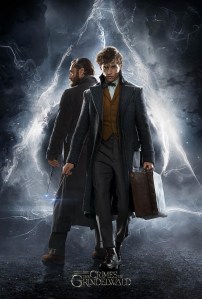
An early promotional poster for Fantastic Beasts. The core three characters of this film – Dumbledore (Jude Law), Newt (Eddie Redmayne), and Grindelwald (Johnny Depp) are male. Photo: Flickr

If the secondary characters were all female it might be less of an affront that Rowling went with a story about another man, but I can’t really defend her there. Just like Harry, Ron, and Hermione, Newt is surrounded by other male leads. In The Crimes of Grindelwald specifically, we have No-Maj (Muggle) Jacob, Newt’s brother Theseus, Credence, and then the big ol’ showdown between future Hogwarts Headmaster Albus Dumbledore and European powerhouse tyrant Gellert Grindelwald, the darkest wizard on the world stage before Lord Voldemort’s time. As you can see, lots of testosterone floating around.

Of course, the Goldstein sisters Tina and Queenie figure into the storyline, this time alongside Leta Lestrange and *SPOILER ALERT* Nagini (to whom I’ll probably devote a whole other post in the future). It’s not that the women are there, however, that checks the proverbial box of so-called gender parity; as I argued in my article on ethnicity, it’s what they do that matters. In the first Fantastic Beasts film, Newt and Jacob were the top-billed characters in the plotline, with Tina and Queenie playing supporting roles. Likewise, we know that the Dumbledore-Grindelwald relationship takes centre stage now. J.K. Rowling could just as easily have chosen a witch to work with Dumbledore for this spinoff series, but she didn’t, and men are still at the centre of the action. It strikes me as a bit disingenuous for a self-declared progressive female author, but I suppose our society influences our implicit expectations. All I can say without spoiling the film is that our girls Tina, Queenie, and Leta’s storylines heavily feature men and aren’t explored as in-depth as I would like.

There’s one possible upside apart from Newt’s own emotional vulnerability: Dumbledore and Grindelwald’s confrontation and the unravelling of their past. Such an interplay could do much to highlight LGBTQ2+ representation and men’s emotional depth if it’s properly explored. It is a shame that the only gay relationship we may see is an abusive and manipulative one, but nevertheless, this franchise will be very telling as to whether J.K. Rowling truly believes in diverse representation or is just trying to ride the wave.

So far she’s demonstrated a shocking hesitancy to give female, non-binary, or trans individuals representation, and I doubt we can expect anything that doesn’t feature a male lead from her soon.* For now, even as far as women – complex, wonderful, and important as they are – are concerned, I’m not convinced Rowling’s in it for the long haul. If she is, I’d like to see more action and agency from her non-male characters front and centre.

After all, actions speak louder than words, and Rowling’s approach to gender isn’t quite loud enough for me.

This article is part of the Critiquing Harry Potter series. Read about ethnic representation in the series here.

____________________________________

FOOTNOTES
*Just take a look at her Cormoran Strike novels under the penname Robert Galbraith, which also feature a male character.

Monument Men: Constructing Likenesses

Creating commemorative likenesses – statues, wax figures, paintings – is no easy feat. The way an individual is remembered could have repercussions for years to come, so how does creativity factor in?

By Serena Ypelaar

When we visit a wax museum, we’re usually prepared for a couple of duds that look nothing like they’re supposed to. Perhaps it’s due to the levity of such a space – after all, what purpose do wax museums serve apart from the fleeting amusement of seeing celebrities’ likenesses up close?

However, with commemorative likenesses such as statues, busts, or paintings meant to immortalize public figures, there’s a lot more to it. A grossly inaccurate portrayal could be damaging to a person’s public image, and depending on the nature of the commemoration, may be seen as unflattering or even disrespectful.

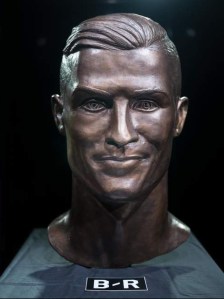
Take footballer Cristiano Ronaldo’s infamous bust, which was unveiled at Madeira Airport in Portugal last year. The bust was mercilessly ridiculed and made the subject of numerous memes, to the point that the artist had to redo it.

ronaldo
Portuguese footballer Cristiano Ronaldo was commemorated with this bust by sculptor Emanuel Santos in 2017. Public opinion ensured that it was replaced by a new, “more accurate” version, which can be seen below. Photo: Know Your Meme

Admittedly, famous individuals like these are exposed to these depictions by the very nature of their existence – they’re well-known, so people are going to make fun of them, whether it’s creating unflattering portrayals or vocally enjoying such parodies. That doesn’t make it right or excusable, especially if the public figure is a good person (if they aren’t, well, have at it!). Nevertheless, the fact remains that famous people lose the ability to regulate their public perception. The same goes for unauthorized biographies and the like – there isn’t much that can be done to prevent these interpretations unless someone wants to sue for libel.

standard
Photo: Bleacher Report

The new, sleek Ronaldo statue reflects what we’re conditioned to expect when it comes to commemorative statues, though – a public monument is no hokey wax figure. We seem to expect accuracy and a display of strength or nobility in these types of depictions, which is why more gutsy interpretations often get shot down. Yet we can’t pull the plug on artists’ interpretations altogether. To do so would be to rob artists of their style and create a mild form of censorship that could inhibit creative thinking. (Whether we want to foster “creativity” when it comes to portraying likenesses for public commemoration is another question altogether).

Still, that won’t stop me from expressing my dislike for what I call the “Paper Airplane Portrayal” of Canada’s longest-serving Prime Minister, William Lyon Mackenzie King. Cristiano Ronaldo is one thing – as an athlete, he doesn’t carry the same kind of significance that a former national leader might. So King’s statue on Parliament Hill in Ottawa seems even more bizarre to me, since I would expect him to look a bit less cartoony and more like the other statues on the Hill. Sculptor Raoul Hunter was aiming to convey King’s forcefulness as a leader, according to this page on the Government of Canada website explaining the interpretations of the statues. The other monuments on the Hill portray their subjects more proportionately, whereas King can only be described as abstract. His monument makes me laugh at him a little, which, applied in the context of public office, is surely a less desirable outcome.

king
You don’t need a picture of King to know that nobody is shaped so angularly. Nor did King’s head appear so oblong in life. I will add, however, that this statue was created in 1967 when this style was in vogue, which could raise another fascinating discussion about how aesthetic standards affect portrayals during a given era. Photo: Flickr

Of course, I’m sure it’s all a matter of personal opinion – I know people who like the King statue (above). And that 81-year-old Spanish lady who famously “touched up” Jesus’ face in the “Ecce Homo” fresco clearly thought his makeover looked fine…

Irrespective of whether we can gauge the accuracy of monuments beyond personal preference, discussing the issue tells us what we value as a society on a surface level. Commemorative monuments rely on context and setting to construct a noble or attractive memory of a person (often a man, statistically speaking) and their contributions in life. Let’s just hope that if we do anything noteworthy, the sculptor chosen to portray us won’t get too weird with it.

It’s Lit(erary)

By Serena Ypelaar

Hello again, dear readers, and thanks for visiting The Mindful Rambler! Last week, we talked about history and who writes our past. Collectively (though not without knowledge hierarchies), we shape our memory of historical events through storytelling. Now, let’s look at the second of our four themes: Literature.

When I speak broadly about literature, I mean fictional prose, poetry, literary essays, or the like. Literature may not necessarily reflect on actual events, but it does capture elements of the human experience for us to examine and reflect upon. Thus, literature is an instrument of storytelling.

shelf
An extremely crammed bookshelf promises enough interpretation to last years. Photo: Serena Ypelaar

Why is it important to look at literature in the field of interpretation? Because literature itself is an interpretation of the world around us. The creators of literature are absorbing what they see around them and reproducing (or subverting) it through the act of storytelling. Drawing upon shared experiences and portraying them, whether through realism or abstraction, allows us to understand each other, ourselves, and our environment.

daunt
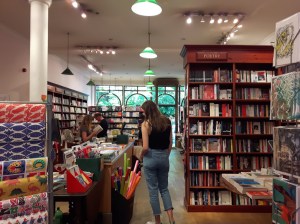
Daunt Books, Hampstead, London, UK. Photo: Serena Ypelaar

Literature uses the written word to tell us the truths the world doesn’t share openly – but it’s more than just that. Books, poems, pamphlets, essays, and other literature aren’t limited to just words. They give us imagery; they provoke our senses and prompt us to think critically in response to stimuli. We aren’t force-fed these images, nor is the meaning of a literary work meant to slap us in the face. There are nuances that we ourselves have to read into, which often means that we as individuals bring different perspectives to the literature we consume.

In the act of reading, we’re interpreting. We process the messages that writers (who have interpreted before us) present to us, and our takeaway varies from one person to the next based on past experiences. Our own personalities and backstories define what stands out to us and what we think is worth considering.

So how do we find a definitive interpretation of literary texts?

We can’t.

We can choose to venerate the analyses of certain individuals – for instance, since I like Samuel Johnson, to whom this blog’s title pays homage, I’m more likely to embrace his opinions on Shakespeare. Conversely, if I love Jane Austen (and I do, most ardently), I will reject Mark Twain’s scathing criticisms of Pride and Prejudice. But you, or someone else, may like and respect Twain’s opinion and therefore lend it some credence. Our biases influence our perceptions, so interpreting literature is a constant decision-making process.

westminsterpoetscorner
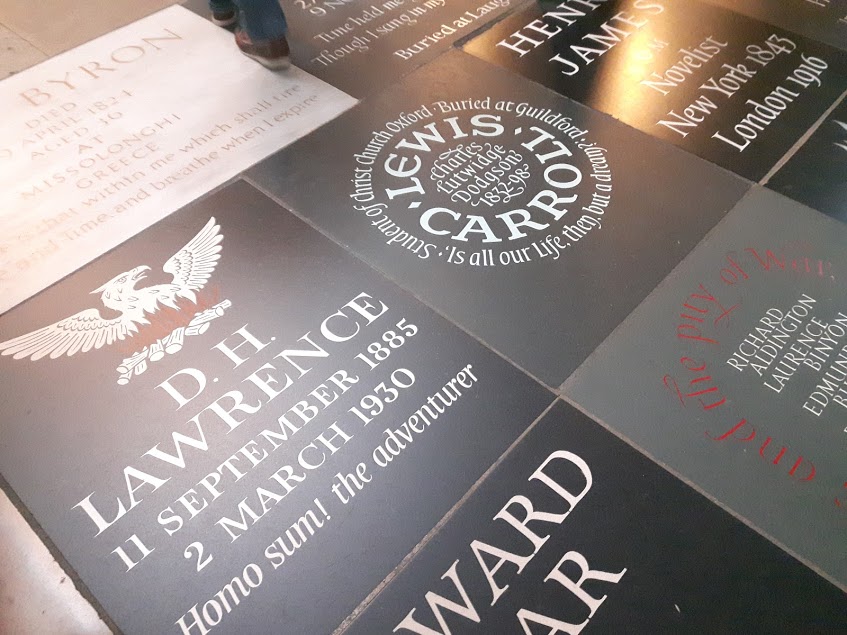
Graves from the Poets’ Corner in Westminster Abbey, London, UK. Readers connect with different works/authors/themes as a result of their individual background – this diversity affects our interpretive processes. Photo: Serena Ypelaar

Hence, once literature is published, its meaning lies in the hands of the recipient. Authors’ intentions are powerful and significant, and this column, “On Literature“, will explore those ethical concerns. However, we aren’t necessarily bound by them. No one can really police our response to literature because it’s a very personal interaction. As a former English major, I definitely learned how to pick up on people’s partiality and respond to that, but ultimately, we form our own relationships with the materials that are presented to us.

So literature as media is oddly empowering: we can choose what we read, how we read it, and how we respond to it. We can be mindful of the contexts in which a work was produced, or we can simply read it at face value – and is either interpretation wrong?

Tell Me a (Hi)story

ram·ble
/ˈrambəl/
Middle Dutch
verb
  1. walk for pleasure, typically without a definite route.
  2. talk or write at length, typically in a confused or inconsequential way.

Hi! My name is Serena, and I’m the Founder and Editor-in-Chief of The Mindful Rambler. I started this blog to explore questions of interpretation and the ways we communicate in the public sphere. As the definitions above suggest, there will be confusing moments during these “rambles” when we don’t know exactly where we’re going – but they’ll help us learn! To celebrate our official launch, I’d like to introduce you to one of our four key themes: History.

centraalstationamsterdam
History is all around us, with new additions embracing (or sometimes overpowering) the old. Photo: Serena Ypelaar

History is all around us. The present is influenced by our past and the way we remember it. History isn’t just “the past”, though – it’s not as objective as that. Rather, history represents the way we interpret and understand the past using material evidence.

Such evidence can come in the form of documents, photographs, artwork, audio, or even commonplace objects. We construct history from this evidence; it’s not always easy to process or understand, especially when we’re trying to synthesize multiple (sometimes conflicting) pieces of evidence into a coherent story.

What types of evidence are privileged? Which voices do we value? In placing emphasis on some forms of evidence over others, which perspectives do we identify as “more important” in the greater scheme of things?

sir winston churchill, churchill war rooms, london, WWII, history
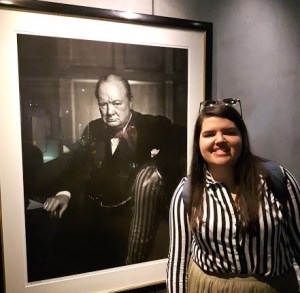
Serena stands with Yousuf Karsh’s 1941 portrait of Sir Winston Churchill at the Churchill War Rooms, London, UK. We can interpret photographs like this one as historical evidence of a period in time. Photo: Serena Ypelaar

In this column, “On History“, we’ll delve deeper into these questions using specific case studies. It’s crucial to understand how we remember our past and why we remember it that way. By consciously exploring our interpretative processes, we can understand the methods we use to create bridges between the past, present, and future.

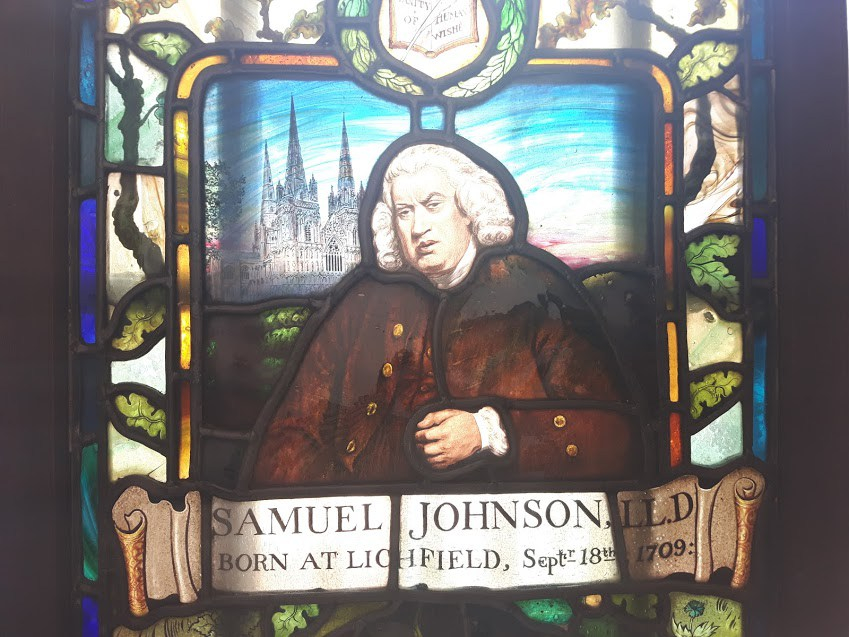
The name “The Mindful Rambler” is a tribute to Dr. Samuel Johnson, the 18th century scholar and writer of the first English Dictionary. Published between 1750 and 1752, Johnson’s periodical The Rambler discussed contemporary societal issues such as politics, religion, morality, and literature. In coming up with a title for this blog, I enjoyed the idea of “rambling” like Dr. Johnson, but the connotations seemed a little more lackadaisical than the goal of this blog – hence the addition of mindfulness to our title.

samuel johnson, dr. johnson, stained glass, literature, england, london
Stained glass window commemorating Samuel Johnson’s life, located at Dr. Johnson’s House Museum in Gough Square, London, UK. Photo: Serena Ypelaar

We should definitely let our ideas unfold so we can learn new things from one another, but being mindful of how we interpret and communicate will ensure the ethical sharing of knowledge. Johnson had similar beliefs:

Integrity without knowledge is weak and useless, and knowledge without integrity is dangerous and dreadful. — Samuel Johnson

From reflecting on lessons learned, to contemplating ongoing mysteries, to questioning privileged knowledge structures, we owe it to our future to acknowledge and preserve our past – and to inform how we treat history going forward. It’s my hope that when considering issues of interpretation and communication, we always tread mindfully – and think before we ramble.

Welcome to The Mindful Rambler!

Hello! Welcome to The Mindful Ramblera blog exploring literary and historical interpretation.

I created this blog to think about the ways in which we tell stories. Stories are part of the human experience – whether we are living them or sharing them with others, they lie at the heart of human connection and empathy. This publication will look at the ways in which we remember each other, the ways we interact with each other, the ways we communicate, and the ways we understand.

Come take a walk with me as we sift through these ideas together!

Stay tuned for our launch on June 1, 2018.

— Serena Ypelaar (Founder & Editor-in-Chief)

Integrity without knowledge is weak and useless, and knowledge without integrity is dangerous and dreadful. — Samuel Johnson

20170826_111207
Great Slave Lake, Yellowknife, Northwest Territories, 2017. Photo: Serena Ypelaar