Ambulo x The Mindful Rambler: A Conversation Between Wanderers

Created by Matt Helders and James O’Hara, Ambulo is an all day café blurring the boundaries between cultural space and relaxed community hangout.

By Serena Ypelaar

Here at The Mindful Rambler, we talk a lot about interpretation, storytelling, and sharing experiences, often through cultural lenses. So naturally, as a museum/arts professional who cares a lot about engaging the public, I’m always thinking about more ways to explore the theme of visitor experiences. Last month, all day café Ambulo opened its first location in Sheffield, UK, and in following the café’s updates on social media, I was impressed by how successfully they’ve been sharing their story. Each of their Instagram posts is an invitation to the public – to everyone – to join them in the space and enjoy their visit.

Arctic Monkeys drummer Matt Helders and The Rockingham Group co-founder James O’Hara, who have been friends for years, conceptualized Ambulo and have seen it through to its opening. They collaborated with Museums Sheffield to launch two locations; the first at the Millennium Gallery, and the second opening soon at Weston Park Museum. Alongside its setting in a cultural space, Ambulo’s welcoming vibe makes it an ideal example of visitor engagement done right.

James O’Hara and Matt Helders at Ambulo. Photo: India Hobson, courtesy of Ambulo

Interestingly, “ambulo” means “to wander” in Latin, just like “ramble” means “to wander” in Middle English/Dutch. Ambulo and The Mindful Rambler seem to have an inquisitive outlook in common, and I was eager to explore this idea of learning and sharing in more depth. I recently spoke with James O’Hara, one half of the Ambulo duo, to hear more about the vision behind Ambulo, the significance of its location in museum/gallery sites, and how they’ve opened a café with inclusion as their priority.

Serena Ypelaar: What kind of visitor experience did you envision when you created Ambulo? Who is the space for?

James O’Hara: Our background with our previous ventures was very much more bar orientated and more focused on a late night offering. It was a very conscious decision with Ambulo to make a really light, open, inclusive space. There’s a definite feeling of responsibility that comes with providing a multi-faceted café in what is essentially the ground floor of a gallery.

The Millennium Gallery location. Photo: India Hobson, courtesy of Ambulo

SVY: Can you tell us about the partnership with Museums Sheffield and how Ambulo ended up in the Millennium Gallery?

JO: Essentially via a tender process. We were the only local independent to make it to the final 5, the rest were national operators with a much more experienced background in these sorts of spaces. However, I think our history of cultural engagement in the city (I’m the co-founder of Tramlines music festival) and our track record of transforming interesting, somewhat derelict buildings (Public is located in a former gents toilet) excited Museums Sheffield and our enthusiasm for the project balanced out the obvious risk element associated with choosing a smaller company like ours. 

Selections from Ambulo’s daytime menu. Photo: India Hobson, courtesy of Ambulo

SVY: You and Matt spent a couple of years wandering and testing food and drink to inform the creation of Ambulo’s menu. How was that creative process, and what did you learn?

JO: The idea for Ambulo started over 3 years ago – or at least the concept did – Ambulo means ‘to wander’ in Latin, and mine and Matt’s travels have formed a big part of the inspiration for the food and the brand. The main takeaway is that our favourite places and experiences don’t disguise themselves in pretension or opaque terminology. Our aim is to democratise the dining experience and provide great produce across our food and drink without all the associated nonsense that can often come with it.

Evening at Ambulo. Photo: India Hobson, courtesy of Ambulo

SVY: From food/drink to music to decor, there are many aspects to creating Ambulo as it exists now. Can you tell us about your collaborations with friends and local businesses?

JO: We have a core group of collaborators who we have worked with on almost all our projects. Rocket Design (Ben Pickup) make and build all our interiors, Totally Okay (Nick Deakin) has designed all the branding and associated imagery of this project and all our previous businesses, India Hobson takes all the photos, Swallows and Damsons have done all the beautiful floral displays and New Phase LED do all our lighting design. We’ve done so much together that we all have a real shorthand and understand how each party works. They’re an amazing group of people. 

SVY: What’s your favourite dish on the menu, and why?

JO: I would say the Kedgeree Soldiers. It feels like a very Ambulo dish – originally an imported breakfast dish from Victorian times, Exec Sheff has put this through a prism of modernity to come up with a really delicious and simple reinterpretation.

SVY: Thanks for taking the time to speak with us! I’m looking forward to following Ambulo’s future programming, and I can’t wait to check it out in person one day soon.

Ambulo is now open in the Millennium Gallery, 48 Arundel Gate, Sheffield, UK. The café’s second location is slated to open at Weston Park Museum, Western Bank, Sheffield.

Pies Are Just Sweet Calzones

Considering that even pies can be understood in different ways, interpreting history can seem a lost cause. But it is having a multiplicity of voices that leads to a balanced historical narrative.

By Lilia Lockwood

In 1977, NASA launched the Golden Record into outer space aboard Voyagers 1 and 2. The two copies of the record had images and sounds of life on earth, including nature sounds, greetings in 55 languages, and music from different eras and cultures. This is easily the most ambitious time capsule, as it seeks to convey the entirety of human experience on our planet over millennia. We may never know if it reaches extraterrestrials, but it does raise another question: is it possible to capture a place and moment in time?

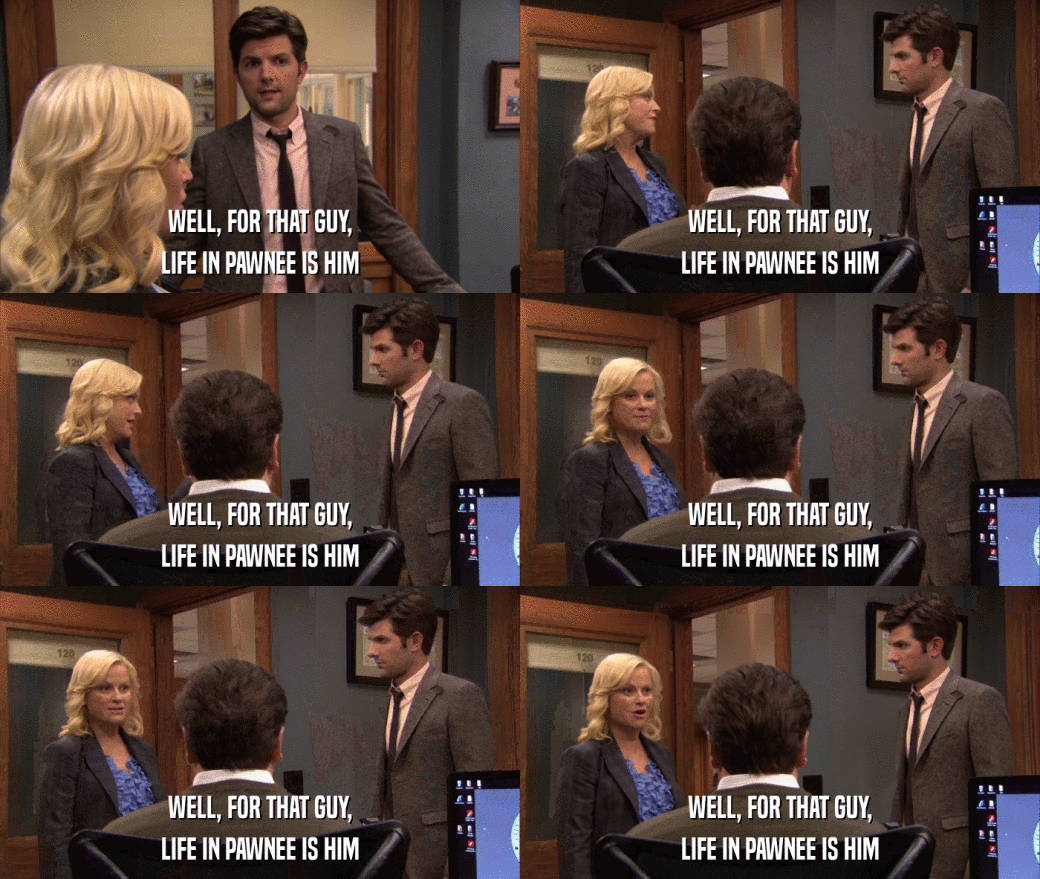
I’ve been thinking about this since watching an episode of one of my favourite television shows, Parks and Recreation. The satirical sitcom follows the trials and triumphs of determined public servant Leslie Knope (Amy Poehler) and her team at the small-town parks and rec department of Pawnee, Indiana. Be warned: this blog post contains spoilers for season 3, episode 3. And gifs. Lots of gifs.

Andy-Dwyer-Shock
When you realize you can write about history AND Parks and Rec. Photo: Reaction Gifs

The premise for the episode is that Leslie has decided to make a time capsule that represents life in Pawnee. She soon finds, however, that there are different understandings of what exactly constitutes “life in Pawnee.” The episode starts with Jerry, one of the department’s employees, saying that he has brought his mother’s diaries to put in the time capsule. Leslie thinks this idea is perfect. Amen, Leslie! Discovering a historical diary of daily life is every historian’s dream.

Events take a turn when word gets out about the department’s time capsule project, bringing Pawnee citizen Mr. Kelly Larson to Leslie’s office. He demands that the book Twilight, by Stephenie Meyer, be included in the capsule. At first, Leslie is dead set against this. What, she wonders (as most viewers likely do), does a teen vampire romance have to do with Pawnee?

But then, Leslie has an epiphany:

iLd9glnvi5cJ

and his daughter reading that book
Photo: Gifglobe

Leslie thought the time capsule should include what are traditionally considered historical items, such as her book A brief history of everything that has ever happened since Pawnee was founded. But she realizes that each person is experiencing life in Pawnee differently, and the time capsule has to reflect that. She organizes a public forum to hear ideas for what additional items to add, where everyone starts arguing over suggestions. Twilight is too Christian! Twilight is not Christian enough!

pies are
There are always different perspectives to consider. Photo: Giphy

There aren’t necessarily right and wrong sides to these arguments (though of course extremes must be carefully weighed). Rather, considering many subjective accounts allows us to arrive at a closer approximation of objective reality.

grouchy ron
It is vital to acknowledge other points of view. Don’t follow Ron’s example. Photo: Gfycat

Ultimately, Leslie finds an elegant solution. The capsule will include everyone’s perspectives by preserving a video of the forum. As she has discovered, the only way to capture a place and moment in time is to include multiple voices in dialogue with each other. And the task of the historian is to seek those voices and make them heard.

Frontier: As Intersectional as Feminism Can Be in the 1770s

Netflix and Discovery series Frontier explores the pluralistic conflicts defining Canada’s fur trade in the late 18th century. How does the show treat women’s history in a time where their social roles were especially limited?

Warning: this article contains light spoilers about character development and thematic events depicted in Frontier

By Serena Ypelaar

Last week we discussed how Netflix and Discovery series Frontier interprets the history of the fur trade in Canada during the late 18th century. Since it’s International Women’s Day, I’m back with Part II of the Frontier series, this time to talk about women’s roles in the show.

As you probably know if you’re into history or women’s studies (or if you’re aware of women’s rights movements such as intersectional feminism), women’s social roles have been extremely restricted throughout history. In the 1770s, women couldn’t usually hold property and were most often made to marry to secure their future. With Indigenous women in North America, things were a bit different – certain Indigenous communities are matrilineal, meaning that women hold leadership positions rather than men. Indigenous groups still had/have gender-specific roles, but colonization marked a grim turn for women. Indigenous women were in many cases sold or “offered” to settlers as “country wives”, many being forced into non-consensual marriages.

Sokanon (Jessica Matten) dedicates her time to helping other women fight the effects of colonialism, such as forced marriages. The show tacitly parallels today’s ongoing issue of Missing and Murdered Indigenous Women. Photo: Hypable

So with these complexities in mind, how does Frontier interpret women’s history? With a great degree of respect and nuance, I’m happy to say.

Chaulk (Kathryn Wilder) poses as a man to survive on her own. Photo: TVMaze

Frontier explores new world realities for women in the 1770s without disempowering them. Characters with no income such as Clenna Dolan (Lyla Porter-Follows) and Chaulk (Kathryn Wilder) must adapt to survive, latching onto benefactors who prove to be manipulative; but they both demonstrate resilience and resourcefulness. On the other hand – I won’t drop a big spoiler, but there is one particular character whom I was indignant to see killed off before all her potential had been exercised. Yet for the most part in Frontier, we’re shown so many unique women with examples of strength and vulnerability (which are not mutually exclusive traits, I might add).

Prolific Indigenous actress Tantoo Cardinal plays Kamenna, chief of the Cree Lake Walkers who are integral trade partners to some of the fur traders. Elizabeth Carruthers (Katie McGrath) runs her own company after the death of her husband, and she is a shrewd and calculating businesswoman. Josephette (Karen LeBlanc) steers the Brown Bros.’ company better than they do.

Clockwise from left: Kamenna (Tantoo Cardinal), Josephette (Karen LeBlanc), Elizabeth Carruthers (Katie McGrath), Grace Emberly (Zoe Boyle).

Likewise, Grace Emberly (Zoe Boyle) owns a Fort James tavern and uses overheard intelligence as a form of power; she also literally wears the pants. I admit I underestimated her barmaid, Mary (Breanne Hill), thinking she’d be vapid, but she proves to be fierce as hell, going so far as to attack and kill rapists who try to sexually assault women and girls in the tavern. Sokanon (Jessica Matten) also goes on a personal quest to save Indigenous women from being forcibly married off, and she and Mary join ranks to achieve their honourable cause.

Mary (Breanne Hill) and Sokanon (Matten) fight to escape a Christian convent preparing North American women, many of them Indigenous, to marry European settlers. Photo: FatherSonHolyGore

Some viewers might say “how are these roles accurate?” but if you honestly believe that women have taken centuries of oppression lying down and didn’t fight back, you’re mistaken. Frontier could go even further to establish their female characters’ nuanced experiences, but to the show’s credit it portrays women’s entrepreneurial talent, compassion, integrity, and ambition.

I said this last week and I’ll say it again – Frontier is by no means perfect. Nor is any interpretation of history, when you think about it, but the bigger question to consider is: does it treat the subject matter responsibly? As a woman who loves history, I feel that Frontier does.

This article is part of a larger series discussing storytelling in the television show Frontier. As a mainstream adaptation of early Canadian history available worldwide, Frontier examines the pluralistic past and colonial legacies that still shape Canada today. Read the rest of the series here.

Frontier: Harping on about Canadian History

Starring Jason Momoa, Frontier explores the pluralistic conflicts defining Canada’s fur trade in the late 18th century. From a historical and ethical perspective, how does the show’s cultural authenticity stack up?

Warning: this article contains light spoilers about events depicted in Frontier

By Serena Ypelaar

It’s often said that there are two sides to a story.

But that’s not true: there are many sides to a story, and Frontier proves it’s possible (though difficult) to tell them.

I’ve been waiting to write about Frontier since before The Mindful Rambler was founded. Anyone who knows me knows I have an enduring love for early Canadian history … and in 2016, Discovery Channel and Netflix miraculously created a television show about it!

Set in the late 18th century in what is now Canada, Frontier centres on locations such as Hudson Bay, James Bay, Montréal, Fort James, and the wilderness. Indigenous peoples have lived on the land since time immemorial, long before European settlers arrived – a fact which is starkly portrayed in the series. The show stars Jason Momoa (also Executive Producer) as Declan Harp, a half-Cree, half-Irish trader who, for deeply personal reasons, seeks to destroy the Hudson’s Bay Company (HBC)’s oppressive monopoly on the fur trade.

Jason Momoa plays Declan Harp, a half-Cree, half-Irish fur trader on a mission to topple the Hudson’s Bay Company’s monopoly. Photo: ScreenerTV

There’s a plethora of “New World” films/shows out there, many of which are inevitably framed from the perspective of newly arrived colonial settlers. But it’s not inevitable to tell the story that way. Frontier is an example of what happens when you incorporate multiple perspectives and, crucially, spend time on authenticity. Though its storytelling and pacing is less than perfect, Frontier‘s diversity and inclusion is noteworthy and fairly well-done.

Indigenous and pluralistic representation

Today, Canada is populated by diverse cultural and linguistic groups, which was also the case during the 1770s. Frontier showrunners Brad Peyton, Rob Blackie, and Peter Blackie take care not to fall into the trap of depicting Indigenous peoples as one and the same – throughout its three seasons, we’ve seen Cree, Haudenosaunee, Métis, Inuit, and more nations – acknowledging that they do not comprise just one singular culture or identity.

Whenever I talk about Frontier and Jason Momoa playing an Indigenous man, people often ask “but isn’t he Hawaiian?”

“Yes, Momoa is part Native Hawaiian, but he’s also part Native American on his mother’s side,” I say. You’d be surprised how skeptically people react to that answer. There’s a definite issue with saying someone is not “_________ enough” to identify with their heritage (I know from experience, as a mixed individual). To say that anyone who is part First Nations, part Inuit, etc. isn’t “Indigenous enough” is akin to telling a mixed English/Scottish Canadian that they aren’t allowed to identify as Scottish. People who are part Indigenous are Indigenous and have a right to their culture.

Momoa is heavily invested in sharing the experiences of Indigenous peoples in North America. Though working in London at the time, he was vocal during the #NoDAPL protest in North Dakota in 2016; he also starred in Road to Paloma (2014), which exposes the systemic dangers to Indigenous women in the United States. And now, on Frontier, he’s helping portray Canadian history from an Indigenous vantage point. Momoa’s Instagram posts demonstrate how he advocates for Canadian history as I’ve never seen in another American. His work in Frontier contributes to the preservation of Canadian history from multiple perspectives.

Frontier also emphasizes linguistic diversity. Métis/Saulteaux-Cree actress Jessica Matten, who plays Harp’s sister-in-law Sokanon, learned two specific Indigenous languages for the show:

I’m mainly speaking Swampy Cree and also Ojibway to reflect Sokanon’s eclectic upbringing, born an Ojibway woman but raised amongst Métis, Cree, Scottish, French people on Turtle Island [North America]

Jessica Matten, Instagram post

Matten also provided creative direction in depicting the sale of Indigenous women to white settlers (as “country wives”).  The portrayal of these realities mirrors today’s issues with missing and murdered Indigenous women.

Brother- and sister-in-law Harp (Jason Momoa) and Sokanon (Jessica Matten). Photo: Edmonton Journal

In early North America, intermarriage also occurred and is portrayed in Frontier, another nod to authentic representation. Irish settler O’Reilly’s wife Kahwihta is Haudenosaunee (married under frankly sinister circumstances), and Sokanon and Michael Smyth (Landon Liboiron)’s budding yet troubled romance reflects the effects of the influx of fur traders on traditional lands. Nevertheless, Indigenous women – and almost all the women on the show – are depicted not as helpless victims but as clever and resourceful fighters. Frontier doesn’t shy away from the HBC’s violent behaviour that caused lasting trauma and grief for Indigenous peoples either, as depicted in the opening of season three, when the HBC is shown raiding and assaulting a Métis village.

Even amidst the fur trading companies, pluralism is the name of the game. There’s Declan Harp’s Métis-fronted Black Wolf Company, working directly against the HBC. The Scottish Brown brothers (Allan Hawco – also Executive Producer – and Michael Patric) are rivals to Carruthers & Co., managed formidably by Elizabeth Carruthers (Katie McGrath) after her husband’s death. Samuel Grant (Shawn Doyle) and Cobbs Pond (Greg Bryk) are Americans established in Montreal, and Michael Smyth, an impoverished Irish stowaway, joins Harp’s company. Englishman Lord Benton (Alun Armstrong), a fictitious governor of the HBC who loosely represents the company’s real-life actions, is portrayed mercilessly – on Frontier, the HBC is held accountable for its historical misdeeds.

Irish trader Michael Smyth (Landon Liboiron), Harp’s protegée, with Sokanon (Jessica Matten). Photo: Rotten Tomatoes

The show flounders in its portrayal of Black loyalists in Canada, however. Charleston (Demetrius Grosse) flees enslavement in the United States and falls in with Harp, but he is (SPOILER ALERT) the first to die in an overseas voyage – a typical trope in Hollywood movies (Black Dude Dies First trope). The two Black characters only play supporting roles; Josephette (Karen LeBlanc) is a close associate of Elizabeth Carruthers (Katie McGrath) but eventually takes on the bulk of the company management when Elizabeth’s new husband Douglas Brown (Allan Hawco) drives it into the ground. If Josephette were given a larger role, her character could thrive in the limelight. 

A new Frontier for Canadian history

While Frontier is undeniably flawed, both in a storytelling/pacing sense and an accuracy sense, I think its merits outweigh its detractors. The show illustrates (and popularizes) a long-distant era of Canadian history and emphasizes the facets of the fur trade economy. Most importantly, without glorifying colonialism, it depicts the conflicting interests of the different individuals and groups trying to live off the land – and in some cases, exploit it. It features Indigenous languages, celebrates women’s autonomy, and inspires awe – there was a lot going on in the Hudson Bay region.

Warts and all, Frontier proves that Canadian history is by no means boring.

This article is part of a larger series discussing storytelling in the television show Frontier. As a mainstream adaptation of early Canadian history available worldwide, Frontier examines the pluralistic past and colonial legacies that still shape Canada today. Read the rest of the series here.

O choose me for your Valentine!

Who sent the first Valentine in North America? The truth might surprise you, as the sender is associated very closely with early Canada.

By Serena Ypelaar

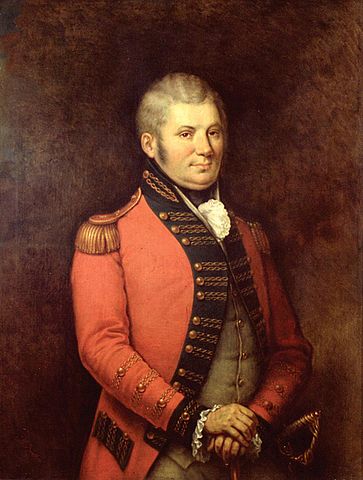
On February 14, 1779, British Lieutenant Colonel John Graves Simcoe, who would later become the founder of York (Toronto) and the first governor of Upper Canada, sent an impassioned valentine – to a Patriot’s daughter.

John Graves Simcoe’s signature. Photo: Wikimedia

Historically, Simcoe is an interestingly dual figure. You may have seen him in TURN: Washington’s Spies (the AMC series I can talk about for days if allowed) or at Fort York National Historic Site if you’re familiar with Toronto’s history.

Lieutenant Governor John Graves Simcoe, painted c. 1881.

In TURN, he’s wholeheartedly vilified based on his true-to-life role in oppressing American colonists and carrying out attacks such as the Massacre at Hancock’s Bridge (1778). But in southern Ontario, he’s venerated as the founder of York, earliest administrator of Upper Canada, and a staunch abolitionist. Simcoe passed the first Act Against Slavery in 1793 (only a year or so after accepting the post of Lieutenant Governor) and ensured that there were no slaves in Upper Canada by 1810 – 24 years before the rest of the British Empire finally abolished slavery in 1834.

The moment I assume the Government of Upper Canada under no modification will I assent to a law that discriminates by dishonest policy between natives of Africa, America, or Europe.

John Graves Simcoe to the Legislative Assembly

Before governing Upper Canada, Simcoe was stationed in Oyster Bay, New York during the American Revolution. He and another officer stayed at the home of notable Patriot Samuel Townsend and his family.

Simcoe, then almost 27, took a liking to Samuel’s 18-year-old daughter Sarah “Sally” Townsend, and it’s said that on Valentine’s Day 1779, he gave her a valentine letter consisting of a 52-line poem.

Fairest Maid, where all is fair
Beauty’s pride and Nature’s care;
To you my heart I must resign
O choose me for your Valentine!

Love, Mighty God! Thou know’st full well
Where all thy Mother’s graces dwell,
Where they inhabit and combine
To fix thy power with spells divine;

Thou know’st what powerful magick lies
Within the round of Sarah’s eyes,
Or darted thence like lightning fires
And Heaven’s own joys around inspires;

Thou know’st my heart will always prove
The shrine of pure unchanging love!
Say; awful God! Since to thy throne
Two ways that lead are only known-

Excerpt from Simcoe’s valentine poem to Sarah Townsend

Thematically, the poem addresses the implications of loving an enemy – apparently such poetic romances truly aren’t just a thing of fiction.

Sarah is known to have had a brief flirtation with Simcoe during his time in Oyster Bay. Declaring his love for her, he asked her to choose him as her valentine, but their relationship was not to be. Simcoe ended up in Upper Canada after the Revolutionary War (1775-1783), and Sarah remained in Oyster Bay. She never married; the valentine was discovered among her possessions after her death in 1842.

It’s unknown whether Sarah returned Simcoe’s feelings.  The nature of their relationship is further complicated by the fact that Sarah is thought to have spied on Simcoe. Sarah’s older brother Robert was a key operative of the Culper Spy Ring, George Washington and Benjamin Tallmadge’s intelligence network (and the core focus in TURN). Under the codename Samuel Culper Jr., Robert Townsend fed secrets to the Ring to advance the Patriot cause.

Legend claims that Sarah overheard Simcoe speaking to Major John André about their plans to take West Point using leaked intelligence from notorious turncoat General Benedict Arnold. Robert’s subsequent tip to the Ring would result in André’s capture and hanging as a spy. Given that the Townsends were working against the British, the relationship between Sarah and Simcoe has a decidedly Romeo-and-Juliet air – the only question is whether Sarah loved him back.

Raynham Hall, the Townsend family home. Photo: Wikimedia

We don’t have any physical written evidence to reveal Sarah’s feelings, but a colonial-era windowpane of the Townsends’ home survives today. This windowpane contains a message scratched into the glass by a British officer to “the adorable Sally Sarah Townsend”. Was it Simcoe who scratched the message? It’s possible, given that he was living there, but not proven.

Where’s the valentine now? It’s preserved in the place where it was first given – Raynham Hall Museum, Oyster Bay. The Townsends’ home is now a historic museum focusing on Robert Townsend’s role as a Patriot spy, as well as the family’s history from the time Raynham Hall was built in 1740.

Amidst the hearts and chocolate, we don’t often stop to consider historic valentines. Valentine-giving is an age-old tradition that tells us a lot about love and the conventions of the time (and the weight and respect that love poetry once commanded!).

As far as Simcoe and Sarah’s story goes, the evidence of this particular love is one-sided; but was the romance one-sided too? We’ll likely never know.

Extremely Wicked, Shockingly Evil and Vile: Portraying a Killer

Zac Efron is playing Ted Bundy in a film. Some think the casting glamorizes the notorious serial killer, despite Bundy’s factual reputation as a deadly yet charismatic deceiver. In this unique case, is it unethical to be accurate?

Warning: contains mention of violent crime and may be disturbing for some readers.

By Serena Ypelaar

“Can we please not glamorize a killer?”

That was the online response from many after seeing the teaser trailer in which Zac Efron plays infamous serial killer Ted Bundy in the upcoming film Extremely Wicked, Shockingly Evil and Vile.

I agree – we don’t want to promote or celebrate murderers. But is accurately depicting a killer the same as “glamorizing” them?

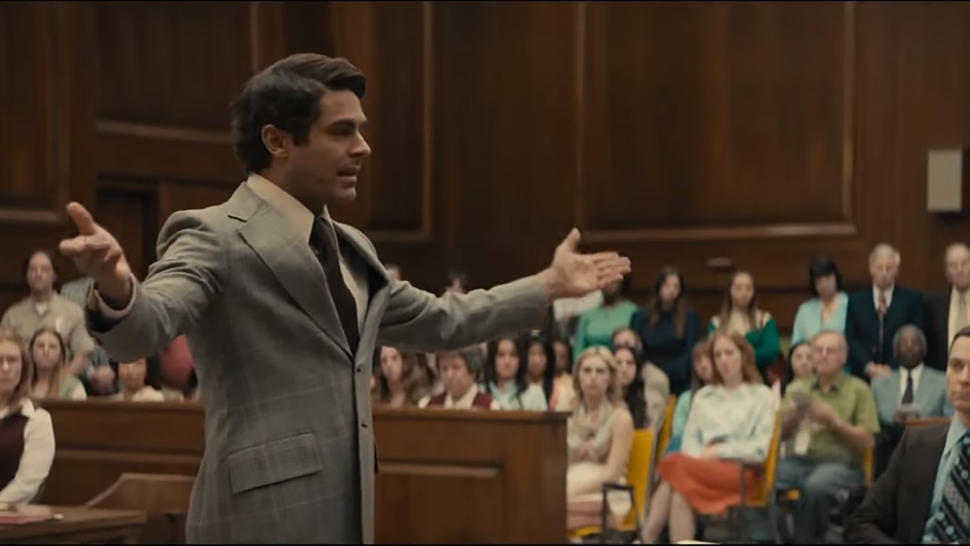
Though the film follows the perspective of Bundy’s long-term girlfriend Elizabeth Kloepfer (Lily Collins), audiences are unsurprisingly fixated on Efron’s portrayal of Bundy.

Joe Berlinger, who also put together the four-part Netflix docuseries Conversations with a Killer: The Ted Bundy Tapes (2019), directed the film. The true crime docuseries features audio of interviews with Bundy while he was on death row.

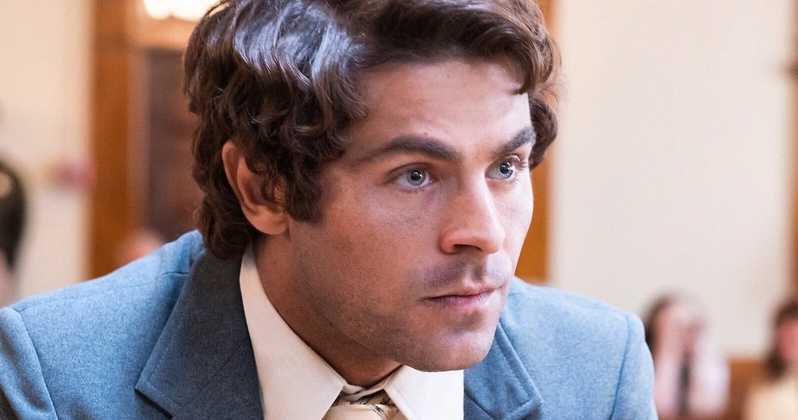
Zac Efron as notorious serial killer Ted Bundy in Extremely Wicked, Shockingly Evil and Vile. Photo: Daily Express

Bundy was active throughout the United States between 1974 and 1978, murdering and raping upward of 30 women in seven states. He escaped from prison twice but was eventually convicted and sentenced to death. He was executed thirty years ago, on 24 January 1989 at Florida State Prison.

I understand where our concerns are coming from. Somehow, there’s a real threat of people becoming infatuated with murderers. On the surface, it doesn’t seem like a great idea to cast a charming, good-looking actor as a depraved killer. What does that impression promote?

The truth is, Bundy was handsome. He was charming. And he used his personality to make people trust him, from his victims – whom he persuaded to accompany him to his car under the guise of disability, usually using a sling or crutches – to people who knew him. Friends, partners (Kloepfer, and later Bundy’s wife Carole Ann Boone, whom he married at one of his trials), and his mother all thought there was no way he could’ve committed such grisly crimes. Kloepfer eventually contacted the police with some vague suspicions, but Bundy still got away with a lot under her nose. His charm inevitably fuelled her denial for years; he was a skilled and charismatic manipulator. Bundy wanted people to believe he was just an average guy, and he maintained the lie of his innocence until just before his execution.   

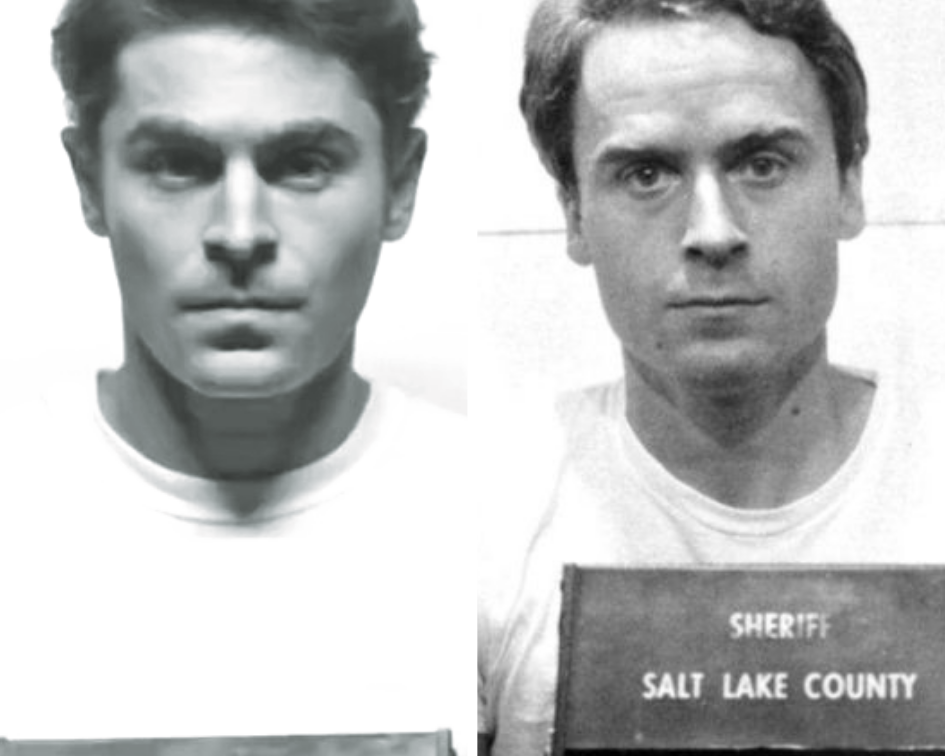
Zac Efron as Ted Bundy, compared alongside Ted Bundy himself.

So couldn’t it be that Zac Efron is actually the perfect choice for the role? I was skeptical at first, but after watching Conversations with a Killer, I changed my mind. Efron and Bundy even look alike; Efron claims they even have some of the same mannerisms.

I believe that in order to show him exactly the way he was, it’s not really glorifying him. I think hopefully it will make women … be more aware of their surroundings and be cautious. He had different tactics that he used for people to help him get in cars or do things, and in your gut, if you just feel that something doesn’t feel right, just say no.

Kathy Kleiner Rubin, one of Bundy’s survivors, doesn’t have a problem with the film

It’s important for us to try to understand, or at least recognize, how serial killers like Ted Bundy operate. The uncanny ability to convince people around him (as well as those avidly following his case in the 1980s) that he was wrongfully accused is troubling. Bundy himself said in Conversations with a Killer that “people don’t realize that murderers do not come out in the dark with long teeth and saliva dripping off their chin.” They have a chameleon-like talent for blending in (“The Bundy Effect”). If the film depicts this trait in Bundy without sensationalizing details, it won’t be glamorous; it’ll be truthful.

Understanding how serial killers deceive, and people who do evil deceive, really is kind of the theme of the film.

Director Joe Berlinger

We are in control of our own opinions. As long as we, the viewers, are conscientious and aware of context, we can watch films without falling prey to misinformation. It all comes down to critical thinking, which is our responsibility. In a pre-internet era, I can see how a film that seemingly glamorizes Bundy (or shows him accurately as the charismatic liar he was) could run the risk of misleading people. But we live in an age where a quick Google search can set the facts straight, if the movie doesn’t do that to begin with. We just have to make sure we commit to learning ethically and questioning sources.

Photo: Google News

As always, I’ll reserve final judgement on the film until it gets released. I hope it doesn’t simplify Bundy’s disconcertingly complex personality. I kind of think our deep-seated concerns may end up being less about “glamorizing” the killer and more about how the killer was able to glamorize himself. Extremely Wicked, Shockingly Evil and Vile thus has a huge opportunity to be very telling about sinister individuals and their ability to blend in.

I Hope It’s a Funny Depression

As the stigma around mental illness lessens, more and more comedies have begun to tackle the subject. We take a look at how humour can be a powerful way to express the inexpressible darkness of depression.

By Adriana Wiszniewska

Why are funny people so sad? Sounds like the setup to a joke, but it’s a serious question.  Some studies have shown a link between stand-up comedy and depression, with one study suggesting comedians are more likely to have “psychotic traits” associated with schizophrenia and manic depression. There have certainly been a number of high-profile comedians who have struggled with mental illness or succumbed to it. Even putting those cases aside, many comedians find humour in really dark or serious material, pushing the boundary of what’s funny. Is it that naturally funny people are somehow more susceptible to mental illness? Or is there something about dark subject matter that lends itself to comedy?

I can’t speak to the accuracy of those studies and I’m definitely not suggesting that mental illness is a prerequisite to being funny or being an artist. But I can speak to my own experience. I was anxious and depressed for a long time, including most of high school. But if you took a look through my yearbook, you’d see that almost everyone, friend and acquaintance alike, echoed the same thing: I was really funny. That was, apparently, the lasting impression I left on people during one of the darkest periods of my life. So how do we reconcile laughter with loneliness and self-loathing?

There’s a theory of humour which states that humour comes from incongruity. That is, things are funny when they upend our expectations. And what could be more incongruous than a sad clown? A funny person who’s really broken inside?

Maybe it’s that unexpectedness that has led more and more comedies to depict mental illness. One of the best representations of depression I’ve ever seen, in fact, comes from a sitcom. You’re the Worst is about Jimmy and Gretchen, two self-destructive and, by all standards, awful people who fall in love and attempt to navigate a relationship. In its second season, though, You’re the Worst did something few comedies have tried, let alone in such a nuanced way. Gretchen, we find out, is clinically depressed. Rather than shy away from it, the show explored the reality of depression and of loving someone who can’t be “fixed,” and it did so in a way that was real and heartfelt without sacrificing its humour. That’s an extremely delicate balancing act.

mv5bnzm5zwm0otgtntdmni00mjzjltg1ywmtztrhymi0odyxyme2xkeyxkfqcgdeqxvymjyyodq0otq@._v1_
Gretchen (Aya Cash) day drinks, lashes out, and eventually opens up about being depressed in You’re the Worst. Photo: IMDb

You’re the Worst isn’t the only show to walk that tightrope in recent years. Bojack Horseman, an animated comedy series about a once-celebrated but now-disgraced TV star (who is also horse-man), gets similarly real about mental illness. As does the brilliant musical-comedy series Crazy Ex-Girlfriend, which mines its protagonist’s mental illness as as source of comedy without ever reducing her to a punchline because of it. Even a blog like Allie Brosh’s Hyperbole and a Half, published as a book in 2013, used humour and crude MS paint drawings to explore depression. Maybe that’s not enough to qualify as a trend, but I think there’s something potent about the combination of humour and darkness. There’s power in laughing at the things that haunt us.

nuanced_gif
Mental illness is nuanced and requires equally nuanced representation (from Crazy Ex-Girlfriend). Photo: Giphy

So why is comedy such an apt vehicle through which to express sadness? I don’t really have an answer. But art is often about connecting with the experiences of others in ways that are transcendent and ineffable. Maybe encountering this particular experience through comedy can help us understand it better or just lessen the burden. Maybe it’s simply about finding light in something unbearably dark.

A Wee Auld Dirge for Auld Robbie Burns

Thes Robbie Burns Day invites us tae ponder th’ continued timelessness ay his works. Burns’ use ay th’ Scottish vernacular (employed thus) illustrates exactly hoo his poems an’ ballads shood be performed alood.

By Serena Ypelaar

If you’re scratching your head at the text above, I’m sure you aren’t alone. For the sake of clarity, here’s what I wrote, in what you might call “plain English”:

This Robbie Burns day invites us to ponder the continued timelessness of his works. Burns’ use of the Scottish vernacular illustrates exactly how his poems and ballads should be performed aloud.

Today is indeed Robbie Burns Day, and what better time to pay homage to Scotland’s national poet than on his 260th birthday?

Born 25 January 1759 in Alloway, Scotland, Robert Burns was a tenant farmer like his father, and was (unlike many poets of his day) not particularly wealthy. His works have hence been lauded as relatable portrayals of Scottish farm life, illustrating class, regional experience, religion, and traditional culture.

“Portrait of Robert Burns, 1787”, painted by Alexander Nasmyth and held in the Scottish National Portrait Gallery. Photo: Wikimedia

A “dirge”, as referred to in my title, is a lament for someone who has died. In this case, though Burns is gone, we aren’t lamenting him so much as celebrating his legacy.

I’ve been looking forward to this post, as Burns’ works speak so decisively in and of themselves, but also because his writing style lends itself perfectly to The Mindful Rambler’s mission. Exercising his own interpretive power, Burns writes in the Scottish vernacular, meaning he has spelled his words exactly as pronounced. He is known for a number of songs – you might know “Auld Lang Syne” from your New Year’s traditions – that, when performed, reflect the Scottish dialect. In writing this way, Burns has cemented the dialect into his texts, and therefore preserves his Scottish identity while also sharing it with the world.

To illustrate what I’m talking about, here are a few lines from Burns’ poem A Winter Night:

Ilk happing bird, wee, helpless thing!

That, in the merry months o’ spring,

Delighted me to hear thee sing,

What comes o’ thee?

Whare wilt thou cow’r thy chittering wing

An’ close thy e’e?

Robbie Burns, “A Winter Night”, lines 19-24

As you can see, Burns has written the dialect straight into the poem, influencing how we read and interpret it.

I’ll be the first to admit – I tried to read Diana Gabaldon’s romance novel Outlander (an admission in itself) and put the book down for this very reason – the Scottish dialect. Apart from reaching page 178 and feeling that not much had yet happened, I also found it extraordinarily tiring to read the characters’ dialogue as written out in the vernacular, so I quit. (For those who haven’t read/attempted to read Outlander, think Hagrid’s dialogue in Harry Potter, except almost every character speaks that way.)

Nevertheless, in Burns’ short and much more digestible poems, I can appreciate the beauty of writing out the dialect so literally – Burns does half of the interpretive work for us. Instead of trying to envision a Scotsman and how he may sound uttering the words, we get his voice given straight to us. The Scottish vernacular is interwoven with the text itself, and we find ourselves transported into the shoes of the Scottish speaker.

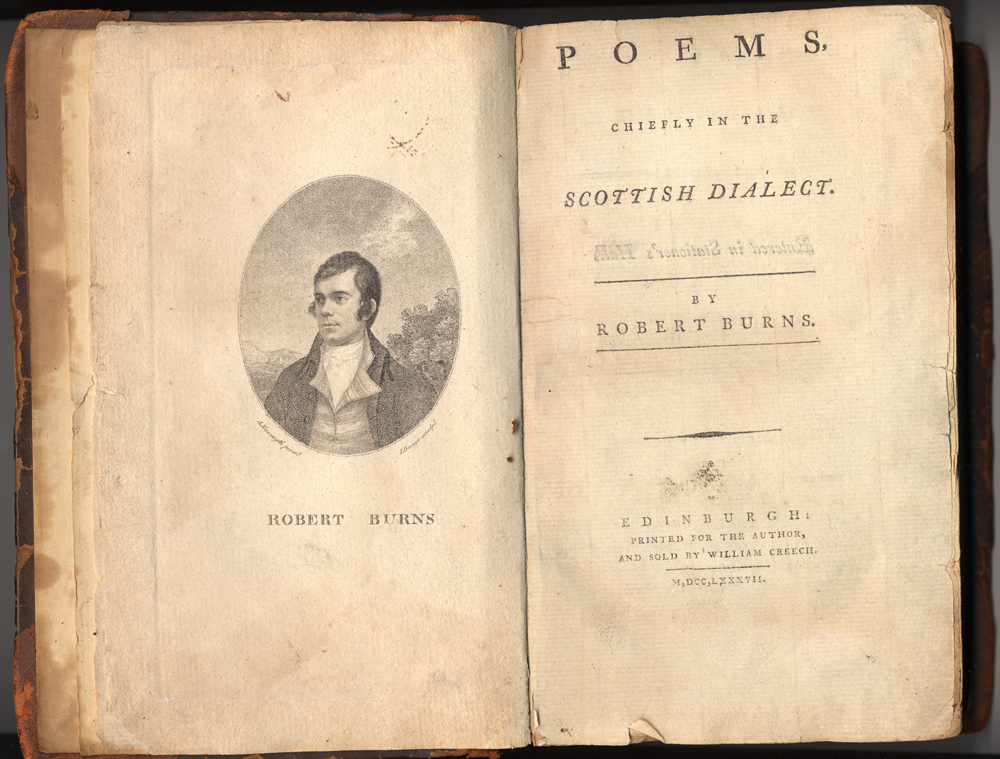
“Poems, Chiefly in the Scottish Dialect” (1787) by Robert Burns. The volume was first printed and issued in 1786. Photo: Futuremuseum

Burns was a lyrical poet as well, setting some of his poems to music but also writing words for Scottish folk melodies. His methods involved considering how songs would be sung before developing the lyrics. As a lyricist too, he therefore gave the pronunciation of his words the same consideration he would have us give them, as prompted by his literary style.

During my undergrad, my favourite British literature prof went the full mile and read a couple of Burns’ poems to us out loud, in the Scottish vernacular. It’s a participatory action that I think needs to be done to appreciate the extent of Burns’ literary voice and the conviction with which he proclaimed his identity. While it’s not always clear exactly what Burns is saying, one thing is irrefutable: who better for Scotland to have as its national poet than auld Robbie Burns?

Long Story Short, You Can’t Control Everything

Though storytelling is highly personal, it thrives on human interaction and the sharing of experiences, making storytelling and interpretation inherently collaborative processes.

By Serena Ypelaar

“You can’t control what others think, but you can control what you put out there.”

This idea is something a lot of people carry around, and it has a special relevance when we think of how we’re surrounded by stories. As we enter a brand new year of The Mindful Rambler, I’d like to reframe the discussion on storytelling and interpretation – and the methods of both processes – which we’ve been examining here on the blog.

In telling a story, whether it’s for entertainment, healing, documentation, critical analysis, or otherwise, there’s always a lot of pressure around how it will be received. Will people like it? Will they get it? Will they take from it the information you’re hoping to impart?

Shakespeare definitely distilled some information down when he wrote his history plays, inciting a multitude of different interpretations.
Photo: Giphy

I experience that pressure whenever I write something. Anything I write can be interpreted, misinterpreted, and reinterpreted, and the truth is that my writing won’t exist entirely under my control once it’s out there. Every person who hears a story brings their own unique experience to it, creating something new. Two people who read the same book, for example, might see it in completely different ways, meaning that the result – the experience of storytelling – actually becomes a hybridization, a meeting place between the “teller” and the “listener”. Storytelling is the act of bringing one’s story, through words, images, sound, and other sensory outputs, into being outside of one’s self.

To avoid delving too far into the abstract, I’ll use an example. If someone is describing a place while telling a story, they’ll describe it as best they can noting features they feel are important to the story or of personal value to them. The person listening to the story will then construct their own interpretation of the event, incorporating their past experiences, feelings, biases, and assumptions. In short, the story is changed by the listener’s reception of it. Every single person hearing that story will have a different conceptualization of it, and a different understanding.

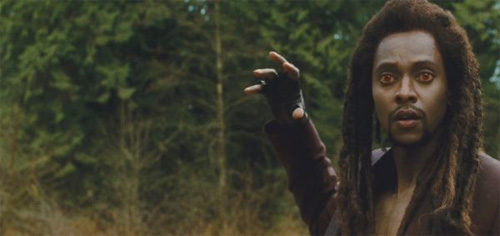
It’s the same with novel writing. Writers describe a character, for instance, and we, the readers, each construct a mental image of that person (and then get angry when the film casting doesn’t match that). I don’t know how many people I heard, back in middle school, ranting about how they definitely, totally did not picture Robert Pattinson when they dreamed up Twilight’s Edward Cullen in their heads. There are also race-based biases toward literary characters which often become clear when a person of colour is cast as a character many assumed would be white (like the vampire Laurent from the same franchise), racial prejudices becoming evident with readers’ indignation.

As demonstrated by their reaction to Edi Gathegi being cast as Laurent, Twilight‘s preteen fanbase did not want a diverse cast for the 2009 film adaptation… and, according to director Catherine Hardwicke, neither did the author (Stephenie Meyer) herself.

Irrespective of a story and its content, creators must become comfortable with the notion that each person who hears their story is going to see something different. There’s no way a storyteller can construct their tale in a way that guarantees uniform interpretation. Attempting to do so can result in over-describing something and alienating readers by unconsciously (or consciously) trying to harness control over their perceptions. It’s possible to use photographs to aid a visual picture, for instance, but these will still foster further imaginings on the part of the listener. Gaps in information will be filled independently – so the point is not to describe every single thing that is within you, but rather what is important to the story. That’s how we get such engaging stories, whether in literature, history, entertainment, art, memoir, or otherwise. Allow the listener to meet you halfway, and together you can share the experience while expressing trust in another person.

Maybe that’s why storytelling is so important to us – on an instinctual level, it allows us to connect with each other and find common ground.

What the Dickens? Christmas the Scrooge Way

Charles Dickens’ A Christmas Carol is a classic favourite when it comes to the Christmas spirit, and he entwines a fictional biography with class commentary.

By Serena Ypelaar

“In life I was your partner, Jacob Marley.”

This phrase from Charles Dickens’ well-loved Christmas novella cleverly establishes the intersection of life and death, as the ghost of Ebenezer Scrooge’s business partner comes to warn him off his cold-hearted ways. A Christmas Carol (1843) illuminates the importance of generosity during the festive season, but it also serves as an excellent form of fictional biography.

In the book, Dickens exemplifies the writerly adage “show, don’t tell” and spins a compelling illustration of a man’s life without resorting to long-winded character monologues. Where a lesser author might have their protagonist prattle on at length about their upbringing in a style that bores most readers, Dickens instead shows us almost firsthand how miser Ebenezer Scrooge became the person he is.

sim-everett.jpeg
Ebenezer Scrooge (Alistair Sim) watches events of his past as shown by the Ghost of Christmas Past (Michael Dolan) in the 1951 adaptation of “A Christmas Carol”. Photo: The Guardian

It’s a fascinating combination of realism and supernaturality, with the Ghosts of Christmas Past appearing to guide Scrooge (and us) through a revival of his past. Not a retelling, but a re-experiencing. But what does Dickens want from us when taking us through fictional Scrooge’s lifetime? An understanding of the character is the obvious answer, but it also goes a little deeper than that. He wants us to foster empathy for not only Scrooge, but those he deprives.

Scrooge is visited by the Ghost of Christmas Present, illustrated by John Leech. Photo: Wikimedia

From an interpretive perspective, the flashback device serves to place us directly in Scrooge’s shoes, therefore holding us accountable. By using Scrooge as an overarching symbol of avarice (especially during the holidays), Dickens warns against the danger of greed. In his customary fashion, he prompts us – through experiencing Scrooge’s life alongside him – to ensure we don’t repeat the same mistakes. Do we donate to those in need at the holidays? Many of us do, but many of us don’t. We fret about shopping and wish lists but fail to consider those for whom (like the Cratchits) a big family dinner would mean the world.

It’s fascinating to consider that Dickens predated the commercial bastardization of Christmas by almost century, as we now sit at a point where Christmas for many people is defined by dollar signs (or pounds, for that matter).

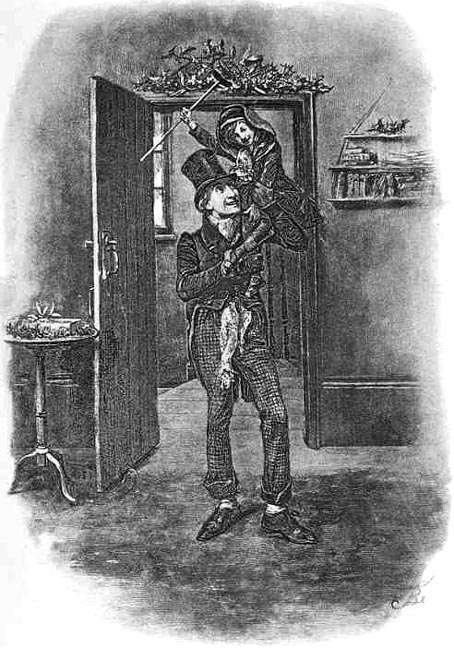
Bob Cratchit and Tiny Tim, who walks with a cane, as illustrated by Fred Barnard. The Cratchits cannot afford adequate medical care for Tim. Photo: Wikimedia

So when we read A Christmas Carol or watch an adaptation (my family and I favour the 1951 film starring Alistair Sim), we’re prompted to examine our own behaviour. In damning Scrooge for his constant refrain of “bah, Humbug”, are we ourselves really focused on the true meaning of Christmas? We can interpret Dickens’ work many ways, but the one immovable theme at the core is that Christmas calls us toward togetherness, kindness, and compassion. Dickens wishes us a Merry Christmas, certainly, but he doesn’t let us off easy when it comes to our own thoughtfulness. That much is clear when he stresses the final two words of Tiny Tim’s famous refrain: God bless us, every one.”

The world may be an unequal place, as Dickens knew well, but his works inspire us to do whatever we can to reset the balance and share what we have.

In parting, Merry Christmas, and thank you for reading The Mindful Rambler! Sending you all the best wishes – take care of each other.

Leaving you with a wonderful Dickens parody on the television series Quacks, starring Andrew Scott as the writer himself!