“The Love that Dare Not Speak its Name”

Oscar Wilde, the Irish poet and playwright known for his unmatched wit and, infamously, for his sexuality, defined what it is to be unapologetically proud.

By Serena Ypelaar

There were no Pride parades in his day, but Oscar Wilde’s openness on the streets of London arguably comprises the Victorian equivalent.

Growing up in Merrion Square in Dublin (which I just visited last month), Wilde moved to London and settled there for much of his life. He’s celebrated as a gay icon, but it’s little known that he was once in love with the woman who would become Bram Stoker’s wife, Florence Balcombe. Wilde was devastated when she chose to marry Stoker over him. He proposed to two other women before marrying Constance Lloyd, with whom he had two sons. It’s said that Wilde loved Constance, though of course he’s best known to have engaged in relations with numerous men. Today we’d probably call him bisexual, but Wilde considered himself “Socratic” when it came to love.

Oscar Wilde grew up in this house at 1 Merrion Square, Dublin. Photo: Serena Ypelaar

Wilde was proud of his identity – and quite open with his sexuality especially by the standards of the time. Yet even he had to hide who he was to avoid persecution in the form of a criminal trial. In 1895 Wilde was convicted of gross indecency, a homophobic law in the United Kingdom which made same-sex relations illegal for men.

Wilde wasn’t officially out yet when he toured North America for his lecture series on aestheticism in the early 1880s; but as he dressed himself flamboyantly and tended to push the envelope with his sardonic and witty manner, he had cultivated a considerable reputation. The Marquess of Lorne, 9th Duke of Argyll and fourth Governor General of Canada, even declined to meet Oscar Wilde lest ongoing rumours of his own suspected homosexuality be exacerbated. All the while, Wilde had not a care in the world what people thought of his effeminacy.

In 1882 (aged 27), he watched a lacrosse match from the Lieutenant Governor’s box in Toronto, Canada, and was said to have remarked to the Toronto Globe newspaper on his great appreciation for “a tall, well-built defence man”. While Wilde had no qualms about public displays of same-sex interactions, having once kissed a waiter in a restaurant (and possibly Walt Whitman too), such actions were unforgivable in the formal courts back in England.

Oscar Wilde in 1882, by Napoleon Sarony. Photo: Wikimedia

Lord Alfred “Bosie” Douglas, Oscar Wilde’s most famous lover, wrote a poem titled “Two Loves” (1894), which ends with the phrase “I am the Love that dare not speak its name.” The line was used against Wilde in his trial when he was charged by Douglas’ father, the Marquess of Queensberry, who suspected the two gentlemen’s romance and abhorred it. Queensberry demanded that Wilde cut ties with Douglas, persisting despite Wilde’s insouciance.

Queensberry: “I do not say that you are [homosexual], but you look it, and pose at it, which is just as bad. And if I catch you and my son again in any public restaurant I will thrash you.”

Wilde: “I don’t know what the Queensberry rules are, but the Oscar Wilde rule is to shoot on sight.”

An 1894 exchange between The Marquess of Queensberry and Oscar Wilde at Wilde’s residence, 16 Tite Street, London

Unwisely, Wilde pressed charges against Queensberry when the latter left a calling card at Wilde’s club reading “For Oscar Wilde, posing somdomite [sic]”. Incensed by what he took for a public accusation of sodomy, Wilde sued for libel, but it was this legal action which led to Queensberry’s acquittal and counter-suit against Wilde. Having procured evidence of Wilde’s liaisons with male prostitutes alongside letters to Douglas, Queensberry had cornered Wilde. Douglas’ poem was interpreted as a euphemism for sodomy, which Wilde denied, but evidence was stacking up against him. Out in society, his dandyish reputation and conflicts with Queensberry caused him little harm, but taking the feud to the courtroom proved to be Wilde’s undoing. He was convicted and sentenced to two years’ hard labour. His imprisonment from 1895 to 1897 spurred his decline, and in 1900 he died of meningitis in France – but not before being reunited with Douglas for a time.
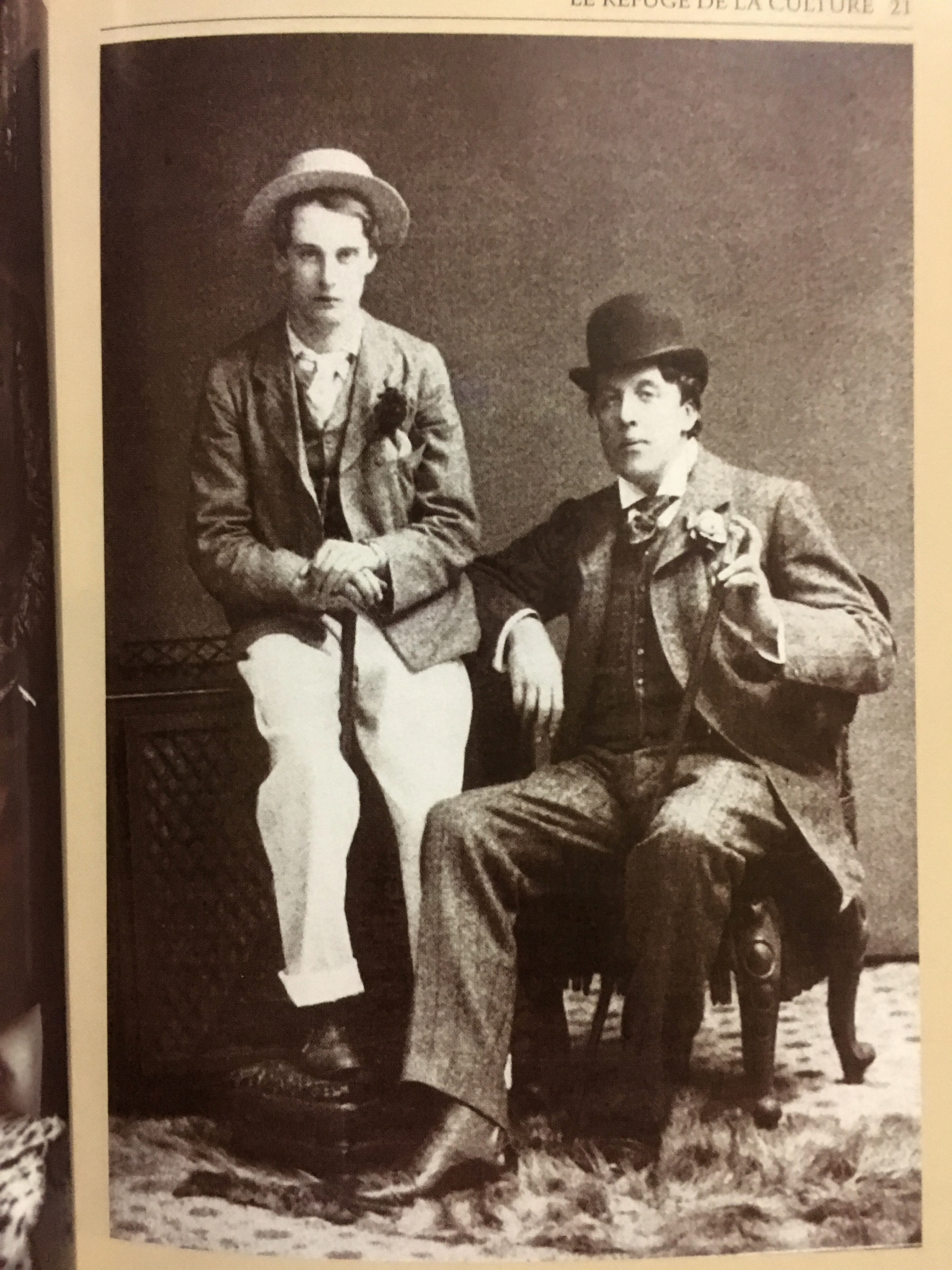
Lord Alfred “Bosie” Douglas with Oscar Wilde in 1894. Photo: Wikimedia

In continuing to be himself at all costs, Oscar Wilde was extraordinarily brave in the face of so much discrimination. And yet he had to resort to denying his same-sex encounters in the name of self-preservation. He was incarcerated for his defiance of society’s norms, and he fell from public regard. It wasn’t easy to be queer in the 1890s. Society may have taken strides toward equality and respect since, but that doesn’t mean it’s easy now, either.

What does Wilde’s life over 100 years ago tell us about Pride today? Namely that there are still obstacles to freedom, love, and tolerance, but that the LGBTQ2+ community deserves the right to a parade. Not just the organized Pride parades that take place around the world, but the mere act of parading down the street during day-to-day life: open, out, and free, living authentically without retribution. So-called “Straight Pride parades” happen every single day with the simple privilege of going out into the world without discrimination. The LGBTQ2+ Pride parade should happen every day too – because queer individuals have every reason to be proud.

So, Tell Me Something About Yourself

To celebrate The Mindful Rambler‘s 1st birthday, we examine storytelling as a way to get to know people.

By Serena Ypelaar

Think of the last funny story you told. 

How did you make it compelling? Which parts did you include, and which parts did you omit? And what about timing? (It’s supposed to be everything, isn’t it?) I’m guessing you were definitely hoping for the best punchline and the best response to your story.

Storytelling is an inherently creative process. And I think that the reception of a story depends heavily on the storyteller. What perspective are they coming from? Who are they trying to reach? Audience – and knowing your audience – is just as integral to the success of a story. 

Photo: Serena Ypelaar

Personal storytelling is something of a curatorial process, trying to synthesize one’s own experience and present it coherently to others so they can share in it.

For instance, I just got back from a month in Scotland, and I have a plethora of stories to tell my family and friends. Since there are so many, they’ll likely unravel slowly over time as I’m reminded of things I did or saw (or, let’s be honest, ate). Naturally I’ll be looking to impart the essence of my experience – how enlightening it was, how beautiful the landscapes were, how friendly people are … the list of stories it’s possible to share goes on.

Yours truly on a ramble through the woods. Photo: Serena Ypelaar

I’ve been thinking a lot lately about personal storytelling and what it means for us as humans. We’ve mostly been discussing public storytelling here on The Mindful Rambler, on a large scale; but as we’re today celebrating the blog’s 1st birthday, I want to reframe things a bit so we also consider storytelling on a more personal level. 

What is the significance of our own stories? And how do literary masters, artists, and creators pour themselves into their own storytelling to share a piece of their lives – their struggles, their triumphs, their losses, their love? The art reflects the artist; not only can we learn something about the world when we consume and interpret stories, we also get to know another person, sometimes without ever having met them. Humanity needs stories.

We’ll be rambling more on these themes soon. Thank you all for reading The Mindful Rambler in its first year – I hope you’ve enjoyed it! My fellow ramblers and I – Adriana, Sadie, Lilia, Jenny, and Bretton – look forward to telling even more stories over the next year.

The Thing That Gets Us to the Thing

Technology connects us like never before. Halt and Catch Fire takes place during the computer boom that started it all, emphasizing the importance of human connection.

By Adriana Wiszniewska

When AMC released Halt and Catch Fire in 2014, people were quick to dismiss it as “Mad Men but in the 80s! With tech!” Now, it’s no secret that we love Mad Men here at the Rambler, but I think the comparisons did Halt and Catch Fire a disservice. The show remained criminally underrated and under-watched for four seasons, over which it grew into one of the most profoundly human shows on television.

HCF_S2_preseason
From left: Lee Pace, Mackenzie Davis, Kerry Bishé, and Scoot McNairy, stars of Halt and Catch Fire. Photo: AMC

It starts at an interesting moment in history: the 1980s, when computers are not yet ubiquitous but the industry is on the cusp of … something. We know, of course, just how important computers will become, that the tech industry will explode and eventually everyone will have computers not only in their homes but in their pockets. The characters in the middle of that history, however, remain in a constant struggle to get ahead of the curve, to create the thing that will change everything. A lot of period shows rely on this kind of dramatic irony, where viewers know what the characters don’t. We can’t reach through the screen and tell them that Bill Gates and Steve Jobs will beat them to the punch. But it’s fascinating to watch them keep trying anyway.

joe
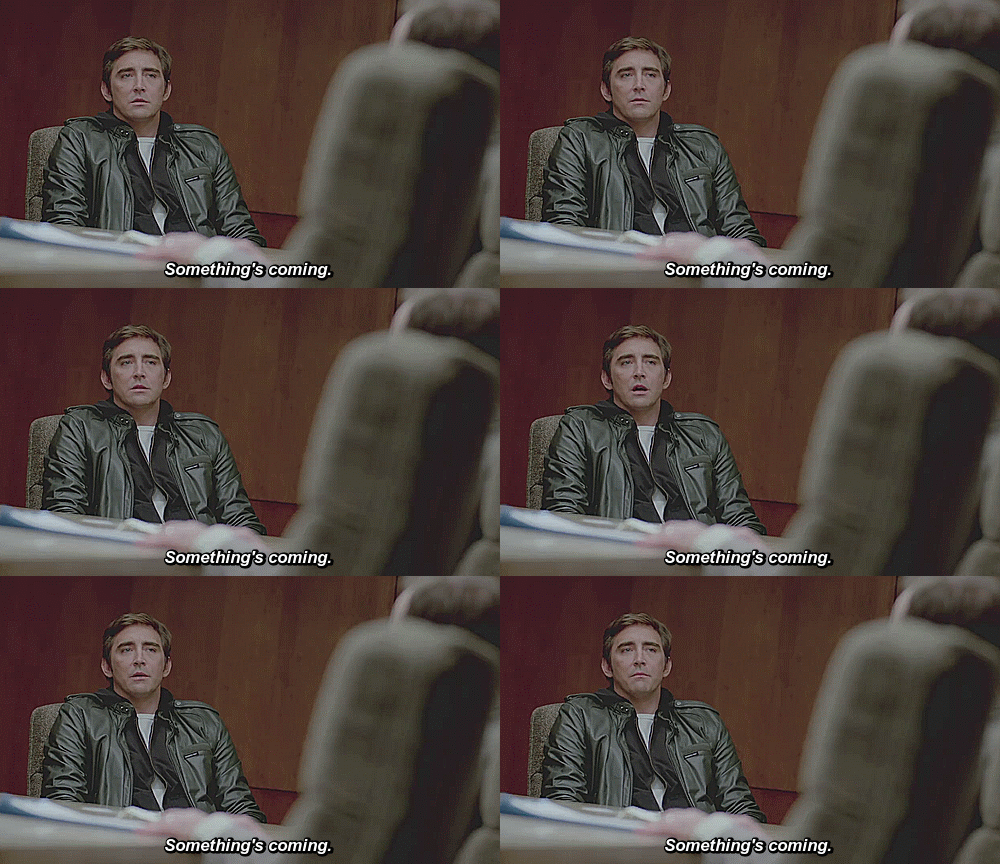
Joe MacMillan (Lee Pace) predicts the future. Photo: Giphy

Somewhere along the way, though, Halt and Catch Fire realized that the real draw was not seeing the slow birth of the Information Age, but the people at the heart of it. The dreamers and creators who so badly want to leave a mark and change the world and end up changing themselves in the process.

Joe MacMillan (the always amazing Lee Pace) starts off as a fairly typical male antihero akin to those that dominate prestige television—you know, Tony Soprano, Walter White, or, yeah, Don Draper. Joe is a visionary who manipulates, cheats, and talks his way into a fledgling Texas software company in order to transform it into a PC company to rival IBM. But the show quickly stopped trying to emulate other prestige dramas and Joe, rather than a villain or even an antihero, became the voice of the show’s underdog humanity. Joe sees what others don’t, that technology has the potential to change the way we interact with one another. So it’s fitting that Joe is the one to utter the words that could serve as Halt and Catch Fire’s thesis statement: “Computers aren’t the thing. They’re the thing that gets us to the thing.”

That thing, in my view, is connection. Throughout its run, Halt and Catch Fire consistently emphasizes that behind all those screens and wires and lines of code are human beings, desperately seeking connection in a world that is often forbidding. It’s no surprise that Joe, an openly bisexual man, would eventually want to build something that brings people together and lets them be who they really are.

MV5BMTU0NDQ0NTUwOV5BMl5BanBnXkFtZTgwMTQyNTA2OTE@._V1_SY1000_CR0,0,1497,1000_AL_
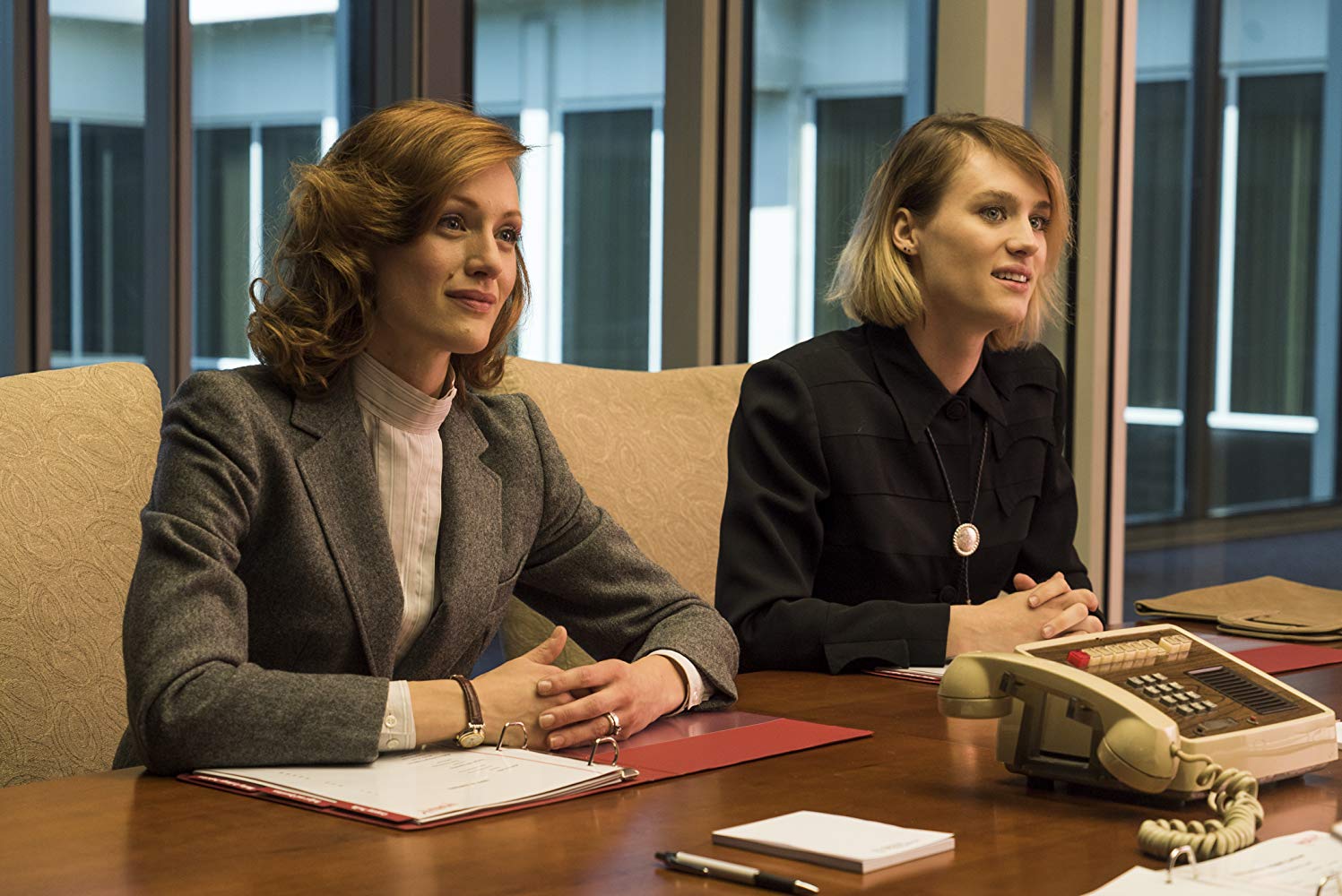
Donna Clark (Kerry Bishé) and Cameron Howe (Mackenzie Davis) in Halt and Catch Fire. Photo: IMDb

It’s easy to be cynical about the Internet these days. But we forget that it can be a wonderful space for people to share their creativity and interests and connect with other people they might otherwise never meet. Over and over again, Halt and Catch Fire shows us that what matters is less the technology that connects us than it is the people who use it.

You Can’t Repeat the Past

Why, of course you can! Baz Luhrmann’s The Great Gatsby (2013) demonstrates that while it may seem unorthodox to decide against a by-the-book 1920s soundtrack, the choice to incorporate contemporary artists worked.

By Serena Ypelaar

When a new adaptation of The Great Gatsby got the green light (pun intended), I was over the moon. High School Me was obsessed with F. Scott Fitzgerald’s 1925 novel, despite never being assigned to read it (or perhaps that’s why I actually liked it: it wasn’t just schoolwork).

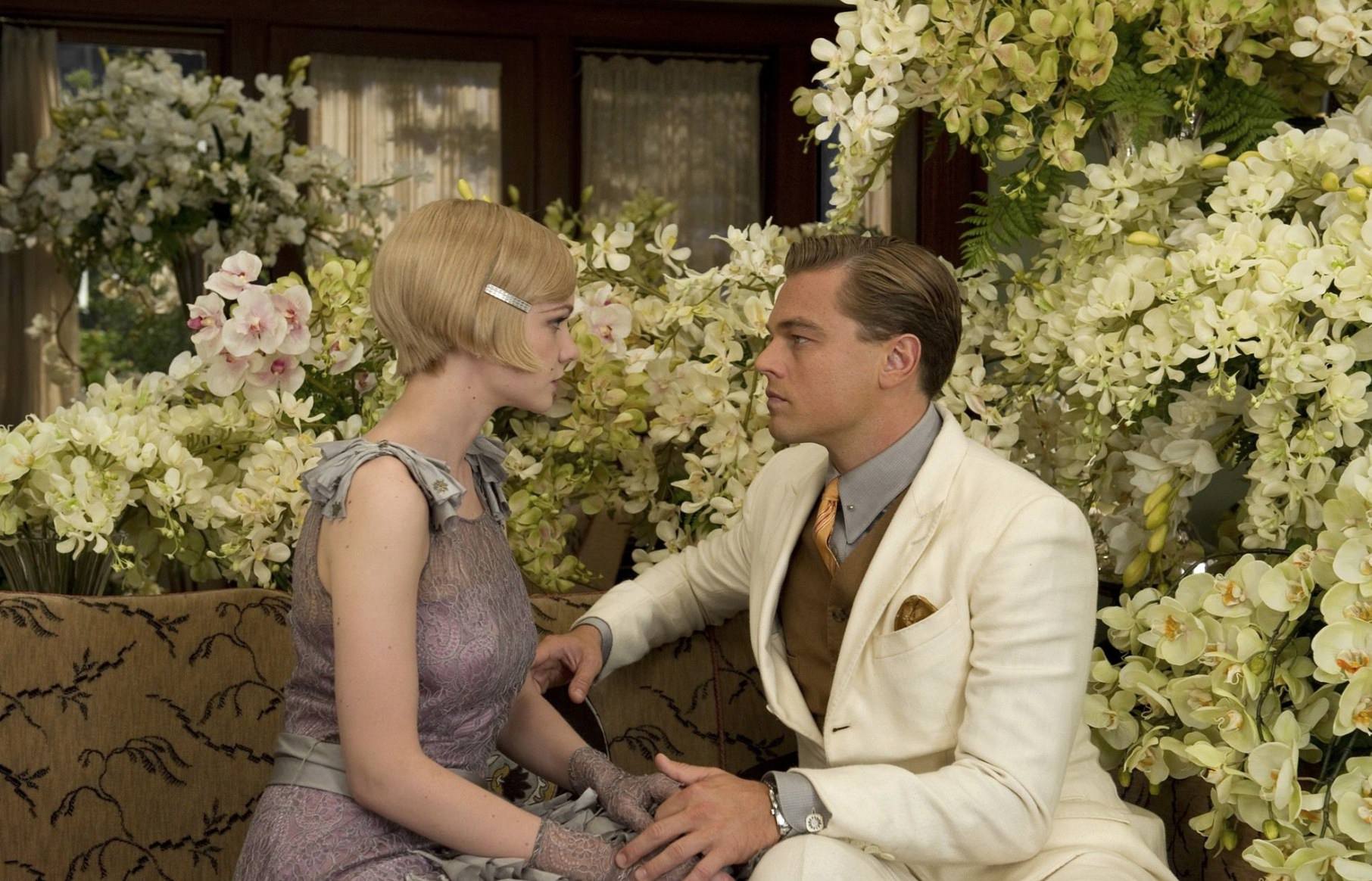
Daisy Buchanan (Carey Mulligan) and Jay Gatsby (Leonardo DiCaprio). Photo: The Gentleman’s Journal

Leonardo DiCaprio was cast as Jay Gatsby, Tobey Maguire was to play narrator Nick Carraway, and Carey Mulligan was Daisy; matches made in heaven, basically. But one thing I just wasn’t sure about was the soundtrack. When I saw a couple of early trailers for the film, I was mildly indignant. Eager as I was, I was a purist and had expected authentic 1920s music to furnish the lavish Baz Luhrmann film. But that’s the understanding I lacked: I hadn’t seen Moulin Rouge or any of Luhrmann’s other films at that time, so his style was unknown to me. What do you mean, they’re using modern music in such a sacred film, one rooted so inextricably in the Jazz Age? I was positively affronted. How would that ever work?

But then came May, and I saw the movie. And it worked; by God, did it ever work. I don’t know how, but I finally understood the vision and appreciated the 1920s flair added to each track, as produced by Jay-Z. Joining him were Kanye West, Beyoncé and André 3000, Lana Del Rey, will.i.am, Fergie, Gotye, Sia, Florence + the Machine,
Emeli Sandé, Bryan Ferry, The xx, and Jack White. In other words, a gilded lineup if I ever saw (or heard) one.

Nick Carraway (Tobey Maguire) and Jay Gatsby (Leo DiCaprio) in New York. Photo: Pinterest

Del Rey’s “Young and Beautiful” is achingly wistful; The xx’s “Together” is languid and romantic. On the flip side, Fergie and will.i.am’s tracks brought the party to life, and Jay-Z, Kanye, and Beyoncé capture the enigmatic allure of both Gatsby and New York City. Jay-Z and Kanye’s “No Church in the Wild” overlaid a city montage so memorably that I picture the scene whenever I hear the track.

The soundtrack is used (in conjunction with original novel quotes) to great effect at Gatsby’s party, seen here.

As seen through Nick’s eyes, Gatsby’s party is a perfect example of the soundtrack at play. In my reading of the novel, Fitzgerald knew exactly the right balance to strike between well-placed pithiness and sprawlingly eloquent description. The film soundtrack is the perfect complement: opulence, combined with Fitzgerald’s judicious prose, creates a picture of how the party might look and sound.

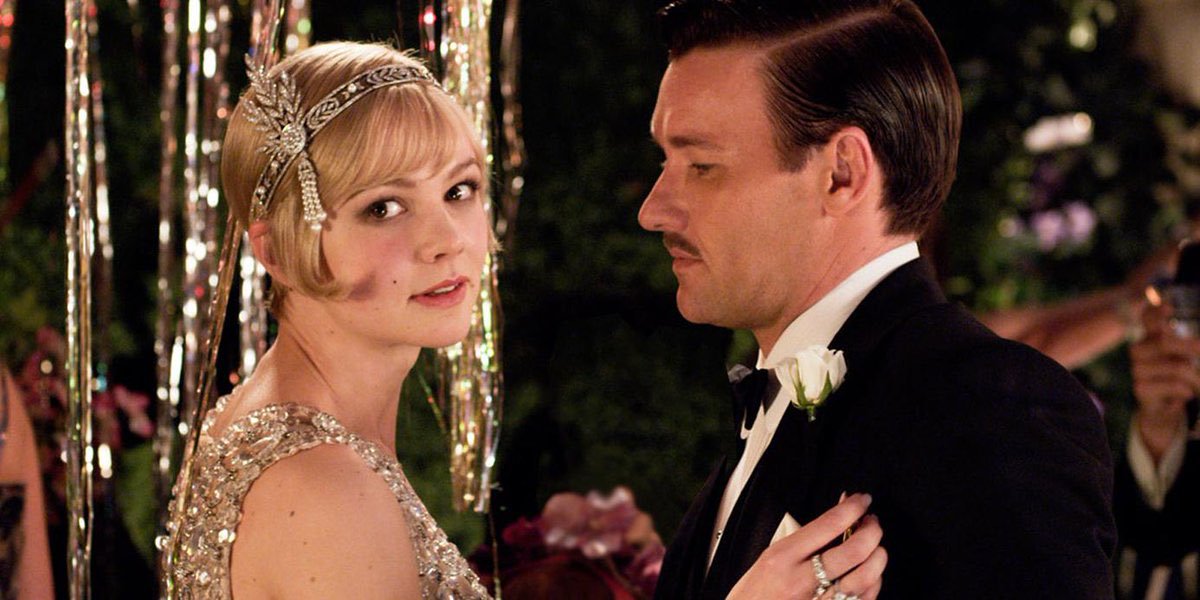
The Buchanans, Daisy (Carey Mulligan) and Tom (Joel Edgerton). Photo: Pinterest

Surrendering my preconceived notions was easy once swept up by the film in its totality. I appreciate how the soundtrack was able to unseat my stubborn misgivings, and I think creatively, it was a phenomenal success. When I imagine the alternative, my originally preferred 1920s jazz, I can admit that the film might then have come across as static compared to this adaptation, which lies fluidly between Fitzgerald’s era and ours. It’s a bridge to audiences, who can relate to these familiar musicians in a setting that may be largely unfamiliar. In less capable hands, it could have been a disaster. But elements of each song nod to the novel, from Florence’s “green light” in “Over the Love” to Gatsby’s ultimate fate, tacitly referenced in will.i.am’s “Bang Bang”. Interspersed with Craig Armstrong’s alternately bubbly and haunting score, the soundtrack represents all the warring interests and desires of the film, looping backstory into the ominous plot progression.

Some people didn’t even like this film. But Luhrmann’s Gatsby is staunchly faithful to the source material as far as the screenplay goes. The characters spoke many lines verbatim from the book, which warmed my purist heart; the costumes were wonderfully executed. Any liberality had to be assigned elsewhere, and I’m actually glad it was the music. This soundtrack might not have thrived with a direct repeat of past music. Instead, it acknowledges history and moves forward with it to inform something new, which the misguided Gatsby failed to do as he tried to reconstruct the past.

Gatsby (DiCaprio) reaches for the green light across the bay, obsessed with getting back to Daisy as if nothing had changed. Photo: Odyssey

This soundtrack will always be relevant to me as a reminder that our fixation on what things should be isn’t always what’s best – there are so many new and daring possibilities out there.

Springfield Museology

Through parody, satire, and cultural commentary, The Simpsons provide a unique perspective on the world of museums and cultural institutions.

By Bretton Weir

This being my inaugural post with The Mindful Rambler, I find it quite appropriate that I have the opportunity to write about The Simpsons! As my friends and well wishers will tell you, Simpsons references are insidious in my day-to-day vernacular. These same friends also know that museums play an equally prominent role in my identity. What happens when we combine The Simpsons with museology? Well, simply put, we get this post.

As The Simpsons winds up its 30th season, I thought it would be fun to look at how museums operate in the world of the show. Every type of museum, cultural centre, tourist trap, and historic site under the sun has made, at the very least, a handsome cameo during the show’s run.

Following are three of my favourite museum moments featured in the show and why I think they are a perfect marriage between The Simpsons and museums.

The Orb of Isis from “Lost Our Lisa” (Season 4, Episode 24)

The Orb of Isis, a mystery that Homer decides he needs to solve.
Source: Giphy

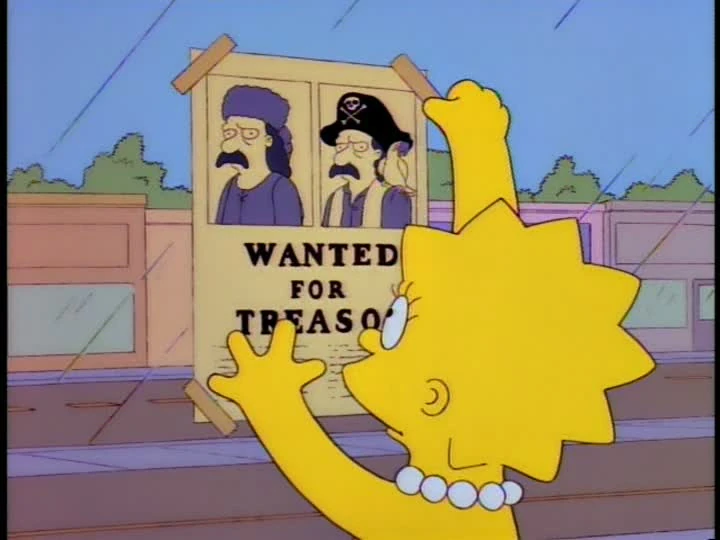
The mythical Orb of Isis is the centrepiece object of the “Treasures of Isis” exhibit, a showcase of artifacts from the Egyptian Temple of Isis. Lisa misses seeing the exhibit but Homer convinces her to join him and sneak into the Springsonian Museum before the artifacts are packed and sent to the next tour stop. Much to Lisa’s protest, Homer betrays the unwritten rule not to cross the “velvet rope” in order to get up close with the alluring object and figure out its secret. While the scenario is a bit reaching, Lisa’s attention to museum etiquette in this stereotypical portrayal of archeological exhibitions is enough to make any museum professional appreciate the intersection of object preservation and innocent curiosity.

Lisa will forever be the voice of reason.
Source: Giphy

Springfield Elementary Field Trip to Fort Springfield from “The PTA Disbands” (Season 6, Episode 21)

Throughout the history of the show, we see a number of representations of historical military forts. In “The PTA Disbands,” the students of Springfield Elementary visit the historical site Fort Springfield, a Civil War-era living history museum. Upon arriving, Principal Skinner is shocked to learn that a for-profit company has assumed management and what was once a free museum experience is now a cash grab out of reach for the school to pay.

A real scenario that museum management juggles, The Simpsons find a way to make it humourous.
Source: Simpsons Fandom

This is a very real scenario that museums are seeing. Balancing rising operational costs and profit-driven leadership often leads to some level of inaccessibility to an institution’s programming and exhibitions.

Lisa versus Jebediah Springfield and the Springfield Historical Society from “Lisa the Iconoclast” (Season 7, Episode 16)

Plot, character development, and quotability aside, this episode examines difficult aspects of museum work, preserving history, and interpreting stories. While one could dive deep into a discourse of this episode, alone, the episode intelligently explores the idea of the legacy, truth, and representation of local hero Jebediah Springfield. If you watch only one episode on this list, make it this one.


Lisa on a quest to break misinformation around the town’s founder that has been preserved in the collective memory.
Source: Wikia

Whether it be a pivotal plot point or a hilarious one-off gag in an episode, museums are given their due on The Simpsons. Clever commentary on the cultural field at large, and tongue-in-cheek satire of museum practice make for an amusing and thought-provoking experience for all viewers.

What are some of your favourite museum moments featured on The Simpsons? Let us know in the comments below.

Uneasy lies the head that wears a crown

Though Shakespeare has been dead for over 400 years, modern renditions of his plays are still alive and well. BBC’s The Hollow Crown adapts Shakespeare’s history plays, which prompt us to examine the Bard as not only playwright, but historical interpreter.

By Serena Ypelaar

As we approach William Shakespeare’s 455th birthday – thought to be April 23, the same day as his death – one can’t deny his unparalleled legacy. Shakespeare is still studied in schools worldwide. His words and idioms still pervade the English language. And people are still adapting his works on stage and screen.

As a self-professed Shakespeare devotee, I’ve seen several productions, personal highlights being Hamlet at the Globe Theatre in London; Colm Feore in Macbeth at the Stratford Festival in Ontario; and A Midsummer Night’s Dream at Shakespeare in High Park. I have yet to see King Lear and Richard III (my favourites) on stage, but thanks to Shakespeare’s robust canon, we’re also blessed with film and television adaptations – like The Hollow Crown.

Tom Hiddleston as Henry V in The Hollow Crown. Photo: BBC

Most of Shakespeare’s best-loved plays are his comedies and tragedies. When I first heard about The Hollow Crown, which adapts Shakespeare’s tetralogies, I knew I had to see it. Starring Tom Hiddleston, Benedict Cumberbatch, Jeremy Irons, Tom Sturridge, Sophie Okonedo, and Dame Judi Dench, The Hollow Crown covers Richard II, Henry IV Part 1, Henry IV Part 2, and Henry V in the first cycle; and Henry VI Part 1, Henry VI Part 2, Henry VI Part 3, and Richard III in the second cycle.

Shakespeare’s history plays don’t receive as much appreciation, but they’re fascinating because they demonstrate the playwright in action as a historical interpreter. Taking historical events and condensing them into dramatic plays is a sensitive act of storytelling, albeit heavily influenced by reigning powers at the time. Shakespeare composed his plays during the Tudor and Stuart eras, and his work thus appealed to Tudor and then Stuart sensibilities. Under Queen Elizabeth I, Shakespeare furthered the Tudor Myth, which essentially comprises propaganda that glorified the Tudors and sought to legitimize their claim to the throne – which meant historical figures like Richard III, the Plantagenet king slain by Henry Tudor (Henry VII) were heavily vilified. Shakespeare’s contribution is Richard III, a play depicting Richard as deformed and mercilessly evil.* 

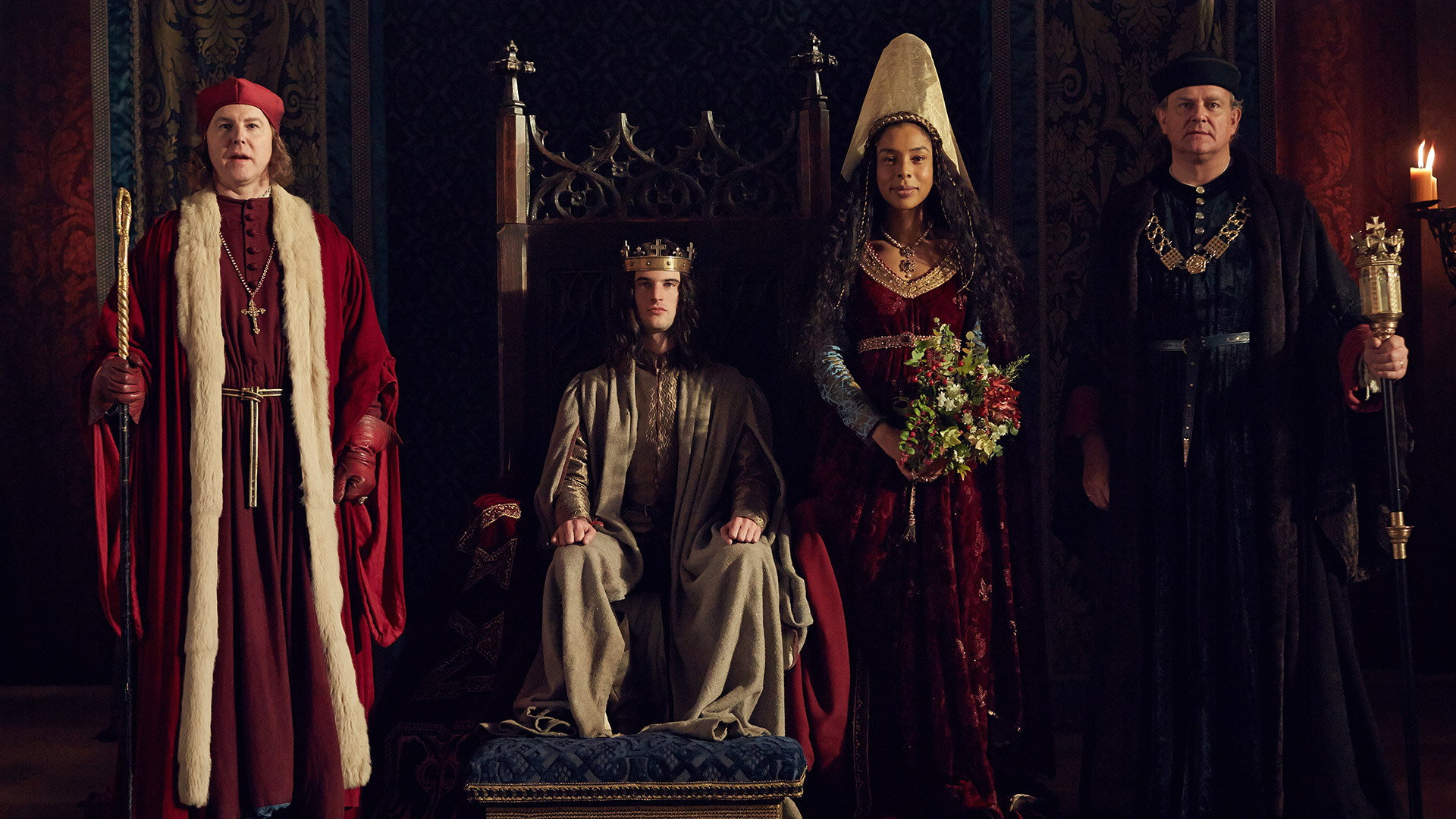
The Bishop of Winchester (Samuel West), Henry VI (Tom Sturridge), Queen Margaret (Sophie Okonedo), and the Duke of Gloucester (Hugh Bonneville) in The Hollow Crown’s adaptation of Henry VI. Photo: Robert Viglasky

Since Shakespeare’s history plays were political tools used to flatter and curry favour with kings and queens, their content is open to discussion. However, to those unfamiliar with early English monarchs, the plays can also familiarize audiences with important histories. I admittedly never could get Henry IV, Henry V, and Henry VI straight (so many Henrys!), but after watching The Hollow Crown, I’ve grasped enough of an overview to launch further research (of the Wikipedia variety for casual learning). Much of my medieval history knowledge has therefore been shaped by Shakespeare, for better or for worse.

Like any historical adaptation, it’s important to understand the changes Shakespeare made for the sake of drama (and political appeasement). A completely accurate account may not make for the best entertainment, especially on an Elizabethan or Jacobean stage. All the same, I admire how Shakespeare’s tetralogies are all interwoven. In The Hollow Crown: The Wars of the Roses, for instance, we see the future King Richard III witnessing his father Richard of York’s death at the hands of the Lancastrians; revenge is a major theme in the plays, which The Hollow Crown illustrates well. 

Benedict Cumberbatch as Richard III in The Hollow Crown: The Wars of the Roses.
Photo: Robert Viglasky

As a screen adaptation, the delivery differs from stage productions, but the performances are so excellent that the production is still effective. Most notably, Benedict Cumberbatch’s monologues as the dastardly Richard III gave me chills. In typical Shakespearean asides which break the fourth wall, Richard’s eye contact with the viewer fosters an unsettling connection, even through a television screen. Likewise, Tom Sturridge’s depiction of both compassion and weakness as Henry VI demonstrated complexity in a sympathetic way, and so I felt – from the comfort of my sofa – swept up into the dramatic interpretation of dynastic conflicts from centuries past.

Nevertheless, Shakespeare’s plays transcend entertainment because they are prominent accounts of history. Like any historian’s account of events, the Bard’s plays continue to inform our remembrance of English political history. The Hollow Crown is a reminder of this phenomenon and the weight that the legendary playwright’s voice carries. That leaves Shakespeare as not only a dramatist, but a historical interpreter shaping contemporary perceptions of history – both in the late 16th and early 17th century, but also as long as his plays continue to be performed and read.

*During the Book History and Print Culture part of my master’s degree I specialized in Richard III and how Shakespeare’s portrayal influences public memory of the Yorkist king, and I’ll be writing about him in detail in the future.

Diversity, Dramaturgy, and Broadway Musicals

Revisiting the classics with diversity in mind isn’t just a moral and artistic imperative, but a strategy for giving them new life.

By Jenny Lee

Gentle reader, we are both on the internet in 2019, so I assume you too have absorbed a lot of essays about Why It Is Important to Have Representative Media. This is so true and  well-trodden that I must glide over it and write this essay about something else entirely.

I’ve been thinking about how diversity helps us reframe and reimagine older cultural works, written in even more exclusionary times and places, and also I have been thinking about the Stratford Festival’s 2018 production of The Music Man (directed by Donna Feore).  

If you’re not familiar with the plot of The Music Man and do not have a Theatre Kid™ in your life to explain it, I am here to help. It is a Broadway musical about a con man called Harold Hill who rocks up in River City, Iowa, intending to sell uniforms and equipment for a boys’ marching band before skipping town. Imagine Footloose, if Kevin Bacon wanted to sell you a tuba instead of spreading the joy of dance.

music man .jpg
Daren A. Herbert and company in The Music Man, Stratford Festival 2018. Photo: Cylla von Tiedemann.

Harold promptly falls in love with the town’s librarian, Marian (I know!), which gives him a reason to stay in town – except that he lacks the requisite musical skill to teach River City’s new boys’ band to play, and the townspeople inevitably find him out.  

In the Stratford production, this was the moment at which the production rose from charmingly classic to vividly contemporary. As the people of River City discover the con and start grimly looking for tar and feathers with which to enact justice on a captive, terrified Harold Hill, played by Daren A. Herbert, you remember that The Music Man’s quaint Main Street U.S.A. set is a recreation of the American Midwest in 1912, and Herbert’s version of Hill – unlike, say, Matthew Broderick’s – is a black man explicitly living in a time and place where lynching is an extremely concrete reality.

959889406
Matthew Broderick and his white privilege starring as Harold Hill in the 2003 TV version. Also, yes, every single production of this musical looks like this. Photo: AP Photo/ABC, Rafy

Suddenly, this anodyne mid-century musical has much higher stakes, and resonates more deeply with a 21st-century audience – and not a word of the script has been changed. It’s an absurdly effective dramaturgical decision, and it works because of, not in spite of, the diversity of the cast.

Often, diverse casting has little effect on the interpretation of the text. Twelfth Night, for example, is set outside of real-world geography and history, and so a modern audience (ideally) shelves their ideas about race at the door, and this is fine. The Music Man is fixed in its time and setting and doesn’t have this luxury, but it has the advantage of a built-in context that much of its audience will understand. (This is why so many productions of Shakespeare are ‘set’ in 1942 Paris, 1920s New Orleans, or whatever: it’s an easy way to help your audience interpret what’s happening using pre-existing knowledge, and also justifies cool costumes.) The fear is heightened, but if you don’t know anything about Progressive-era race relations, the script still works as written. 

image
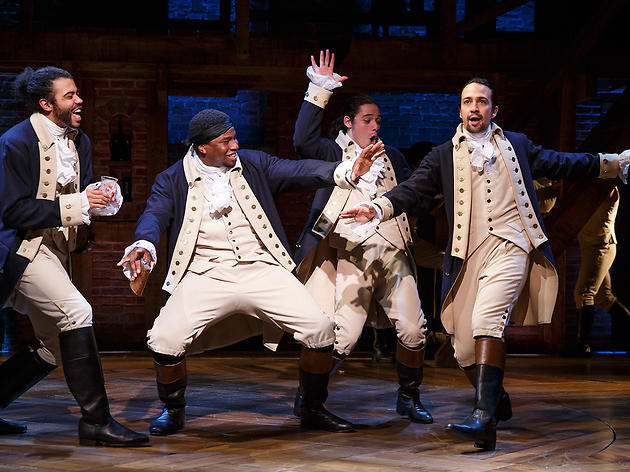
You may have heard of this other musical which uses the racial diversity of its cast to underscore a historical and political point … Photo: Joan Marcus

These choices make worn-out texts feel more interesting, closer to reality, and ultimately better. Rather than rendering performers’ identities and experiences abstract, asking the audience to believe they don’t matter, thoughtful and diverse theatre-making can make race, gender, disability, or sexuality central to the audience’s understanding of an old cultural text, revealing secrets we never knew it was keeping.

“The box for this one said ‘Ages 8-14’!”

Lego products appeal to children (and adults) of all ages. Now, some advanced sets attempt to capture the look of iconic movie moments, eschewing playability for an “authentic” appearance.  

By Daniel Rose

As a child, I devoured the Lego catalogue from the moment it hit my mailbox. Leafing through the pages, I fantasized about adding each set to my collection. Facing the writing prompt “If I were…” in Grade 2 English class, I wrote a short story about being a Lego brick in my own collection – a very meta thought for a seven-year-old, but understandable given how much Lego was on my mind. Every time a new, expensive collection was released, I vowed that I would continue to buy Lego as an adult. Unlike most childhood dreams, oddly, this one came true.

My Lego short story was published as part of Staples’ “If I Were” story collection in 2002. I was pretty thrilled. Photo: Daniel Rose

Since the Lego Company’s famous plastic interlocking bricks were introduced in 1947, the company’s motto of “play well” (or leg godt in the native Danish) has inspired people of all ages to use their imagination to create and to recreate.  From movies and books to real places and things, Lego’s sets have used familiar places and themes as a frame for play. Play can take many forms, from the basic level of building the setting and characters to interactive elements (including projectile shooters and complex motors). For the most part, sets are inspired by their subject matter without being overly detailed, encouraging builders to use their imaginations to complete a scenario rather than providing a faithful recreation.

Spurred on by Lego’s official releases, communities of adult fans of Lego (or AFOLs) have created complex constructs based on popular culture, history and even existing Lego sets that attempt to perfectly capture the look of a particular place or thing.  Ranging in size and scale (and price!), these designs incorporate minute details – from the shape of a lighting fixture to custom-printing a sticker for a particular section of a wall – to build an authentic-looking creation. Recognizing the unique demands of these consumers, Lego has worked with these “master builders” to offer “advanced” sets that feature greater detail at a higher price range. Whether designed to fit the company’s iconic minifigures or at a more precise scale, these sets appeal to the desire of AFOLs and other builders to have “perfect-looking” recreated spaces while maintaining the tactile building element that has made Lego so popular. Interestingly, these constructs often sacrifice the greater “playability” of Lego in favour of “looking the part”, something which was lampooned in The Lego Movie through the character of The Man Upstairs.  Played by an indignant Will Ferrell, the character alleges that the way he uses Lego “makes it an adult thing”, rather than the toy it rightly is. I had never felt more represented, or hilariously caricatured, by a movie before, much to my own amusement.

Model 75192, configured in the classic Empire Strikes Back setup, takes up an entire table in my basement. Photo: Daniel Rose

Nowhere is the desire for accuracy more evident than in Lego model 75192 – the Millennium Falcon. Lego pulled out all the stops for Star Wars fans, who are notoriously fastidious in their demands for accuracy, to create a model that is nearly four feet long and three feet wide.  Released in 2017, the model incorporates information from official movie guides as well as the six films the ship makes an appearance in. With 7541 pieces (and retailing for an eye-watering $899.99 – before tax!), it is the largest Lego set commercially produced.* While the set features cross-sections of two of the ship’s classic rooms, allowing builders to use the eight included minifigures to act out scenes from the movies, more attention is paid to minute design elements.  Builders can swap out parts, such as the ship’s radar dish, depending on their preference for the original trilogy or the sequel trilogy. The set is the zenith of “authentic” official releases, demonstrating the extreme lengths builders can go to reproduce space. 

The scale of the model is gobsmacking – each of the six “vents” has the
same circumference as my fist. Photo: Daniel Rose

Model 75192 reveals the absurdity of the pursuit of authenticity. It replaced Model 10179, released in 2007 with a paltry 5 195 pieces (and 5 minifigures) in comparison. The intervening decade saw Lego design new parts and Disney release new Star Wars films; that is to say, that which was authentic previously is no longer a perfect recreation today. The same goes for unofficial constructions – the introduction of new design elements can make what was a faithful interpretation of a place or thing into an outdated caricature. This speaks to the importance of the imagination in filling the gaps better than an interlocking brick. Each recreation embodies the spirit of what the builder considers an essential part of the design. Even if the results never quite measure up, the pursuit of perfection is revealing.

Author’s Note: In the interest of clarity, I would like to note that I was one of the folks who purchased Model 75192, much to the chagrin of my savings and my common sense.

Ambulo x The Mindful Rambler: A Conversation Between Wanderers

Created by Matt Helders and James O’Hara, Ambulo is an all day café blurring the boundaries between cultural space and relaxed community hangout.

By Serena Ypelaar

Here at The Mindful Rambler, we talk a lot about interpretation, storytelling, and sharing experiences, often through cultural lenses. So naturally, as a museum/arts professional who cares a lot about engaging the public, I’m always thinking about more ways to explore the theme of visitor experiences. Last month, all day café Ambulo opened its first location in Sheffield, UK, and in following the café’s updates on social media, I was impressed by how successfully they’ve been sharing their story. Each of their Instagram posts is an invitation to the public – to everyone – to join them in the space and enjoy their visit.

Arctic Monkeys drummer Matt Helders and The Rockingham Group co-founder James O’Hara, who have been friends for years, conceptualized Ambulo and have seen it through to its opening. They collaborated with Museums Sheffield to launch two locations; the first at the Millennium Gallery, and the second opening soon at Weston Park Museum. Alongside its setting in a cultural space, Ambulo’s welcoming vibe makes it an ideal example of visitor engagement done right.

James O’Hara and Matt Helders at Ambulo. Photo: India Hobson, courtesy of Ambulo

Interestingly, “ambulo” means “to wander” in Latin, just like “ramble” means “to wander” in Middle English/Dutch. Ambulo and The Mindful Rambler seem to have an inquisitive outlook in common, and I was eager to explore this idea of learning and sharing in more depth. I recently spoke with James O’Hara, one half of the Ambulo duo, to hear more about the vision behind Ambulo, the significance of its location in museum/gallery sites, and how they’ve opened a café with inclusion as their priority.

Serena Ypelaar: What kind of visitor experience did you envision when you created Ambulo? Who is the space for?

James O’Hara: Our background with our previous ventures was very much more bar orientated and more focused on a late night offering. It was a very conscious decision with Ambulo to make a really light, open, inclusive space. There’s a definite feeling of responsibility that comes with providing a multi-faceted café in what is essentially the ground floor of a gallery.

The Millennium Gallery location. Photo: India Hobson, courtesy of Ambulo

SVY: Can you tell us about the partnership with Museums Sheffield and how Ambulo ended up in the Millennium Gallery?

JO: Essentially via a tender process. We were the only local independent to make it to the final 5, the rest were national operators with a much more experienced background in these sorts of spaces. However, I think our history of cultural engagement in the city (I’m the co-founder of Tramlines music festival) and our track record of transforming interesting, somewhat derelict buildings (Public is located in a former gents toilet) excited Museums Sheffield and our enthusiasm for the project balanced out the obvious risk element associated with choosing a smaller company like ours. 

Selections from Ambulo’s daytime menu. Photo: India Hobson, courtesy of Ambulo

SVY: You and Matt spent a couple of years wandering and testing food and drink to inform the creation of Ambulo’s menu. How was that creative process, and what did you learn?

JO: The idea for Ambulo started over 3 years ago – or at least the concept did – Ambulo means ‘to wander’ in Latin, and mine and Matt’s travels have formed a big part of the inspiration for the food and the brand. The main takeaway is that our favourite places and experiences don’t disguise themselves in pretension or opaque terminology. Our aim is to democratise the dining experience and provide great produce across our food and drink without all the associated nonsense that can often come with it.

Evening at Ambulo. Photo: India Hobson, courtesy of Ambulo

SVY: From food/drink to music to decor, there are many aspects to creating Ambulo as it exists now. Can you tell us about your collaborations with friends and local businesses?

JO: We have a core group of collaborators who we have worked with on almost all our projects. Rocket Design (Ben Pickup) make and build all our interiors, Totally Okay (Nick Deakin) has designed all the branding and associated imagery of this project and all our previous businesses, India Hobson takes all the photos, Swallows and Damsons have done all the beautiful floral displays and New Phase LED do all our lighting design. We’ve done so much together that we all have a real shorthand and understand how each party works. They’re an amazing group of people. 

SVY: What’s your favourite dish on the menu, and why?

JO: I would say the Kedgeree Soldiers. It feels like a very Ambulo dish – originally an imported breakfast dish from Victorian times, Exec Sheff has put this through a prism of modernity to come up with a really delicious and simple reinterpretation.

SVY: Thanks for taking the time to speak with us! I’m looking forward to following Ambulo’s future programming, and I can’t wait to check it out in person one day soon.

Ambulo is now open in the Millennium Gallery, 48 Arundel Gate, Sheffield, UK. The café’s second location is slated to open at Weston Park Museum, Western Bank, Sheffield.

Frontier: As Intersectional as Feminism Can Be in the 1770s

Netflix and Discovery series Frontier explores the pluralistic conflicts defining Canada’s fur trade in the late 18th century. How does the show treat women’s history in a time where their social roles were especially limited?

Warning: this article contains light spoilers about character development and thematic events depicted in Frontier

By Serena Ypelaar

Last week we discussed how Netflix and Discovery series Frontier interprets the history of the fur trade in Canada during the late 18th century. Since it’s International Women’s Day, I’m back with Part II of the Frontier series, this time to talk about women’s roles in the show.

As you probably know if you’re into history or women’s studies (or if you’re aware of women’s rights movements such as intersectional feminism), women’s social roles have been extremely restricted throughout history. In the 1770s, women couldn’t usually hold property and were most often made to marry to secure their future. With Indigenous women in North America, things were a bit different – certain Indigenous communities are matrilineal, meaning that women hold leadership positions rather than men. Indigenous groups still had/have gender-specific roles, but colonization marked a grim turn for women. Indigenous women were in many cases sold or “offered” to settlers as “country wives”, many being forced into non-consensual marriages.

Sokanon (Jessica Matten) dedicates her time to helping other women fight the effects of colonialism, such as forced marriages. The show tacitly parallels today’s ongoing issue of Missing and Murdered Indigenous Women. Photo: Hypable

So with these complexities in mind, how does Frontier interpret women’s history? With a great degree of respect and nuance, I’m happy to say.

Chaulk (Kathryn Wilder) poses as a man to survive on her own. Photo: TVMaze

Frontier explores new world realities for women in the 1770s without disempowering them. Characters with no income such as Clenna Dolan (Lyla Porter-Follows) and Chaulk (Kathryn Wilder) must adapt to survive, latching onto benefactors who prove to be manipulative; but they both demonstrate resilience and resourcefulness. On the other hand – I won’t drop a big spoiler, but there is one particular character whom I was indignant to see killed off before all her potential had been exercised. Yet for the most part in Frontier, we’re shown so many unique women with examples of strength and vulnerability (which are not mutually exclusive traits, I might add).

Prolific Indigenous actress Tantoo Cardinal plays Kamenna, chief of the Cree Lake Walkers who are integral trade partners to some of the fur traders. Elizabeth Carruthers (Katie McGrath) runs her own company after the death of her husband, and she is a shrewd and calculating businesswoman. Josephette (Karen LeBlanc) steers the Brown Bros.’ company better than they do.

Clockwise from left: Kamenna (Tantoo Cardinal), Josephette (Karen LeBlanc), Elizabeth Carruthers (Katie McGrath), Grace Emberly (Zoe Boyle).

Likewise, Grace Emberly (Zoe Boyle) owns a Fort James tavern and uses overheard intelligence as a form of power; she also literally wears the pants. I admit I underestimated her barmaid, Mary (Breanne Hill), thinking she’d be vapid, but she proves to be fierce as hell, going so far as to attack and kill rapists who try to sexually assault women and girls in the tavern. Sokanon (Jessica Matten) also goes on a personal quest to save Indigenous women from being forcibly married off, and she and Mary join ranks to achieve their honourable cause.

Mary (Breanne Hill) and Sokanon (Matten) fight to escape a Christian convent preparing North American women, many of them Indigenous, to marry European settlers. Photo: FatherSonHolyGore

Some viewers might say “how are these roles accurate?” but if you honestly believe that women have taken centuries of oppression lying down and didn’t fight back, you’re mistaken. Frontier could go even further to establish their female characters’ nuanced experiences, but to the show’s credit it portrays women’s entrepreneurial talent, compassion, integrity, and ambition.

I said this last week and I’ll say it again – Frontier is by no means perfect. Nor is any interpretation of history, when you think about it, but the bigger question to consider is: does it treat the subject matter responsibly? As a woman who loves history, I feel that Frontier does.

This article is part of a larger series discussing storytelling in the television show Frontier. As a mainstream adaptation of early Canadian history available worldwide, Frontier examines the pluralistic past and colonial legacies that still shape Canada today. Read the rest of the series here.