A Life and Death Matter

Historically, death masks were used to remember those who had passed away, or to create likenesses in portraits. Life masks are their slightly less macabre twin, and they both close an interpretive gap in physical memory.

By Serena Ypelaar

When I first set foot in Keats House in Hampstead, London almost exactly a year ago, I had long been fascinated by death masks – but life masks would prove to bring a whole other thrill.

Posthumous portrait of the poet John Keats by William Hilton. Photo: Wikimedia Commons

You might wonder why the distinction between the two holds any significance. One type of mask is taken from a deceased subject’s face, while the other involves the face of a living individual. What’s the big difference?

From an interpretive standpoint, the fact that historical figures posed for life masks while living and breathing – that they perhaps might have made a remark or laughed just before the cast was taken – is staggering. The result, while it may seem trifling at the time, is an unrivaled connection to the subject – it outlives them. A life mask of a historical figure preserves their face in its tangible and living form beyond a photograph or painting, allowing us to interact with it.

Let’s give these abstract notions some context. I first came across the poet John Keats (1795-1821) and his work while studying British literature in undergrad. I quickly came to love Romantic poetry, in which nature, emotion, and the metaphysical take centre stage. Keats’ 1820 Ode on a Grecian Urn (in which the speaker marvels at the beauty of an artifact in the British Museum) captures everything I love about museums and literature.

Keats House in Hampstead Heath, London, where the poet lived from 1818-1820. Photo: Serena Ypelaar

So there I stood in Keats House, ready to connect with my favourite poet in a long-awaited moment of fulfillment. I couldn’t have hoped for a better outcome. For one thing, the house’s interpretation was excellent – I had expected a rather dated presentation of the Romantic poet’s life, but the displays are new, appealing, and most importantly, emotionally evocative. Sensory elements are manifold as we’re given opportunities to visualize Keats’ presence and listen to audio of a first-person interpreter reading his poems and personal writings. And most strikingly, there are masks.

On the ground floor is Keats’ life mask. As a forever fangirl of the poet who lived there from 1818 to 1820, I was instantly drawn to it. (I can’t believe I’m telling you this, because it sounds irredeemably creepy.) My strange urge to reach out for the mask was validated (thank God, I’m not crazy after all!) when I read the label next to it: please touch.

John Keats’ life mask on display at Keats House, next to a label encouraging visitors to touch.
Photo: Serena Ypelaar

And that was how I ended up in Keats’ house touching his face. To further justify my museum nerdiness + mild infatuation, I can only describe the experience as unique and surreal.

With a life mask, you can engage with those who’ve predeceased you, whether you feel the contours of their face or just look. It’s so rare to find this kind of connection with individuals who died before photography gathered steam. Maybe Keats House really knew their audience, but the experience far surpassed trying to picture someone’s face based on portraits: here was the unembellished truth of what Keats really looked like. Since no photographs of him exist, the mask is an invaluable instrument of truth.
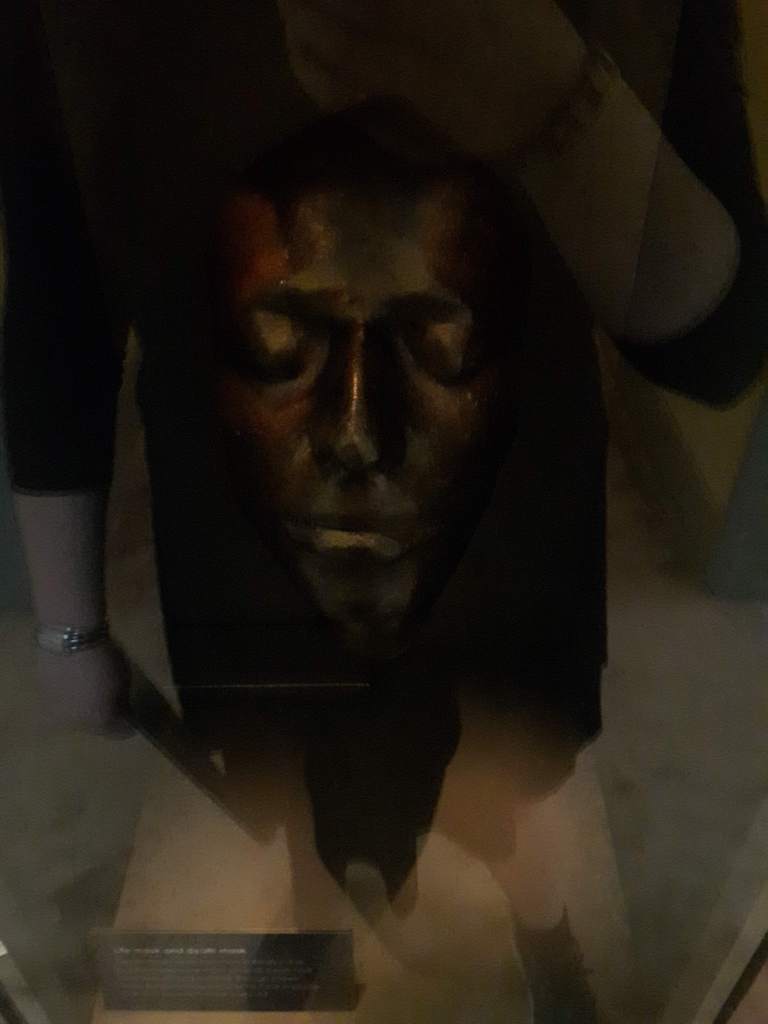
Keats’ death mask as reflected in my (perhaps appropriately black) dress. It’s a jarring contrast to the life mask. Photo: Serena Ypelaar

Upstairs was a much more sobering reality, but affecting all the same. The lighthearted yet poignant discovery of the life mask was now replaced by a sombre shift: here, behind glass, was Keats’ death mask. Keats died of tuberculosis aged 25. The difference in his face was noticeable. His once robust features were gaunt and thinner, a mark of the illness that claimed his life; and like the life mask, coming face to face with Keats (now in death) was jarring. It’s appropriate that this iteration was inaccessible by touch, for obvious ethical (and perhaps even spiritual) reasons. No one needs to touch a death mask, unless they’re a collections manager! Regardless, I was glad to have the rare privilege of seeing both a life and death mask of the same person, however grim the comparison.

Life and death masks offer an indisputable connection to the subject(s) of both. The concept is a goldmine as far as historical and biographical interpretation goes. In front of us is the near-objective image of a person’s likeness, almost as if they were before our eyes. One thing’s for sure: when looking at Keats’ life mask, I felt as mesmerized as the speaker looking at the Grecian urn in the British Museum – viewing a moment in time. I hope to see more life (and death) masks of public figures in the future, because their immersive value is priceless.

When old age shall this generation waste,
Thou shalt remain, in midst of other woe
Than ours, a friend to man, to whom thou say’st,
“Beauty is truth, truth beauty — that is all
Ye know on earth, and all ye need to know.”
John Keats, from “Ode on a Grecian Urn” (1820)

You Can’t Repeat the Past

Why, of course you can! Baz Luhrmann’s The Great Gatsby (2013) demonstrates that while it may seem unorthodox to decide against a by-the-book 1920s soundtrack, the choice to incorporate contemporary artists worked.

By Serena Ypelaar

When a new adaptation of The Great Gatsby got the green light (pun intended), I was over the moon. High School Me was obsessed with F. Scott Fitzgerald’s 1925 novel, despite never being assigned to read it (or perhaps that’s why I actually liked it: it wasn’t just schoolwork).

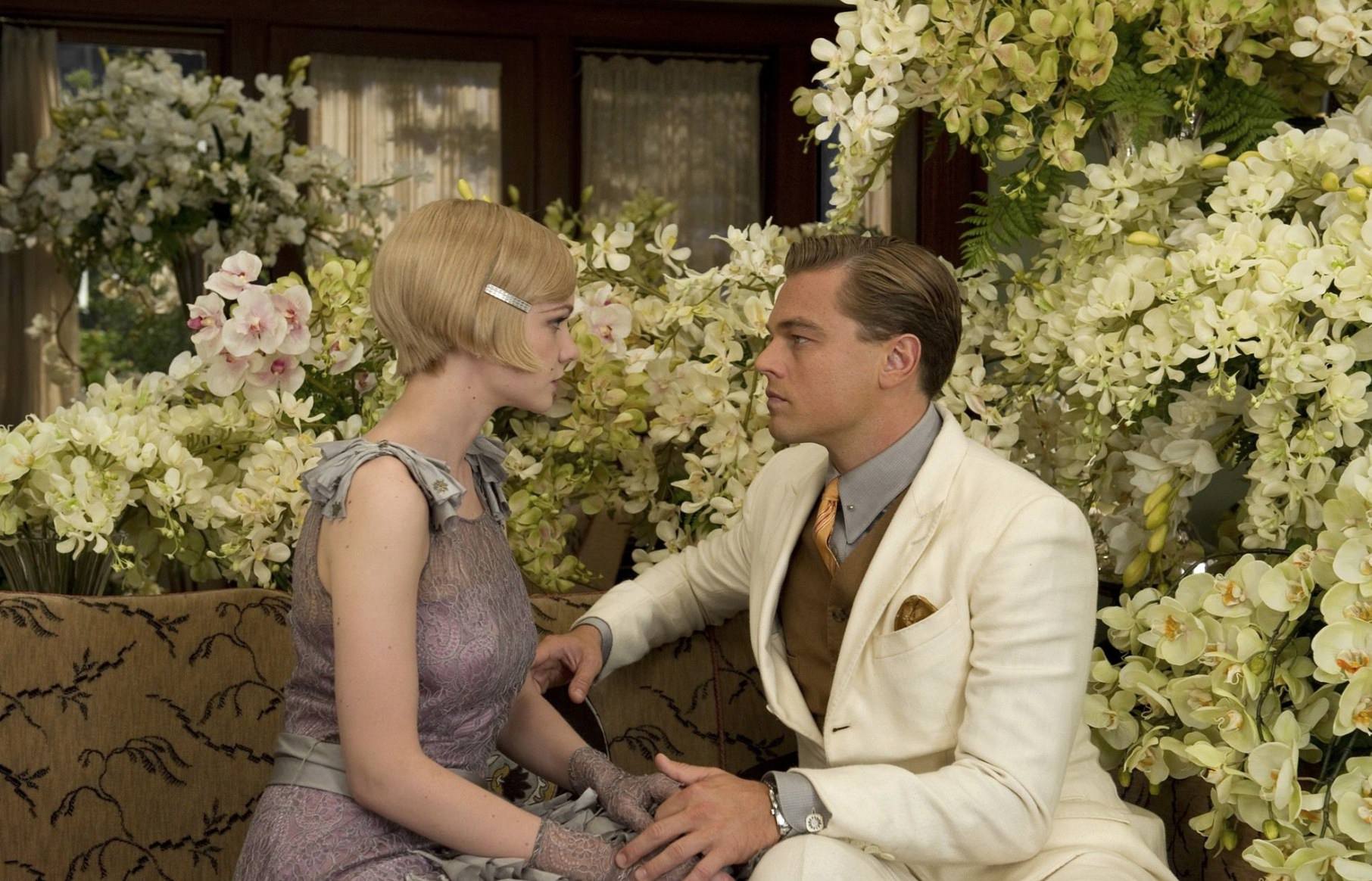
Daisy Buchanan (Carey Mulligan) and Jay Gatsby (Leonardo DiCaprio). Photo: The Gentleman’s Journal

Leonardo DiCaprio was cast as Jay Gatsby, Tobey Maguire was to play narrator Nick Carraway, and Carey Mulligan was Daisy; matches made in heaven, basically. But one thing I just wasn’t sure about was the soundtrack. When I saw a couple of early trailers for the film, I was mildly indignant. Eager as I was, I was a purist and had expected authentic 1920s music to furnish the lavish Baz Luhrmann film. But that’s the understanding I lacked: I hadn’t seen Moulin Rouge or any of Luhrmann’s other films at that time, so his style was unknown to me. What do you mean, they’re using modern music in such a sacred film, one rooted so inextricably in the Jazz Age? I was positively affronted. How would that ever work?

But then came May, and I saw the movie. And it worked; by God, did it ever work. I don’t know how, but I finally understood the vision and appreciated the 1920s flair added to each track, as produced by Jay-Z. Joining him were Kanye West, Beyoncé and André 3000, Lana Del Rey, will.i.am, Fergie, Gotye, Sia, Florence + the Machine,
Emeli Sandé, Bryan Ferry, The xx, and Jack White. In other words, a gilded lineup if I ever saw (or heard) one.

Nick Carraway (Tobey Maguire) and Jay Gatsby (Leo DiCaprio) in New York. Photo: Pinterest

Del Rey’s “Young and Beautiful” is achingly wistful; The xx’s “Together” is languid and romantic. On the flip side, Fergie and will.i.am’s tracks brought the party to life, and Jay-Z, Kanye, and Beyoncé capture the enigmatic allure of both Gatsby and New York City. Jay-Z and Kanye’s “No Church in the Wild” overlaid a city montage so memorably that I picture the scene whenever I hear the track.

The soundtrack is used (in conjunction with original novel quotes) to great effect at Gatsby’s party, seen here.

As seen through Nick’s eyes, Gatsby’s party is a perfect example of the soundtrack at play. In my reading of the novel, Fitzgerald knew exactly the right balance to strike between well-placed pithiness and sprawlingly eloquent description. The film soundtrack is the perfect complement: opulence, combined with Fitzgerald’s judicious prose, creates a picture of how the party might look and sound.

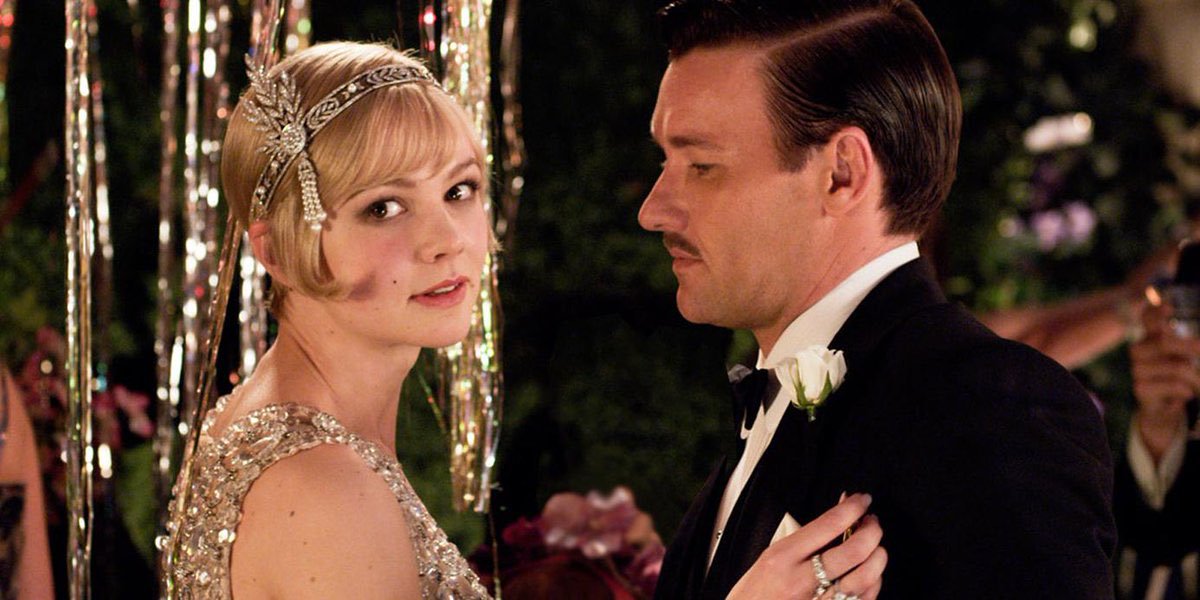
The Buchanans, Daisy (Carey Mulligan) and Tom (Joel Edgerton). Photo: Pinterest

Surrendering my preconceived notions was easy once swept up by the film in its totality. I appreciate how the soundtrack was able to unseat my stubborn misgivings, and I think creatively, it was a phenomenal success. When I imagine the alternative, my originally preferred 1920s jazz, I can admit that the film might then have come across as static compared to this adaptation, which lies fluidly between Fitzgerald’s era and ours. It’s a bridge to audiences, who can relate to these familiar musicians in a setting that may be largely unfamiliar. In less capable hands, it could have been a disaster. But elements of each song nod to the novel, from Florence’s “green light” in “Over the Love” to Gatsby’s ultimate fate, tacitly referenced in will.i.am’s “Bang Bang”. Interspersed with Craig Armstrong’s alternately bubbly and haunting score, the soundtrack represents all the warring interests and desires of the film, looping backstory into the ominous plot progression.

Some people didn’t even like this film. But Luhrmann’s Gatsby is staunchly faithful to the source material as far as the screenplay goes. The characters spoke many lines verbatim from the book, which warmed my purist heart; the costumes were wonderfully executed. Any liberality had to be assigned elsewhere, and I’m actually glad it was the music. This soundtrack might not have thrived with a direct repeat of past music. Instead, it acknowledges history and moves forward with it to inform something new, which the misguided Gatsby failed to do as he tried to reconstruct the past.

Gatsby (DiCaprio) reaches for the green light across the bay, obsessed with getting back to Daisy as if nothing had changed. Photo: Odyssey

This soundtrack will always be relevant to me as a reminder that our fixation on what things should be isn’t always what’s best – there are so many new and daring possibilities out there.

Churchill’s Secret Agents: The New Recruits

During WWII, Allied secret agents were tested to their limits. The best way to foster empathy for the hardships they faced is to undergo them yourself – just ask the contestants on Churchill’s Secret Agents: The New Recruits.

By Serena Ypelaar

The only people who know what World War II was really like are the ones who lived through it. Army, navy, air force, nurses, medical corps, civilians … and spies. Everyone living between 1939 and 1945 had a diverse experience of one of the largest global conflicts in history, and for someone like myself, that experience is nearly unfathomable.

Nearly.

We have historical records and witness testimony to illustrate the war to those of us who hadn’t yet been born or were too young to remember anything. The mass genocide of Jewish people and the horrors suffered at the hands of Adolf Hitler and the Nazis have left lasting scars. But the Allies defeated the Axis powers in 1945, restoring peace.

A few of the contestants on Churchill’s Secret Agents: The New Recruits. From left: instructor Nicky Moffat, Samy Ali, Debbey Clitheroe, Alastair Stanley, and Magda Thomas. Photo: Polygon

At the heart of the war effort was Britain, who dispatched secret agents from Allied countries throughout occupied Europe to bring down enemy forces and top-ranking Nazi officials. In 1940, Prime Minister Winston Churchill and Minister of Economic Warfare Hugh Dalton created the Special Operations Executive (SOE), an espionage organization. SOE agents faced countless tests and challenges both in training and in the field, challenges we can scarce imagine – until last year, when the Netflix/BBC miniseries Churchill’s Secret Agents: The New Recruits premiered.

A unique reality show, Churchill’s Secret Agents focuses not on interpersonal drama, backstabbing, or creative skill, but rather, on suitability to become an SOE operative as per the 1940s standards. Supervised by Nicky Moffat, the British army’s highest ranking woman before her resignation in 2012, Lt. Col. Adrian Weale, commanding officer, and Mike Rennie, military psychologist, the show is essentially a training simulation for the 14 recruits hoping to be selected as SOE agents. As an exercise in empathy, it’s incredibly effective – it offers not only the recruits, but the audience, with fascinating (and sometimes shocking) insights into the life of an SOE spy. I’ve watched the five-episode series three times already; I loved seeing how each recruit navigates each test, and who excels at what.

SOE Historian Rod Bailey consults on the show.
Photo: Popsugar

The show is diversely cast, which in this case is historically authentic. The SOE recruited both men and women from various walks of life to blend in behind enemy lines. Their main concerns were talent and aptitude. On the show, the new recruits include Rohini Bajaj, a doctor; 21-year-old maths graduate Alastair Stanley; Polish-born translator Madga Thomas; ex-military Rob Copsey, who lost his leg serving in Rwanda, grandmother and drama teacher Debbey Clitheroe; paralegal Will Beresford-Davies, and research scientist Lizzie Jeffreys, among others of varying professions, cultural backgrounds, and ages.

Recruits Rohini Bajaj, Rob Copsey, Lizzie Jeffreys, and Will Beresford-Davies. Photo: The Guardian

The series seems to offer the best of both worlds, too – each training exercise is contextualized with documentary-style footage including narration about the SOE’s impact on the war effort, specific missions that succeeded and failed, and prominent agents who were later recognized for their service.

Reality shows can be an invaluable method of historical interpretation; what better way to understand history than to see it recreated, and even more importantly, to interact with it? As a spectator, I fortunately don’t have to scale a mountainside in the pouring rain, but I can still appreciate the emotional and physical strength needed as I watch the recruits attempt it. For the contestants themselves, their understanding is even more immersive, as they literally have to participate in the testing process and challenges.

Recruits receive training (and are later tested) on hand to hand combat, firearms and explosives, stealth, disguise, interrogation, lockpicking, physical tasks such as scaling walls/cliffs and crawling under barbed wire, and Morse code/transmission.

The first of five episodes is shown here. You can stream the show on Netflix or watch the entire series on YouTube.

It’s hard to pin down the best part of the show, as I’ve already outlined its benefits for historical appreciation. However, I think Churchill’s Secret Agents‘ biggest strength lies in its emotional impact. If you’ve read The Mindful Rambler enough, you’ll know that I’m a big crier, but suffice it to say that this overview of the Resistance and the efforts of those who fought against injustice had me welling up. Not only that, but the fact that these modern-day people of varying backgrounds could complete the rigorous training pretty much floored me. It made me realize that we can exceed our limits if we resolve to, and we can do what’s necessary to fight for good, even if it’s difficult.

I don’t know if I could really navigate such difficult training on such a short timeline – but I like to think that if it was needed, I would try my hardest.

Uneasy lies the head that wears a crown

Though Shakespeare has been dead for over 400 years, modern renditions of his plays are still alive and well. BBC’s The Hollow Crown adapts Shakespeare’s history plays, which prompt us to examine the Bard as not only playwright, but historical interpreter.

By Serena Ypelaar

As we approach William Shakespeare’s 455th birthday – thought to be April 23, the same day as his death – one can’t deny his unparalleled legacy. Shakespeare is still studied in schools worldwide. His words and idioms still pervade the English language. And people are still adapting his works on stage and screen.

As a self-professed Shakespeare devotee, I’ve seen several productions, personal highlights being Hamlet at the Globe Theatre in London; Colm Feore in Macbeth at the Stratford Festival in Ontario; and A Midsummer Night’s Dream at Shakespeare in High Park. I have yet to see King Lear and Richard III (my favourites) on stage, but thanks to Shakespeare’s robust canon, we’re also blessed with film and television adaptations – like The Hollow Crown.

Tom Hiddleston as Henry V in The Hollow Crown. Photo: BBC

Most of Shakespeare’s best-loved plays are his comedies and tragedies. When I first heard about The Hollow Crown, which adapts Shakespeare’s tetralogies, I knew I had to see it. Starring Tom Hiddleston, Benedict Cumberbatch, Jeremy Irons, Tom Sturridge, Sophie Okonedo, and Dame Judi Dench, The Hollow Crown covers Richard II, Henry IV Part 1, Henry IV Part 2, and Henry V in the first cycle; and Henry VI Part 1, Henry VI Part 2, Henry VI Part 3, and Richard III in the second cycle.

Shakespeare’s history plays don’t receive as much appreciation, but they’re fascinating because they demonstrate the playwright in action as a historical interpreter. Taking historical events and condensing them into dramatic plays is a sensitive act of storytelling, albeit heavily influenced by reigning powers at the time. Shakespeare composed his plays during the Tudor and Stuart eras, and his work thus appealed to Tudor and then Stuart sensibilities. Under Queen Elizabeth I, Shakespeare furthered the Tudor Myth, which essentially comprises propaganda that glorified the Tudors and sought to legitimize their claim to the throne – which meant historical figures like Richard III, the Plantagenet king slain by Henry Tudor (Henry VII) were heavily vilified. Shakespeare’s contribution is Richard III, a play depicting Richard as deformed and mercilessly evil.* 

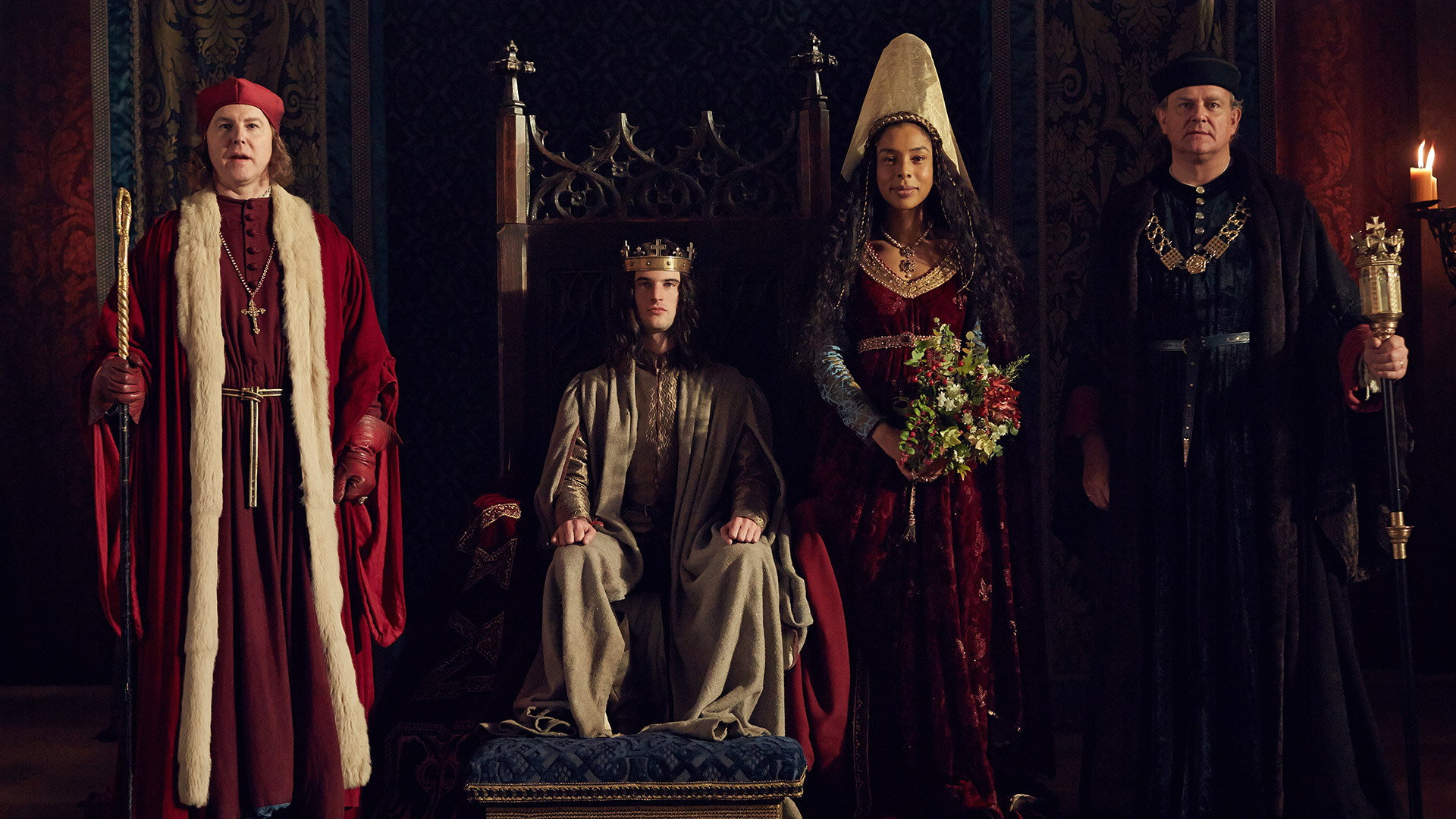
The Bishop of Winchester (Samuel West), Henry VI (Tom Sturridge), Queen Margaret (Sophie Okonedo), and the Duke of Gloucester (Hugh Bonneville) in The Hollow Crown’s adaptation of Henry VI. Photo: Robert Viglasky

Since Shakespeare’s history plays were political tools used to flatter and curry favour with kings and queens, their content is open to discussion. However, to those unfamiliar with early English monarchs, the plays can also familiarize audiences with important histories. I admittedly never could get Henry IV, Henry V, and Henry VI straight (so many Henrys!), but after watching The Hollow Crown, I’ve grasped enough of an overview to launch further research (of the Wikipedia variety for casual learning). Much of my medieval history knowledge has therefore been shaped by Shakespeare, for better or for worse.

Like any historical adaptation, it’s important to understand the changes Shakespeare made for the sake of drama (and political appeasement). A completely accurate account may not make for the best entertainment, especially on an Elizabethan or Jacobean stage. All the same, I admire how Shakespeare’s tetralogies are all interwoven. In The Hollow Crown: The Wars of the Roses, for instance, we see the future King Richard III witnessing his father Richard of York’s death at the hands of the Lancastrians; revenge is a major theme in the plays, which The Hollow Crown illustrates well. 

Benedict Cumberbatch as Richard III in The Hollow Crown: The Wars of the Roses.
Photo: Robert Viglasky

As a screen adaptation, the delivery differs from stage productions, but the performances are so excellent that the production is still effective. Most notably, Benedict Cumberbatch’s monologues as the dastardly Richard III gave me chills. In typical Shakespearean asides which break the fourth wall, Richard’s eye contact with the viewer fosters an unsettling connection, even through a television screen. Likewise, Tom Sturridge’s depiction of both compassion and weakness as Henry VI demonstrated complexity in a sympathetic way, and so I felt – from the comfort of my sofa – swept up into the dramatic interpretation of dynastic conflicts from centuries past.

Nevertheless, Shakespeare’s plays transcend entertainment because they are prominent accounts of history. Like any historian’s account of events, the Bard’s plays continue to inform our remembrance of English political history. The Hollow Crown is a reminder of this phenomenon and the weight that the legendary playwright’s voice carries. That leaves Shakespeare as not only a dramatist, but a historical interpreter shaping contemporary perceptions of history – both in the late 16th and early 17th century, but also as long as his plays continue to be performed and read.

*During the Book History and Print Culture part of my master’s degree I specialized in Richard III and how Shakespeare’s portrayal influences public memory of the Yorkist king, and I’ll be writing about him in detail in the future.

Ambulo x The Mindful Rambler: A Conversation Between Wanderers

Created by Matt Helders and James O’Hara, Ambulo is an all day café blurring the boundaries between cultural space and relaxed community hangout.

By Serena Ypelaar

Here at The Mindful Rambler, we talk a lot about interpretation, storytelling, and sharing experiences, often through cultural lenses. So naturally, as a museum/arts professional who cares a lot about engaging the public, I’m always thinking about more ways to explore the theme of visitor experiences. Last month, all day café Ambulo opened its first location in Sheffield, UK, and in following the café’s updates on social media, I was impressed by how successfully they’ve been sharing their story. Each of their Instagram posts is an invitation to the public – to everyone – to join them in the space and enjoy their visit.

Arctic Monkeys drummer Matt Helders and The Rockingham Group co-founder James O’Hara, who have been friends for years, conceptualized Ambulo and have seen it through to its opening. They collaborated with Museums Sheffield to launch two locations; the first at the Millennium Gallery, and the second opening soon at Weston Park Museum. Alongside its setting in a cultural space, Ambulo’s welcoming vibe makes it an ideal example of visitor engagement done right.

James O’Hara and Matt Helders at Ambulo. Photo: India Hobson, courtesy of Ambulo

Interestingly, “ambulo” means “to wander” in Latin, just like “ramble” means “to wander” in Middle English/Dutch. Ambulo and The Mindful Rambler seem to have an inquisitive outlook in common, and I was eager to explore this idea of learning and sharing in more depth. I recently spoke with James O’Hara, one half of the Ambulo duo, to hear more about the vision behind Ambulo, the significance of its location in museum/gallery sites, and how they’ve opened a café with inclusion as their priority.

Serena Ypelaar: What kind of visitor experience did you envision when you created Ambulo? Who is the space for?

James O’Hara: Our background with our previous ventures was very much more bar orientated and more focused on a late night offering. It was a very conscious decision with Ambulo to make a really light, open, inclusive space. There’s a definite feeling of responsibility that comes with providing a multi-faceted café in what is essentially the ground floor of a gallery.

The Millennium Gallery location. Photo: India Hobson, courtesy of Ambulo

SVY: Can you tell us about the partnership with Museums Sheffield and how Ambulo ended up in the Millennium Gallery?

JO: Essentially via a tender process. We were the only local independent to make it to the final 5, the rest were national operators with a much more experienced background in these sorts of spaces. However, I think our history of cultural engagement in the city (I’m the co-founder of Tramlines music festival) and our track record of transforming interesting, somewhat derelict buildings (Public is located in a former gents toilet) excited Museums Sheffield and our enthusiasm for the project balanced out the obvious risk element associated with choosing a smaller company like ours. 

Selections from Ambulo’s daytime menu. Photo: India Hobson, courtesy of Ambulo

SVY: You and Matt spent a couple of years wandering and testing food and drink to inform the creation of Ambulo’s menu. How was that creative process, and what did you learn?

JO: The idea for Ambulo started over 3 years ago – or at least the concept did – Ambulo means ‘to wander’ in Latin, and mine and Matt’s travels have formed a big part of the inspiration for the food and the brand. The main takeaway is that our favourite places and experiences don’t disguise themselves in pretension or opaque terminology. Our aim is to democratise the dining experience and provide great produce across our food and drink without all the associated nonsense that can often come with it.

Evening at Ambulo. Photo: India Hobson, courtesy of Ambulo

SVY: From food/drink to music to decor, there are many aspects to creating Ambulo as it exists now. Can you tell us about your collaborations with friends and local businesses?

JO: We have a core group of collaborators who we have worked with on almost all our projects. Rocket Design (Ben Pickup) make and build all our interiors, Totally Okay (Nick Deakin) has designed all the branding and associated imagery of this project and all our previous businesses, India Hobson takes all the photos, Swallows and Damsons have done all the beautiful floral displays and New Phase LED do all our lighting design. We’ve done so much together that we all have a real shorthand and understand how each party works. They’re an amazing group of people. 

SVY: What’s your favourite dish on the menu, and why?

JO: I would say the Kedgeree Soldiers. It feels like a very Ambulo dish – originally an imported breakfast dish from Victorian times, Exec Sheff has put this through a prism of modernity to come up with a really delicious and simple reinterpretation.

SVY: Thanks for taking the time to speak with us! I’m looking forward to following Ambulo’s future programming, and I can’t wait to check it out in person one day soon.

Ambulo is now open in the Millennium Gallery, 48 Arundel Gate, Sheffield, UK. The café’s second location is slated to open at Weston Park Museum, Western Bank, Sheffield.

Frontier: As Intersectional as Feminism Can Be in the 1770s

Netflix and Discovery series Frontier explores the pluralistic conflicts defining Canada’s fur trade in the late 18th century. How does the show treat women’s history in a time where their social roles were especially limited?

Warning: this article contains light spoilers about character development and thematic events depicted in Frontier

By Serena Ypelaar

Last week we discussed how Netflix and Discovery series Frontier interprets the history of the fur trade in Canada during the late 18th century. Since it’s International Women’s Day, I’m back with Part II of the Frontier series, this time to talk about women’s roles in the show.

As you probably know if you’re into history or women’s studies (or if you’re aware of women’s rights movements such as intersectional feminism), women’s social roles have been extremely restricted throughout history. In the 1770s, women couldn’t usually hold property and were most often made to marry to secure their future. With Indigenous women in North America, things were a bit different – certain Indigenous communities are matrilineal, meaning that women hold leadership positions rather than men. Indigenous groups still had/have gender-specific roles, but colonization marked a grim turn for women. Indigenous women were in many cases sold or “offered” to settlers as “country wives”, many being forced into non-consensual marriages.

Sokanon (Jessica Matten) dedicates her time to helping other women fight the effects of colonialism, such as forced marriages. The show tacitly parallels today’s ongoing issue of Missing and Murdered Indigenous Women. Photo: Hypable

So with these complexities in mind, how does Frontier interpret women’s history? With a great degree of respect and nuance, I’m happy to say.

Chaulk (Kathryn Wilder) poses as a man to survive on her own. Photo: TVMaze

Frontier explores new world realities for women in the 1770s without disempowering them. Characters with no income such as Clenna Dolan (Lyla Porter-Follows) and Chaulk (Kathryn Wilder) must adapt to survive, latching onto benefactors who prove to be manipulative; but they both demonstrate resilience and resourcefulness. On the other hand – I won’t drop a big spoiler, but there is one particular character whom I was indignant to see killed off before all her potential had been exercised. Yet for the most part in Frontier, we’re shown so many unique women with examples of strength and vulnerability (which are not mutually exclusive traits, I might add).

Prolific Indigenous actress Tantoo Cardinal plays Kamenna, chief of the Cree Lake Walkers who are integral trade partners to some of the fur traders. Elizabeth Carruthers (Katie McGrath) runs her own company after the death of her husband, and she is a shrewd and calculating businesswoman. Josephette (Karen LeBlanc) steers the Brown Bros.’ company better than they do.

Clockwise from left: Kamenna (Tantoo Cardinal), Josephette (Karen LeBlanc), Elizabeth Carruthers (Katie McGrath), Grace Emberly (Zoe Boyle).

Likewise, Grace Emberly (Zoe Boyle) owns a Fort James tavern and uses overheard intelligence as a form of power; she also literally wears the pants. I admit I underestimated her barmaid, Mary (Breanne Hill), thinking she’d be vapid, but she proves to be fierce as hell, going so far as to attack and kill rapists who try to sexually assault women and girls in the tavern. Sokanon (Jessica Matten) also goes on a personal quest to save Indigenous women from being forcibly married off, and she and Mary join ranks to achieve their honourable cause.

Mary (Breanne Hill) and Sokanon (Matten) fight to escape a Christian convent preparing North American women, many of them Indigenous, to marry European settlers. Photo: FatherSonHolyGore

Some viewers might say “how are these roles accurate?” but if you honestly believe that women have taken centuries of oppression lying down and didn’t fight back, you’re mistaken. Frontier could go even further to establish their female characters’ nuanced experiences, but to the show’s credit it portrays women’s entrepreneurial talent, compassion, integrity, and ambition.

I said this last week and I’ll say it again – Frontier is by no means perfect. Nor is any interpretation of history, when you think about it, but the bigger question to consider is: does it treat the subject matter responsibly? As a woman who loves history, I feel that Frontier does.

This article is part of a larger series discussing storytelling in the television show Frontier. As a mainstream adaptation of early Canadian history available worldwide, Frontier examines the pluralistic past and colonial legacies that still shape Canada today. Read the rest of the series here.

Frontier: Harping on about Canadian History

Starring Jason Momoa, Frontier explores the pluralistic conflicts defining Canada’s fur trade in the late 18th century. From a historical and ethical perspective, how does the show’s cultural authenticity stack up?

Warning: this article contains light spoilers about events depicted in Frontier

By Serena Ypelaar

It’s often said that there are two sides to a story.

But that’s not true: there are many sides to a story, and Frontier proves it’s possible (though difficult) to tell them.

I’ve been waiting to write about Frontier since before The Mindful Rambler was founded. Anyone who knows me knows I have an enduring love for early Canadian history … and in 2016, Discovery Channel and Netflix miraculously created a television show about it!

Set in the late 18th century in what is now Canada, Frontier centres on locations such as Hudson Bay, James Bay, Montréal, Fort James, and the wilderness. Indigenous peoples have lived on the land since time immemorial, long before European settlers arrived – a fact which is starkly portrayed in the series. The show stars Jason Momoa (also Executive Producer) as Declan Harp, a half-Cree, half-Irish trader who, for deeply personal reasons, seeks to destroy the Hudson’s Bay Company (HBC)’s oppressive monopoly on the fur trade.

Jason Momoa plays Declan Harp, a half-Cree, half-Irish fur trader on a mission to topple the Hudson’s Bay Company’s monopoly. Photo: ScreenerTV

There’s a plethora of “New World” films/shows out there, many of which are inevitably framed from the perspective of newly arrived colonial settlers. But it’s not inevitable to tell the story that way. Frontier is an example of what happens when you incorporate multiple perspectives and, crucially, spend time on authenticity. Though its storytelling and pacing is less than perfect, Frontier‘s diversity and inclusion is noteworthy and fairly well-done.

Indigenous and pluralistic representation

Today, Canada is populated by diverse cultural and linguistic groups, which was also the case during the 1770s. Frontier showrunners Brad Peyton, Rob Blackie, and Peter Blackie take care not to fall into the trap of depicting Indigenous peoples as one and the same – throughout its three seasons, we’ve seen Cree, Haudenosaunee, Métis, Inuit, and more nations – acknowledging that they do not comprise just one singular culture or identity.

Whenever I talk about Frontier and Jason Momoa playing an Indigenous man, people often ask “but isn’t he Hawaiian?”

“Yes, Momoa is part Native Hawaiian, but he’s also part Native American on his mother’s side,” I say. You’d be surprised how skeptically people react to that answer. There’s a definite issue with saying someone is not “_________ enough” to identify with their heritage (I know from experience, as a mixed individual). To say that anyone who is part First Nations, part Inuit, etc. isn’t “Indigenous enough” is akin to telling a mixed English/Scottish Canadian that they aren’t allowed to identify as Scottish. People who are part Indigenous are Indigenous and have a right to their culture.

Momoa is heavily invested in sharing the experiences of Indigenous peoples in North America. Though working in London at the time, he was vocal during the #NoDAPL protest in North Dakota in 2016; he also starred in Road to Paloma (2014), which exposes the systemic dangers to Indigenous women in the United States. And now, on Frontier, he’s helping portray Canadian history from an Indigenous vantage point. Momoa’s Instagram posts demonstrate how he advocates for Canadian history as I’ve never seen in another American. His work in Frontier contributes to the preservation of Canadian history from multiple perspectives.

Frontier also emphasizes linguistic diversity. Métis/Saulteaux-Cree actress Jessica Matten, who plays Harp’s sister-in-law Sokanon, learned two specific Indigenous languages for the show:

I’m mainly speaking Swampy Cree and also Ojibway to reflect Sokanon’s eclectic upbringing, born an Ojibway woman but raised amongst Métis, Cree, Scottish, French people on Turtle Island [North America]

Jessica Matten, Instagram post

Matten also provided creative direction in depicting the sale of Indigenous women to white settlers (as “country wives”).  The portrayal of these realities mirrors today’s issues with missing and murdered Indigenous women.

Brother- and sister-in-law Harp (Jason Momoa) and Sokanon (Jessica Matten). Photo: Edmonton Journal

In early North America, intermarriage also occurred and is portrayed in Frontier, another nod to authentic representation. Irish settler O’Reilly’s wife Kahwihta is Haudenosaunee (married under frankly sinister circumstances), and Sokanon and Michael Smyth (Landon Liboiron)’s budding yet troubled romance reflects the effects of the influx of fur traders on traditional lands. Nevertheless, Indigenous women – and almost all the women on the show – are depicted not as helpless victims but as clever and resourceful fighters. Frontier doesn’t shy away from the HBC’s violent behaviour that caused lasting trauma and grief for Indigenous peoples either, as depicted in the opening of season three, when the HBC is shown raiding and assaulting a Métis village.

Even amidst the fur trading companies, pluralism is the name of the game. There’s Declan Harp’s Métis-fronted Black Wolf Company, working directly against the HBC. The Scottish Brown brothers (Allan Hawco – also Executive Producer – and Michael Patric) are rivals to Carruthers & Co., managed formidably by Elizabeth Carruthers (Katie McGrath) after her husband’s death. Samuel Grant (Shawn Doyle) and Cobbs Pond (Greg Bryk) are Americans established in Montreal, and Michael Smyth, an impoverished Irish stowaway, joins Harp’s company. Englishman Lord Benton (Alun Armstrong), a fictitious governor of the HBC who loosely represents the company’s real-life actions, is portrayed mercilessly – on Frontier, the HBC is held accountable for its historical misdeeds.

Irish trader Michael Smyth (Landon Liboiron), Harp’s protegée, with Sokanon (Jessica Matten). Photo: Rotten Tomatoes

The show flounders in its portrayal of Black loyalists in Canada, however. Charleston (Demetrius Grosse) flees enslavement in the United States and falls in with Harp, but he is (SPOILER ALERT) the first to die in an overseas voyage – a typical trope in Hollywood movies (Black Dude Dies First trope). The two Black characters only play supporting roles; Josephette (Karen LeBlanc) is a close associate of Elizabeth Carruthers (Katie McGrath) but eventually takes on the bulk of the company management when Elizabeth’s new husband Douglas Brown (Allan Hawco) drives it into the ground. If Josephette were given a larger role, her character could thrive in the limelight. 

A new Frontier for Canadian history

While Frontier is undeniably flawed, both in a storytelling/pacing sense and an accuracy sense, I think its merits outweigh its detractors. The show illustrates (and popularizes) a long-distant era of Canadian history and emphasizes the facets of the fur trade economy. Most importantly, without glorifying colonialism, it depicts the conflicting interests of the different individuals and groups trying to live off the land – and in some cases, exploit it. It features Indigenous languages, celebrates women’s autonomy, and inspires awe – there was a lot going on in the Hudson Bay region.

Warts and all, Frontier proves that Canadian history is by no means boring.

This article is part of a larger series discussing storytelling in the television show Frontier. As a mainstream adaptation of early Canadian history available worldwide, Frontier examines the pluralistic past and colonial legacies that still shape Canada today. Read the rest of the series here.

O choose me for your Valentine!

Who sent the first Valentine in North America? The truth might surprise you, as the sender is associated very closely with early Canada.

By Serena Ypelaar

On February 14, 1779, British Lieutenant Colonel John Graves Simcoe, who would later become the founder of York (Toronto) and the first governor of Upper Canada, sent an impassioned valentine – to a Patriot’s daughter.

John Graves Simcoe’s signature. Photo: Wikimedia

Historically, Simcoe is an interestingly dual figure. You may have seen him in TURN: Washington’s Spies (the AMC series I can talk about for days if allowed) or at Fort York National Historic Site if you’re familiar with Toronto’s history.

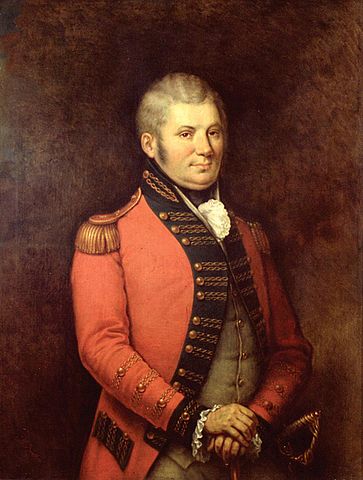
Lieutenant Governor John Graves Simcoe, painted c. 1881.

In TURN, he’s wholeheartedly vilified based on his true-to-life role in oppressing American colonists and carrying out attacks such as the Massacre at Hancock’s Bridge (1778). But in southern Ontario, he’s venerated as the founder of York, earliest administrator of Upper Canada, and a staunch abolitionist. Simcoe passed the first Act Against Slavery in 1793 (only a year or so after accepting the post of Lieutenant Governor) and ensured that there were no slaves in Upper Canada by 1810 – 24 years before the rest of the British Empire finally abolished slavery in 1834.

The moment I assume the Government of Upper Canada under no modification will I assent to a law that discriminates by dishonest policy between natives of Africa, America, or Europe.

John Graves Simcoe to the Legislative Assembly

Before governing Upper Canada, Simcoe was stationed in Oyster Bay, New York during the American Revolution. He and another officer stayed at the home of notable Patriot Samuel Townsend and his family.

Simcoe, then almost 27, took a liking to Samuel’s 18-year-old daughter Sarah “Sally” Townsend, and it’s said that on Valentine’s Day 1779, he gave her a valentine letter consisting of a 52-line poem.

Fairest Maid, where all is fair
Beauty’s pride and Nature’s care;
To you my heart I must resign
O choose me for your Valentine!

Love, Mighty God! Thou know’st full well
Where all thy Mother’s graces dwell,
Where they inhabit and combine
To fix thy power with spells divine;

Thou know’st what powerful magick lies
Within the round of Sarah’s eyes,
Or darted thence like lightning fires
And Heaven’s own joys around inspires;

Thou know’st my heart will always prove
The shrine of pure unchanging love!
Say; awful God! Since to thy throne
Two ways that lead are only known-

Excerpt from Simcoe’s valentine poem to Sarah Townsend

Thematically, the poem addresses the implications of loving an enemy – apparently such poetic romances truly aren’t just a thing of fiction.

Sarah is known to have had a brief flirtation with Simcoe during his time in Oyster Bay. Declaring his love for her, he asked her to choose him as her valentine, but their relationship was not to be. Simcoe ended up in Upper Canada after the Revolutionary War (1775-1783), and Sarah remained in Oyster Bay. She never married; the valentine was discovered among her possessions after her death in 1842.

It’s unknown whether Sarah returned Simcoe’s feelings.  The nature of their relationship is further complicated by the fact that Sarah is thought to have spied on Simcoe. Sarah’s older brother Robert was a key operative of the Culper Spy Ring, George Washington and Benjamin Tallmadge’s intelligence network (and the core focus in TURN). Under the codename Samuel Culper Jr., Robert Townsend fed secrets to the Ring to advance the Patriot cause.

Legend claims that Sarah overheard Simcoe speaking to Major John André about their plans to take West Point using leaked intelligence from notorious turncoat General Benedict Arnold. Robert’s subsequent tip to the Ring would result in André’s capture and hanging as a spy. Given that the Townsends were working against the British, the relationship between Sarah and Simcoe has a decidedly Romeo-and-Juliet air – the only question is whether Sarah loved him back.

Raynham Hall, the Townsend family home. Photo: Wikimedia

We don’t have any physical written evidence to reveal Sarah’s feelings, but a colonial-era windowpane of the Townsends’ home survives today. This windowpane contains a message scratched into the glass by a British officer to “the adorable Sally Sarah Townsend”. Was it Simcoe who scratched the message? It’s possible, given that he was living there, but not proven.

Where’s the valentine now? It’s preserved in the place where it was first given – Raynham Hall Museum, Oyster Bay. The Townsends’ home is now a historic museum focusing on Robert Townsend’s role as a Patriot spy, as well as the family’s history from the time Raynham Hall was built in 1740.

Amidst the hearts and chocolate, we don’t often stop to consider historic valentines. Valentine-giving is an age-old tradition that tells us a lot about love and the conventions of the time (and the weight and respect that love poetry once commanded!).

As far as Simcoe and Sarah’s story goes, the evidence of this particular love is one-sided; but was the romance one-sided too? We’ll likely never know.

Extremely Wicked, Shockingly Evil and Vile: Portraying a Killer

Zac Efron is playing Ted Bundy in a film. Some think the casting glamorizes the notorious serial killer, despite Bundy’s factual reputation as a deadly yet charismatic deceiver. In this unique case, is it unethical to be accurate?

Warning: contains mention of violent crime and may be disturbing for some readers.

By Serena Ypelaar

“Can we please not glamorize a killer?”

That was the online response from many after seeing the teaser trailer in which Zac Efron plays infamous serial killer Ted Bundy in the upcoming film Extremely Wicked, Shockingly Evil and Vile.

I agree – we don’t want to promote or celebrate murderers. But is accurately depicting a killer the same as “glamorizing” them?

Though the film follows the perspective of Bundy’s long-term girlfriend Elizabeth Kloepfer (Lily Collins), audiences are unsurprisingly fixated on Efron’s portrayal of Bundy.

Joe Berlinger, who also put together the four-part Netflix docuseries Conversations with a Killer: The Ted Bundy Tapes (2019), directed the film. The true crime docuseries features audio of interviews with Bundy while he was on death row.

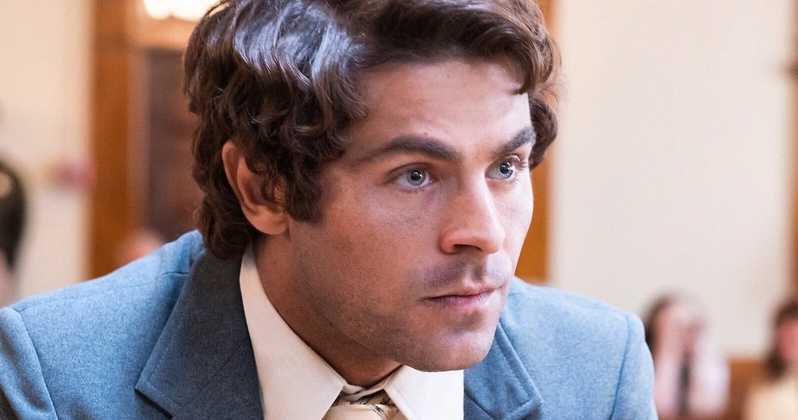
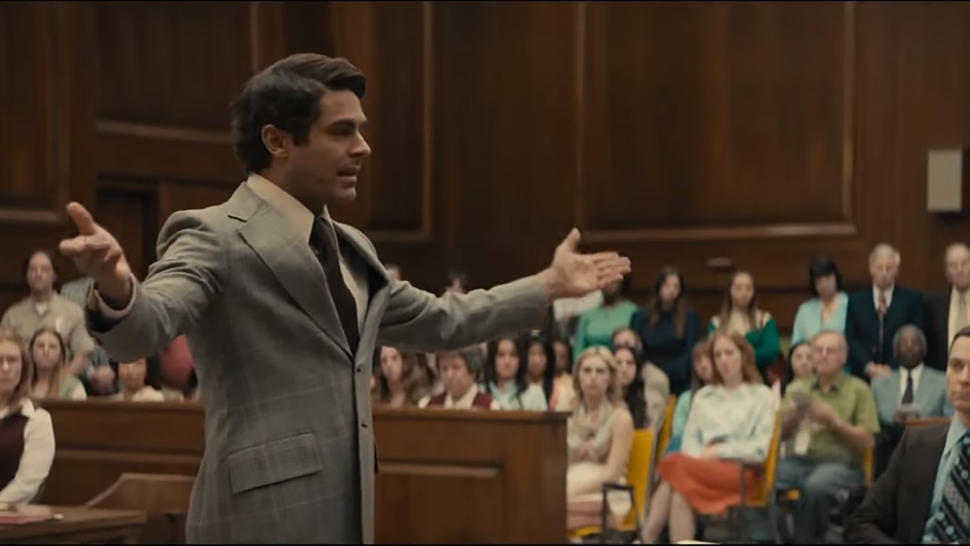
Zac Efron as notorious serial killer Ted Bundy in Extremely Wicked, Shockingly Evil and Vile. Photo: Daily Express

Bundy was active throughout the United States between 1974 and 1978, murdering and raping upward of 30 women in seven states. He escaped from prison twice but was eventually convicted and sentenced to death. He was executed thirty years ago, on 24 January 1989 at Florida State Prison.

I understand where our concerns are coming from. Somehow, there’s a real threat of people becoming infatuated with murderers. On the surface, it doesn’t seem like a great idea to cast a charming, good-looking actor as a depraved killer. What does that impression promote?

The truth is, Bundy was handsome. He was charming. And he used his personality to make people trust him, from his victims – whom he persuaded to accompany him to his car under the guise of disability, usually using a sling or crutches – to people who knew him. Friends, partners (Kloepfer, and later Bundy’s wife Carole Ann Boone, whom he married at one of his trials), and his mother all thought there was no way he could’ve committed such grisly crimes. Kloepfer eventually contacted the police with some vague suspicions, but Bundy still got away with a lot under her nose. His charm inevitably fuelled her denial for years; he was a skilled and charismatic manipulator. Bundy wanted people to believe he was just an average guy, and he maintained the lie of his innocence until just before his execution.   

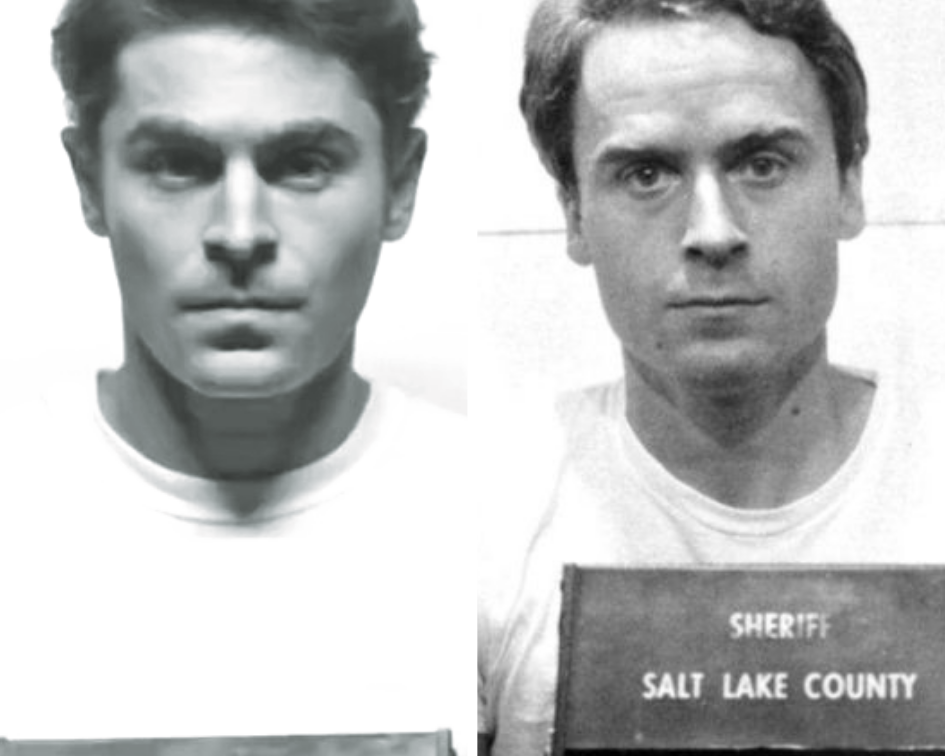
Zac Efron as Ted Bundy, compared alongside Ted Bundy himself.

So couldn’t it be that Zac Efron is actually the perfect choice for the role? I was skeptical at first, but after watching Conversations with a Killer, I changed my mind. Efron and Bundy even look alike; Efron claims they even have some of the same mannerisms.

I believe that in order to show him exactly the way he was, it’s not really glorifying him. I think hopefully it will make women … be more aware of their surroundings and be cautious. He had different tactics that he used for people to help him get in cars or do things, and in your gut, if you just feel that something doesn’t feel right, just say no.

Kathy Kleiner Rubin, one of Bundy’s survivors, doesn’t have a problem with the film

It’s important for us to try to understand, or at least recognize, how serial killers like Ted Bundy operate. The uncanny ability to convince people around him (as well as those avidly following his case in the 1980s) that he was wrongfully accused is troubling. Bundy himself said in Conversations with a Killer that “people don’t realize that murderers do not come out in the dark with long teeth and saliva dripping off their chin.” They have a chameleon-like talent for blending in (“The Bundy Effect”). If the film depicts this trait in Bundy without sensationalizing details, it won’t be glamorous; it’ll be truthful.

Understanding how serial killers deceive, and people who do evil deceive, really is kind of the theme of the film.

Director Joe Berlinger

We are in control of our own opinions. As long as we, the viewers, are conscientious and aware of context, we can watch films without falling prey to misinformation. It all comes down to critical thinking, which is our responsibility. In a pre-internet era, I can see how a film that seemingly glamorizes Bundy (or shows him accurately as the charismatic liar he was) could run the risk of misleading people. But we live in an age where a quick Google search can set the facts straight, if the movie doesn’t do that to begin with. We just have to make sure we commit to learning ethically and questioning sources.

Photo: Google News

As always, I’ll reserve final judgement on the film until it gets released. I hope it doesn’t simplify Bundy’s disconcertingly complex personality. I kind of think our deep-seated concerns may end up being less about “glamorizing” the killer and more about how the killer was able to glamorize himself. Extremely Wicked, Shockingly Evil and Vile thus has a huge opportunity to be very telling about sinister individuals and their ability to blend in.

A Wee Auld Dirge for Auld Robbie Burns

Thes Robbie Burns Day invites us tae ponder th’ continued timelessness ay his works. Burns’ use ay th’ Scottish vernacular (employed thus) illustrates exactly hoo his poems an’ ballads shood be performed alood.

By Serena Ypelaar

If you’re scratching your head at the text above, I’m sure you aren’t alone. For the sake of clarity, here’s what I wrote, in what you might call “plain English”:

This Robbie Burns day invites us to ponder the continued timelessness of his works. Burns’ use of the Scottish vernacular illustrates exactly how his poems and ballads should be performed aloud.

Today is indeed Robbie Burns Day, and what better time to pay homage to Scotland’s national poet than on his 260th birthday?

Born 25 January 1759 in Alloway, Scotland, Robert Burns was a tenant farmer like his father, and was (unlike many poets of his day) not particularly wealthy. His works have hence been lauded as relatable portrayals of Scottish farm life, illustrating class, regional experience, religion, and traditional culture.

“Portrait of Robert Burns, 1787”, painted by Alexander Nasmyth and held in the Scottish National Portrait Gallery. Photo: Wikimedia

A “dirge”, as referred to in my title, is a lament for someone who has died. In this case, though Burns is gone, we aren’t lamenting him so much as celebrating his legacy.

I’ve been looking forward to this post, as Burns’ works speak so decisively in and of themselves, but also because his writing style lends itself perfectly to The Mindful Rambler’s mission. Exercising his own interpretive power, Burns writes in the Scottish vernacular, meaning he has spelled his words exactly as pronounced. He is known for a number of songs – you might know “Auld Lang Syne” from your New Year’s traditions – that, when performed, reflect the Scottish dialect. In writing this way, Burns has cemented the dialect into his texts, and therefore preserves his Scottish identity while also sharing it with the world.

To illustrate what I’m talking about, here are a few lines from Burns’ poem A Winter Night:

Ilk happing bird, wee, helpless thing!

That, in the merry months o’ spring,

Delighted me to hear thee sing,

What comes o’ thee?

Whare wilt thou cow’r thy chittering wing

An’ close thy e’e?

Robbie Burns, “A Winter Night”, lines 19-24

As you can see, Burns has written the dialect straight into the poem, influencing how we read and interpret it.

I’ll be the first to admit – I tried to read Diana Gabaldon’s romance novel Outlander (an admission in itself) and put the book down for this very reason – the Scottish dialect. Apart from reaching page 178 and feeling that not much had yet happened, I also found it extraordinarily tiring to read the characters’ dialogue as written out in the vernacular, so I quit. (For those who haven’t read/attempted to read Outlander, think Hagrid’s dialogue in Harry Potter, except almost every character speaks that way.)

Nevertheless, in Burns’ short and much more digestible poems, I can appreciate the beauty of writing out the dialect so literally – Burns does half of the interpretive work for us. Instead of trying to envision a Scotsman and how he may sound uttering the words, we get his voice given straight to us. The Scottish vernacular is interwoven with the text itself, and we find ourselves transported into the shoes of the Scottish speaker.

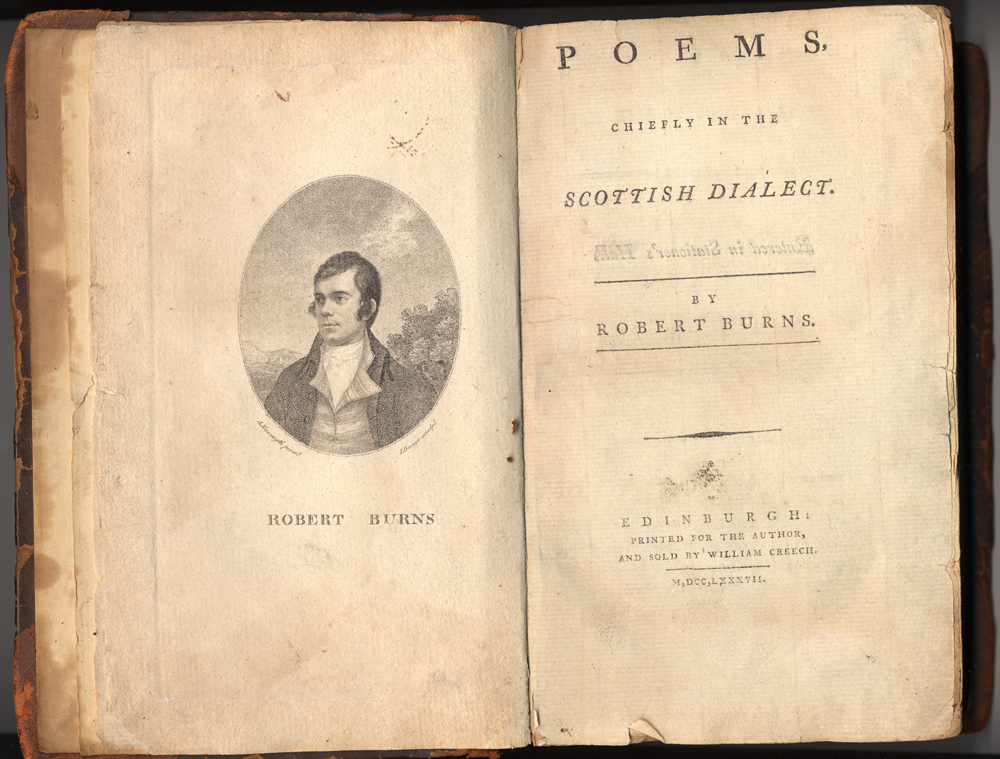
“Poems, Chiefly in the Scottish Dialect” (1787) by Robert Burns. The volume was first printed and issued in 1786. Photo: Futuremuseum

Burns was a lyrical poet as well, setting some of his poems to music but also writing words for Scottish folk melodies. His methods involved considering how songs would be sung before developing the lyrics. As a lyricist too, he therefore gave the pronunciation of his words the same consideration he would have us give them, as prompted by his literary style.

During my undergrad, my favourite British literature prof went the full mile and read a couple of Burns’ poems to us out loud, in the Scottish vernacular. It’s a participatory action that I think needs to be done to appreciate the extent of Burns’ literary voice and the conviction with which he proclaimed his identity. While it’s not always clear exactly what Burns is saying, one thing is irrefutable: who better for Scotland to have as its national poet than auld Robbie Burns?