It’s Lit(erary)

By Serena Ypelaar

Hello again, dear readers, and thanks for visiting The Mindful Rambler! Last week, we talked about history and who writes our past. Collectively (though not without knowledge hierarchies), we shape our memory of historical events through storytelling. Now, let’s look at the second of our four themes: Literature.

When I speak broadly about literature, I mean fictional prose, poetry, literary essays, or the like. Literature may not necessarily reflect on actual events, but it does capture elements of the human experience for us to examine and reflect upon. Thus, literature is an instrument of storytelling.

shelf
An extremely crammed bookshelf promises enough interpretation to last years. Photo: Serena Ypelaar

Why is it important to look at literature in the field of interpretation? Because literature itself is an interpretation of the world around us. The creators of literature are absorbing what they see around them and reproducing (or subverting) it through the act of storytelling. Drawing upon shared experiences and portraying them, whether through realism or abstraction, allows us to understand each other, ourselves, and our environment.

daunt
Daunt Books, Hampstead, London, UK. Photo: Serena Ypelaar

Literature uses the written word to tell us the truths the world doesn’t share openly – but it’s more than just that. Books, poems, pamphlets, essays, and other literature aren’t limited to just words. They give us imagery; they provoke our senses and prompt us to think critically in response to stimuli. We aren’t force-fed these images, nor is the meaning of a literary work meant to slap us in the face. There are nuances that we ourselves have to read into, which often means that we as individuals bring different perspectives to the literature we consume.

In the act of reading, we’re interpreting. We process the messages that writers (who have interpreted before us) present to us, and our takeaway varies from one person to the next based on past experiences. Our own personalities and backstories define what stands out to us and what we think is worth considering.

So how do we find a definitive interpretation of literary texts?

We can’t.

We can choose to venerate the analyses of certain individuals – for instance, since I like Samuel Johnson, to whom this blog’s title pays homage, I’m more likely to embrace his opinions on Shakespeare. Conversely, if I love Jane Austen (and I do, most ardently), I will reject Mark Twain’s scathing criticisms of Pride and Prejudice. But you, or someone else, may like and respect Twain’s opinion and therefore lend it some credence. Our biases influence our perceptions, so interpreting literature is a constant decision-making process.

westminsterpoetscorner
Graves from the Poets’ Corner in Westminster Abbey, London, UK. Readers connect with different works/authors/themes as a result of their individual background – this diversity affects our interpretive processes. Photo: Serena Ypelaar

Hence, once literature is published, its meaning lies in the hands of the recipient. Authors’ intentions are powerful and significant, and this column, “On Literature“, will explore those ethical concerns. However, we aren’t necessarily bound by them. No one can really police our response to literature because it’s a very personal interaction. As a former English major, I definitely learned how to pick up on people’s partiality and respond to that, but ultimately, we form our own relationships with the materials that are presented to us.

So literature as media is oddly empowering: we can choose what we read, how we read it, and how we respond to it. We can be mindful of the contexts in which a work was produced, or we can simply read it at face value – and is either interpretation wrong?
Tell Me a (Hi)story

ram·ble
/ˈrambəl/
Middle Dutch
verb
  1. walk for pleasure, typically without a definite route.
  2. talk or write at length, typically in a confused or inconsequential way.

Hi! My name is Serena, and I’m the Founder and Editor-in-Chief of The Mindful Rambler. I started this blog to explore questions of interpretation and the ways we communicate in the public sphere. As the definitions above suggest, there will be confusing moments during these “rambles” when we don’t know exactly where we’re going – but they’ll help us learn! To celebrate our official launch, I’d like to introduce you to one of our four key themes: History.

centraalstationamsterdam
History is all around us, with new additions embracing (or sometimes overpowering) the old. Photo: Serena Ypelaar

History is all around us. The present is influenced by our past and the way we remember it. History isn’t just “the past”, though – it’s not as objective as that. Rather, history represents the way we interpret and understand the past using material evidence.

Such evidence can come in the form of documents, photographs, artwork, audio, or even commonplace objects. We construct history from this evidence; it’s not always easy to process or understand, especially when we’re trying to synthesize multiple (sometimes conflicting) pieces of evidence into a coherent story.

What types of evidence are privileged? Which voices do we value? In placing emphasis on some forms of evidence over others, which perspectives do we identify as “more important” in the greater scheme of things?

sir winston churchill, churchill war rooms, london, WWII, history
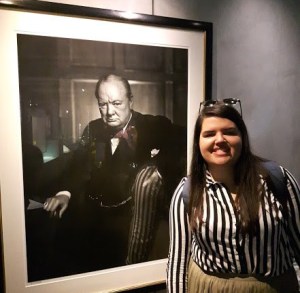
Serena stands with Yousuf Karsh’s 1941 portrait of Sir Winston Churchill at the Churchill War Rooms, London, UK. We can interpret photographs like this one as historical evidence of a period in time. Photo: Serena Ypelaar

In this column, “On History“, we’ll delve deeper into these questions using specific case studies. It’s crucial to understand how we remember our past and why we remember it that way. By consciously exploring our interpretative processes, we can understand the methods we use to create bridges between the past, present, and future.

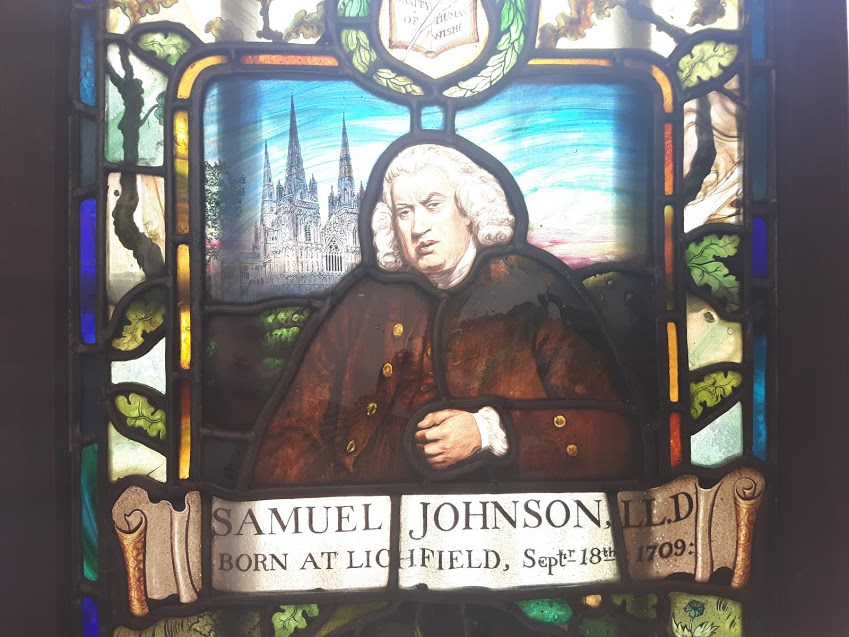
The name “The Mindful Rambler” is a tribute to Dr. Samuel Johnson, the 18th century scholar and writer of the first English Dictionary. Published between 1750 and 1752, Johnson’s periodical The Rambler discussed contemporary societal issues such as politics, religion, morality, and literature. In coming up with a title for this blog, I enjoyed the idea of “rambling” like Dr. Johnson, but the connotations seemed a little more lackadaisical than the goal of this blog – hence the addition of mindfulness to our title.

samuel johnson, dr. johnson, stained glass, literature, england, london
Stained glass window commemorating Samuel Johnson’s life, located at Dr. Johnson’s House Museum in Gough Square, London, UK. Photo: Serena Ypelaar

We should definitely let our ideas unfold so we can learn new things from one another, but being mindful of how we interpret and communicate will ensure the ethical sharing of knowledge. Johnson had similar beliefs:

Integrity without knowledge is weak and useless, and knowledge without integrity is dangerous and dreadful. — Samuel Johnson

From reflecting on lessons learned, to contemplating ongoing mysteries, to questioning privileged knowledge structures, we owe it to our future to acknowledge and preserve our past – and to inform how we treat history going forward. It’s my hope that when considering issues of interpretation and communication, we always tread mindfully – and think before we ramble.