Advice After the Fact: What Historical Advisors Do Best

Historical advisors make sure the era-specific details of television and film are portrayed authentically. Using Downton Abbey as a case study, we examine the various aspects they consider when recreating a time period.  

By Serena Ypelaar

The approach of fall, and later winter, inevitably means one thing: More time indoors = more television = more period dramas.

In mainstream media, historical television has gained traction in recent years, with shows like Downton Abbey, Peaky Blinders, Poldark, Mad Men, and The Crown gaining cult followings. As a historian, I love a good period drama, since watching a fictional recreation of an era is one of the best ways to learn about it. Of course, being a historian means I’m also hung up on accuracy.

Did you know there’s a specific job in which people ensure period dramas are accurate? Those magical people are called historical advisors.

Not every show has one, but I’d like to argue the importance of such a role. In the most miniscule ways, historical dramas give viewers a vivid impression of life in a specific era. The details simply provide a backdrop for the overarching narrative, but if incorrect, they undermine the story and realism of the series. I’ve highlighted five key elements a historical advisor must oversee to help interpret history for television and produce a credible period drama. In the interest of time, all examples come from Downton Abbey, whose historical advisor Alastair Bruce has spoken publicly about his role.
downton
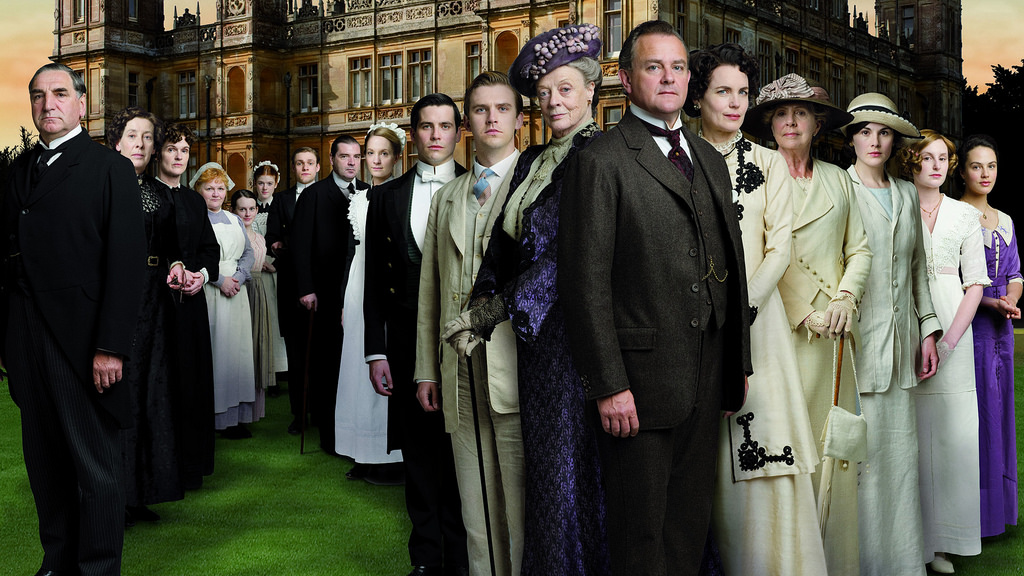
Ensemble cast of Downton Abbey, in Season 1 promotional image. From left: Jim Carter, Phyllis Logan, Siobhan Finneran, Lesley Nicol, Sophie McShera, Rose Leslie, Thomas Howes, Brendan Coyle, Joanne Froggatt, Rob James-Collier, Dan Stevens, Dame Maggie Smith, Hugh Bonneville, Elizabeth McGovern, Penelope Wilton, Michelle Dockery, Laura Carmichael, Jessica Brown Findlay. Photo: Flickr

Setting, set design, and technology 

Set in Edwardian England, Downton Abbey follows the aristocratic Crawley family and their servants in the eponymous great house. We’re treated with an (albeit rose-tinted) illustration of British society and its evolution from 1912 through 1926. It’s important that these shows capture setting in a way that transports viewers while avoiding anachronisms. Sets must be dressed with care, including items such as telephones, musical instruments, and furniture to highlight technological advances of the time.

Costuming, dress codes, and wardrobe etiquette 

dressing
Downton Abbey capitalizes on portraying everyday aspects of life, such as dining or dressing, seen here. Source: Golden Globes

Perhaps the most universally enjoyed element of historical drama is the fashion. Historical advisors should ideally work with costume designers for accuracy, since clothing leaves a lasting overall impression. In an upstairs-downstairs series like Downton, the frequent act of the staff dressing their employers demonstrates how garments were worn. Alastair Bruce famously intervened in a scene in which newspaper man Sir Richard Carlisle shakes hands with Cora Crawley with his glove on. According to Bruce, gentlemen would always remove a glove before shaking hands.

Mannerisms, accents, and speech

Downton Abbey is located in Yorkshire, but you won’t hear the upper-crust Crawleys speaking with northern accents. Actress Michelle Dockery, who normally speaks with an Essex accent, had to adopt a measured drawl to convincingly play the aloof Lady Mary. Conversely, you’ll find the belowstairs staff using coarser dialects. Historical advisors must ensure consistency as well as monitor word choice in scripts, as some words weren’t commonly used yet. Physical mannerisms likewise illustrate character; the Crawleys and their peers would walk rigidly upright while the working class characters have a different gait, especially when relaxing “off-duty”. These details may seem insignificant to viewers, but when employed they can help teach us the nuances of how our forebears lived.

PBS_Alastair_Bruce
Downton Abbey’s historical advisor, Alastair Bruce. Source: Downton Abbey Wiki

Gender, race, sexual orientation, and class politics

Often, dynamics between people from different stations in life drive the tension in period dramas. Any good period drama will highlight change, usually in the form of innovation, social causes, and cultural shifts. It’s essential that historical advisors allow writers to capitalize on these changes without sacrificing legitimacy. In a series like Downton Abbey, where men and women of varying status and motivations interact in a large house, there are specific protocols which historically would have been followed – and which Alastair Bruce had to emphasize during filming.

Society, nationalism, trends, and overarching historical context

The wider historical backdrop is the linchpin. It shapes the characters’ outlook, values, and knowledge (How do they understand the world? What has happened at this point, and what is yet to come? Are they racist? Probably). National context, such as British sentiment during World War I, was crucial to understand while writing Downton. This is one area I feel Bruce and writer Julian Fellowes falter – not in the overall context, but in the mindsets of their characters. The Crawleys are astonishingly progressive for conservative landowners; certain characters exhibit a surprising lack of prejudice, which at times breaks the carefully crafted personas from their vantage point of a hundred years ago. Nevertheless, the motivation was undoubtedly to foster empathy, which in a television series is understandable.
thomas and the crawleys
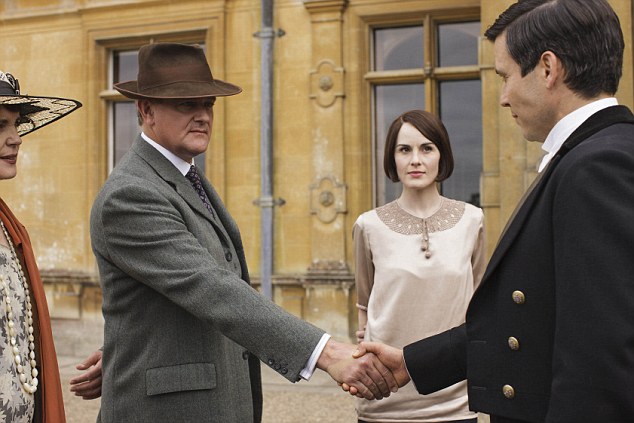
So we’re supposed to believe that these wealthy conservative Britons living a hundred years before us have the same tolerant sensibilities of our time? Oooookay (but we love the outfits so we’ll suspend our disbelief, am I right?) Source: The Daily Mail

With prior knowledge of Fellowes’ planned storylines before each season, Bruce conducted preliminary research using specific case studies – in this case, country houses in England – to determine the aspects of life in a country estate like the fictional Downton Abbey. He then advised on the finer elements of the story’s execution.

As someone who writes historical fiction, I can relate. I’ve always found the storyline to be the core of a project – the steering wheel, so to speak – while the research, the actual historical facts, are the engine. The creator is the driver. In period television, the writer and historical advisor must copilot the vehicle if they are to arrive smoothly at their destination: a polished, realistic period drama that will appeal to laymen and historians alike.* Granted, Downton Abbey is certainly not without its critics (myself included when it comes to the later seasons), but the showrunners’ meticulous attention to detail does it credit.
*Fans of Downton Abbey will hopefully forgive me for my tactless use of a car metaphor – it just came to me as I went. Trust me, I know it’s a sore spot, as I myself haven’t quite gotten over The Incident from the 2012 Christmas special…

Historical Looks on Film: A Rant

Period dramas often fudge the accuracy of historical costumes, resulting in possible misconceptions and a flawed feel. But what happens when a series puts the work into capturing period-specific attire?

By Sadie MacDonald

Let’s talk about a trope I am resentfully fascinated by: inaccurate fashion in historical films. Many such films reflect the standards of attractiveness at the time they were made, often at the expense of historical accuracy.

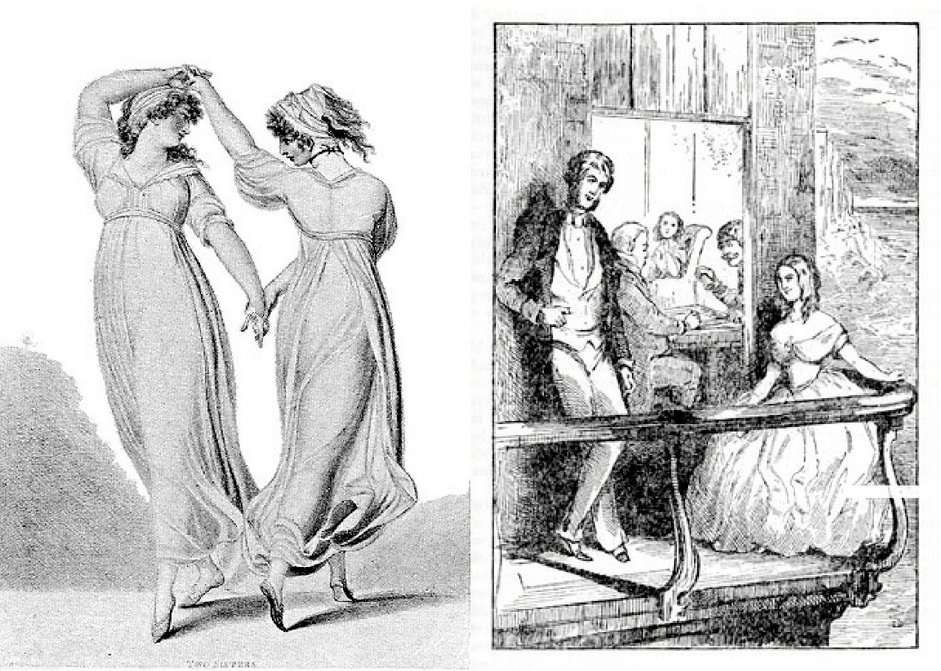
This trend isn’t new. William Makepeace Thackeray’s illustrations for Vanity Fair show the characters in contemporary 1840s fashion rather than Regency attire, as Thackeray claimed “I have not the heart to disfigure my heroes and heroines by costumes so hideous.”

Untitled design
On the left, apparently “hideous” costumes, and on the right, one of Thackeray’s… improvements. Photo Credit: Left, Sisters Dancing, Marino Bovi; right, A Family Party at Brighton, William Thackeray, scanned by Gerald Ajam.

Let’s start off our look at film examples with Disney. Snow White (1937) has a tidily-curled bob; the accentuated waists of Cinderella’s (1950) gowns evoke Christian Dior’s “New Look”; Ariel (1989) sports voluminous bangs and a wedding dress with sleeves that Princess Diana would approve of; Rapunzel’s (2010) side-part and gently-waved straight hair look very stylish for the late 2000s.

An example from the Golden Age of Cinema is Scarlett O’Hara in Gone with the Wind. While the costumes of the film revel in lavish stylings of antebellum American Southern dress, Vivien Leigh’s bright red lipstick and sculpted eyebrows belong more in 1939 than 1860.

It’s easy to see this convention in 1980s films. Check out the perm on the 1940s mother in A Christmas Story, or EVERYONE in Dirty Dancing, which is ostensibly set in the 1960s.

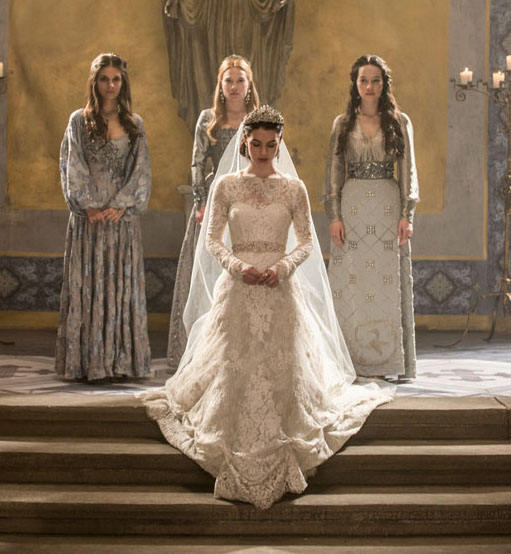
Recent films are also guilty. Pride and Prejudice (2005) is a major offender, as the Bennet sisters run around with wispy unsecured bangs and long, loose hair. It seems unfair for me to target The Tudors and Reign, as the dubious accuracy of those shows’ costuming has been endlessly lampooned, and neither show makes pretensions to historical accuracy.

Consummation
But it’s so hard to resist making fun of the show’s choices. Photo: Frock Flicks, which does a hilarious takedown of Mary’s wedding dress.

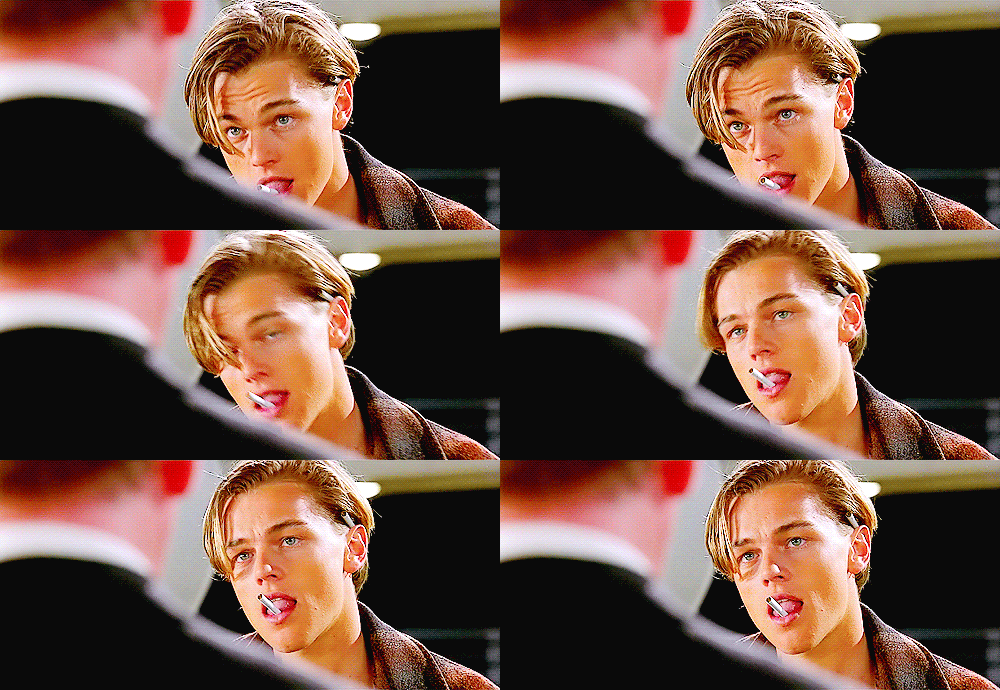
This trend is especially jarring when inconsistently applied in a film. The love interest in the 1996 French film Ridicule has straight hair, thick bangs, and simple make-up, but the unsympathetic characters of the French court look more accurate. A male example from the 90s would be Jack from Titanic, who has boyishly-floppy locks parted in the middle. Villain Cal, however, looks more period-appropriate. Clearly the film creators were okay with maintaining less-flattering historical looks for antagonistic characters, but not heroes.

dce7a58585be99ffc6c0bfa40472b303
Sometimes you gotta toss your anachronistic hair. Photo: Pinterest

This illustrates that anachronistic costuming choices are not necessarily borne from laziness. In addition to making main characters look attractive and sympathetic, inaccurate fashion can also help convey aspects of character. The titular character in Marie Antoinette (2006) owns a pair of Converse sneakers to emphasize that she is a childish teenager. A Knight’s Tale puts leading lady Jocelyn in punk-rock hairstyles to illustrate her rebelliousness.

Anachronistic fashion doesn’t have to be sloppy. But when accuracy is taken into account, the results are worth it.

Take the 1995 Pride and Prejudice miniseries. The tightly-curled hair might look funny at first, but it adds to the detailed Regency environment, the elements of which come together to bring Jane Austen’s world vibrantly to life.

Mad Men is a recent triumphant example. The actors are decked out in proper attire right down to their undergarments, as costume designer Janie Bryant understood how important this detail was to creating 1960s silhouettes. Here, historical accuracy is not exclusive with creativity, as costuming on Mad Men also reflect the characters’ personalities.

7ed92e6043e2640d19855ab5ceb84be0
Lookin’ good! Photo: Pinterest

These examples use costuming not to make the characters look attractive to modern sensibilities, but to fully immerse viewers in the period. If anything else, shouldn’t film be immersive?

“Canadian” is not a genre

As we near Canada Day, we question Canadian content standards and come up with some top playlist picks for the long weekend.

By Serena Ypelaar

I didn’t come up with the title for this post myself – it’s a slogan coined by Dine Alone Records, the Canadian independent record label based here in Toronto.

We can take some pointers from its message, as Canadian art is often dismissed – from literature, to visual arts, to music, and more. It’d be interesting to see what percentage of music in our libraries is Canadian – I’d wager most Canadians have 15% or less. But the fact is that there is so much Canadian music out there – and it’s good. 

9053598741_0e3efbb889_o
Canadian Indigenous singer-songwriter Buffy Sainte-Marie. Photo: Flickr

What is it about being Canadian that automatically garners less attention? We even have poorer-quality versions of American reality TV shows, and a terrible Netflix selection compared to our southern neighbours to show for it.

In our current political climate, feat. a tariff war with the United States (which, let’s be honest, flares up every so often like a chronic wound), why not support Canadian musicians and invest in some local talent?

Here are some concise, but by no means comprehensive, top picks for quintessential Canadian listening. Enjoy my quick recs below.

A Tribe Called Red: Essential Indigenous electronic/hip-hop; mandatory listening. Songs to Start With: “R.E.D.,” “How I Feel”, “Bread & Cheese”

Billy Talent: Political commentary & punk rock all in one. Crisp guitars; crisper lyrics. Songs to Start With: “Try Honesty”, “Devil in a Midnight Mass”, “White Sparrows”

July Talk: Jarring juxtaposition of vocals – guttural/masculine vs. soft/feminine. Songs to Start With: “Headsick”, “Blood + Honey”, “Picturing Love”

Alexisonfire: “The sound of two Catholic high-school girls mid-knife-fight”.* Songs to Start With: “Boiled Frogs”, “Get Fighted”, “Midnight Regulations”

*I can’t describe it any better than they already have…

City and Colour: Mournful lamentations nursed by Dallas Green’s voice. Songs to Start With: “Casey’s Song”, “Waiting…”, “The Lonely Life”

Arkells: Anthemic, buoyant daytime rock with a touch of motown. Songs to Start With: “Where U Goin”, “Cynical Bastards”, “John Lennon”

28521842711_254f6e659b_o
Mike DeAngelis and Max Kerman of Hamilton band Arkells, at WayHome Music and Arts Festival 2016. Photo: Flickr

Death From Above: Industrious duo at the junction of bass & drums. Songs to Start With: “All I C is U and Me”, “Crystal Ball”, “Romantic Rights”

Tanya Tagaq: Daring, innovative, and traditional Inuit throat-singing. Songs to Start With: “Uja”, “Sila”, “Retribution”

Mother Mother: Three-layered high-pitched vocals on a base of synth and strings. Songs to Start With: “Ghosting”, “The Stand”, “Infinitesimal”

Sum 41: Sprawling spitfire of classic punk rock with heavyweight choruses. Songs to Start With: “Still Waiting”, “Open Your Eyes”, “With Me”

USS (Ubiquitous Synergy Seeker): Lucid, lively electronica fuelled by lyrical emotion. Songs to Start With: “Damini”, “Vulcan”, “Freakquency”

Arcade Fire: A convergence of 6+ hipsters producing indie rock with accordion and keyboard at the fore. Songs to Start With: “Ready to Start”, “The Suburbs”, “No Cars Go”

Monster Truck: 70s style blues rock backed by organs. Long hair & denim required.   Songs to Start With: “Don’t Tell Me How to Live”, “Old Train”, “For the People”

Hollerado: Personable indie rock with a genuine sound and hard-hitting beats. Songs to Start With: “Too Much to Handle”, “So It Goes”, “Got to Lose”

Drake: No description needed for Toronto’s resident rapper… Songs to Start With: “Passionfruit”, “Over”, “God’s Plan”

Our Lady Peace: Low, crooning vocals replete with reassuring lyrics. Songs to Start With: “Innocent”, “All You Did Was Save My Life”, “Angels/Losing/Sleep”

Avril Lavigne: Do I even need to explain this? Songs to Start With: “Complicated”, “Sk8er Boi”, “I’m With You”

Cancer Bats: Gritty underground metal; shredding, cymbal-smashing oblivion. Songs to Start With: “Hail Destroyer”, “Beelzebub”, “Gatekeeper”

Three Days Grace: Bass-heavy garage-rock with brutally honest insights. Songs to Start With: “Just Like You”, “Never Too Late”, “Last to Know”

Sam Roberts Band: Even-paced alternative rock with laid-back guitars. Songs to Start With: “Brother Down”, “Them Kids”, “If You Want It”

Half Moon Run: Serene assertions on the human condition, featuring folksy acoustics. Songs to Start With: “Nerve”, “Trust”, “Narrow Margins”

Wintersleep: Guitars, synth, and experimental riffs with a sprightly rhythm. Songs to Start With: “Lifting Cure”, “Metropolis”, “Santa Fe”

alanis
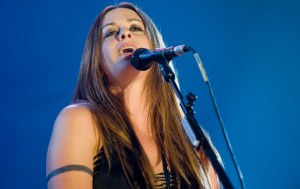
Alanis Morissette. Photo: Wikimedia

Of course, there are also the Canadian classics, which you might consider revisiting for the long weekend. I’ve created a track-by-track vignette of essential Canadiana:

  • Rush – “YYZ”
  • Buffy Sainte-Marie – “Working for the Government”
  • Bryan Adams – “Summer of ’69”
  • The Guess Who – “American Woman”
  • Gordon Lightfoot – “Canadian Railroad Trilogy”
  • Shania Twain – “Man! I Feel Like A Woman”
  • Alanis Morissette – “Thank U”
  • Sarah McLachlan – “Building A Mystery”
  • Great Big Sea – “The Chemical Worker’s Song”
  • Neil Young – “Heart of Gold”
  • Joni Mitchell – “Big Yellow Taxi”
  • Leonard Cohen – “Treaty”
  • k.d. lang – “Constant Craving”
  • Celine Dion – “My Heart Will Go On”
  • Barenaked Ladies – “Canada Dry”
  • The Tragically Hip – “Bobcaygeon”

Obviously I omitted a bunch of bands/artists, mainly because I don’t listen to them enough to consider myself worthy of making thoughtful recommendations. Other Canadian artists are included below.

Shad, Lights, The Dirty Nil, Anne Murray, The Jerry Cans, Shawn Mendes, Sloan, Tegan and Sara, Michael Buble, Metric, Simple Plan, Young Empires, Joni Mitchell, Nelly Furtado, Bruce Cockburn, Jann Arden, The Trews, Corey Hart, Alessia Cara, Ron Sexsmith, Diana Krall, Stan Rogers, BROS, Feist, The Beaches, Moneen, The Darcys, The Weeknd, Justin Bieber, Said the Whale, Constantines, Marianas Trench, Silverstein, Broken Social Scene, Big Wreck, Nickelback, PUP, Dear Rouge, Blue Rodeo, Hedley, Fucked Up, Toronto, Great Lake Swimmers, The Rural Alberta Advantage, Teenage Head, Down With Webster, Thousand Foot Krutch, Matt Good Band, The Tea Party, The Sheepdogs, Hey Rosetta!, The Elwins, IllScarlett, Prism, I Mother Earth, Black Lungs, Chromeo, Japandroids, Whitehorse, Protest the Hero, The New Pornographers, Joel Plaskett, Northern Voice, Serena Ryder, Lost Cousins, Moist, Neverending White Lights, Platinum Blonde, Stabilo, Saint Asonia, Finger Eleven, Templar, Theory of a Deadman, Wolf Parade, Yukon Blonde, Born Ruffians, Black Bear.

Over the years, so much of Canadian identity has been built on what we’re not (namely, American). Let’s talk about what we are, for a change. It’s something Canadian music does well, if we only listen.