The Longest and Most Charming Love Letter in Literature

A love letter can be one of the most intimate ways to express love and affection to another. Thankfully for us, some of the greatest writers in English literature also wrote beautiful letters, which often take on new life after the deaths of their writers and recipients.

By Adriana Wiszniewska

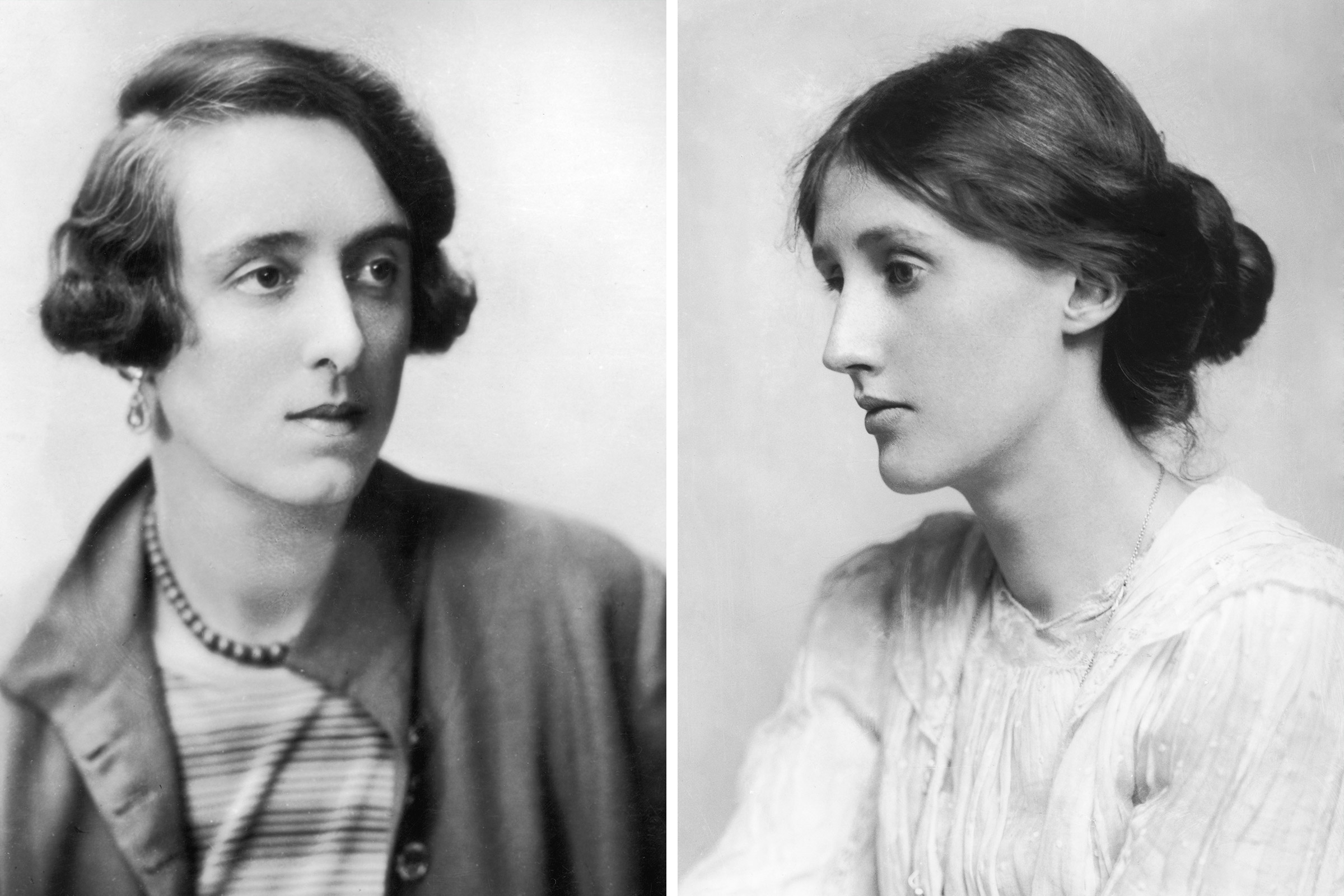
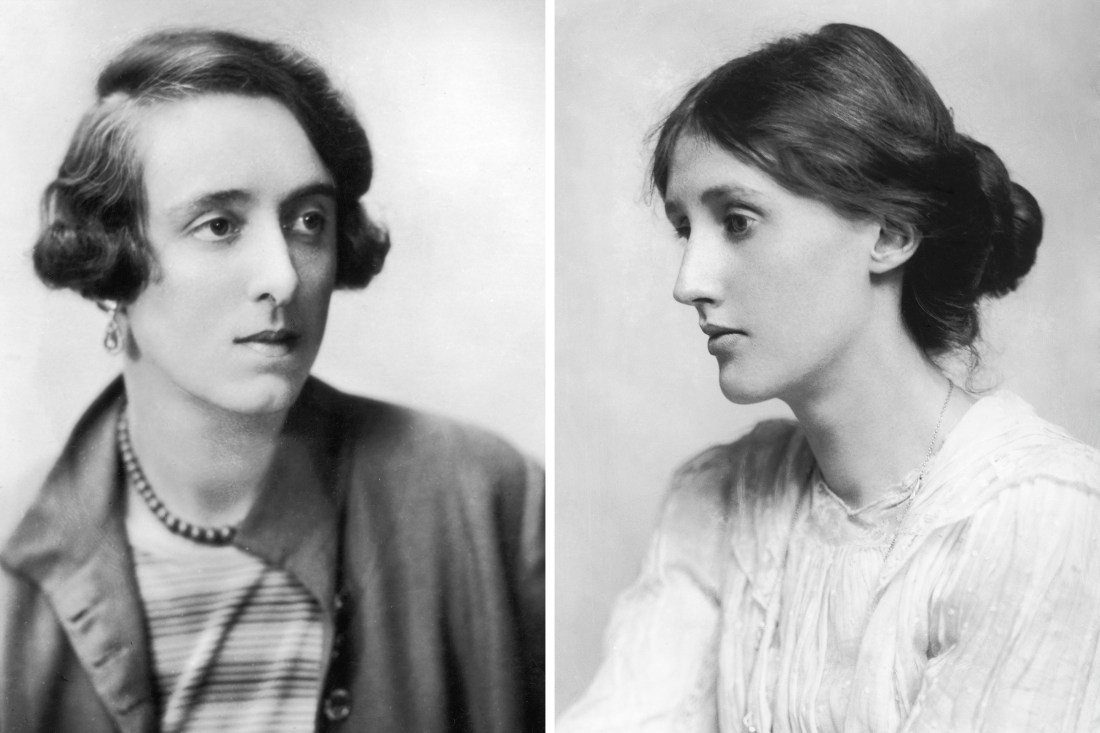
In 1928, Virginia Woolf published Orlando, a novel about a poet who lives for centuries and changes from man to woman. The book was inspired by Vita Sackville-West, with whom Virginia had a decades-long romance and later friendship. Sackville-West’s son, Nigel Nicolson, famously described Orlando as “the longest and most charming love letter in literature.” The book is really an ode to Vita in all her complexities and contradictions and a testament to the power of language and story to express the most complicated human experiences. Fitting, too, that Nicolson likened Orlando to a love letter, since Vita and Virginia wrote letters to one another from their first encounter in 1922 until Virginia’s death in 1941.
virginia-woolf-vita-sackville-west
Vita Sackville-West (left) and Virginia Woolf (right). Photo: Time

In the age of Internet dating, it’s easier than ever to stay connected, but convenience has in some ways come at the expense of creativity. Somewhere along the way, sliding into your crush’s DMs became the primary mode of expressing romantic interest. Love letters, by comparison, seem like a dying art form.

There’s something strangely fascinating about reading another person’s intimate letters, like peering behind a curtain you’re not supposed to. Letters, after all, are meant to be private. Yet, our inclination to uncover the private lives of public figures persists.

Writers like John Keats, Franz Kafka, Emily Dickinson, and Woolf, among many others, were all exceptional diarists and letter-writers as well as poets and novelists. It’s a curious thing to read the most intimate writings of our favourite writers—like realizing your professors are human beings who have entire lives outside of the academy. The letters of writers continue to be published posthumously not only because they make for interesting historical documents, but also because they offer insight into the remarkable and mundane inner lives of often exalted figures.

The love letter, in particular, reflects exactly what makes the medium of letters so special. Call me a hopeless romantic, but reading the most intimate expressions of love and desire between two people is kind of swoon-worthy. The power of reading these love letters comes from the medium itself, which is at once private and public, immediate and remote, intimate and mundane, fleeting and permanent.
Orlando-vita-and-Virginia-012
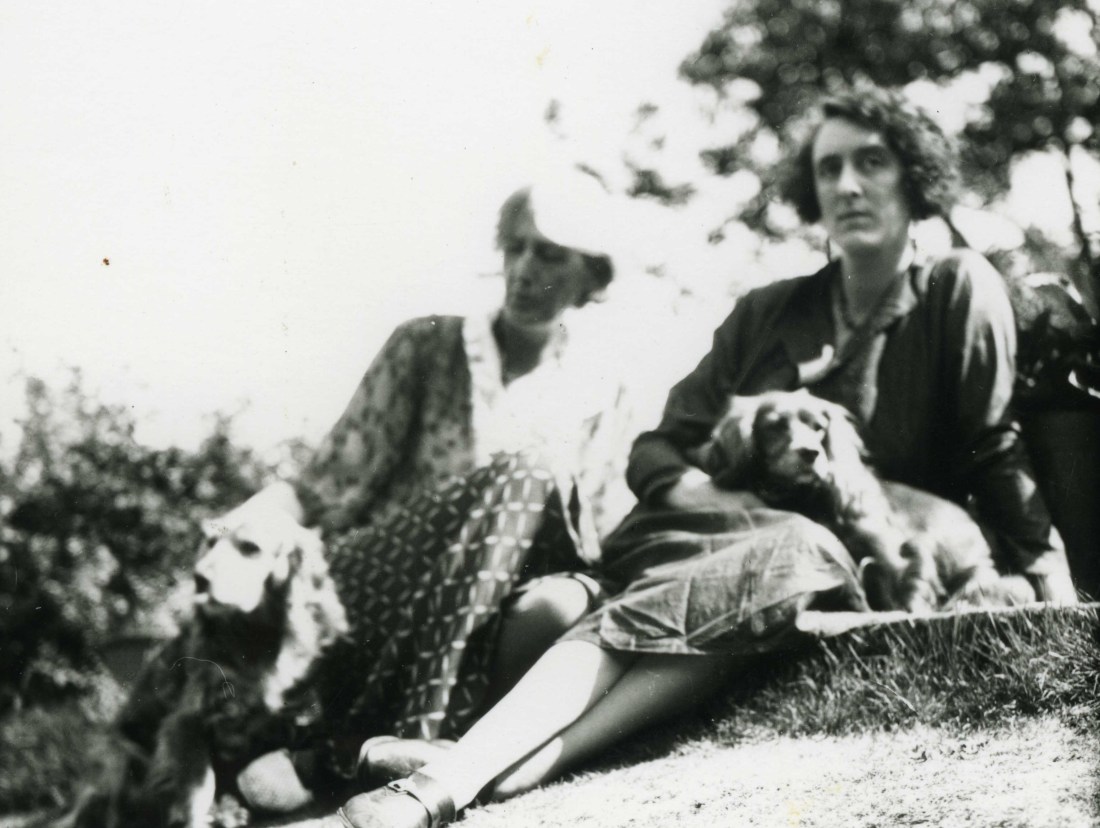
Vita and Virginia and dogs! Photo: Charleston

Vita and Virginia wrote letters to each other throughout the entirety of their complex and shifting relationship, and through those letters, we get a glimpse of just how much the two meant to each other, how much impact each left on the other’s life and art. Their letters to each other are a chronicle of human connection, captured across space and time.

In perhaps my favourite love letter of all time, Vita writes to Virginia:

I am reduced to a thing that wants Virginia. I composed a beautiful letter to you in the sleepless nightmare hours of the night, and it has all gone: I just miss you, in a quite simple desperate human way. You, with all your undumb letters, would never write so elementary a phrase as that; perhaps you wouldn’t even feel it. And yet I believe you’ll be sensible of a little gap. But you’d clothe it in so exquisite a phrase that it should lose a little of its reality. Whereas with me it is quite stark: I miss you even more than I could have believed; and I was prepared to miss you a good deal. So this letter is really just a squeal of pain. It is incredible how essential to me you have become. I suppose you are accustomed to people saying these things. Damn you, spoilt creature; I shan’t make you love me any more by giving myself away like this — But oh my dear, I can’t be clever and stand-offish with you: I love you too much for that. Too truly. You have no idea how stand-offish I can be with people I don’t love. I have brought it to a fine art. But you have broken down my defenses. And I don’t really resent it.

January 1926

That’s the beauty of a letter: it’s there and then it’s gone. Here, Vita puts her feelings in the starkest of terms: simple, honest, vulnerable. But the “little gap” she talks about is present also in the form of the letter. There is always a gap in what we can know from these missives. We get only a glimpse but are unable to fully grasp all that remains unspoken and what happens between the acts. But that’s also what makes reading these letters such a unique experience: we’re only getting a part of the story. Some of it will be forever unavailable to us. And maybe that’s exactly as it should be.

O choose me for your Valentine!

Who sent the first Valentine in North America? The truth might surprise you, as the sender is associated very closely with early Canada.

By Serena Ypelaar

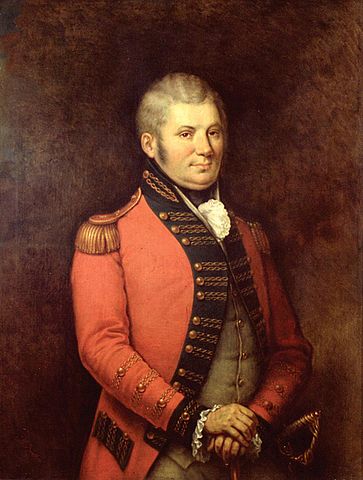
On February 14, 1779, British Lieutenant Colonel John Graves Simcoe, who would later become the founder of York (Toronto) and the first governor of Upper Canada, sent an impassioned valentine – to a Patriot’s daughter.

John Graves Simcoe’s signature. Photo: Wikimedia

Historically, Simcoe is an interestingly dual figure. You may have seen him in TURN: Washington’s Spies (the AMC series I can talk about for days if allowed) or at Fort York National Historic Site if you’re familiar with Toronto’s history.

Lieutenant Governor John Graves Simcoe, painted c. 1881.

In TURN, he’s wholeheartedly vilified based on his true-to-life role in oppressing American colonists and carrying out attacks such as the Massacre at Hancock’s Bridge (1778). But in southern Ontario, he’s venerated as the founder of York, earliest administrator of Upper Canada, and a staunch abolitionist. Simcoe passed the first Act Against Slavery in 1793 (only a year or so after accepting the post of Lieutenant Governor) and ensured that there were no slaves in Upper Canada by 1810 – 24 years before the rest of the British Empire finally abolished slavery in 1834.

The moment I assume the Government of Upper Canada under no modification will I assent to a law that discriminates by dishonest policy between natives of Africa, America, or Europe.

John Graves Simcoe to the Legislative Assembly

Before governing Upper Canada, Simcoe was stationed in Oyster Bay, New York during the American Revolution. He and another officer stayed at the home of notable Patriot Samuel Townsend and his family.

Simcoe, then almost 27, took a liking to Samuel’s 18-year-old daughter Sarah “Sally” Townsend, and it’s said that on Valentine’s Day 1779, he gave her a valentine letter consisting of a 52-line poem.

Fairest Maid, where all is fair
Beauty’s pride and Nature’s care;
To you my heart I must resign
O choose me for your Valentine!

Love, Mighty God! Thou know’st full well
Where all thy Mother’s graces dwell,
Where they inhabit and combine
To fix thy power with spells divine;

Thou know’st what powerful magick lies
Within the round of Sarah’s eyes,
Or darted thence like lightning fires
And Heaven’s own joys around inspires;

Thou know’st my heart will always prove
The shrine of pure unchanging love!
Say; awful God! Since to thy throne
Two ways that lead are only known-

Excerpt from Simcoe’s valentine poem to Sarah Townsend

Thematically, the poem addresses the implications of loving an enemy – apparently such poetic romances truly aren’t just a thing of fiction.

Sarah is known to have had a brief flirtation with Simcoe during his time in Oyster Bay. Declaring his love for her, he asked her to choose him as her valentine, but their relationship was not to be. Simcoe ended up in Upper Canada after the Revolutionary War (1775-1783), and Sarah remained in Oyster Bay. She never married; the valentine was discovered among her possessions after her death in 1842.

It’s unknown whether Sarah returned Simcoe’s feelings.  The nature of their relationship is further complicated by the fact that Sarah is thought to have spied on Simcoe. Sarah’s older brother Robert was a key operative of the Culper Spy Ring, George Washington and Benjamin Tallmadge’s intelligence network (and the core focus in TURN). Under the codename Samuel Culper Jr., Robert Townsend fed secrets to the Ring to advance the Patriot cause.

Legend claims that Sarah overheard Simcoe speaking to Major John André about their plans to take West Point using leaked intelligence from notorious turncoat General Benedict Arnold. Robert’s subsequent tip to the Ring would result in André’s capture and hanging as a spy. Given that the Townsends were working against the British, the relationship between Sarah and Simcoe has a decidedly Romeo-and-Juliet air – the only question is whether Sarah loved him back.

Raynham Hall, the Townsend family home. Photo: Wikimedia

We don’t have any physical written evidence to reveal Sarah’s feelings, but a colonial-era windowpane of the Townsends’ home survives today. This windowpane contains a message scratched into the glass by a British officer to “the adorable Sally Sarah Townsend”. Was it Simcoe who scratched the message? It’s possible, given that he was living there, but not proven.

Where’s the valentine now? It’s preserved in the place where it was first given – Raynham Hall Museum, Oyster Bay. The Townsends’ home is now a historic museum focusing on Robert Townsend’s role as a Patriot spy, as well as the family’s history from the time Raynham Hall was built in 1740.

Amidst the hearts and chocolate, we don’t often stop to consider historic valentines. Valentine-giving is an age-old tradition that tells us a lot about love and the conventions of the time (and the weight and respect that love poetry once commanded!).

As far as Simcoe and Sarah’s story goes, the evidence of this particular love is one-sided; but was the romance one-sided too? We’ll likely never know.