Come for the Gorgeous Ladies, Stay for the Wrestling

With the release of season 3 of Netflix’s GLOW, we take a moment to reflect on professional wrestling, the art of storytelling, and empowered women.

By Adriana Wiszniewska

This may come as a surprise to some who know me, but I used to watch professional wrestling as a kid. Every Monday and Friday night, my brother and I would sit down in front of the TV to watch a rotating cast of burly men (and occasionally women! Trish Stratus FTW) fight each other inside the ring and out. For nine-year-old me, it was the height of entertainment. A Stone Cold Steve Austin action figure sat next to Barbie in my closet and when the show pulled off moments of magic—like the Undertaker rising from the dead in a glorious comeback—I was absolutely blown away, eyes glued to the screen.

johnoliverwrestling
John Oliver tells it like it is. Photo: Imgur

Somewhere along the way, however, my passion for WWE faded and I almost forgot that episode of my childhood. Then I watched GLOW on Netflix and remembered why I used to love wrestling so much. Set in the 80s, GLOW follows a group of oddball women who come together to form the first all-female wrestling show. Here was wrestling presented to me as I remembered it. Not as the butt of a joke. Not as “fake” fighting. Not as mere “soap opera for men.” In fact, GLOW’s particular iteration of wrestling includes very few men at all.

GLOW, which stands for Gorgeous Ladies of Wrestling, was an actual all-female wrestling show that originally ran from 1986 to 1990. It was ridiculous and over-the-top, with storylines about good and evil and walking stereotypes for characters. It had comic interludes and rapping and sketches. It was the modern day equivalent of vaudeville, entertaining millions with theatrics and a sense of humour.

595523912100003400fc4ac1
The Gorgeous Ladies of Wrestling. Photo: Huffpost

You might wonder why a show centred around people fighting each other would incorporate song and dance and tomfoolery. Well, while wrestling is now a billion-dollar industry, it actually began in side shows, carnivals, and vaudeville theatres. Wrestling is not just fighting dressed up with spandex and costumes but a form of performance art in its own right. Characters are larger than life, with designated “faces” (the heroes who garner our sympathy) and “heels” (the villains we love to hate) as well as storylines taking place inside and outside the ring to drive conflict. But while the wrestling is for show, that doesn’t make it any less impressive. It’s true that the outcomes are fixed and the moves are rehearsed. But the athleticism is real. It takes immense strength and ability to make wrestling look real, limit injuries, and throw your body around over and over, night after night.

The magic of GLOW is that it understands that wrestling is more than just play-acting fights. It’s also just plain fun. The real heart of wrestling, as GLOW proves, is its capacity for humour and creative storytelling. Although GLOW starts with a focus on Alison Brie’s Ruth Wilder, it quickly turns into an ensemble piece, showcasing a diverse cast of brilliant and funny women. And that’s what GLOW, both the original wrestling show and the Netflix show it inspired, is really about: a bunch of women empowering themselves and each other through wrestling.

glow
The cast of GLOW (Netflix). Photo: Deadline

In the penultimate episode of GLOW’s first season, the ladies attend a fancy gala, pretending to be recovering drug addicts in order to raise funds for their strange and struggling wrestling show. One by one, they make a show of speechifying to the rich crowd. But when it’s Ruth’s turn to take the stage, she breaks through to something real, admitting to a room full of strangers that she’s made mistakes, big ones, including sleeping with her best friend’s husband.

But then I found wrestling. And it saved me. Coming to the gym every day and seeing these women struggle to use their bodies and learn something new and . . . we did. And it’s a better feeling than drugs.

ruthspeech
Ruth (Alison Brie) describes the power of wrestling. Photo: Netflix

Like the best art, wrestling has the capacity to save. Not in the way a doctor might save a patient, but in the way that only art can—by showing us that we are not alone. GLOW is a TV show that embodies the spirit of pro wrestling. It has comedy and drama and characters you want to root for. And, of course, gorgeous ladies who come together, learn something new, and struggle to use their bodies in ways no one expected of them.

Conservation and Construction in the Limestone City

Canada’s first capital is home to historic buildings and a housing crisis. How does this affect Kingston’s tourism and city planning?

By Daniel Rose

On a recent visit to Fort Henry, I struck up a conversation with two visitors from Philadelphia who were astonished by Kingston’s historic charm. From enclaves of private homes in the downtown core dating back to the early 19th century to historic sites such as Kingston Penitentiary, they were surprised that the changing needs of the city hadn’t led to more mishaps. One remarked that, “In Philly, we’d have bulldozed half the city fifty years ago for a freeway, so good on ya!”

The British Whig building, an amalgamation of the Ontario Bank Building (constructed in 1894) and the Daily British Whig Building (constructed in 1895). Photo: Daniel Rose

As Canada’s first capital and home to the highest concentration of museums per capita in the country, Kingstonians often take their immersion in the country’s history for granted. When my family moved to Kingston in 1998, we visited local museums to get a handle on the city. Once we settled in, I didn’t return to most of them for almost twenty years! Many historic areas are more commonly used as points of reference when giving direction to the visiting tourists (or “seeds” as some old-timers call them) that descend upon the city every year. 

For residents, the historic city brings a significant challenge: the lowest vacancy rate in Ontario. Sites along the waterfront, such as the old train yards on “block D”, remained vacant for decades for fear of stirring up industrial waste. Other swathes of the city cater to the need for university and college student housing. There is no easy fix – per municipal regulations, new downtown buildings must maintain Kingston’s skyline. As a result, iconic locations such as the S&R building incorporate their original façade with a modern interior. These changes have not come without drawbacks, as affordable businesses are replaced with upscale boutiques. Once home to a budget department store, the S&R building is now a posh mixed office and retail space, while block D is now luxury condos and hotels.

The Smith-Robinson Building, formerly home to S&R Department Store. Photo: Waymark

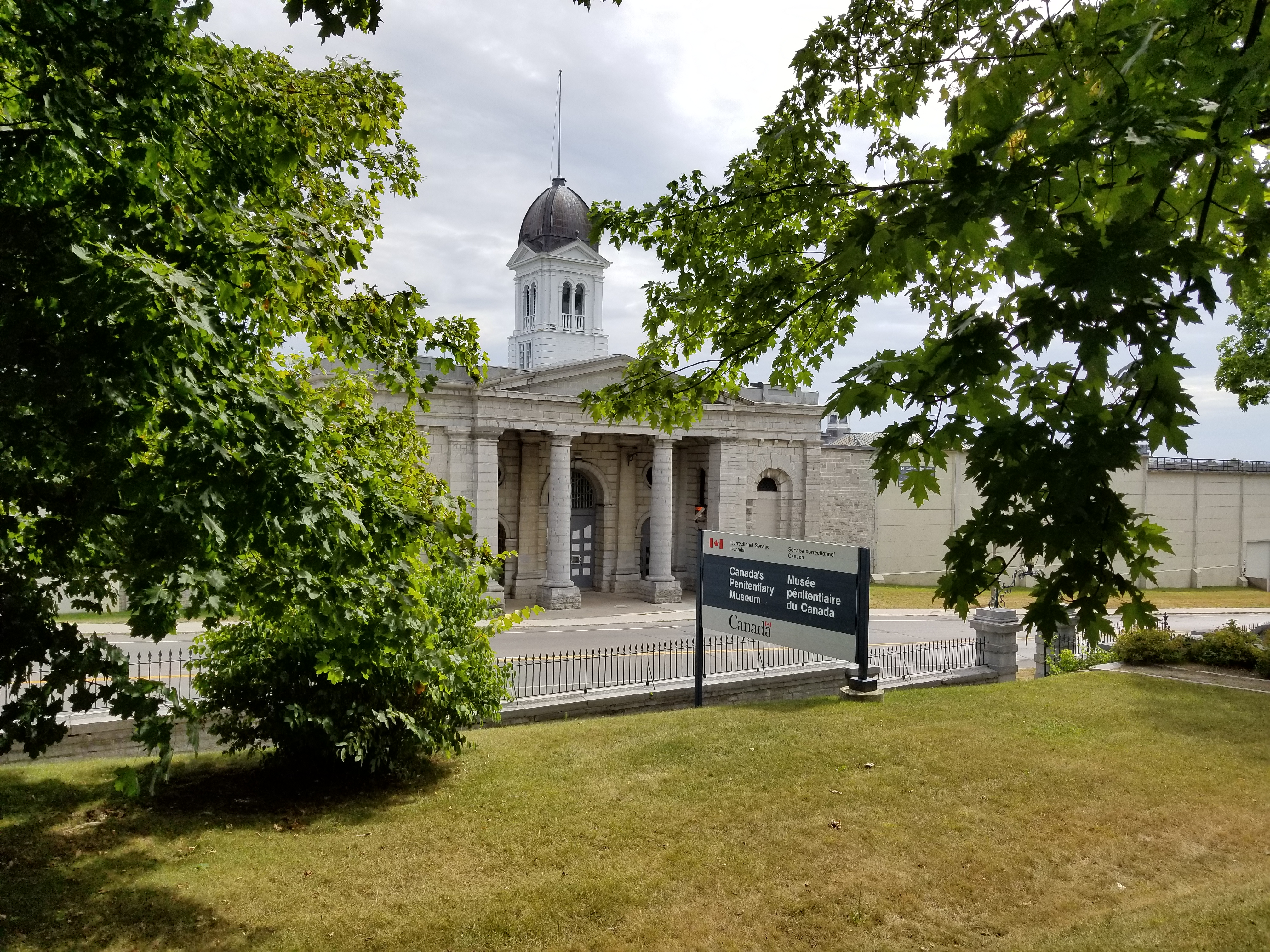
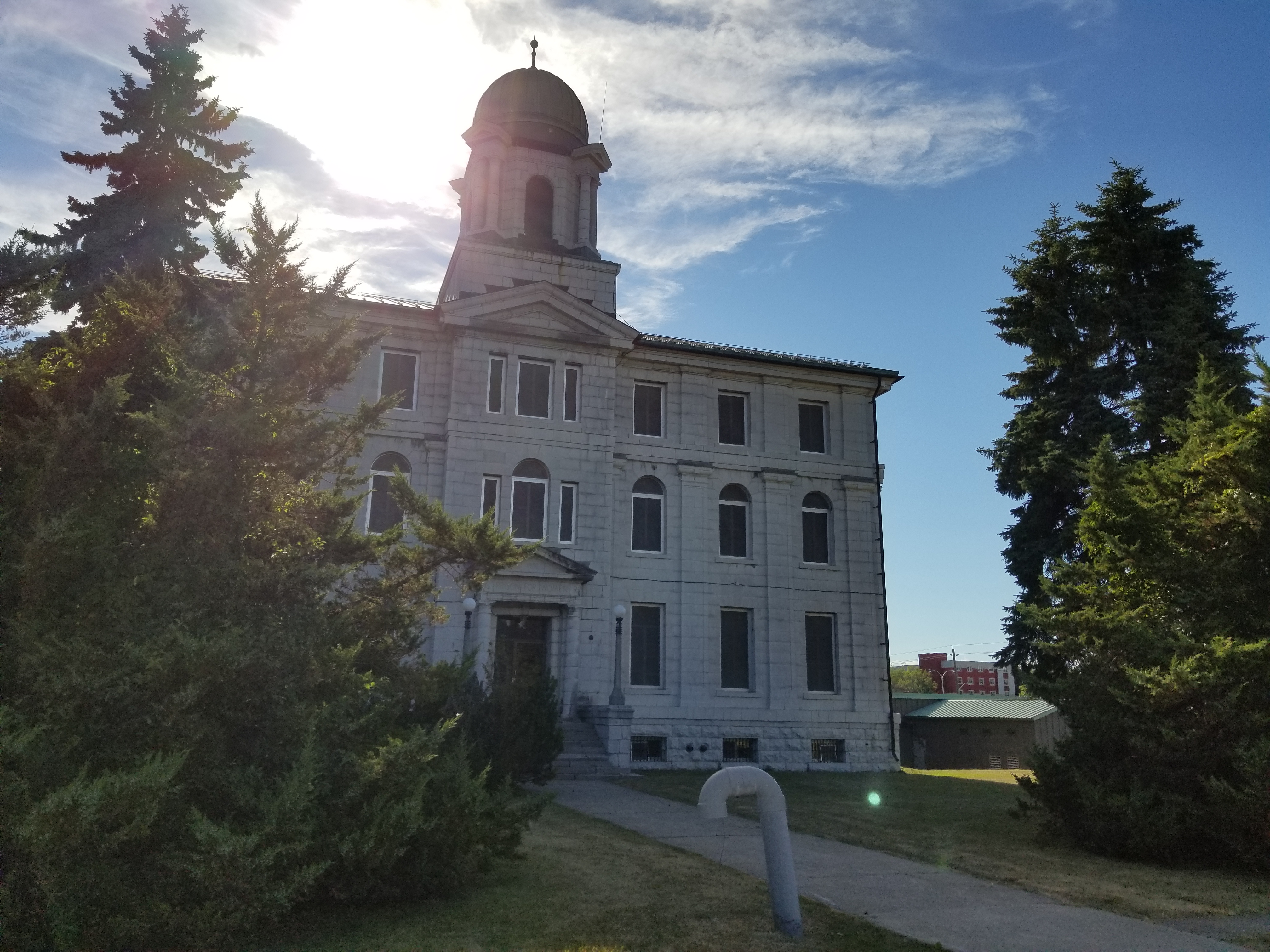
One place where concerns for housing and heritage preservation meet is the land around Kingston Pen and the Prison for Women (P4W). Kingston Pen, opened in 1835 as Canada’s first penitentiary, housed offenders of all ages, genders and backgrounds over its 178 years of operation, while P4W was the only prison for women doing sentences longer than two years in Canada from 1934-2000. Ironically, neither site was considered part of the City of Kingston until the 1960s!  

The North Gate of Kingston Penitentiary, 2018. Photo: Daniel Rose

Each site has changed since closing.  Queen’s University purchased P4W in 2008, demolishing the perimeter wall and additions to the original structure. In 2018, a private developer purchased P4W with the intent of building residential, office and commercial properties incorporating the prison. Meanwhile, Kingston Pen is still owned by Corrections Canada, with a partnership with a local parks commission bringing in thousands of visitors every year to attend guided tours featuring testimony from retired staff.

How can places of significant national heritage with a complicated legacy incorporate the memorializing nature of an historic site while accommodating the need for residential space? In some ways, the Kingston Pen tours acknowledge the difficult and dangerous work staff put in during the penitentiary’s operation. Without any inmate testimony, however, the tours can feel like an incomplete picture of operations. Some activists, such as the P4W Memorial Collective, have suggested establishing a memorial garden on the grounds of P4W to acknowledge the hardships encountered by the women incarcerated in the prison. While an intriguing suggestion that holds merit, this decision ultimately remains in the hands of the developer who purchased the site.  

The front entrance to Prison for Women (P4W), 2018. Photo: Daniel Rose

The fate of Kingston Pen and P4W remains in motion. The contract for tours at Kingston Pen is renewed on a year-to-year basis, while development plans for P4W are still in their infancy. The decisions taken on both sites will affect locals and tourists alike.

Reflections and Realizations on a Wizard’s Birthday

Like a fine wine, a book, too, can get better with age. With age comes maturity; with maturity comes appreciation. This is all to say that a reread of a prolific childhood novel can leave one with a much greater understanding and respect in adulthood.

By Bretton Weir

July 31st comes but once a year. To most, this seems like it could be nothing more than an arbitrary date; to others, this day celebrates the birth of one of literature’s most prolific heroes: Harry Potter turns 39. To commemorate this day, a Harry Potter-inspired post is a (room of) requirement.

If I baked, I’d make this cake in celebration.
Source: Giphy

I am a fan of Harry Potter. I grew up with the book series and enjoyed the films; however, I recognize that my passive appreciation doesn’t hold a match to the fanaticism of many, including a few of the contributing writers of The Mindful Rambler.

I wanted to write this post, however, because I have come to this realization as an adult: The Chamber of Secrets is the book I underrated most growing up BUT I have come to realize it is a lynch pin to the plot of the entire series. 

Building on Perfection

The first novel in the series, The Philosopher’s Stone, is bliss. It gives us all the tools to understand the Wizarding World — the grandeur, the allure, the sense of place Harry finds so comforting, and it sets up the conflict of good versus evil. However, it can stand alone as a novel. Independent. A one-off.

The Chamber of Secrets takes what the first book establishes, uses it as its foundation, and further builds up and solidifies the future of the entire series. 

Expanding the Wizarding World

In this second installment, we get to see more of what makes the Wizarding World so magnificent. For instance, we are introduced to the Weasleys’ homestead, The Burrow. This is a location that will continue to represent a place of belonging for Harry throughout the series. Or take the Floo network, a magical highway of sorts, connecting all the fireplaces of the Wizarding World together.

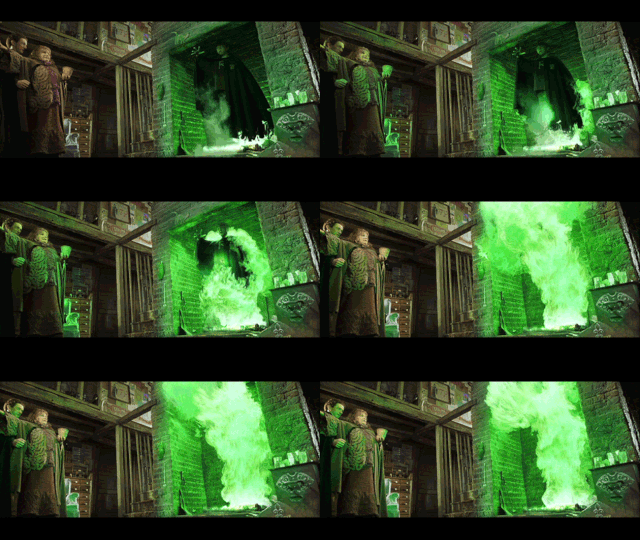
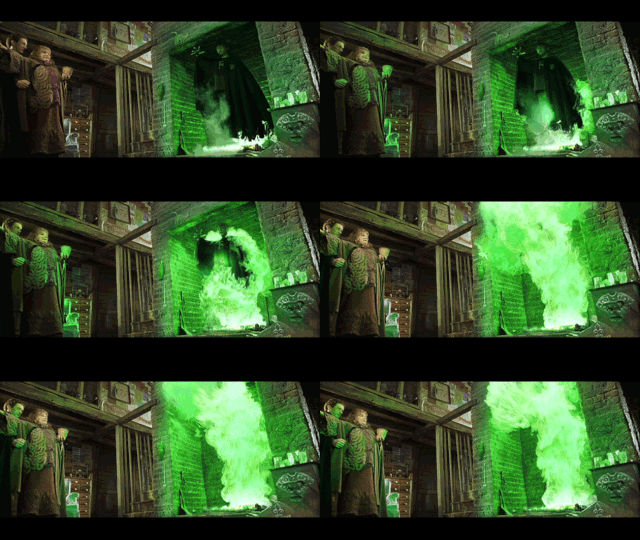
Accio: Floo Powder
Source: Giphy

While all very intriguing, what The Chamber of Secrets does so well is in its setup of the extent of Voldemort’s evil and how Harry will eventually meet and defeat his foe. 

Horcruxes FTW

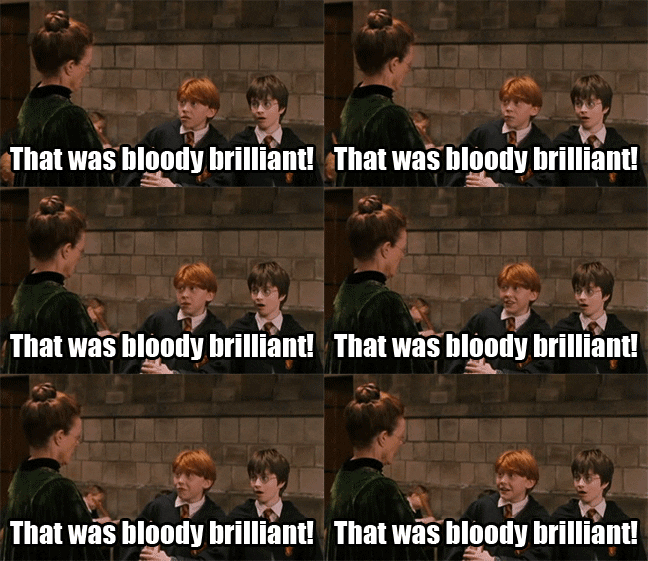
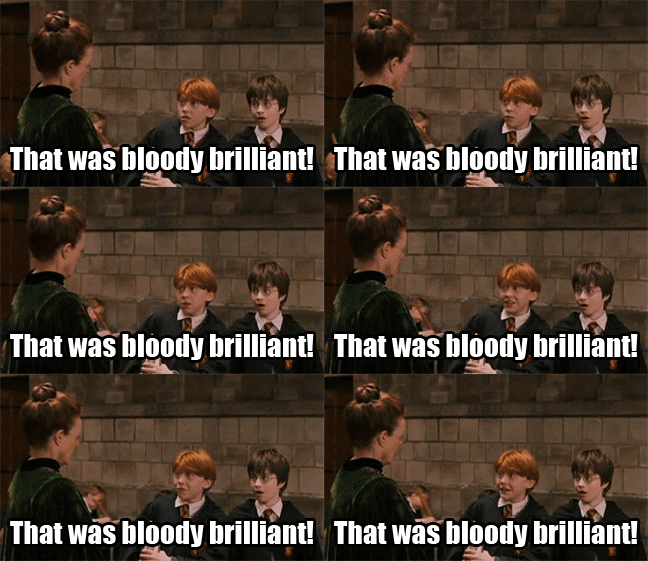
Yes, Voldemort is the big bad. And yes, we know that from the start. What The Chamber of Secrets does is covertly introduce us to the concept of Horcruxes — the physical objects in which Voldemort has split his soul. As any reader knows, the Horcruxes are what drive the plot and action of the last third of the series. For J.K. Rowling to plant this seed so early in the series, however, speaks to her ingenuity and thoughtful long-term planning. The fact Harry is able to face and defeat one of these manifestations of evil (Tom Riddle’s diary) so early gives us some comforting foresight. As well, the continued use of the basilisk as a further symbol of Voldemort’s terror is very affecting. Furthermore, this symbolism contrasts the fact that the fangs of this creature are a powerful tool in destroying the evil they seem to represent. Two words I use to describe this: bloody brilliant.

Wise words, Ronald Weasley. Wise words.
Source: Giphy

With all this being said, I would suggest we all give The Chamber of Secrets a reread. Heck, why not a reread of the entire series? I reckon you’ll be amazed at what you’ll pick up on another pass through the books.

What are you thoughts on The Chamber of Secrets, and Harry Potter, at large? Drop us a comment below!

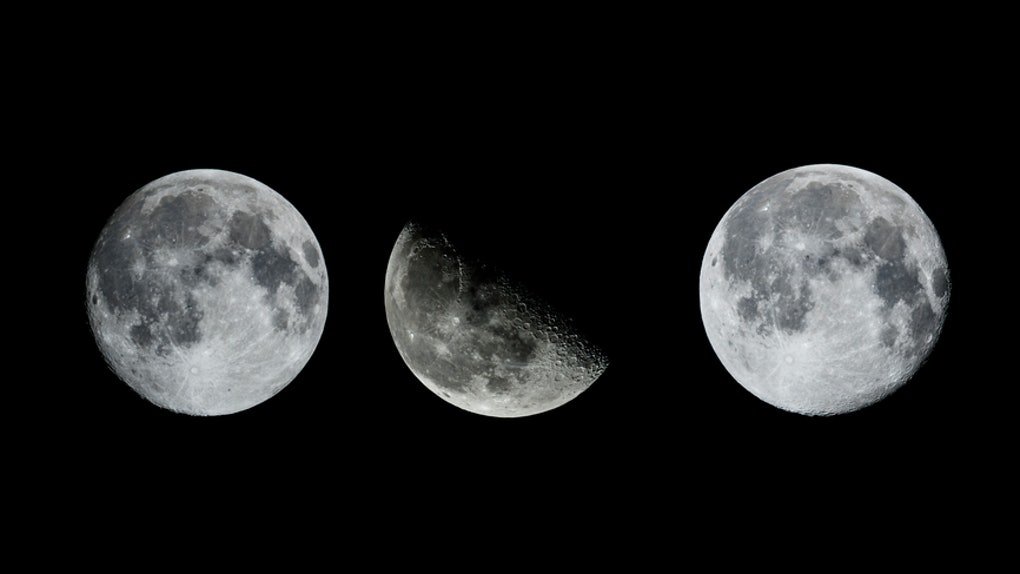
Fly Me to the Moon … Wait, Didn’t We Do That Already?

Humans first landed on the Moon 50 years ago, but some people still refuse to believe it happened. Moon hoax conspiracy theories prove that interpretation is a highly subjective practice regardless of the evidence.

By Serena Ypelaar

Can you believe we are 50 years out from the first Moon landing? That’s right: on July 20, 1969, humans set foot on the Moon for the first time in history. 

Baby boomers and their parents might remember watching the footage of the Apollo 11 mission on television, which was a critical medium for broadcasting the American feat to the entire world. The context of the Moon landing as a Cold War accomplishment, especially in the Space Race between the United States and the Soviet Union, makes the phenomenon of the Moon landing broadcast even more significant.

Those who were alive back then saw it – but not everyone believes. It may seem bizarre since the fact that humans have landed on the Moon is generally established today, but there are still people out there who think it never happened – that the entire Apollo program was a hoax, a lie fabricated by NASA using television as an aid to their deceit. 

Buzz Aldrin on the Moon, as photographed by Neil Armstrong on the Apollo 11 mission in 1969. Photo: Wikipedia

How can a conspiracy theory (or theories, as there are many variations of the argument that the Moon landing didn’t actually happen) survive for 50 years, seemingly in defiance of logic?

I’ve been thinking about it, and I think it comes down to the way evidence is interpreted. Any given piece of evidence – whether it be presented visually, aurally or otherwise – can either be accepted as part of a coherent narrative or rejected as incredible. Conspiracy theories come from those who refuse to accept the mainstream narrative, in this case that the first Moon landing happened on July 20, 1969, because they question the veracity of the evidence. 

People are still fascinated by the footage of the Moon landing, from preparation to takeoff to landing. CNN has been airing the documentary Apollo 11, directed by Todd Douglas Miller and featuring “rare and never-before-seen large-format film footage”. The film itself is also an interpretation of the event, since creating it involved selecting and editing clips to tell the story in a way that is understandable for mass consumption. And yet, the compendium of Moon landing footage out there is not convincing enough for conspiracists, who claim it’s part of a massive hoax. 

From the assertion that NASA roped in Stanley Kubrick to direct film footage of a faked Moon landing to the belief that up to 400,000 personnel helped develop and release the alleged false narrative over 10 years, all of the conspiracy theories are wildly imaginative and also cannot possibly coexist, therefore undermining the credibility of each one. 

The nature of conspiracy theories is to interpret pieces of tangible evidence or content through a specific lens or argument, which could be motivated by confirmation bias or another fallacy of logic that involves distorting or discrediting evidence to make it suit an alternative story. In the case of the Moon landing hoax conspiracies, people assert that evidence of the Moon landings, most notably footage, is faulty, and because it is (in their opinion) faulty, it must be fabricated. 

There’s an entire list of supposed issues with NASA’s Moon landing, issues which have been cited in conspiracies but have since been refuted by scientists. But if pointing out flaws in the footage was the main ammunition of the conspiracists, do they then suggest that reality must be perfect and errors indicate fabrication? The logical reasoning is hard to follow, and yet conspiracists are inclined to occupy their minds with a kind of subversive interpretive technique in order to pursue the established history. 

Still from “Le Voyage Dans La Lune” / “A Trip to the Moon”, the 1902 film by Georges Méliès that fascinated the world. Photo: Wikipedia

What does this mean in the greater scheme of history and conspiracy theories? I’d bet money they will continue to thrive as long as there’s someone to tout them and someone else to buy in. And by all means, it’s important and valuable to question the prevalent perspectives of history and who preserves those narratives in the first place. But at the heart of conspiracy theory is a delight, I think, in observing that which others have not observed, and believing in a secret truth that others can’t hope to access unless they join in and enter this underground interpretative world.

As for me, I think I’d rather just enjoy the beauty and majesty of the Moon – at a comfortable distance. 

.

Looking for a concept album to celebrate the Moon landing? Try “Tranquility Base Hotel + Casino” by Arctic Monkeys – a record about a hotel on the Moon.

A March Through Time: The Continued Appeal of Re-enactments

How do spectacles like historical re-enactments help place us at the scene of a major historical event? By using sensory stimulation, historic sites ensure visitors keep coming back (in time) for more.

By Serena Ypelaar

I love military re-enactments. There’s just something about showing up at a historic fort and catching sight of thousands of redcoats, canvas tents, musket fire and cannon blasts that offers pure indulgence for any history buff, especially one who grew up in the Upper Canada region. I’ve been involved with the history of the War of 1812 since I was a kid, having slept in the soldiers’ barracks at Fort York (Toronto, ON) twice for Girl Guides camp. Later, as a teenager, I started volunteering at the Fort; I also wrote my IB Programme thesis on Tecumseh’s Indigenous Confederacy before and during the War of 1812.

During the bicentennial commemorations of the War of 1812, I could be found at the Battle of Queenston Heights, the taking of Fort George, and the Battle of York re-enactments. It’s been six or seven years since I last attended an event, so when I returned to Fort George yesterday it felt like a long-awaited homecoming.

Re-enactors at Fort George National Historic Site, 13 July 2019. Photo: Nicholas Ypelaar

These kinds of events tend to draw a huge crowd, for obvious reasons – the performances are almost like 200-year-old action movies. People love loud bangs and smoke, music, and (I say with a wry smile) violence – all of which are sensational elements of performance. Complete with lemonade served in a corked glass bottle, regimental fife and drum corps, and a sutler’s row, the immersion level at Fort George yesterday was off the charts.

Military re-enactments offer the sights, sounds and smells of battle, which, though a dynamic and exciting prospect, should also be treated with respect. The Battle of Fort George re-enactment included a lament performed by the musical corps to honour the victims of the war who fought and died at the site – as well as Indigenous peoples who supported either the British or the Americans and yet were not compensated with their promised outcomes. Certainly, military conflict isn’t actually something to shout “huzzah!” about – it’s a grim product of colonial interests. But by portraying early military combat at the original site of its happening, interpreters and re-enactors can educate visitors on the scale, impact, and ongoing legacies of battles.

American troops attempting to invade Fort George. Photo: Nicholas Ypelaar

Re-enactment is an active form of interpretation which immerses the visitor and offers what I call a “passive” visitor experience – passive in a way that indicates that on-site interpretation is excellent. The more organically information is presented to me as a visitor, the less I have to work to picture the historic site in use – meaning I can be passive during the learning process since I’m provided with plenty of interpretation and storytelling. I don’t even need to read text during a re-enactment – I’m shown, not told, what happened. The spectacle aspect creates emotional reactions, and the impressive visuals are what I remember. At the Battle of Queenston Heights re-enactment, when British-Indigenous leader John Norton (Teyoninhokarawen) emerged to lead the Mohawk warriors into battle, the audience applauded its heartiest – something which intrigued me, and which I haven’t ever forgotten.

There are numerous complicated perspectives in the War of 1812, and it can be a lot to grasp. What I found excellent at this year’s Fort George re-enactment was the commentary provided throughout. When the two interpreters first started narrating the battle, I thought it would be annoying, but it was actually so informative. I learned tactical insights about what was happening on both sides – the invading American contingent and the defending British & Indigenous forces. Visitors from both sides of the border had come to attend, and I found that hearing the context imparted valuable knowledge to the audience, myself included. It also demonstrated the re-enactors’ commitment to authenticity, as actions such as “flanking” the invaders were explained, and so on. It gave the battle meaning, and I felt confident I could then share my tactical understanding of the history with others in the future.

Re-enactments animate historic sites, meeting visitors where they’re at – in the 21st century. I didn’t have to struggle to picture the broad expanse of grass as a battlefield because it became one, simulated before my eyes. I was transported into the early 19th century, with historic vendors selling historic wares and wearing historical clothing. And the re-enactors themselves get to explore historical research in a thoroughly hands-on way – stepping into the soldiers’/warriors’ shoes and living history.

That’s why I jump at the chance to go. I get to witness history … or at least the closest thing to it.

A Tale of Two Biopics

Elton John’s biopic Rocketman is out (pun intended) and as expected, people are comparing it with Bohemian Rhapsody. But the difference in vantage points precludes direct comparison, instead highlighting the nuances of how the biographer affects the biography. 

By Serena Ypelaar 

Let’s get one thing straight before we dive back into biopics: I don’t want to compare Bohemian Rhapsody (2018) and Rocketman (2019) as overall films. To do so would be to confine each by relating them too much to one another, when in fact I find they’re pretty different in tone. But that leads me to this article, in which I’ll analyze just one aspect of the films: voice. (Surprisingly not in the context of singing.) How does authorship of a biography, specifically in the biopic film genre, affect how a story is told? 

Take Bohemian Rhapsody, for starters. It was produced and released long after Freddie Mercury’s death but chronicles his rise to fame and his artistic legacy in what I feel is a tasteful tribute. It’s been criticized by fans for simplifying the LGBTQ2+ narrative and Freddie’s diagnosis with AIDS, as well as for some sequential inaccuracies – but as a casual Queen listener myself, I do favour a cohesive story flow over pinpoint accuracy. Some other stories always make me foam at the mouth in the name of authenticity (*ahemPrideandPrejudice*), but I can appreciate a solid, tightened-up story especially where distilling someone’s life into a consumable, 2-hour flick is concerned. BoRhap delivers on that front. 

Rami Malek as Freddie Mercury of Queen, in Bohemian Rhapsody. Photo: NME / Alamy

But it’s fascinating, with the recent release of Elton John biopic Rocketman, to behold the variance in tone thanks to its vantage point. This biopic doesn’t tell the story about Sir Elton John. Elton John tells you his story himself (also condensed but mostly accurate), since he’s still living and was personally involved in the project as an executive producer alongside his husband David Furnish. Knowing this, I felt while watching the movie that I could pick up the difference between the two films in terms of voice. Rocketman is bolder when it comes to the personal trials of its subject, tackling issues such as substance abuse, LGBTQ2+ experiences and homophobia, mental health, and the burdens of fame. 

Taron Egerton as Elton John and Jamie Bell as Bernie Taupin in Rocketman (2019). Photo: IMDb

Bohemian Rhapsody definitely touched on a number of these topics too, but seemed to handle them much more cautiously in terms of Mercury’s experiences within them. I felt that there was a more reverent tone toward Mercury and a distance from the grittier parts of his story – understandably. Producing a legacy biopic means celebrating an artist’s achievements – and as Mercury is no longer present to have agency over his story, writers and producers took the utmost care, perhaps scaling down difficult topics a bit to avoid making any controversial statements. Getting inside Mercury’s head and obtaining an insider perspective of his emotions in each scene is no longer possible, so his life had to be interpreted more from the outside. It makes perfect sense, especially when loved ones and former Queen members Brian May and Roger Taylor, who were film consultants, are watching the film – their approval matters, as does the feeling that the film does justice to Mercury’s life and experiences. 

On the other hand, Rocketman pulled out all the stops, no holds barred. John and Furnish didn’t quail when it came to plunging into the darker underbelly of John’s lowest moments – the result was an intensely honest human experience, as John and his deepest insecurities and struggles are laid bare for viewers. Again, it’s not surprising that Rocketman‘s perspective is more internally oriented – it’s John’s story to tell. He has direct ownership over his life and how he presents it to others, and he’s fearlessly made use of it. 

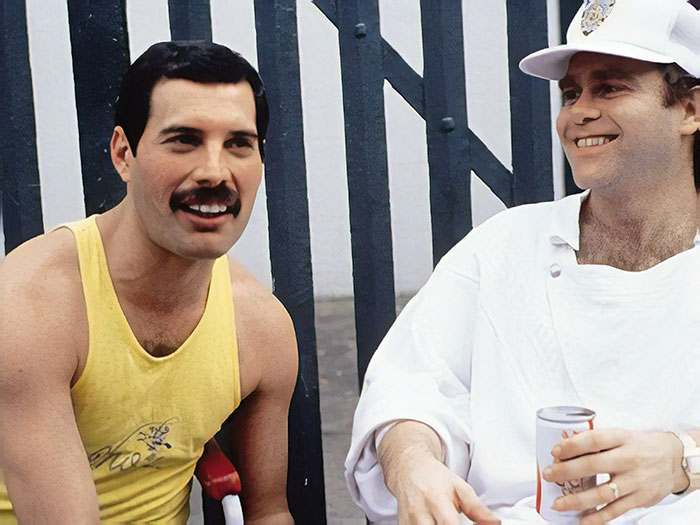
The real Freddie Mercury and Elton John hanging out. Photo: Pinterest

You could say, then, that Bohemian Rhapsody is more of a biography while Rocketman is an autobiography. The two modes of storytelling vary from one another, and the products of each come through in their respective films. BoRhap is a glossy, uplifting vignette of Freddie Mercury’s genius from the perspective of those who remember him fondly, and Rocketman is an extremely self-aware, moodier take on fame and collaboration, Elton John’s way of thanking (and alternately, condemning) those who were a part of his journey, depending on their roles in his life. 

Both films are intriguing, with common themes of artistic talent, loneliness, and love. Yet each has its own priorities for preserving the story of its subject. Although I said I resent too much direct comparison of these two films (they both offer their own merits), the inevitability of it within the genre has enabled me to really ponder creatorship and how it shapes narrative. Next time you’re watching a biopic, ask yourself who’s telling the story and how that affects its portrayal. I’d bet it’ll help you appreciate the subject’s life even more.

Canadian Music Picks 2019: Contemporary

We dive deep into some newer tracks, littered with a few favourites, on the Canadian contemporary music scene.

By Serena Ypelaar

Hey readers! Happy Canada Day. If you’ve either been reading The Mindful Rambler or spoken to me for more than a sec, you’ll know I’m obsessed with music, especially in the alternative rock/indie/punk genres. Last year I broke down some of my top Canadian music picks, both contemporary and classic. This Canada Day, I’ve created a new list of tracks for your summer – all by Canadian artists.

Toronto-based indie pop band Alvvays. Photo: Rolling Stone

I thought it’d be nice to revel in the present and look to the future this time around, so I’ve got a strictly contemporary playlist for your listening pleasure. Without further ado, here’s the latest curated #CanCon playlist, courtesy of The Mindful Rambler.

CanCon: Contemporary 🍁

Just Here With My Friends – The Darcys & Leah Fay
You Already Know – Arcade Fire
Map Of The World – City and Colour
Afraid Of Heights – Billy Talent
It’s Alright – Mother Mother
Bathed In Light – The Dirty Nil
There’s Nothing Holdin’ Me Back – Shawn Mendes
Saturday Night – Arkells
Side Walk When She Walks – Alexisonfire
If You Want It – Sam Roberts
You Want It Darker – Leonard Cohen
Forest Fire – Wintersleep
How I Feel – A Tribe Called Red, Shad, Leonard Sumner, Northern Voice
Johnny + Mary – July Talk
Who’s With Me – Ubiquitous Synergy Seeker
Rhythms – Sum 41
Icebreaker – Tanya Tagaq
Get Over It – Hollerado
NVR 4EVR – Death From Above
Trust – Half Moon Run
Don’t Matter to Me (feat. Michael Jackson) – Drake
Ballad of a Poet – Our Lady Peace
Want What You Got – The Beaches
Everything is Alright – The Glorious Sons
All I Need – Shad, Yukon Blonde
Gold Guns Girls – Metric
I Feel It All – Feist
I Don’t Know – The Sheepdogs
Ultestakon – Jeremy Dutcher
The Lion – Monster Truck
Boujee Natives – Snotty Nose Rez Kids
Pressure – Sam Coffey and the Iron Lungs
Saved By A Waif – Alvvays
The High Road – Three Days Grace

Let me know what you think of this year’s selections!

“The Love that Dare Not Speak its Name”

Oscar Wilde, the Irish poet and playwright known for his unmatched wit and, infamously, for his sexuality, defined what it is to be unapologetically proud.

By Serena Ypelaar

There were no Pride parades in his day, but Oscar Wilde’s openness on the streets of London arguably comprises the Victorian equivalent.

Growing up in Merrion Square in Dublin (which I just visited last month), Wilde moved to London and settled there for much of his life. He’s celebrated as a gay icon, but it’s little known that he was once in love with the woman who would become Bram Stoker’s wife, Florence Balcombe. Wilde was devastated when she chose to marry Stoker over him. He proposed to two other women before marrying Constance Lloyd, with whom he had two sons. It’s said that Wilde loved Constance, though of course he’s best known to have engaged in relations with numerous men. Today we’d probably call him bisexual, but Wilde considered himself “Socratic” when it came to love.

Oscar Wilde grew up in this house at 1 Merrion Square, Dublin. Photo: Serena Ypelaar

Wilde was proud of his identity – and quite open with his sexuality especially by the standards of the time. Yet even he had to hide who he was to avoid persecution in the form of a criminal trial. In 1895 Wilde was convicted of gross indecency, a homophobic law in the United Kingdom which made same-sex relations illegal for men.

Wilde wasn’t officially out yet when he toured North America for his lecture series on aestheticism in the early 1880s; but as he dressed himself flamboyantly and tended to push the envelope with his sardonic and witty manner, he had cultivated a considerable reputation. The Marquess of Lorne, 9th Duke of Argyll and fourth Governor General of Canada, even declined to meet Oscar Wilde lest ongoing rumours of his own suspected homosexuality be exacerbated. All the while, Wilde had not a care in the world what people thought of his effeminacy.

In 1882 (aged 27), he watched a lacrosse match from the Lieutenant Governor’s box in Toronto, Canada, and was said to have remarked to the Toronto Globe newspaper on his great appreciation for “a tall, well-built defence man”. While Wilde had no qualms about public displays of same-sex interactions, having once kissed a waiter in a restaurant (and possibly Walt Whitman too), such actions were unforgivable in the formal courts back in England.

Oscar Wilde in 1882, by Napoleon Sarony. Photo: Wikimedia

Lord Alfred “Bosie” Douglas, Oscar Wilde’s most famous lover, wrote a poem titled “Two Loves” (1894), which ends with the phrase “I am the Love that dare not speak its name.” The line was used against Wilde in his trial when he was charged by Douglas’ father, the Marquess of Queensberry, who suspected the two gentlemen’s romance and abhorred it. Queensberry demanded that Wilde cut ties with Douglas, persisting despite Wilde’s insouciance.

Queensberry: “I do not say that you are [homosexual], but you look it, and pose at it, which is just as bad. And if I catch you and my son again in any public restaurant I will thrash you.”

Wilde: “I don’t know what the Queensberry rules are, but the Oscar Wilde rule is to shoot on sight.”

An 1894 exchange between The Marquess of Queensberry and Oscar Wilde at Wilde’s residence, 16 Tite Street, London

Unwisely, Wilde pressed charges against Queensberry when the latter left a calling card at Wilde’s club reading “For Oscar Wilde, posing somdomite [sic]”. Incensed by what he took for a public accusation of sodomy, Wilde sued for libel, but it was this legal action which led to Queensberry’s acquittal and counter-suit against Wilde. Having procured evidence of Wilde’s liaisons with male prostitutes alongside letters to Douglas, Queensberry had cornered Wilde. Douglas’ poem was interpreted as a euphemism for sodomy, which Wilde denied, but evidence was stacking up against him. Out in society, his dandyish reputation and conflicts with Queensberry caused him little harm, but taking the feud to the courtroom proved to be Wilde’s undoing. He was convicted and sentenced to two years’ hard labour. His imprisonment from 1895 to 1897 spurred his decline, and in 1900 he died of meningitis in France – but not before being reunited with Douglas for a time.

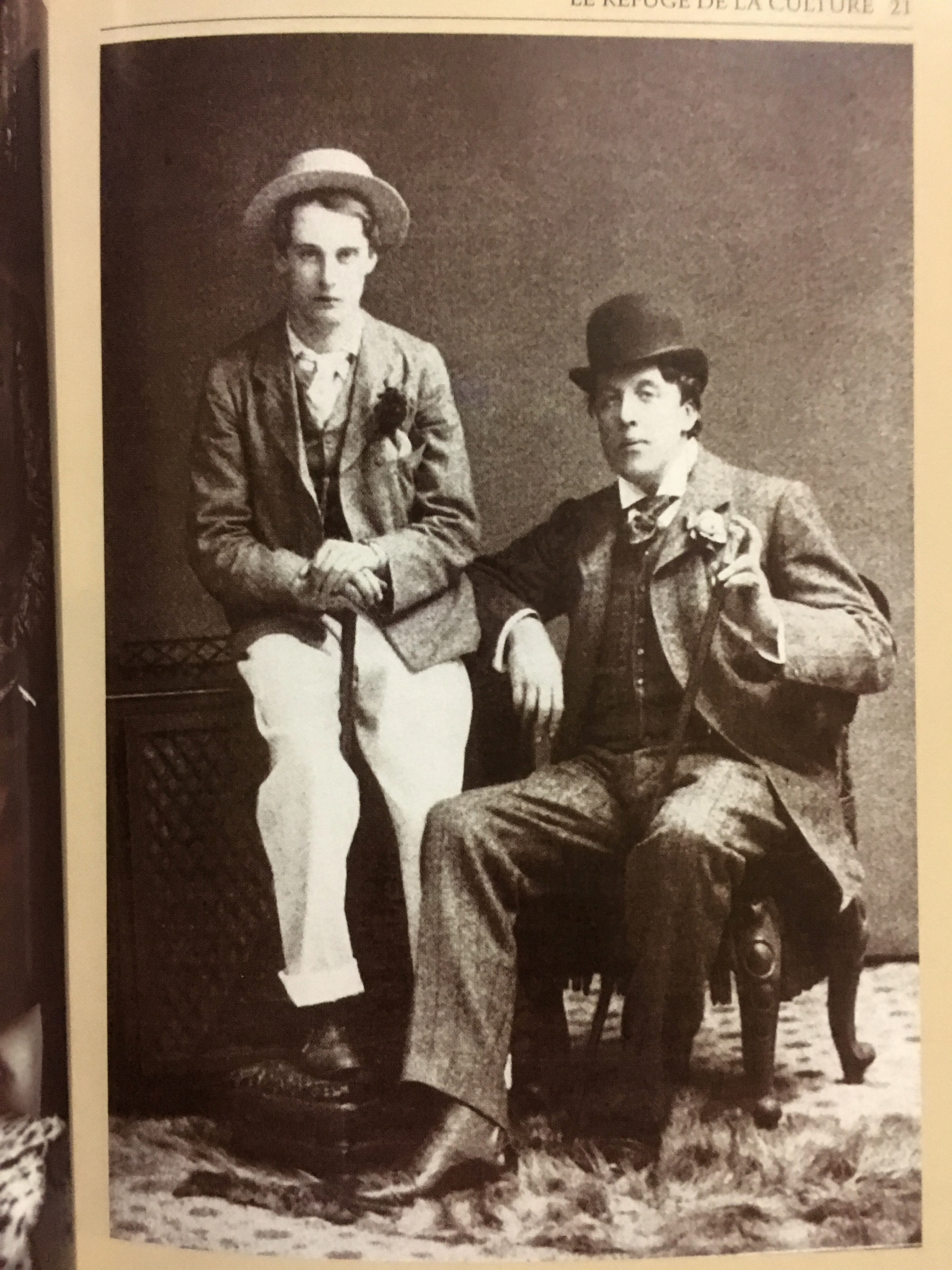
Lord Alfred “Bosie” Douglas with Oscar Wilde in 1894. Photo: Wikimedia

In continuing to be himself at all costs, Oscar Wilde was extraordinarily brave in the face of so much discrimination. And yet he had to resort to denying his same-sex encounters in the name of self-preservation. He was incarcerated for his defiance of society’s norms, and he fell from public regard. It wasn’t easy to be queer in the 1890s. Society may have taken strides toward equality and respect since, but that doesn’t mean it’s easy now, either.

What does Wilde’s life over 100 years ago tell us about Pride today? Namely that there are still obstacles to freedom, love, and tolerance, but that the LGBTQ2+ community deserves the right to a parade. Not just the organized Pride parades that take place around the world, but the mere act of parading down the street during day-to-day life: open, out, and free, living authentically without retribution. So-called “Straight Pride parades” happen every single day with the simple privilege of going out into the world without discrimination. The LGBTQ2+ Pride parade should happen every day too – because queer individuals have every reason to be proud.

Unfinished Austen: The Watsons

Unlike Austen’s other incomplete novel Sanditon, there are hints as to how The Watsons was meant to end. But does knowing the ending mean that the reader will be more satisfied with what we have of Austen’s work?

By Sadie MacDonald

Time for another Unfinished Austen discussion! I wrote about Sanditon, Austen’s last (incomplete) novel, in March. Let’s backtrack to an unfinished novel from the middle of Austen’s career: The Watsons. Images of the manuscript are available online (as well as edited full text). The Watsons is shorter than Sanditon, though we know more about its unwritten plot. Even so, after reading it, I feel wistful for what could’ve been.

austen-pins
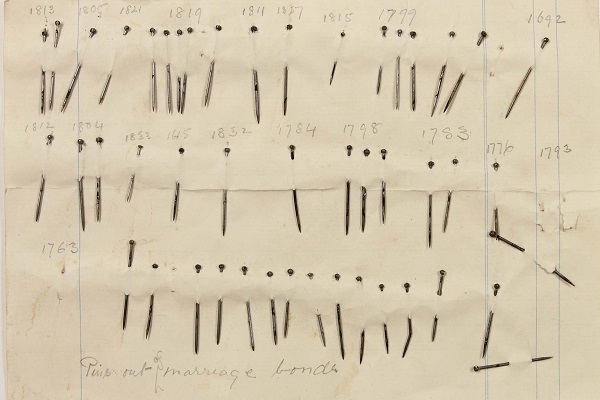
Jane Austen made rewrites to the draft of The Watsons by affixing additional scraps of paper to the manuscript with pins, as shown here. When Microsoft Word isn’t an option, you make do. Photo: Open Culture

Austen’s reasons for abandoning The Watsons aren’t fully known. According to Austen’s great-niece Fanny Lefroy, Austen began the novel “somewhere in 1804… but her father died early in 1805 and it was never finished.” The death of Austen’s father George, who had encouraged his daughter to write, was a serious emotional blow, especially considering that Austen’s close friend Anne Lefroy had died suddenly the month before. Furthermore, George Austen’s death forced Jane, her sister Cassandra, and their mother to depend on relatives for their livelihood. Understandably, Austen was not a prolific writer during those years.

While Austen eventually wrote other novels, she never completed The Watsons, though the manuscript features extensive revisions. The subject matter likely became too personal for her, as the Watson patriarch was supposed to die, casting his daughters in an uncertain position (more on that later). Whatever the case, the fragment remained unpublished until James Edward Austen-Leigh released it in A Memoir of Jane Austen in 1871.

875-3970-lb
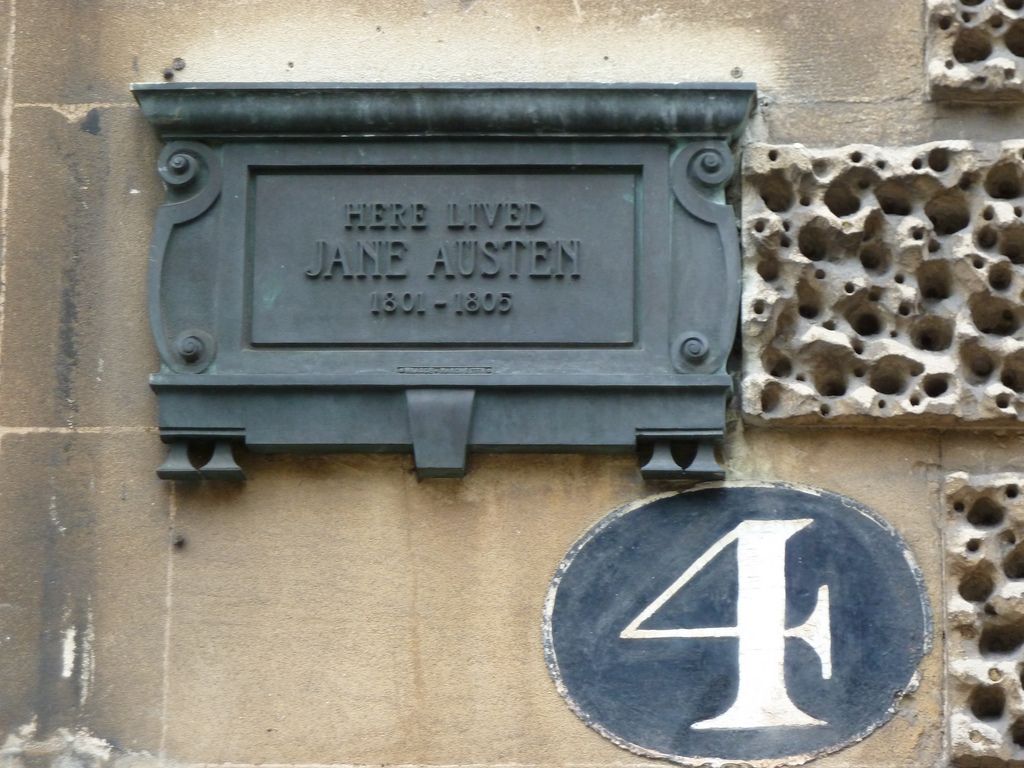
A plaque designating the house in Bath where Jane Austen and her family lived from 1801 to 1805. Austen wrote The Watsons during this period. Apparently Austen was not a fan of Bath – maybe her dislike of the place had something to do with her losing her desire to finish the novel she had started there. Photo: sleepymyf

The story of The Watsons is familiar for Austen readers. The Watsons are poor and numerous, like the Morland and Price families. Heroine Emma Watson was raised by affluent relatives with the expectation she would be made their heir, much like Frank Churchill in Emma. As with the Bennets and the Dashwoods, the family’s sisters must marry and secure a stable future.

We don’t get much of the story, but we have an idea of how The Watsons was meant to end, if Austen-Leigh’s note accompanying the published fragment is anything to go by:

“When the author’s sister, Cassandra, showed the manuscript of this work to some of her nieces, she also told them something of the intended story… Mr. Watson was soon to die; and Emma to become dependent for a home on her narrow-minded sister-in-law and brother. She was to decline an offer of marriage from Lord Osborne, and much of the interest of the tale was to arise from Lady Osborne’s love for Mr. Howard, and his counter affection for Emma, whom he was finally to marry.”

So, The Watsons treads familiar ground, but it also offers intriguing possibilities. Other Austen novels feature death as backstory, but here a father dies in the midst of the story itself. Emma’s relative poverty and distaste for rich suitor Lord Osborne are also interesting. Though her stories focus on affluent circles, Austen was from a family of modest income – closer to the Watsons than the Woodhouses – so this plot could have been personally meaningful for her. As Margaret Drabble writes, “one feels that through [Emma] Jane Austen was expressing the indignation of a whole class of women, to which she herself belonged.” I’m also curious about Emma’s competition against Lady Osborne, Lord Osborne’s mother – I would’ve liked to see a wealthy older woman pursuing a younger man!

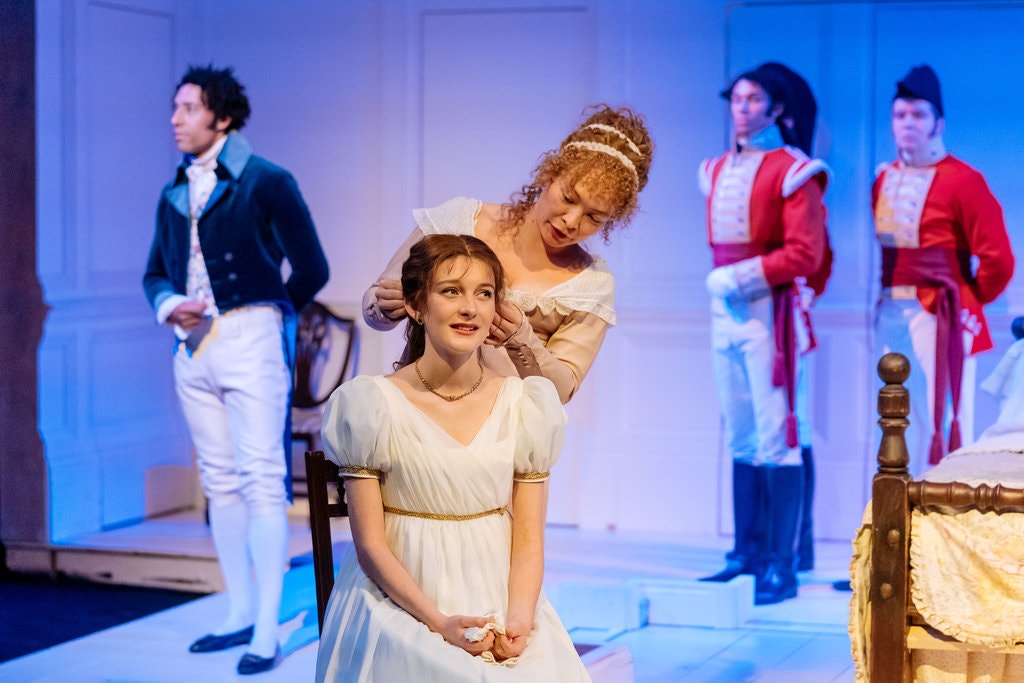
As with Sanditon, other creators have finished The Watsons, including Austen’s niece Catherine Hubback, her great-great-niece Edith Brown, and playwright Laura Wade in 2018.

merlin_146366805_3a6d9b15-a4c8-4ead-9e48-f2e7efe663a0-jumbo
A scene from Laura Wade’s stage rendition of The Watsons at Chichester Festival Theatre. Photo: Manuel Harlan

With the available story notes, taking over The Watsons is an easier task than it is for Sanditon, which contains multitudes of unknowns. As an Austen fan, is it more satisfying knowing the ending to The Watsons? Not really.

Generally, we know what ending to expect when we read Austen novels. We read because we’re intrigued by the steps it takes to get to that ending, and the winding social interactions that make up the plot. I still get anxious when I read about Lydia Bennet’s elopement or Edward Ferrars’ apparent marriage to Lucy Steele. I would’ve liked to see the story build in The Watsons. Margaret Drabble concurs: “although it was written in a period of some sadness, The Watsons has a vitality and optimism that one would have liked to follow to the end.”

We have a roadmap to finish it ourselves, but we’ll always ache for Austen’s touch.

Operation Neptune: Remembering D-Day

75 years after the Normandy landings in 1944, this D-Day commemoration may be the final milestone at which World War II veterans are alive to tell the tale. How does remembrance change when we no longer have firsthand witnesses to uphold our historic memory?

By Serena Ypelaar

Historians, especially those working in public history, know that we have a responsibility to remember and learn from the past, lest past mistakes be repeated. This responsibility will loom larger in the forefront of our duties when the original veterans of World War II, the firsthand memory-keepers, are no longer with us.

Yesterday marked the 75th anniversary of D-Day, the Allied invasion of Normandy. On the 6th of June, 1944, British, French, Canadian, and American troops carried out an amphibious assault on the coast of German-occupied France. Codenamed “Operation Neptune”, the Normandy landings constituted the largest seaborne invasion in history. D-Day therefore laid the foundations for Europe’s liberation and the end of the Second World War. Though there are veterans still living to recount their memories, soon that will no longer be the case.

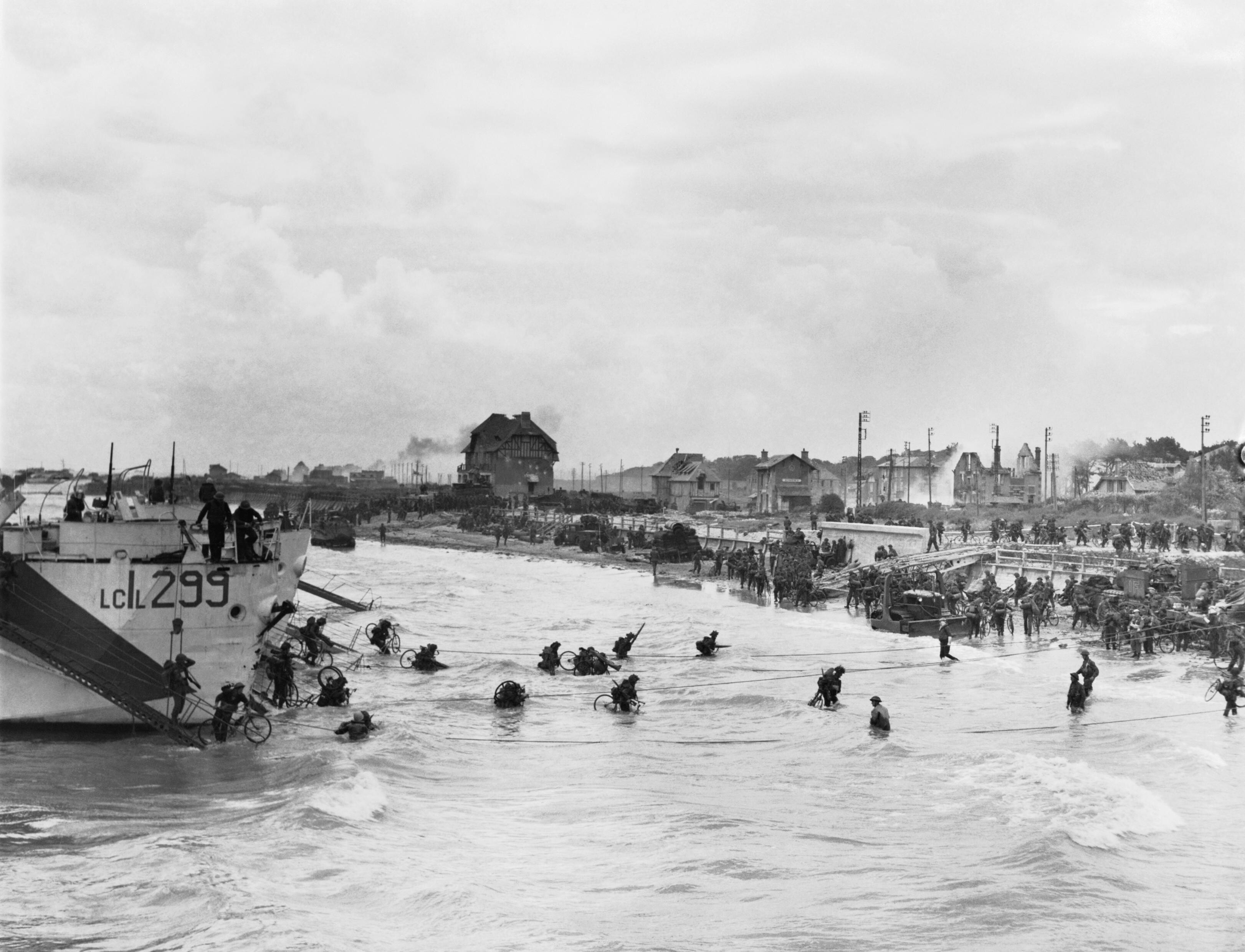
The 9th Canadian Infantry Brigade disembarking onto Juno Beach at Normandy. Photo: Wikimedia

At the commemoration ceremonies at Normandy this past Thursday, Prince Charles referenced this sobering reality in his speech. It left me to ponder how quickly time is receding (as always) from our grasp – these changes will transform the historical memory of the Second World War. After all, we no longer have veterans of World War I (or earlier conflicts) to consult about their experiences. Historical interpretation of WWII will likewise rely on physically preserved records, which is going to change how we remember and reinterpret the conflict.

Remembrance in itself is an act – or series of acts – of interpretation. And those interpretations may change depending on contemporary international contexts. For instance, national leaders including outgoing British prime minister Theresa May, Canadian prime minister Justin Trudeau, and French president Emmanuel Macron, came together at the D-Day ceremonies in France yesterday to memorialize those who fought the Nazis at Normandy. Notably absent was German Chancellor Angela Merkel. It’s unclear whether she was not invited or simply didn’t attend; she was present at the British ceremony in Portsmouth the day before. Of course, Germany’s role in World War II is the obvious point of contention in this kind of commemoration, and how the country engages with commemorations today sets the tone for reconciliation and reparation.

Britain was prominent among the Allied forces during World War II, and they likewise had a robust presence in the D-Day commemorations. With the mess that is Brexit, Britain’s current political situation places them at an interesting perspective. D-Day was a mobilization of Allied forces which relied upon the unity of major European nations like Britain and France. Now, however, Britain is stepping back from their long-term trade ties with France (as well as Germany) to leave the European Union. In a similar way, the United States was heavily involved in D-Day, yet diplomacy between the U.S. and European countries is particularly strained thanks to President Donald Trump. Having seen tension between certain political leaders, such as between Trump and Merkel, these commemoration events are like a strange family reunion: they reveal how relationships have changed over time.

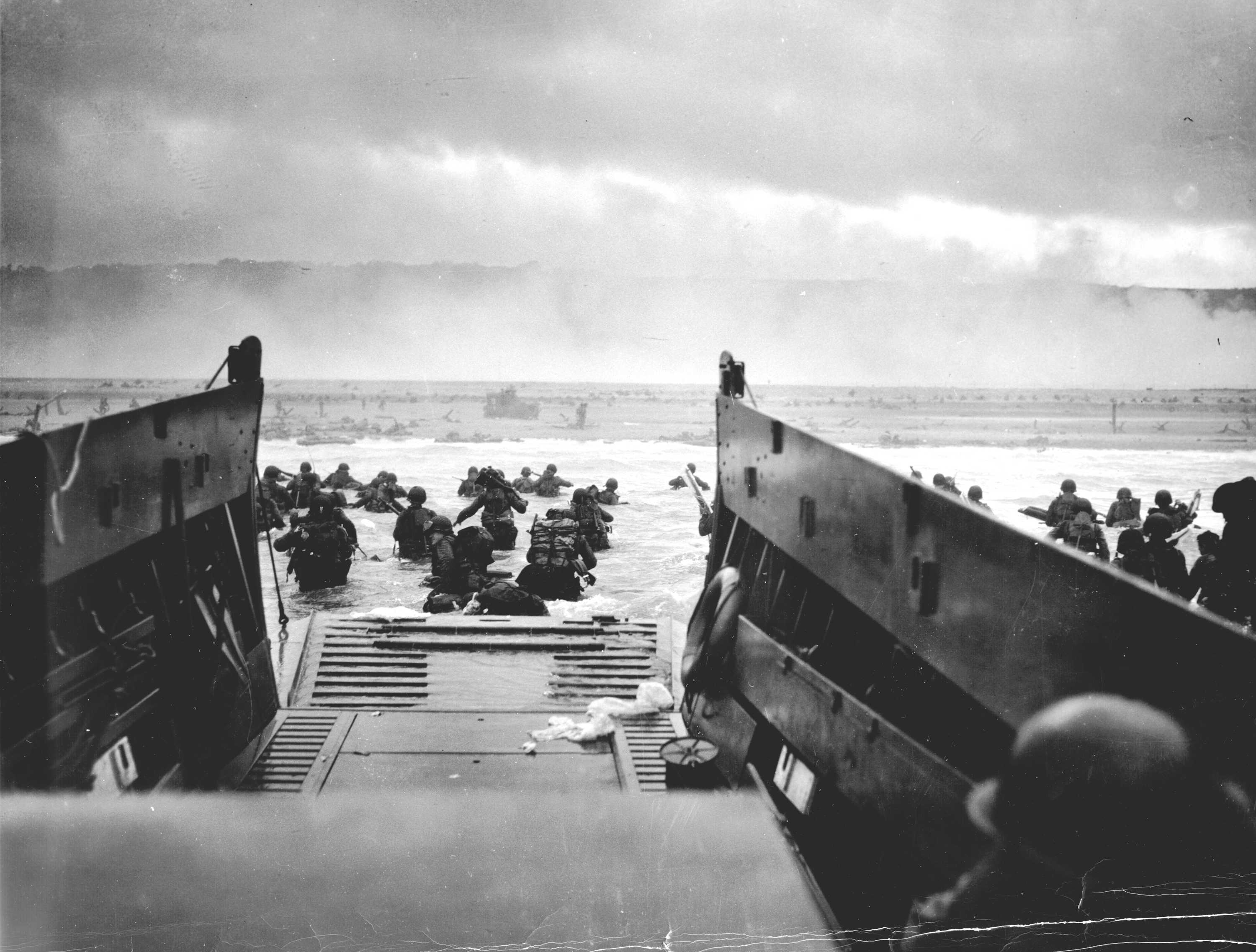
“Into the Jaws of Death” by Chief Photographer’s Mate (CPHOM) Robert F. Sargent, U.S. Coast Guard.
Photo: Wikimedia

The main priority of preserving history is remembering and honouring the past. To this end, Prince William, the Duke of Cambridge, read out the exact words of his great grandfather George VI, from his D-Day Broadcast:

“At this historic moment, surely not one of us is too busy, too young, or too old to play a part in a nationwide, worldwide vigil …”

King George VI, in a D-Day Broadcast aired 6 June 1944
King George VI of England’s D-Day Broadcast,
originally aired on the morning of 6 June 1944.

This touch was particularly notable because it acknowledges the importance of taking the past into account (something the British notoriously excel at!). One day, not only will the veterans be gone, but so will their children, grandchildren, and everyone who knew them. So what does this tell us about commemoration? We need to preserve the stories of those who lived through the experience, and we need to uphold their legacies as if they were our own while paying our respects to the great sacrifices they made for freedom.

“Only those who threw themselves against the walls of the fortress of Europe in Normandy know the full extent of what unfolded here 75 years ago. But it is the responsibility of all Canadians to ensure that their story and their sacrifice will never be forgotten.”

Justin Trudeau, in a speech at Juno Beach on 6 June 2019
Juno Beach is the site where Canadian forces landed during the D-Day invasion. Photo: Joe de Sousa

Nationalism of course comes into play at these commemorations, as it always does. But if we think of commemoration on a purely human level – irrespective of politics – we can preserve history with greater integrity. Sure, we can argue about international relations and the current state of affairs worldwide, but that’s not what commemoration is about. When loss of life is concerned, politicizing memorials trivializes and distracts from the sacrifices of human beings. As shown by the world’s diplomatic leaders, public memory is a collaborative form of historical interpretation. There are many things we may differ on as people and as countries, but the human cost of war is universally significant to us.

D-Day teaches us the importance of balancing past interpretations with present-day ones in order to remember responsibly. In the end, preserving historical memory isn’t the sole responsibility of those who lived through an event in history – it’s our responsibility, as the ones who will carry their stories forward in years to come.

To learn more about the 75th anniversary D-Day commemorations, click here.