Unfinished Austen: Sanditon

Sanditon is one of two novels Jane Austen never finished. Since her death, this fragment of writing has undergone a long journey of alternate interpretations. For better or for worse, everyone who interacts with Sanditon must make their own interpretive choices.

By Sadie MacDonald

It is a truth universally acknowledged that a Jane Austen fan in possession of six full-length novels must be in want of even more Austen stories.

Luckily for us greedy fans, more writing is available! There are several works of juvenilia as well as unfinished fragments The Watsons and Sanditon. Today I’ll focus on Sanditon, which you can read online. As an unfinished novel, it’s been subject to a lot of interpretation and conjecture over time.

First, Sanditon‘s publishing history: it wasn’t a given that it would be widely shared with readers. Jane Austen was a private person who cared deeply about her work, heavily revising manuscripts before publishing them anonymously. After Austen died, her sister Cassandra safeguarded her writing by destroying some of Jane’s letters and preserving unpublished manuscripts, which were distributed among family members after Cassandra’s death. Austen’s nephew James Edward Austen-Leigh included extracts of Sanditon in A Memoir of Jane Austen in 1871. Some of the Austen family had doubts about publishing Jane’s unfinished works, but Austen-Leigh felt that the public should read them. R.W. Chapman published the full text for the first time in 1925. There are pressing questions here regarding the ethics of publishing posthumously, which is beyond the scope of this post (fortunately, Serena will discuss this topic in an upcoming article!).
janeaustencassandrawatercolour
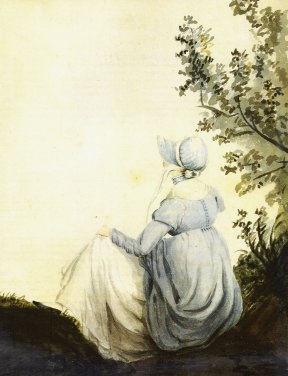
A watercolour of Jane Austen painted by her sister Cassandra in 1804. Photo: Wikimedia Commons

Sanditon tells the story of the Parker family and their speculative attempts to make the titular seaside town a resort destination for tourists. The Parkers invite Charlotte Heywood to experience Sanditon’s charms for herself. The sensible, wry Charlotte meets many characters who vary in ridiculousness. Lady Denham, for example, is a rude, tightfisted gentlewoman who delights in having her relatives compete for her favour. There’s also Mr. Parker’s three hypochondriac siblings, who have teeth pulled on the merest suspicion of gum issues, and his charming unmarried brother, Sidney Parker. The stage is set – but the story didn’t have the chance to play out.

Austen started writing Sanditon in the last months of her life, but she was forced to abandon it when she became too ill. The fragment consists of twelve chapters, ending abruptly after Charlotte compares the portraits of Lady Denham’s deceased husbands: one has a “whole-length portrait” over the mantelpiece, while the other gets an inconspicuous miniature. It’s an innocuous moment to end on – but it’s fitting for Austen’s career to end with a witty observation. What little we have of Sanditon is tantalizing, and Austen presents it with characteristic irony and snideness. Sanditon is most intriguing, however, for what we don’t get to see, and for what we must interpret ourselves.

In her introduction to the Penguin edition of Sanditon, Margaret Drabble notes that “one cannot predict with any certainty the ways in which the plot would have developed.” The biggest questions surround the speculative venture; Mr. Parker’s naïvety left me pessimistic about its success. There’s also Sidney Parker to consider – is he another rakish red herring of a love interest like Wickham and Willoughby, a jovial beau like Mr. Tilney, or something else entirely? One interesting character, discussed but not seen, is Miss Lambe, “a young West Indian of large fortune” who is “about seventeen, half mulatto,* chilly and tender” and the “most important and precious” charge of her guardian. Austen novels can be insular, as they focus on the rural English upper-class; Mansfield Park is one exception, as it mentions that the Bertrams acquired their wealth through slave plantations. Sanditon could have been another chance to broaden horizons.

Unsurprisingly, others have tried to finish Sanditon. Some adaptations have questionable literary merits, but the blanks must be filled in. Prominent continuations include Marie Dobbs’s 1975 version and an attempted completion by Austen’s niece Anna Austen Lefroy. There is also an upcoming television series. What choices will it make?

510dhuhz2cl._sx317_bo1204203200_
The attribution of Marie Dobbs’s continuation makes reference to how Sense and Sensibility was originally promoted as “A New Novel by a Lady.” Photo: Amazon

We all must guess when it comes to Sanditon. By necessity, reading it is an exercise in making one’s own interpretations. In many respects this is nerve-wracking and unsatisfying. Can our own imaginations match up to Austen’s? Should they? Sanditon, perhaps, can be seen as a gift: a Jane Austen story we can make our own.

*The archaic term “mulatto” refers to people of mixed Black and white heritage and came into use during the period of Trans-Atlantic slavery. Considered offensive to English-speakers today, it is not a word that should be used casually in 2019!

A Wee Auld Dirge for Auld Robbie Burns

Thes Robbie Burns Day invites us tae ponder th’ continued timelessness ay his works. Burns’ use ay th’ Scottish vernacular (employed thus) illustrates exactly hoo his poems an’ ballads shood be performed alood.

By Serena Ypelaar

If you’re scratching your head at the text above, I’m sure you aren’t alone. For the sake of clarity, here’s what I wrote, in what you might call “plain English”:

This Robbie Burns day invites us to ponder the continued timelessness of his works. Burns’ use of the Scottish vernacular illustrates exactly how his poems and ballads should be performed aloud.

Today is indeed Robbie Burns Day, and what better time to pay homage to Scotland’s national poet than on his 260th birthday?

Born 25 January 1759 in Alloway, Scotland, Robert Burns was a tenant farmer like his father, and was (unlike many poets of his day) not particularly wealthy. His works have hence been lauded as relatable portrayals of Scottish farm life, illustrating class, regional experience, religion, and traditional culture.

“Portrait of Robert Burns, 1787”, painted by Alexander Nasmyth and held in the Scottish National Portrait Gallery. Photo: Wikimedia

A “dirge”, as referred to in my title, is a lament for someone who has died. In this case, though Burns is gone, we aren’t lamenting him so much as celebrating his legacy.

I’ve been looking forward to this post, as Burns’ works speak so decisively in and of themselves, but also because his writing style lends itself perfectly to The Mindful Rambler’s mission. Exercising his own interpretive power, Burns writes in the Scottish vernacular, meaning he has spelled his words exactly as pronounced. He is known for a number of songs – you might know “Auld Lang Syne” from your New Year’s traditions – that, when performed, reflect the Scottish dialect. In writing this way, Burns has cemented the dialect into his texts, and therefore preserves his Scottish identity while also sharing it with the world.

To illustrate what I’m talking about, here are a few lines from Burns’ poem A Winter Night:

Ilk happing bird, wee, helpless thing!

That, in the merry months o’ spring,

Delighted me to hear thee sing,

What comes o’ thee?

Whare wilt thou cow’r thy chittering wing

An’ close thy e’e?

Robbie Burns, “A Winter Night”, lines 19-24

As you can see, Burns has written the dialect straight into the poem, influencing how we read and interpret it.

I’ll be the first to admit – I tried to read Diana Gabaldon’s romance novel Outlander (an admission in itself) and put the book down for this very reason – the Scottish dialect. Apart from reaching page 178 and feeling that not much had yet happened, I also found it extraordinarily tiring to read the characters’ dialogue as written out in the vernacular, so I quit. (For those who haven’t read/attempted to read Outlander, think Hagrid’s dialogue in Harry Potter, except almost every character speaks that way.)

Nevertheless, in Burns’ short and much more digestible poems, I can appreciate the beauty of writing out the dialect so literally – Burns does half of the interpretive work for us. Instead of trying to envision a Scotsman and how he may sound uttering the words, we get his voice given straight to us. The Scottish vernacular is interwoven with the text itself, and we find ourselves transported into the shoes of the Scottish speaker.

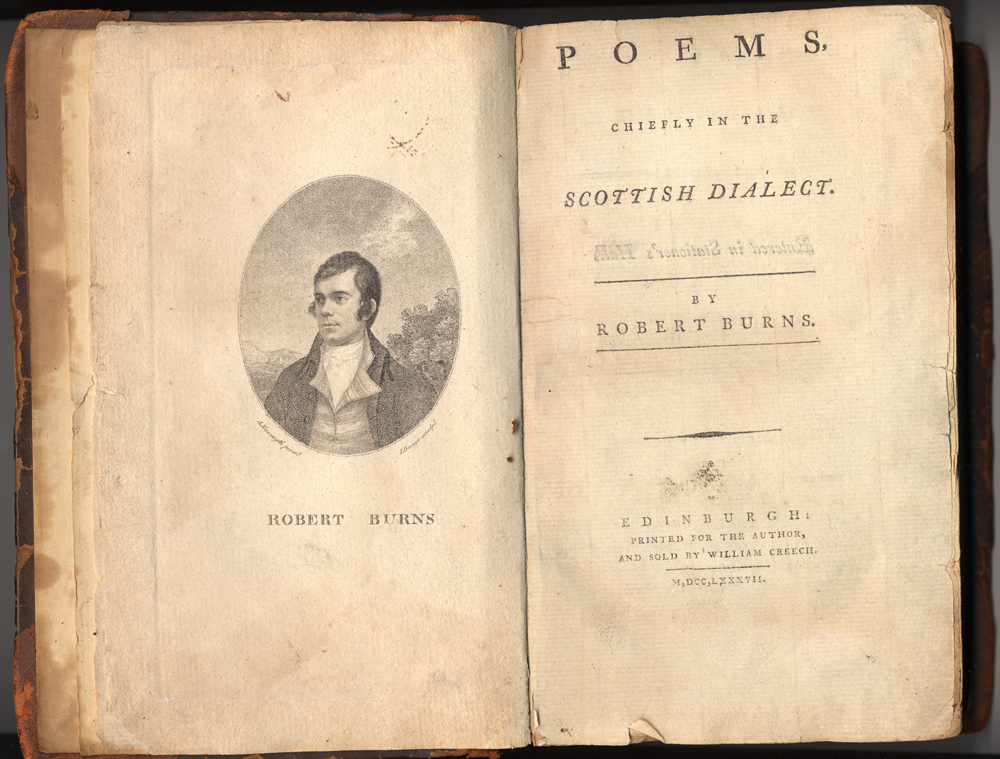
“Poems, Chiefly in the Scottish Dialect” (1787) by Robert Burns. The volume was first printed and issued in 1786. Photo: Futuremuseum

Burns was a lyrical poet as well, setting some of his poems to music but also writing words for Scottish folk melodies. His methods involved considering how songs would be sung before developing the lyrics. As a lyricist too, he therefore gave the pronunciation of his words the same consideration he would have us give them, as prompted by his literary style.

During my undergrad, my favourite British literature prof went the full mile and read a couple of Burns’ poems to us out loud, in the Scottish vernacular. It’s a participatory action that I think needs to be done to appreciate the extent of Burns’ literary voice and the conviction with which he proclaimed his identity. While it’s not always clear exactly what Burns is saying, one thing is irrefutable: who better for Scotland to have as its national poet than auld Robbie Burns?

Long Story Short, You Can’t Control Everything

Though storytelling is highly personal, it thrives on human interaction and the sharing of experiences, making storytelling and interpretation inherently collaborative processes.

By Serena Ypelaar

“You can’t control what others think, but you can control what you put out there.”

This idea is something a lot of people carry around, and it has a special relevance when we think of how we’re surrounded by stories. As we enter a brand new year of The Mindful Rambler, I’d like to reframe the discussion on storytelling and interpretation – and the methods of both processes – which we’ve been examining here on the blog.

In telling a story, whether it’s for entertainment, healing, documentation, critical analysis, or otherwise, there’s always a lot of pressure around how it will be received. Will people like it? Will they get it? Will they take from it the information you’re hoping to impart?

Shakespeare definitely distilled some information down when he wrote his history plays, inciting a multitude of different interpretations.
Photo: Giphy

I experience that pressure whenever I write something. Anything I write can be interpreted, misinterpreted, and reinterpreted, and the truth is that my writing won’t exist entirely under my control once it’s out there. Every person who hears a story brings their own unique experience to it, creating something new. Two people who read the same book, for example, might see it in completely different ways, meaning that the result – the experience of storytelling – actually becomes a hybridization, a meeting place between the “teller” and the “listener”. Storytelling is the act of bringing one’s story, through words, images, sound, and other sensory outputs, into being outside of one’s self.

To avoid delving too far into the abstract, I’ll use an example. If someone is describing a place while telling a story, they’ll describe it as best they can noting features they feel are important to the story or of personal value to them. The person listening to the story will then construct their own interpretation of the event, incorporating their past experiences, feelings, biases, and assumptions. In short, the story is changed by the listener’s reception of it. Every single person hearing that story will have a different conceptualization of it, and a different understanding.

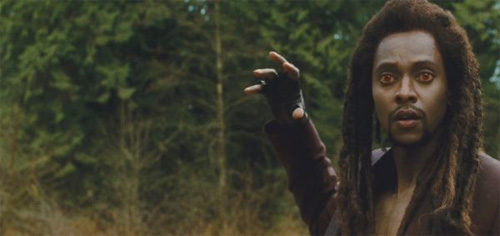
It’s the same with novel writing. Writers describe a character, for instance, and we, the readers, each construct a mental image of that person (and then get angry when the film casting doesn’t match that). I don’t know how many people I heard, back in middle school, ranting about how they definitely, totally did not picture Robert Pattinson when they dreamed up Twilight’s Edward Cullen in their heads. There are also race-based biases toward literary characters which often become clear when a person of colour is cast as a character many assumed would be white (like the vampire Laurent from the same franchise), racial prejudices becoming evident with readers’ indignation.

As demonstrated by their reaction to Edi Gathegi being cast as Laurent, Twilight‘s preteen fanbase did not want a diverse cast for the 2009 film adaptation… and, according to director Catherine Hardwicke, neither did the author (Stephenie Meyer) herself.

Irrespective of a story and its content, creators must become comfortable with the notion that each person who hears their story is going to see something different. There’s no way a storyteller can construct their tale in a way that guarantees uniform interpretation. Attempting to do so can result in over-describing something and alienating readers by unconsciously (or consciously) trying to harness control over their perceptions. It’s possible to use photographs to aid a visual picture, for instance, but these will still foster further imaginings on the part of the listener. Gaps in information will be filled independently – so the point is not to describe every single thing that is within you, but rather what is important to the story. That’s how we get such engaging stories, whether in literature, history, entertainment, art, memoir, or otherwise. Allow the listener to meet you halfway, and together you can share the experience while expressing trust in another person.

Maybe that’s why storytelling is so important to us – on an instinctual level, it allows us to connect with each other and find common ground.

What the Dickens? Christmas the Scrooge Way

Charles Dickens’ A Christmas Carol is a classic favourite when it comes to the Christmas spirit, and he entwines a fictional biography with class commentary.

By Serena Ypelaar

“In life I was your partner, Jacob Marley.”

This phrase from Charles Dickens’ well-loved Christmas novella cleverly establishes the intersection of life and death, as the ghost of Ebenezer Scrooge’s business partner comes to warn him off his cold-hearted ways. A Christmas Carol (1843) illuminates the importance of generosity during the festive season, but it also serves as an excellent form of fictional biography.

In the book, Dickens exemplifies the writerly adage “show, don’t tell” and spins a compelling illustration of a man’s life without resorting to long-winded character monologues. Where a lesser author might have their protagonist prattle on at length about their upbringing in a style that bores most readers, Dickens instead shows us almost firsthand how miser Ebenezer Scrooge became the person he is.

sim-everett.jpeg
Ebenezer Scrooge (Alistair Sim) watches events of his past as shown by the Ghost of Christmas Past (Michael Dolan) in the 1951 adaptation of “A Christmas Carol”. Photo: The Guardian

It’s a fascinating combination of realism and supernaturality, with the Ghosts of Christmas Past appearing to guide Scrooge (and us) through a revival of his past. Not a retelling, but a re-experiencing. But what does Dickens want from us when taking us through fictional Scrooge’s lifetime? An understanding of the character is the obvious answer, but it also goes a little deeper than that. He wants us to foster empathy for not only Scrooge, but those he deprives.

Scrooge is visited by the Ghost of Christmas Present, illustrated by John Leech. Photo: Wikimedia

From an interpretive perspective, the flashback device serves to place us directly in Scrooge’s shoes, therefore holding us accountable. By using Scrooge as an overarching symbol of avarice (especially during the holidays), Dickens warns against the danger of greed. In his customary fashion, he prompts us – through experiencing Scrooge’s life alongside him – to ensure we don’t repeat the same mistakes. Do we donate to those in need at the holidays? Many of us do, but many of us don’t. We fret about shopping and wish lists but fail to consider those for whom (like the Cratchits) a big family dinner would mean the world.

It’s fascinating to consider that Dickens predated the commercial bastardization of Christmas by almost century, as we now sit at a point where Christmas for many people is defined by dollar signs (or pounds, for that matter).

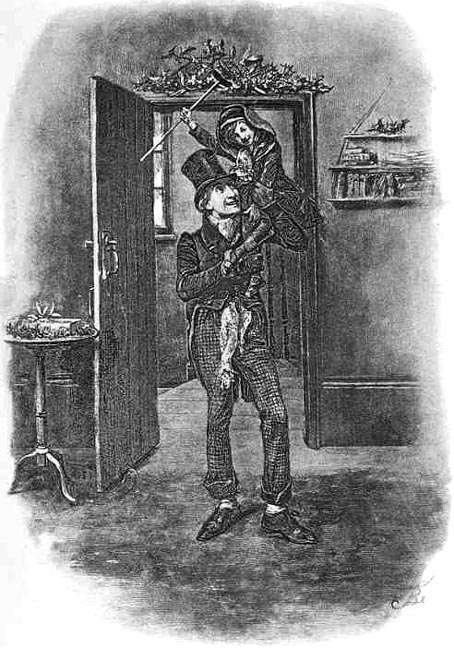
Bob Cratchit and Tiny Tim, who walks with a cane, as illustrated by Fred Barnard. The Cratchits cannot afford adequate medical care for Tim. Photo: Wikimedia

So when we read A Christmas Carol or watch an adaptation (my family and I favour the 1951 film starring Alistair Sim), we’re prompted to examine our own behaviour. In damning Scrooge for his constant refrain of “bah, Humbug”, are we ourselves really focused on the true meaning of Christmas? We can interpret Dickens’ work many ways, but the one immovable theme at the core is that Christmas calls us toward togetherness, kindness, and compassion. Dickens wishes us a Merry Christmas, certainly, but he doesn’t let us off easy when it comes to our own thoughtfulness. That much is clear when he stresses the final two words of Tiny Tim’s famous refrain: God bless us, every one.”

The world may be an unequal place, as Dickens knew well, but his works inspire us to do whatever we can to reset the balance and share what we have.

In parting, Merry Christmas, and thank you for reading The Mindful Rambler! Sending you all the best wishes – take care of each other.

Leaving you with a wonderful Dickens parody on the television series Quacks, starring Andrew Scott as the writer himself!

The pen is mightier than the sword, especially when it’s Jane Austen’s

243 years after Jane Austen’s birth, her words still loom large over the literary world – and in the dialogue about women’s rights.

By Serena Ypelaar

Today is Jane Austen’s birthday.

This time every year, I’m left reflecting on the legacy of that talented and incredibly smart woman, one whose voice speaks so loudly in both her contemporary era and our own. Despite living in a male-dominated society, Austen’s wit and wisdom has pervaded the literary world and she remains one of Britain’s most prominent authors.

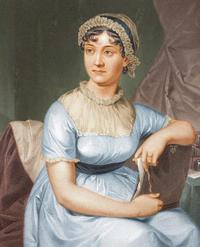
A colourized engraving of Jane Austen (1873).
Photo: Wikimedia Commons

So on her birthday, I’d like to recall the significance of her work as a canon that redefined feminism even at such an early point in time.

The author of Pride & Prejudice, Sense & Sensibility, Persuasion, Northanger Abbey, Mansfield Park, and Emma, among other titles, left an indelible mark on English literature as a writer who speaks from a distinctly feminine perspective in a patriarchal society.

“Men have had every advantage of us in telling their own story. Education has been theirs in so much higher a degree; the pen has been in their hands.”

Anne Elliot discussing gender inequality in Persuasion (1817)

To paint a brief picture, in Austen’s society only landowning men could vote; genteel women of the middle and upper classes could only retain or augment social standing through a successful marriage. Even then, influence was confined to that of one’s husband, a notion at odds with today’s circumstances. Failure to marry well would usually result in spinsterhood, living with one’s parents for the remainder of one’s life (which was extremely embarrassing back then) and a complete lack of independence.

Despite all this, Austen rejected the marriage proposal she received from one Harris Bigg-Wither and instead committed to reconciling the two seemingly disparate lifestyles I’ve just mentioned: autonomy as a single woman.

How did she do it, you ask? She did it through her words, as a woman writer. She wrote about genteel women’s experiences of Regency society, highlighting issues of income, class, personality, gender, and manners. She successfully sold her novels to earn money, making her quite entrepreneurial for a woman of her time. Her discerning assessments of the dynamic between men and women – despite being set 200 years before now – still resonate with us today, and her comments on the human condition have charmed readers of all genders and classes.

I have been open and sincere where I ought to have been reserved, spiritless, dull, and deceitful. Had I talked only of the weather and the roads, and had I spoken only once in ten minutes, this reproach would have been spared.

Marianne Dashwood describing the severe expectations of women in her society in Sense and Sensibility (1811)

Regardless of how I feel about today’s designation of “chick lit” as an excuse to dismiss female authorship, Austen owns her femininity unabashedly, delivering exacting jabs and insightful criticisms from the seat of an observer – each time a considerate and emotionally complex female character. What makes her so relevant today is that amidst the ongoing push for equal rights, people connect to her ability to find flaws in her society and propose solutions to them.

I hate to hear you talk about women as if they were fine ladies instead of rational creatures. None of us want to be in calm waters all our lives. 

Anne Elliot in Persuasion (1817)

Since her books achieved mass popularity, Austen has served as an inspiration to many, though she’s not without her critics (jealous haters). Mark Twain, Charlotte Brontë, and other writers claimed to find no brilliance in her work, but as The Mindful Rambler is by no means a neutral publication, I feel no hesitation in discrediting their criticisms. Austen is brilliant because she represents the everyday. What might seem to some the banalities of the well-to-do in the countryside in fact set Austen apart, through the minutiae of her social criticisms and her practiced understanding of others. We’ve all met a Mrs. Bennet, whether she is our own mother, a voracious aunt, or otherwise; we all want to meet a Mr. Darcy (or Mr. Tilney of Northanger Abbey in my case, but I’m sure we’ll get to that in a future post).

A woman, especially if she have the misfortune of knowing anything, should conceal it as well as she can.

Jane Austen employing her signature biting irony in Northanger Abbey (1817)

I write this from the perspective of a woman who loves writing too, and whose work has been shaped by two prominent female writers, J.K. Rowling and Austen herself. But while the former shies away from gender politics* in favour of the ideological, the latter champions her gender through representation and highlights disparities between men’s and women’s quality of life. Austen does this using a combination of cultural nuances and hyperbolic characters, stressing important themes while more subtly suggesting at other details. The result is a complex but convincing illustration of feminism in the early 19th century, one that we can use to inform our discussions of feminist literature today. And we have a well-educated, unmarried woman in Regency England who forged her own path – despite the restrictions of her society – to thank for that.

Learn more about Jane Austen and her portrayal of women here.

*This article was written before J.K. Rowling’s transphobic tweets and editorial piece were published. The Mindful Rambler does not condone transphobia (or trans-exclusionary radical feminism) in any form, whether the dismissal of a person’s gender and pronouns or otherwise. We stand in solidarity with the trans community.

It’s Raining Men in the Harry Potter Franchise

With the release of the newest Harry Potter film, Fantastic Beasts: The Crimes of Grindelwald, we take another look at representation in author J.K. Rowling’s works in this installment of the Critiquing Harry Potter series.

By Serena Ypelaar

“Strong women” is a phrase we hear a lot, especially regarding film and literature. The desire to see strong women in entertainment (and the misunderstanding of what a “strong” woman actually is) sets up unrealistic standards for female characters and their real-life counterparts. Irrespective of these confining notions, empathy and vulnerability are traits that make women strong, not weak. A profound emotional complexity encapsulates what it means to be human, to live, and to persevere through adversity.

J.K. Rowling has promoted female complexity to an extent through Harry Potter characters such as Hermione Granger, Ginny Weasley, Nymphadora Tonks, Luna Lovegood, Cho Chang, Fleur Delacour, Angelina Johnson, Minerva McGonagall, Lily Evans, Molly Weasley, Narcissa Malfoy, Bellatrix Lestrange, and even Lavender Brown, all of whom have diverse personal attributes that make them uniquely human. Some are leaders, some are learners, some warriors, and some nurturers, but all of them feel. So do men, of course – yet male emotion is sadly suppressed as weakness in our society.

nlt
Brothers Theseus (Callum Turner) and Newt Scamander (Eddie Redmayne) interact while Leta Lestrange (Zoë Kravitz) looks on. In J.K. Rowling’s latest spinoff, men still dominate the story, women are supporting characters, and non-binary characters aren’t included at all. Photo: Entertainment Tonight

Critically examining all aspects of Fantastic Beasts would take days, so keep in mind that I’ve tried to confine the scope of my analysis to gender here. Given that J.K. Rowling is a woman writing in the 21st century (though her latest story is set in the 20th), I’d expected her to feature a female lead this time around. Despite the many complex female characters in the Harry Potter books, Rowling never struck me as going all the way to give women full representation. The majority of the major characters are men, after all, and the few women who are given significant roles are almost all white. In today’s political climate, the time is ripe to focus on feminism and gender equality. Some might argue that it’s Rowling’s responsibility as an influential woman to present more female role models, and I won’t even get started on non-binary characters because that evidently seems too much for Rowling to consider. Ezra Miller, who is a queer actor, does play Credence Barebone in Fantastic Beasts, but Credence is referred to as male in the films – we don’t have any evidence that Rowling understands or wants to include the lived experience of genderqueer individuals. Instead, Rowling safely elected to feature Newt Scamander, widely acclaimed Magizoologist – and a dude.

fb
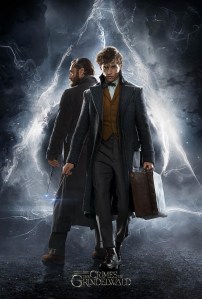
An early promotional poster for Fantastic Beasts. The core three characters of this film – Dumbledore (Jude Law), Newt (Eddie Redmayne), and Grindelwald (Johnny Depp) are male. Photo: Flickr

If the secondary characters were all female it might be less of an affront that Rowling went with a story about another man, but I can’t really defend her there. Just like Harry, Ron, and Hermione, Newt is surrounded by other male leads. In The Crimes of Grindelwald specifically, we have No-Maj (Muggle) Jacob, Newt’s brother Theseus, Credence, and then the big ol’ showdown between future Hogwarts Headmaster Albus Dumbledore and European powerhouse tyrant Gellert Grindelwald, the darkest wizard on the world stage before Lord Voldemort’s time. As you can see, lots of testosterone floating around.

Of course, the Goldstein sisters Tina and Queenie figure into the storyline, this time alongside Leta Lestrange and *SPOILER ALERT* Nagini (to whom I’ll probably devote a whole other post in the future). It’s not that the women are there, however, that checks the proverbial box of so-called gender parity; as I argued in my article on ethnicity, it’s what they do that matters. In the first Fantastic Beasts film, Newt and Jacob were the top-billed characters in the plotline, with Tina and Queenie playing supporting roles. Likewise, we know that the Dumbledore-Grindelwald relationship takes centre stage now. J.K. Rowling could just as easily have chosen a witch to work with Dumbledore for this spinoff series, but she didn’t, and men are still at the centre of the action. It strikes me as a bit disingenuous for a self-declared progressive female author, but I suppose our society influences our implicit expectations. All I can say without spoiling the film is that our girls Tina, Queenie, and Leta’s storylines heavily feature men and aren’t explored as in-depth as I would like.

There’s one possible upside apart from Newt’s own emotional vulnerability: Dumbledore and Grindelwald’s confrontation and the unravelling of their past. Such an interplay could do much to highlight LGBTQ2+ representation and men’s emotional depth if it’s properly explored. It is a shame that the only gay relationship we may see is an abusive and manipulative one, but nevertheless, this franchise will be very telling as to whether J.K. Rowling truly believes in diverse representation or is just trying to ride the wave.

So far she’s demonstrated a shocking hesitancy to give female, non-binary, or trans individuals representation, and I doubt we can expect anything that doesn’t feature a male lead from her soon.* For now, even as far as women – complex, wonderful, and important as they are – are concerned, I’m not convinced Rowling’s in it for the long haul. If she is, I’d like to see more action and agency from her non-male characters front and centre.

After all, actions speak louder than words, and Rowling’s approach to gender isn’t quite loud enough for me.

This article is part of the Critiquing Harry Potter series. Read about ethnic representation in the series here.

____________________________________

FOOTNOTES
*Just take a look at her Cormoran Strike novels under the penname Robert Galbraith, which also feature a male character.

We shall not sleep, though poppies grow

One hundred years after the World War I armistice, we continue to remember – and feel – the sacrifice of those who have served in armed conflict. 

By Serena Ypelaar

Trying in dismay to ignore the declining number of poppies I’ve seen on people’s lapels this year (all of theirs probably just fell off, right?), I of course wanted to pay tribute to our fallen soldiers, surviving veterans, and all those affected by war ahead of Remembrance Day.

And what better way to do so on a literary/historical blog than to revisit the famed rondeau poem In Flanders Fields (1915) by Canada’s very own John McCrae?

1280px-No-man's-land-flanders-field
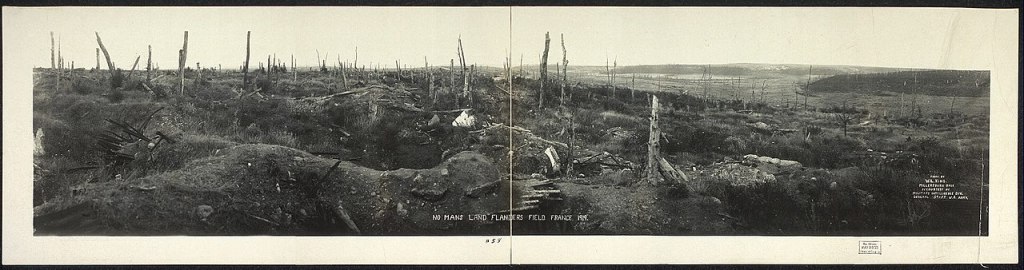
Trenches and No-Man’s Land at Flander’s Fields. Photo: Wikimedia Commons

From an interpretive perspective, the strength of the poem lies in its profound ability to foster empathy. Most of us probably haven’t been in the trenches or known what it’s like to fight in a thankless conflict while watching countless friends die. Those of us who haven’t are extremely lucky – yet In Flanders Fields paints such a visceral picture of sacrifice that we get an almost firsthand glimpse of the devastation.

In Flanders fields the poppies blow
Between the crosses, row on row,
That mark our place; and in the sky
The larks, still bravely singing, fly
Scarce heard amid the guns below.

We are the Dead. Short days ago
We lived, felt dawn, saw sunset glow,
Loved and were loved, and now we lie
In Flanders fields.

Take up our quarrel with the foe:
To you from failing hands we throw
The torch; be yours to hold it high.
If ye break faith with us who die
We shall not sleep, though poppies grow
In Flanders fields.

It is hard to believe that McCrae, a physician and Lieutenant-Colonel during World War I, was dissatisfied with his work and discarded it. He had to be convinced to submit the poem for publication. Yet he uses swift imagery to conjure a painstakingly forlorn scene of war and death, having written it after performing the funeral service for a fellow soldier and close friend, Alexis Helmer. No matter where we read this, we’re hit as though standing there in Belgium: poppies blowing in the wind on the burial site; guns booming in the distance; the keen sting of love and life, all extinguished by the horrors of war.

crae
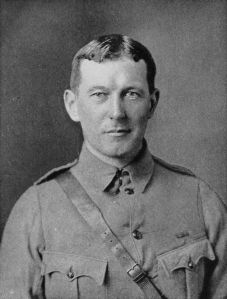
Physician and poet Lieutenant-Colonel John McCrae. Photo: Wikimedia Commons.

I will freely admit that it’s almost impossible for me to read the poem without tearing up. What’s more, it has also been set to music, and the sombre melody combined with McCrae’s stark verse is even more emotional. I always cry when they sing it during the Canadian Remembrance Day ceremony in Ottawa, and I probably always will, because McCrae delivers empathy right to our doorstep. That is, of course the best storytelling – that which makes us feel things.

McCrae’s use of caesura in the second stanza, a halt with punctuation in the middle of a line, drives the point home: We are the Dead. Short days ago we lived … The dead speak to us in the poem, and we are accountable to them to live with honour and integrity as they no longer can. Those feelings of sadness are so well-preserved in the poem that they don’t dull down with time. Every reread reopens the wound – but justly so.

Processed by: Helicon Filter;
A poppy field in Flanders. Photo: Wikimedia Commons

Yes, it’s painful to grieve, but it is necessary. Remembrance Day is an ongoing process of empathy and an enduring resolution to defend honour. That is, after all, why we wear the poppy every year. It’s a symbol of our commitment, gratitude, and respect. Perhaps in remembering the contributions of our fellow citizens, whether by sacrificing their lives or through tireless and laborious efforts, we’ll also be wary of the sorrow that accompanies war and conflict. Lest we forget.

Frankenstein; or the Modern Myth

Mary Shelley’s Frankenstein has endured in popular culture for two centuries. As a story about stories, how does it capture audiences even now, and what does it tell us about literary tradition?

By Adriana Wiszniewska

Mary Shelley’s Frankenstein has been haunting our cultural imagination for 200 years now. Even if you’ve never read the novel, you know the story. You’ve encountered it in some way, shape, or form. Even as early as 5 years after its initial publication in 1818, the novel was adapted into a stage play. And ever since, it’s been twisted and translated, parodied and paid homage to in countless books, films, TV shows, plays, video games, memes, t-shirts, and has even entered into our lexicon (who hasn’t used “Franken” as a prefix, stitching it onto other words like some linguistic version of Frankenstein’s monster?). Frankenstein’s monster remains an enduring cultural touchstone. So why do we keep adapting this strange tale, dreamed up in the mind of a teenage girl? Why is Frankenstein such an enduring story? How does it still resonate?

Frankenstein's_monster_(Boris_Karloff)
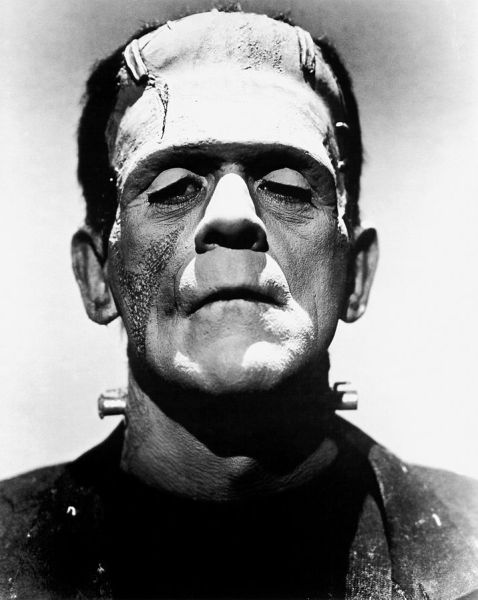
Boris Karloff as Frankenstein’s monster in promotional material for Bride of Frankenstein (1935). Photo: Wikimedia Commons

When we think of Frankenstein, we think of shambling insensate monsters, of the mad scientist in his darkened lab, hunched over a slab of corpse fragments. We think lightning and stitched skin and a mob of pitchforks and torches. But all these images were borne out of the afterlives of Shelley’s novel. Why, then, does the novel lend itself to this kind of modern myth-making?

Well, if we go back to the novel itself, which is often lost among these countless iterations and adaptations, it becomes clear that this is a story about stories. Shelley built her novel on a sturdy foundation of Milton and Shakespeare, science and philosophy and art. It’s a story that speaks through stories about the way stories shape us. It’s no surprise, then, that Frankenstein’s monster, after being abandoned by his creator, learns about the world through books:

I can hardly describe to you the effect of these books. They produced in me an infinity of new images and feelings . . . I found myself similar, yet at the same time strangely unlike the beings concerning whom I read, and to whose conversation I was a listener. I sympathized with, and partly understood them, but I was unformed in mind; I was dependent on none, and related to none.

The creature finds solace in reading, but also comes to better understand himself and the world around him.

Stories allow us to experience and understand things that are unfamiliar to us. Shelley’s novel does exactly that. Instead of painting the creature as a one-dimensional monster, the novel invites us to sympathize with him, despite his bitter cruelty and horrific violence. The monster only becomes monstrous, after all, because of the terrible things done to him.

Why do we keep coming back to Frankenstein? In a world that wants to fit people into black-and-white categories, to distinguish between good and evil, Frankenstein resists easy interpretation. It wallows in seams and ambiguity and gray areas. The book is disturbing, as any good horror fiction should be. But it’s also suffused with loss, desire, grief, and love. No matter how far its offspring stray, Frankenstein continues to resonate because it speaks to our human impulse to create and find some kind of connection through the stories we tell each other.

In Defense of Fanfiction: Authors as Fanfic Writers

By Sadie MacDonald

Ah, fanfiction. Constantly derided, gleefully parodied, snidely dismissed. Even some creators are opposed to it (most famously Anne Rice, but also George R.R. Martin and Diana Gabaldon), preferring that fans refrain from writing fanfiction of their works.

2d8
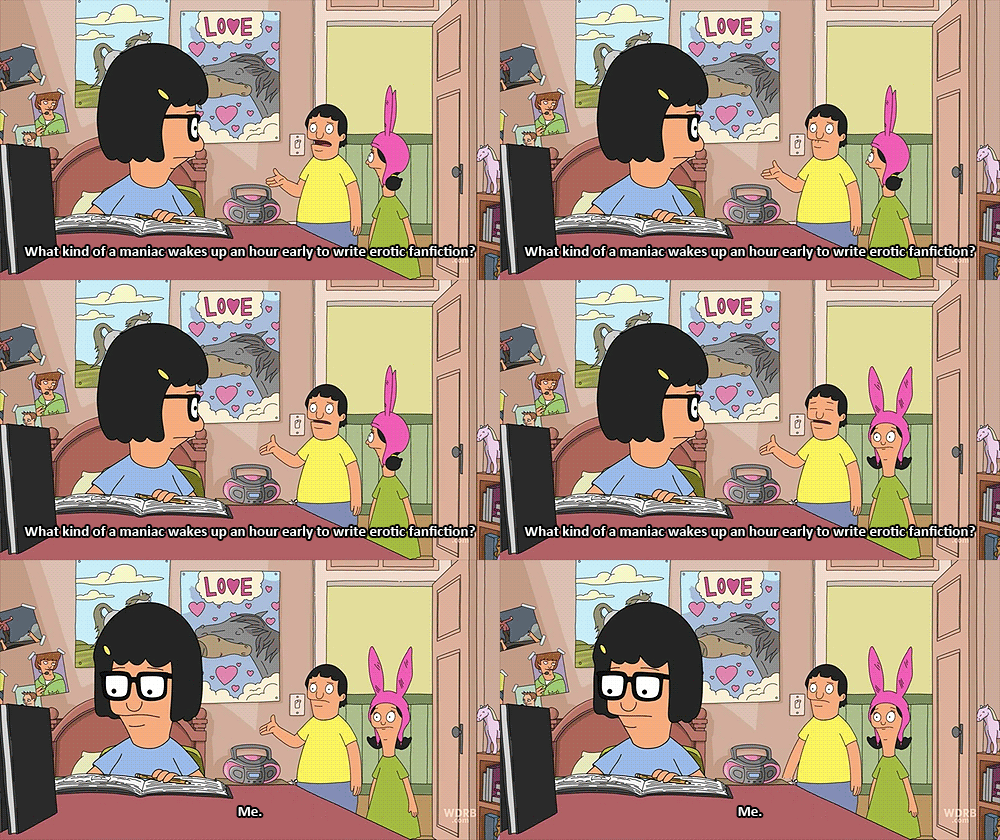
Tina Belcher, a teenage girl, shows us how it’s done in Bob’s Burgers. Photo: Know Your Meme.

I could argue about how sneering over fanfic tends to have a misogynist bent, as fanfic is generally seen as the realm of teenage girls. I could also point out that this dismissive attitude has tinges of homophobia, as most fanfiction is characterized as “slash fiction” (sexual relationships between same-sex characters generally not explored in the original canon), which is accordingly chided as ridiculous. However, in this post, I will stick to examining examples of fanfic produced by well-known creators, who seem to escape the stigma by virtue of being established authors. These authors nonetheless create fanfiction for the same reasons that ordinary teenagers do: to explore the unexplored, and to express love for the source material.

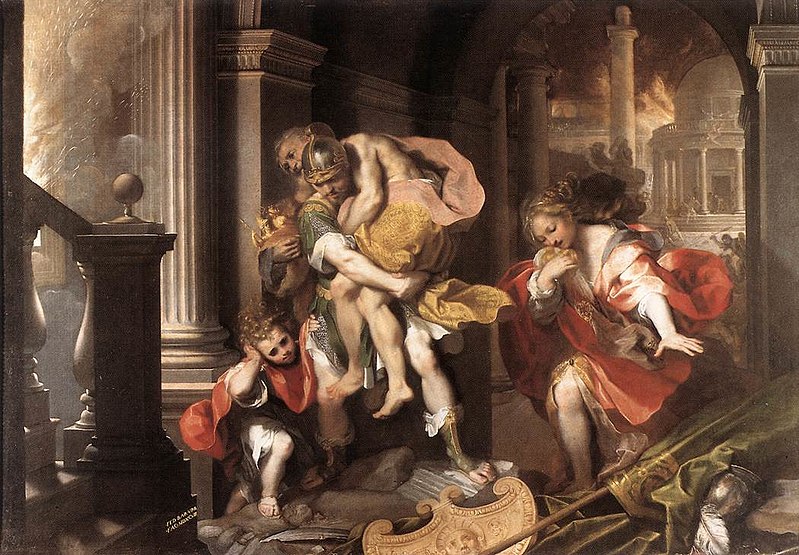
Fanfiction has existed for a long time. Virgil’s Aeneid is arguably fanfic of the Iliad, and is an example of a work that explores the unexplored, showing the other side of the Trojan War from the perspective of Trojan warrior Aeneas.

800px-aeneas27_flight_from_troy_by_federico_barocci
Like The Iliad, The Aeneid itself has spawned its own iconic imagery, such as this 1598 painting by Frederico Barocci showing the flight of Aeneas and his family from Troy. Photo: Wikimedia Commons.

Pastiches often examine hidden perspectives and bring them to the forefront, frequently casting the original works in a new light. The Penelopiad by Margaret Atwood puts a twist on the Odyssey by exploring the perspectives of Penelope and her twelve maids. Jean Rhys’ Wide Sargasso Sea acts as a prequel to Jane Eyre, telling the story behind Mr. Rochester’s doomed first marriage and giving Bertha much-needed sympathy and humanity. Wicked by Gregory Maguire retells The Wizard of Oz from the viewpoint of the villainous Wicked Witch of the West, explaining the reasoning behind her decisions. Geraldine Brooks’ Little Women fanfiction March places much emphasis on slavery, an institution that defined the social and physical landscape of mid-19th century America but is left unspoken in Little Women. These examples show that beloved stories are still capable of revealing new discoveries.

30897
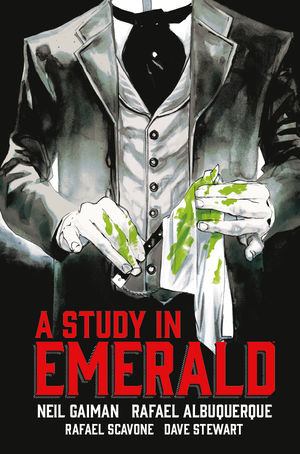
A Study in Emerald was later adapted into a comic book. Photo: Dark Horse Comics.

Not all fanfictions make changes to their source material, and there are many that seem to have been created for the sheer pleasure of engaging with a beloved work. Sherlock Holmes pastiches have existed since Arthur Conan Doyle’s days (and he cared little about what these creators did with his intellectual property). Even established novelists have participated in the Holmesian fun. Neil Gaiman’s “A Study in Emerald” is actually a fanfiction of TWO works, H.P. Lovecraft’s universe and Sherlock Holmes, and serves as a love letter to both.

The persistence of Holmesian fandom, still active nearly a century after Doyle’s last Holmes story was published, shows how much audiences love Sherlock Holmes. We want to continue to have adventures with him, even if that means making our own adventures.

If professional authors can write fanfiction to great acclaim, why do we deride teenagers, just learning how to stretch their literary muscles, for doing the same? Seasoned authors have played in other creators’ sandboxes. Let emerging writers do the same.

Well-Read: On Breaking Up with the Great Books

As literary scholars, book lovers, and participants in popular culture, we are conditioned to become “well-read”. But what weight does the established canon really hold? What is the reward for pursuing literature that is widely lauded as a “great book”?

By Jenny Lee

If you are a sad, nerdy, self-serious reading person, you know about the Lists. The BBC has one, every liberal arts school has one, Harold Bloom had one that would require several lifetimes to finish. The Lists are there to tell you about the Great Books.

IMG_20180806_194003259
The author’s copies of the Norton Anthology of English Literature, which is naught but a particularly large List of Great Books. Photo: Jennifer Lee.

The arguments against the Western literary canon are well-rehearsed. The Canon is dominated by the Dead White Male, with a smattering of token female authors, authors of colour, authors with disabilities. It’s a gatekeeper: people who aren’t familiar with the Canon are excluded from our cultural conversations, because they don’t really know about books. It trains us to extend endless sympathy to angry white men and none at all to … anyone else.

The Canon is the guy at the party who won’t stop talking about Dude Books, but has never read Pride and Prejudice (and yet has an argument about why it’s not a great literary work). The Canon makes you read everything he thought was good when he was fourteen, but leaves every book you lend him on his bedside table, untouched. Every time you struggle through one of his Dude Books, two more appear, like the heads of the Hydra. Admittedly, sometimes they’re good, but they’re not Zadie Smith good.

silvia_refuses_valentine27s_letter
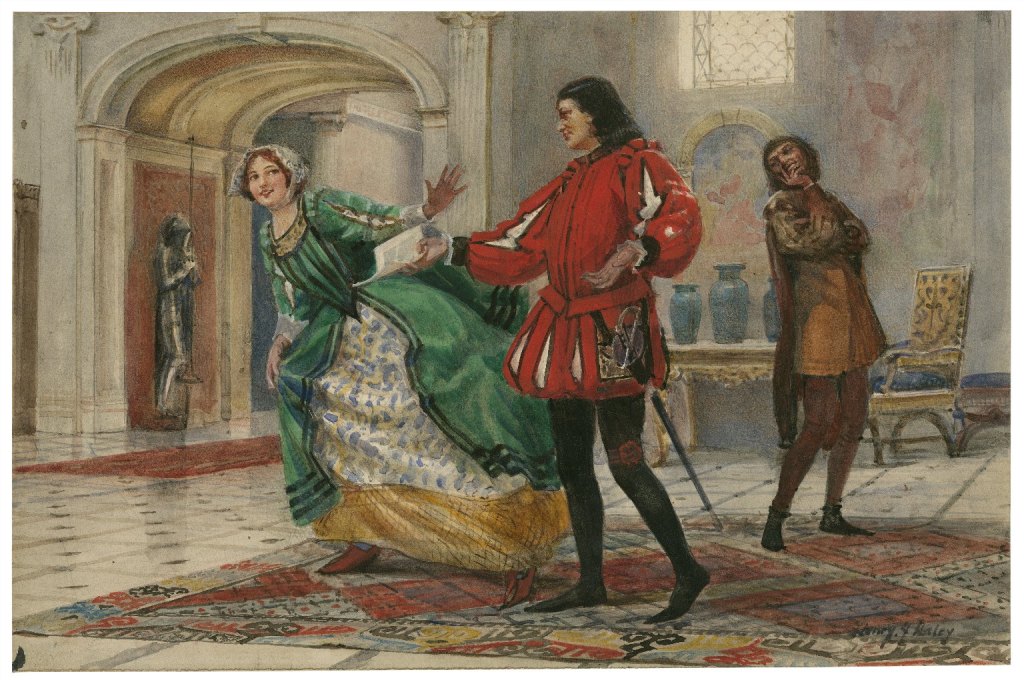
Oh! It’s another book! That you want me to read! Thanks, I’m actually allergic to Salinger, it’s the weirdest thing, I get hives. Huge bummer but what can you do? Source: Wikimedia Commons.

The Canon is inside my head, like the Phantom of the Opera, if the Phantom of the Opera did not offer singing advice but instead just exhorted you to read Dostoyevsky.

The Canon is a bad boyfriend, so why is it so hard to break up with it?

phantom-of-the-opera-james-barbour-dec-2015
“CHRISTINE! Did you finish Atlas Shrugged yet? I know it’s 1200 pages long, but it only took me four days once I got into it. I just feel like Rand was really prescient.” Photo: Matthew Murphy.

I know, intellectually, that these Lists are restrictive, limiting the stories we read and talk about and write, that they arise from power structures I don’t want to uphold. But letting go of the Great Books is more frightening than liberating. If I admit that I think Restoration drama is uniformly terrible* and will never like Wordsworth, then who will present me with a great big trophy and universal approbation for finally being a Well-Read Individual?

There are the stories in the Canon, and then there’s the story of the Canon: the lie that running on the hamster wheel of European thought makes you some kind of literary Ubermensch, that there is only one way to cultural competence and only one culture worth being competent in.

wellread_solo_9212_1024x1024
It turns out you can just BUY THESE on the internet and no one even makes you take a quiz. Photo: Paper Pastries.

I know this, and yet a set of leatherbound classics still makes my pupils dilate in a Pavlovian reaction. There is no prize for being ‘well-read’, but so much of my early formation, as a reader, a critic, a person, was staked on the premise that there might be.

Is it enough to see the Canon for the arbitrary racket it is, to choose instead the company of authors I love, who speak to me? To catch myself before I ask someone else, with reflexive incredulity, “You haven’t read any Auden?” Or do I need to delete the Canon’s number from my phone and start again, building my own Great Books from scratch? Can I finally ghost on The Faerie Queene? 

*COME AT ME