Frontier: Harping on about Canadian History

Starring Jason Momoa, Frontier explores the pluralistic conflicts defining Canada’s fur trade in the late 18th century. From a historical and ethical perspective, how does the show’s cultural authenticity stack up?

Warning: this article contains light spoilers about events depicted in Frontier

By Serena Ypelaar

It’s often said that there are two sides to a story.

But that’s not true: there are many sides to a story, and Frontier proves it’s possible (though difficult) to tell them.

I’ve been waiting to write about Frontier since before The Mindful Rambler was founded. Anyone who knows me knows I have an enduring love for early Canadian history … and in 2016, Discovery Channel and Netflix miraculously created a television show about it!

Set in the late 18th century in what is now Canada, Frontier centres on locations such as Hudson Bay, James Bay, Montréal, Fort James, and the wilderness. Indigenous peoples have lived on the land since time immemorial, long before European settlers arrived – a fact which is starkly portrayed in the series. The show stars Jason Momoa (also Executive Producer) as Declan Harp, a half-Cree, half-Irish trader who, for deeply personal reasons, seeks to destroy the Hudson’s Bay Company (HBC)’s oppressive monopoly on the fur trade.

Jason Momoa plays Declan Harp, a half-Cree, half-Irish fur trader on a mission to topple the Hudson’s Bay Company’s monopoly. Photo: ScreenerTV

There’s a plethora of “New World” films/shows out there, many of which are inevitably framed from the perspective of newly arrived colonial settlers. But it’s not inevitable to tell the story that way. Frontier is an example of what happens when you incorporate multiple perspectives and, crucially, spend time on authenticity. Though its storytelling and pacing is less than perfect, Frontier‘s diversity and inclusion is noteworthy and fairly well-done.

Indigenous and pluralistic representation

Today, Canada is populated by diverse cultural and linguistic groups, which was also the case during the 1770s. Frontier showrunners Brad Peyton, Rob Blackie, and Peter Blackie take care not to fall into the trap of depicting Indigenous peoples as one and the same – throughout its three seasons, we’ve seen Cree, Haudenosaunee, Métis, Inuit, and more nations – acknowledging that they do not comprise just one singular culture or identity.

Whenever I talk about Frontier and Jason Momoa playing an Indigenous man, people often ask “but isn’t he Hawaiian?”

“Yes, Momoa is part Native Hawaiian, but he’s also part Native American on his mother’s side,” I say. You’d be surprised how skeptically people react to that answer. There’s a definite issue with saying someone is not “_________ enough” to identify with their heritage (I know from experience, as a mixed individual). To say that anyone who is part First Nations, part Inuit, etc. isn’t “Indigenous enough” is akin to telling a mixed English/Scottish Canadian that they aren’t allowed to identify as Scottish. People who are part Indigenous are Indigenous and have a right to their culture.

Momoa is heavily invested in sharing the experiences of Indigenous peoples in North America. Though working in London at the time, he was vocal during the #NoDAPL protest in North Dakota in 2016; he also starred in Road to Paloma (2014), which exposes the systemic dangers to Indigenous women in the United States. And now, on Frontier, he’s helping portray Canadian history from an Indigenous vantage point. Momoa’s Instagram posts demonstrate how he advocates for Canadian history as I’ve never seen in another American. His work in Frontier contributes to the preservation of Canadian history from multiple perspectives.

Frontier also emphasizes linguistic diversity. Métis/Saulteaux-Cree actress Jessica Matten, who plays Harp’s sister-in-law Sokanon, learned two specific Indigenous languages for the show:

I’m mainly speaking Swampy Cree and also Ojibway to reflect Sokanon’s eclectic upbringing, born an Ojibway woman but raised amongst Métis, Cree, Scottish, French people on Turtle Island [North America]

Jessica Matten, Instagram post

Matten also provided creative direction in depicting the sale of Indigenous women to white settlers (as “country wives”).  The portrayal of these realities mirrors today’s issues with missing and murdered Indigenous women.

Brother- and sister-in-law Harp (Jason Momoa) and Sokanon (Jessica Matten). Photo: Edmonton Journal

In early North America, intermarriage also occurred and is portrayed in Frontier, another nod to authentic representation. Irish settler O’Reilly’s wife Kahwihta is Haudenosaunee (married under frankly sinister circumstances), and Sokanon and Michael Smyth (Landon Liboiron)’s budding yet troubled romance reflects the effects of the influx of fur traders on traditional lands. Nevertheless, Indigenous women – and almost all the women on the show – are depicted not as helpless victims but as clever and resourceful fighters. Frontier doesn’t shy away from the HBC’s violent behaviour that caused lasting trauma and grief for Indigenous peoples either, as depicted in the opening of season three, when the HBC is shown raiding and assaulting a Métis village.

Even amidst the fur trading companies, pluralism is the name of the game. There’s Declan Harp’s Métis-fronted Black Wolf Company, working directly against the HBC. The Scottish Brown brothers (Allan Hawco – also Executive Producer – and Michael Patric) are rivals to Carruthers & Co., managed formidably by Elizabeth Carruthers (Katie McGrath) after her husband’s death. Samuel Grant (Shawn Doyle) and Cobbs Pond (Greg Bryk) are Americans established in Montreal, and Michael Smyth, an impoverished Irish stowaway, joins Harp’s company. Englishman Lord Benton (Alun Armstrong), a fictitious governor of the HBC who loosely represents the company’s real-life actions, is portrayed mercilessly – on Frontier, the HBC is held accountable for its historical misdeeds.

Irish trader Michael Smyth (Landon Liboiron), Harp’s protegée, with Sokanon (Jessica Matten). Photo: Rotten Tomatoes

The show flounders in its portrayal of Black loyalists in Canada, however. Charleston (Demetrius Grosse) flees enslavement in the United States and falls in with Harp, but he is (SPOILER ALERT) the first to die in an overseas voyage – a typical trope in Hollywood movies (Black Dude Dies First trope). The two Black characters only play supporting roles; Josephette (Karen LeBlanc) is a close associate of Elizabeth Carruthers (Katie McGrath) but eventually takes on the bulk of the company management when Elizabeth’s new husband Douglas Brown (Allan Hawco) drives it into the ground. If Josephette were given a larger role, her character could thrive in the limelight. 

A new Frontier for Canadian history

While Frontier is undeniably flawed, both in a storytelling/pacing sense and an accuracy sense, I think its merits outweigh its detractors. The show illustrates (and popularizes) a long-distant era of Canadian history and emphasizes the facets of the fur trade economy. Most importantly, without glorifying colonialism, it depicts the conflicting interests of the different individuals and groups trying to live off the land – and in some cases, exploit it. It features Indigenous languages, celebrates women’s autonomy, and inspires awe – there was a lot going on in the Hudson Bay region.

Warts and all, Frontier proves that Canadian history is by no means boring.

This article is part of a larger series discussing storytelling in the television show Frontier. As a mainstream adaptation of early Canadian history available worldwide, Frontier examines the pluralistic past and colonial legacies that still shape Canada today. Read the rest of the series here.

O choose me for your Valentine!

Who sent the first Valentine in North America? The truth might surprise you, as the sender is associated very closely with early Canada.

By Serena Ypelaar

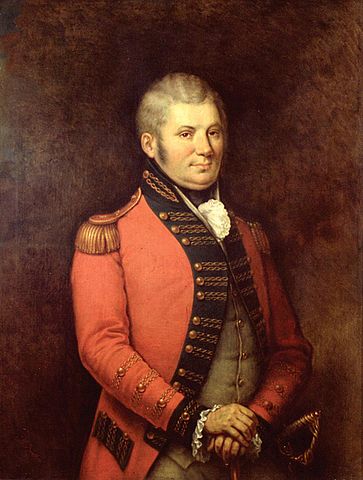
On February 14, 1779, British Lieutenant Colonel John Graves Simcoe, who would later become the founder of York (Toronto) and the first governor of Upper Canada, sent an impassioned valentine – to a Patriot’s daughter.

John Graves Simcoe’s signature. Photo: Wikimedia

Historically, Simcoe is an interestingly dual figure. You may have seen him in TURN: Washington’s Spies (the AMC series I can talk about for days if allowed) or at Fort York National Historic Site if you’re familiar with Toronto’s history.

Lieutenant Governor John Graves Simcoe, painted c. 1881.

In TURN, he’s wholeheartedly vilified based on his true-to-life role in oppressing American colonists and carrying out attacks such as the Massacre at Hancock’s Bridge (1778). But in southern Ontario, he’s venerated as the founder of York, earliest administrator of Upper Canada, and a staunch abolitionist. Simcoe passed the first Act Against Slavery in 1793 (only a year or so after accepting the post of Lieutenant Governor) and ensured that there were no slaves in Upper Canada by 1810 – 24 years before the rest of the British Empire finally abolished slavery in 1834.

The moment I assume the Government of Upper Canada under no modification will I assent to a law that discriminates by dishonest policy between natives of Africa, America, or Europe.

John Graves Simcoe to the Legislative Assembly

Before governing Upper Canada, Simcoe was stationed in Oyster Bay, New York during the American Revolution. He and another officer stayed at the home of notable Patriot Samuel Townsend and his family.

Simcoe, then almost 27, took a liking to Samuel’s 18-year-old daughter Sarah “Sally” Townsend, and it’s said that on Valentine’s Day 1779, he gave her a valentine letter consisting of a 52-line poem.

Fairest Maid, where all is fair
Beauty’s pride and Nature’s care;
To you my heart I must resign
O choose me for your Valentine!

Love, Mighty God! Thou know’st full well
Where all thy Mother’s graces dwell,
Where they inhabit and combine
To fix thy power with spells divine;

Thou know’st what powerful magick lies
Within the round of Sarah’s eyes,
Or darted thence like lightning fires
And Heaven’s own joys around inspires;

Thou know’st my heart will always prove
The shrine of pure unchanging love!
Say; awful God! Since to thy throne
Two ways that lead are only known-

Excerpt from Simcoe’s valentine poem to Sarah Townsend

Thematically, the poem addresses the implications of loving an enemy – apparently such poetic romances truly aren’t just a thing of fiction.

Sarah is known to have had a brief flirtation with Simcoe during his time in Oyster Bay. Declaring his love for her, he asked her to choose him as her valentine, but their relationship was not to be. Simcoe ended up in Upper Canada after the Revolutionary War (1775-1783), and Sarah remained in Oyster Bay. She never married; the valentine was discovered among her possessions after her death in 1842.

It’s unknown whether Sarah returned Simcoe’s feelings.  The nature of their relationship is further complicated by the fact that Sarah is thought to have spied on Simcoe. Sarah’s older brother Robert was a key operative of the Culper Spy Ring, George Washington and Benjamin Tallmadge’s intelligence network (and the core focus in TURN). Under the codename Samuel Culper Jr., Robert Townsend fed secrets to the Ring to advance the Patriot cause.

Legend claims that Sarah overheard Simcoe speaking to Major John André about their plans to take West Point using leaked intelligence from notorious turncoat General Benedict Arnold. Robert’s subsequent tip to the Ring would result in André’s capture and hanging as a spy. Given that the Townsends were working against the British, the relationship between Sarah and Simcoe has a decidedly Romeo-and-Juliet air – the only question is whether Sarah loved him back.

Raynham Hall, the Townsend family home. Photo: Wikimedia

We don’t have any physical written evidence to reveal Sarah’s feelings, but a colonial-era windowpane of the Townsends’ home survives today. This windowpane contains a message scratched into the glass by a British officer to “the adorable Sally Sarah Townsend”. Was it Simcoe who scratched the message? It’s possible, given that he was living there, but not proven.

Where’s the valentine now? It’s preserved in the place where it was first given – Raynham Hall Museum, Oyster Bay. The Townsends’ home is now a historic museum focusing on Robert Townsend’s role as a Patriot spy, as well as the family’s history from the time Raynham Hall was built in 1740.

Amidst the hearts and chocolate, we don’t often stop to consider historic valentines. Valentine-giving is an age-old tradition that tells us a lot about love and the conventions of the time (and the weight and respect that love poetry once commanded!).

As far as Simcoe and Sarah’s story goes, the evidence of this particular love is one-sided; but was the romance one-sided too? We’ll likely never know.

Extremely Wicked, Shockingly Evil and Vile: Portraying a Killer

Zac Efron is playing Ted Bundy in a film. Some think the casting glamorizes the notorious serial killer, despite Bundy’s factual reputation as a deadly yet charismatic deceiver. In this unique case, is it unethical to be accurate?

Warning: contains mention of violent crime and may be disturbing for some readers.

By Serena Ypelaar

“Can we please not glamorize a killer?”

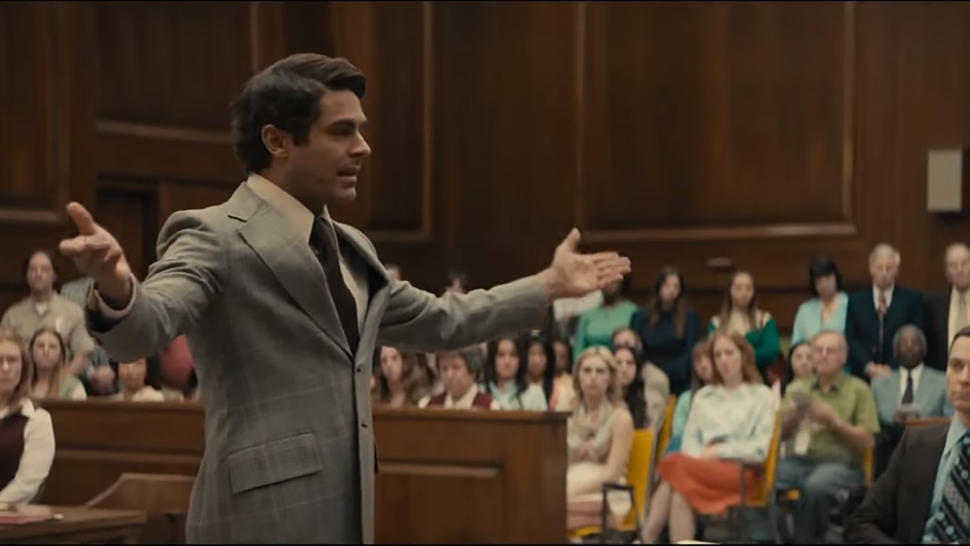
That was the online response from many after seeing the teaser trailer in which Zac Efron plays infamous serial killer Ted Bundy in the upcoming film Extremely Wicked, Shockingly Evil and Vile.

I agree – we don’t want to promote or celebrate murderers. But is accurately depicting a killer the same as “glamorizing” them?

Though the film follows the perspective of Bundy’s long-term girlfriend Elizabeth Kloepfer (Lily Collins), audiences are unsurprisingly fixated on Efron’s portrayal of Bundy.

Joe Berlinger, who also put together the four-part Netflix docuseries Conversations with a Killer: The Ted Bundy Tapes (2019), directed the film. The true crime docuseries features audio of interviews with Bundy while he was on death row.

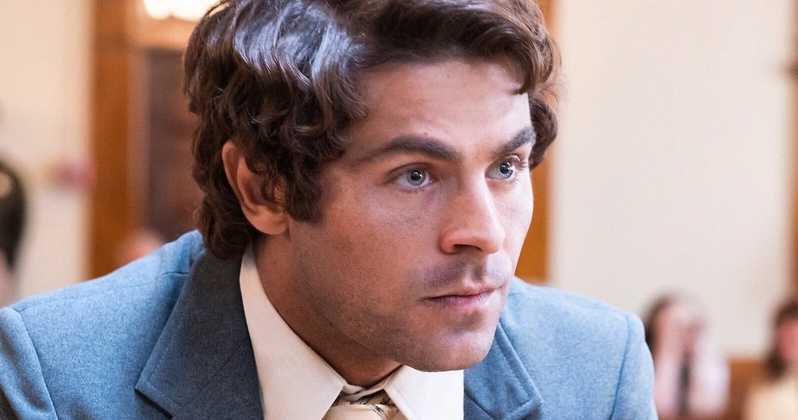
Zac Efron as notorious serial killer Ted Bundy in Extremely Wicked, Shockingly Evil and Vile. Photo: Daily Express

Bundy was active throughout the United States between 1974 and 1978, murdering and raping upward of 30 women in seven states. He escaped from prison twice but was eventually convicted and sentenced to death. He was executed thirty years ago, on 24 January 1989 at Florida State Prison.

I understand where our concerns are coming from. Somehow, there’s a real threat of people becoming infatuated with murderers. On the surface, it doesn’t seem like a great idea to cast a charming, good-looking actor as a depraved killer. What does that impression promote?

The truth is, Bundy was handsome. He was charming. And he used his personality to make people trust him, from his victims – whom he persuaded to accompany him to his car under the guise of disability, usually using a sling or crutches – to people who knew him. Friends, partners (Kloepfer, and later Bundy’s wife Carole Ann Boone, whom he married at one of his trials), and his mother all thought there was no way he could’ve committed such grisly crimes. Kloepfer eventually contacted the police with some vague suspicions, but Bundy still got away with a lot under her nose. His charm inevitably fuelled her denial for years; he was a skilled and charismatic manipulator. Bundy wanted people to believe he was just an average guy, and he maintained the lie of his innocence until just before his execution.   

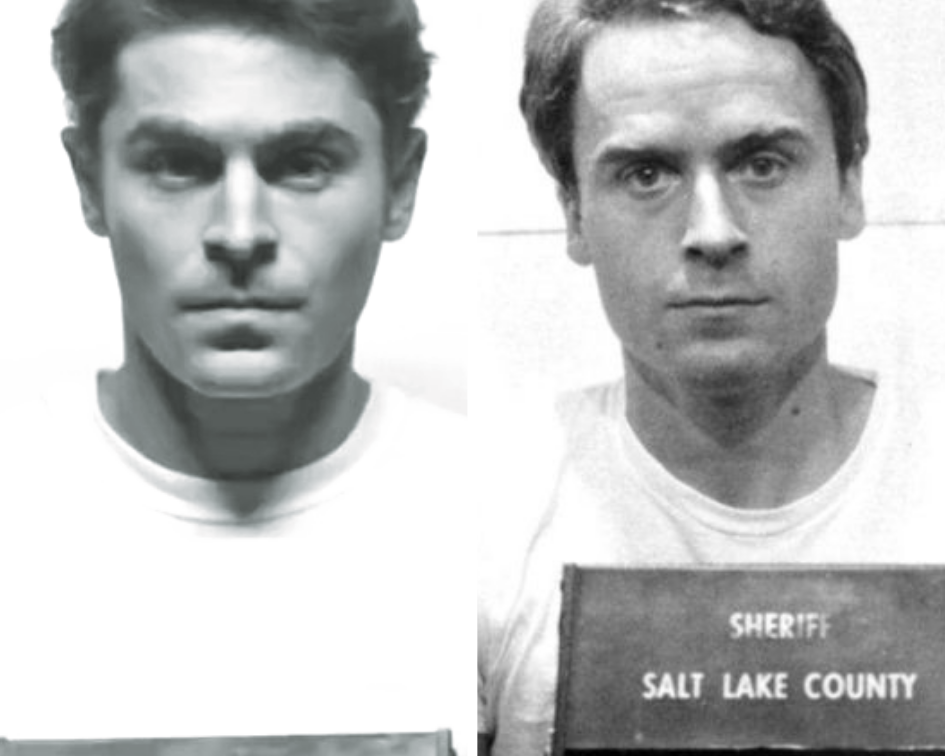
Zac Efron as Ted Bundy, compared alongside Ted Bundy himself.

So couldn’t it be that Zac Efron is actually the perfect choice for the role? I was skeptical at first, but after watching Conversations with a Killer, I changed my mind. Efron and Bundy even look alike; Efron claims they even have some of the same mannerisms.

I believe that in order to show him exactly the way he was, it’s not really glorifying him. I think hopefully it will make women … be more aware of their surroundings and be cautious. He had different tactics that he used for people to help him get in cars or do things, and in your gut, if you just feel that something doesn’t feel right, just say no.

Kathy Kleiner Rubin, one of Bundy’s survivors, doesn’t have a problem with the film

It’s important for us to try to understand, or at least recognize, how serial killers like Ted Bundy operate. The uncanny ability to convince people around him (as well as those avidly following his case in the 1980s) that he was wrongfully accused is troubling. Bundy himself said in Conversations with a Killer that “people don’t realize that murderers do not come out in the dark with long teeth and saliva dripping off their chin.” They have a chameleon-like talent for blending in (“The Bundy Effect”). If the film depicts this trait in Bundy without sensationalizing details, it won’t be glamorous; it’ll be truthful.

Understanding how serial killers deceive, and people who do evil deceive, really is kind of the theme of the film.

Director Joe Berlinger

We are in control of our own opinions. As long as we, the viewers, are conscientious and aware of context, we can watch films without falling prey to misinformation. It all comes down to critical thinking, which is our responsibility. In a pre-internet era, I can see how a film that seemingly glamorizes Bundy (or shows him accurately as the charismatic liar he was) could run the risk of misleading people. But we live in an age where a quick Google search can set the facts straight, if the movie doesn’t do that to begin with. We just have to make sure we commit to learning ethically and questioning sources.

Photo: Google News

As always, I’ll reserve final judgement on the film until it gets released. I hope it doesn’t simplify Bundy’s disconcertingly complex personality. I kind of think our deep-seated concerns may end up being less about “glamorizing” the killer and more about how the killer was able to glamorize himself. Extremely Wicked, Shockingly Evil and Vile thus has a huge opportunity to be very telling about sinister individuals and their ability to blend in.

Long Story Short, You Can’t Control Everything

Though storytelling is highly personal, it thrives on human interaction and the sharing of experiences, making storytelling and interpretation inherently collaborative processes.

By Serena Ypelaar

“You can’t control what others think, but you can control what you put out there.”

This idea is something a lot of people carry around, and it has a special relevance when we think of how we’re surrounded by stories. As we enter a brand new year of The Mindful Rambler, I’d like to reframe the discussion on storytelling and interpretation – and the methods of both processes – which we’ve been examining here on the blog.

In telling a story, whether it’s for entertainment, healing, documentation, critical analysis, or otherwise, there’s always a lot of pressure around how it will be received. Will people like it? Will they get it? Will they take from it the information you’re hoping to impart?

Shakespeare definitely distilled some information down when he wrote his history plays, inciting a multitude of different interpretations.
Photo: Giphy

I experience that pressure whenever I write something. Anything I write can be interpreted, misinterpreted, and reinterpreted, and the truth is that my writing won’t exist entirely under my control once it’s out there. Every person who hears a story brings their own unique experience to it, creating something new. Two people who read the same book, for example, might see it in completely different ways, meaning that the result – the experience of storytelling – actually becomes a hybridization, a meeting place between the “teller” and the “listener”. Storytelling is the act of bringing one’s story, through words, images, sound, and other sensory outputs, into being outside of one’s self.

To avoid delving too far into the abstract, I’ll use an example. If someone is describing a place while telling a story, they’ll describe it as best they can noting features they feel are important to the story or of personal value to them. The person listening to the story will then construct their own interpretation of the event, incorporating their past experiences, feelings, biases, and assumptions. In short, the story is changed by the listener’s reception of it. Every single person hearing that story will have a different conceptualization of it, and a different understanding.

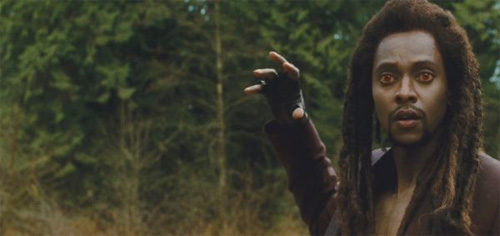
It’s the same with novel writing. Writers describe a character, for instance, and we, the readers, each construct a mental image of that person (and then get angry when the film casting doesn’t match that). I don’t know how many people I heard, back in middle school, ranting about how they definitely, totally did not picture Robert Pattinson when they dreamed up Twilight’s Edward Cullen in their heads. There are also race-based biases toward literary characters which often become clear when a person of colour is cast as a character many assumed would be white (like the vampire Laurent from the same franchise), racial prejudices becoming evident with readers’ indignation.

As demonstrated by their reaction to Edi Gathegi being cast as Laurent, Twilight‘s preteen fanbase did not want a diverse cast for the 2009 film adaptation… and, according to director Catherine Hardwicke, neither did the author (Stephenie Meyer) herself.

Irrespective of a story and its content, creators must become comfortable with the notion that each person who hears their story is going to see something different. There’s no way a storyteller can construct their tale in a way that guarantees uniform interpretation. Attempting to do so can result in over-describing something and alienating readers by unconsciously (or consciously) trying to harness control over their perceptions. It’s possible to use photographs to aid a visual picture, for instance, but these will still foster further imaginings on the part of the listener. Gaps in information will be filled independently – so the point is not to describe every single thing that is within you, but rather what is important to the story. That’s how we get such engaging stories, whether in literature, history, entertainment, art, memoir, or otherwise. Allow the listener to meet you halfway, and together you can share the experience while expressing trust in another person.

Maybe that’s why storytelling is so important to us – on an instinctual level, it allows us to connect with each other and find common ground.

Home for the Holidays

What does tradition tell us about the holidays? As Hanukkah is underway and Advent begins, we examine how collective rituals can unite us, both within and across faiths.

By Serena Ypelaar

What is tradition, really?  

It’s defined as the transmission of customs/beliefs between generations, and the nature of the word itself suggests its deep reliance on community. There’s a reason culture can be steeped in tradition – and a reason that there’s a stigma attached to solitude at the holidays. And that’s because tradition depends on sharing to survive. You can most certainly enjoy traditions on your own (I sure do), but the fact is that they don’t sustain unless they’re shared with other people and carried forward. Since we as humans are mortal, they obviously wouldn’t live past just us. 

Not unless we share them.

As we kick off December I wanted to take a look at the nature of community and its integral significance in holiday rituals. So here we go: a brief but hopefully interesting look that will prompt us to reflect and help us cherish the people that make the traditions great. 

Christmas | Christian tradition

Christians celebrate the birth of their saviour Jesus Christ by attending a mass or church service to have communion, as well as partaking in a feast and gift-giving. However much mass consumerism may exploit the togetherness of Christmas to sell more products, the holiday itself dwells in generosity, regardless of money spent.

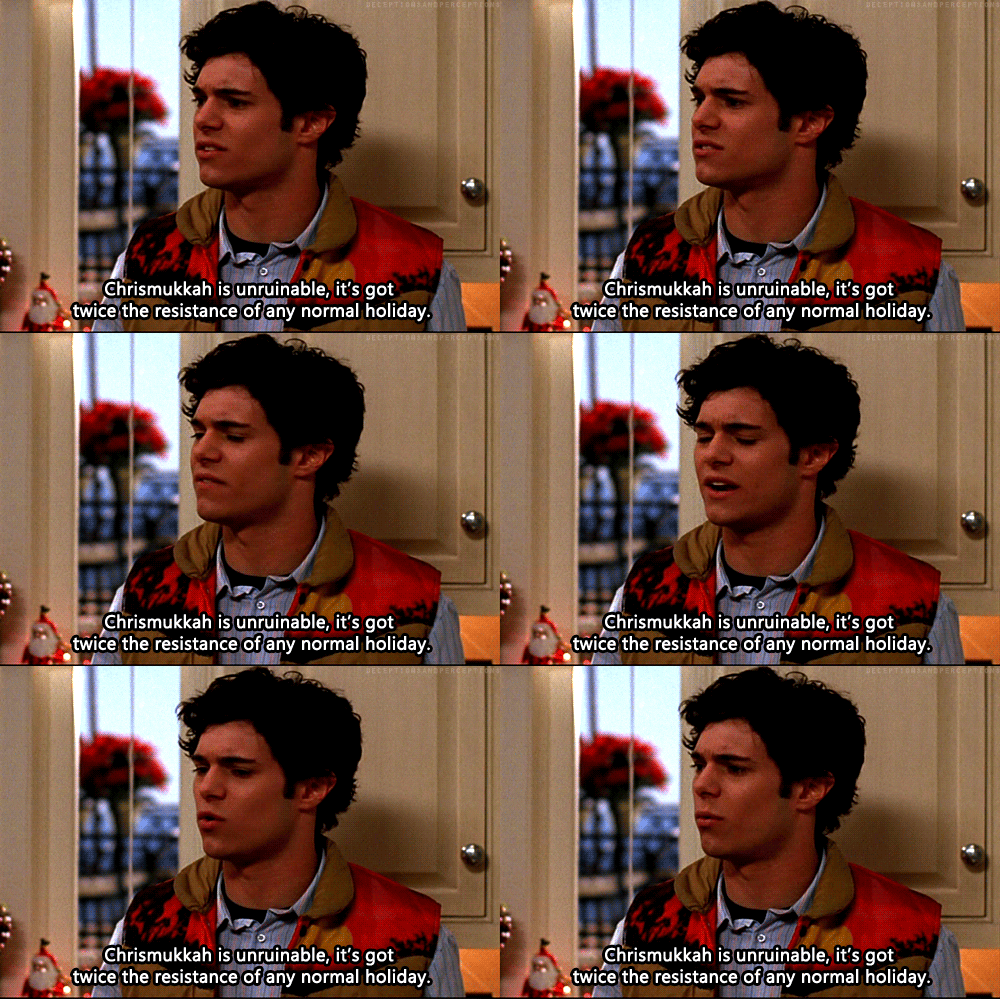
Seth Cohen from the OC discusses how Chrismukkah has twice the resistance of normal holidays because it's half Christmas, half Hanukkah.
As the son of a Jewish father and Christian mother, Seth Cohen from the O.C. was a staunch supporter of “Chrismukkah”, getting people on board to sustain the hybridized traditions.

Hanukkah | Jewish tradition

Hanukkah is celebrated for eight nights to symbolize the successful rebellion of the Maccabees against the Seleucid empire. At the dedication of the Second Temple, the menorah burned for eight days even though there was only enough oil for one. Jewish observances also include playing dreidel and gathering to eat oil-based foods such as latkes.

Winter Solstice | Cree Tradition

Among Cree nations in North America, the winter solstice allows an opportunity for rest and renewal. As the shortest, darkest day in the year, the solstice sees Cree people reflecting on the past year and their connections with plants and animals by looking at the stars. Specifically, the Seven Sisters constellation, or “the hole in the sky” prompts Cree people to come together and reflect on their ancestors.

Kwanzaa | African-American tradition

Kwanzaa celebrates African-American heritage in the United States. Children are included in the observances, and respect is paid to elders and ancestors, concluding with feasting and gift-giving. Families also decorate their homes with African art and colourful African cloth such as kente.

Sinterklaas / St. Nicholas Day | Dutch tradition

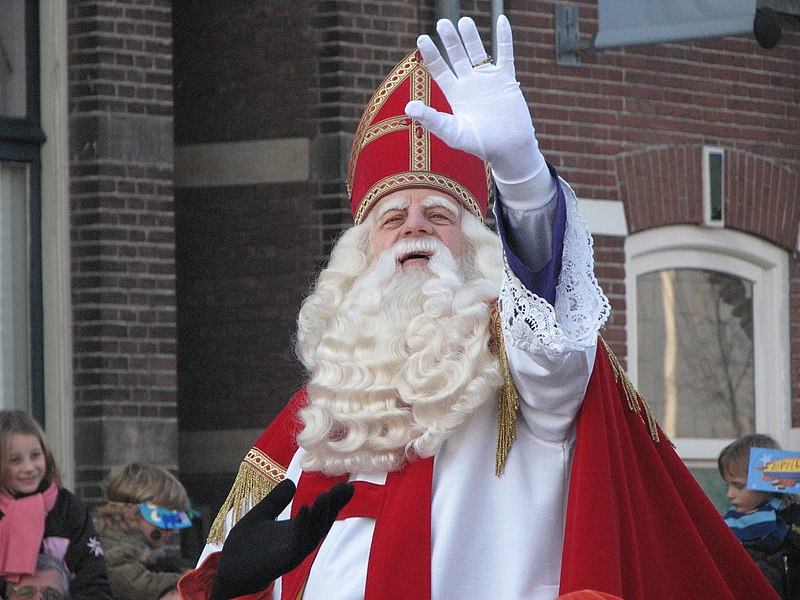
Sinterklaas arrives in the Netherlands from Spain.
Photo: Wikimedia

Celebrated in the Netherlands, Belgium, parts of France, and former Dutch colonies, Sinterklaas Day celebrates the Feast of St. Nicholas, in which Sinterklaas returns from Spain. Children put out wooden clogs on the night of December 5 and awake to chocolate letters, ginger cookies such as speculaas and kruidnoten, and oranges in the clogs. The Sinterklaas parade is also a well-attended event among families in Holland.

Ōmisoka | Japanese tradition

Toshikoshi soba.
Photo: Flickr

Ōmisoka signifies the end of the year, and is celebrated on the final day – December 31. A few hours before the year ends, Japanese people join together for parties and eat toshikoshi soba or toshikoshi udon, long noodles which symbolize passing from one year into the next. From midnight, the first hours of the day are spent at a shrine or temple, and greeting one another. 

Tradition is an instrument of community. As we’ve seen, one person can practice rituals, but it takes many to sustain traditions for years to come. It’s interesting to imagine, with the rise of digital technology and its new prominence in our lives, the new traditions we may create and carry forward – and those which may falter. Nevertheless, one thing has endured throughout: our human craving for connection. 

Interpreting the Zapruder film

55 years after the assassination of U.S. President John F. Kennedy, we still have much to learn about the famous Zapruder film, which captured the incident in Dallas.

Warning: contains mention/images of graphic violence and may be disturbing for some readers.

By Serena Ypelaar

November 22, 1963. John F. Kennedy greets the public in the presidential motorcade as he heads toward Dealey Plaza and the Texas School Book Depository. As the car turns off of Elm Street, onlookers gathered along the side of the road cheer, clap, and wave to the President and his wife, Jacqueline.

The next few seconds would drastically change the future – and believe it or not, they were caught on film.

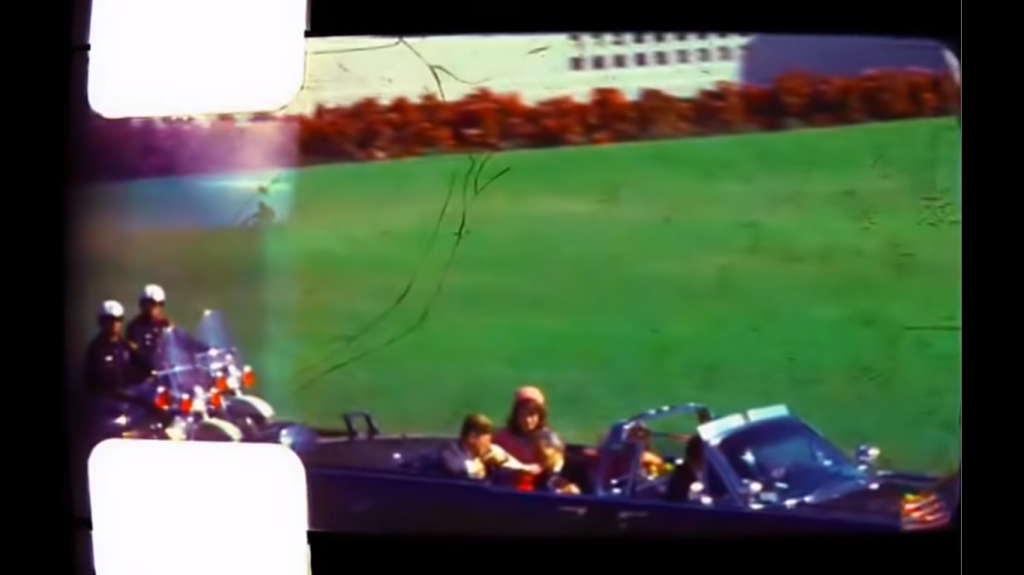
The Zapruder film (graphic content) preserves those moments when JFK was fatally shot, and it’s hence been scrutinized closely for decades. Abraham Zapruder was an ordinary U.S. citizen who happened to be in the right place at the right time, unknowingly documenting a tragic event that would go down in history.

zapruder2
Screencap taken from the Zapruder film.

You might think there’s nothing of value to gain from watching the murder of a political leader, but in this context that couldn’t be further from the truth. Zapruder wasn’t to know that the U.S. government would seize his short film when the Warren Commission was launched to investigate the assassination – he was merely recording the event for himself, on a Bell & Howell home movie camera.

There are others who filmed the assassination, but I want to focus on Zapruder’s close-range footage for its interpretive value.

zaprudercam
Abraham Zapruder’s camera, which is now held in the U.S. National Archives. Photo: Wikimedia Commons

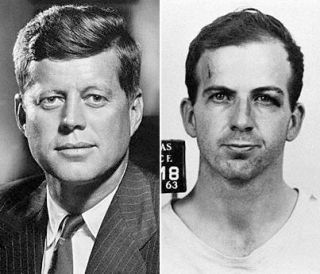
I mentioned that viewing the murder was crucial rather than gratuitous – and now I’ll explain why. JFK’s suspected killer, Lee Harvey Oswald, was shot dead by nightclub owner Jack Ruby before he could be extensively questioned or tried for the murder. This turn of events spawned boundless conspiracy theories, including ones in which Oswald was not the shooter, or that government(s) or other third parties were behind the assassination.

Oswald is alleged to have fired the shots from the sixth floor of the Texas School Book Depository. His own whereabouts and location have been intensely analyzed in order to place him at the scene of the crime: the source of the gunshots. To find and prove the source, the Zapruder film is an invaluable piece of evidence.

jfkoswald
President John F. Kennedy and Lee Harvey Oswald. Source: Psychology Today

Analysts and scientists have hypothesized on the trajectory of the bullets entering and exiting President Kennedy’s body. While many have opposing views on their path and therefore their source location, the point is that without Zapruder’s film, the investigation would have relied instead on subjective witness testimony.

However, discrepancies were perceived between witness testimony and the film’s contents. In an editorial for the New York Times in 2007, Max Holland and Johann Rush assert that Zapruder’s film was initially misunderstood because it seemed to show only two of the three shots believed to have been fired:

The majority of witnesses in Dealey Plaza heard three shots fired. Lawmen found three cartridges in Lee Harvey Oswald’s nest … Yet Zapruder’s film captured only two shots clearly. As a result, the film has been scoured for evidence of another shot, presumably the first one fired at the president. Research has yielded contradictory findings.

But what if Zapruder simply hadn’t turned on his camera in time?

Holland and Rush state that Zapruder commenced filming but turned off his camera when waiting for the President’s limousine to come into view. They suggest that he didn’t turn it back on again until after Oswald had fired his first shot. Viewing the film as incomplete therefore answers a question that loomed large over the Warren Commission investigation: why did Oswald miss the closest shot but prove such an accurate sniper in the two shots following (at 190 and 265 ft. respectively)?

“About the time the car got near the black and white sign, I heard a shot,” a key witness, Amos L. Euins, had said. Holland and Rush argue that it was the sign itself that blocked Oswald’s view of Kennedy. Sure enough, in watching the Zapruder film we lack the first shot but see the next two – after the President passes near a large sign. Startlingly, of the three shots fired, Zapruder managed to document the two that found their target.

The film, we realize, does not depict an assassination about to commence. It shows one that had already started.

The Zapruder film is central to the historical record of Kennedy’s assassination, as is careful analysis. The angles from which one can interpret the film prove that despite its overwhelming value to those trying to understand the event, it provides only a limited (though crucially significant) slice of what happened that day, contingent on a man’s choices of when to record … and his inability to know what was about to happen.


We shall not sleep, though poppies grow

One hundred years after the World War I armistice, we continue to remember – and feel – the sacrifice of those who have served in armed conflict. 

By Serena Ypelaar

Trying in dismay to ignore the declining number of poppies I’ve seen on people’s lapels this year (all of theirs probably just fell off, right?), I of course wanted to pay tribute to our fallen soldiers, surviving veterans, and all those affected by war ahead of Remembrance Day.

And what better way to do so on a literary/historical blog than to revisit the famed rondeau poem In Flanders Fields (1915) by Canada’s very own John McCrae?

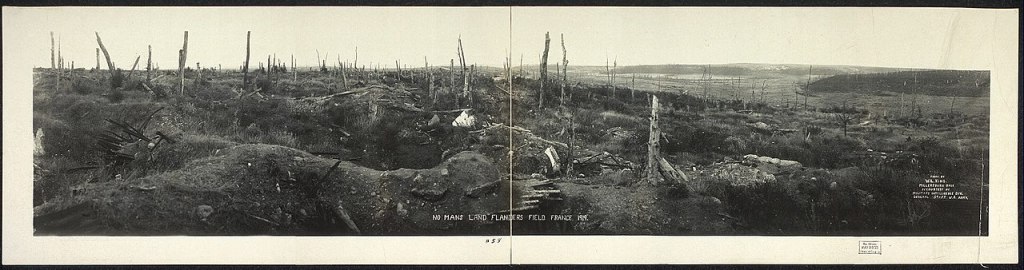
1280px-No-man's-land-flanders-field
Trenches and No-Man’s Land at Flander’s Fields. Photo: Wikimedia Commons

From an interpretive perspective, the strength of the poem lies in its profound ability to foster empathy. Most of us probably haven’t been in the trenches or known what it’s like to fight in a thankless conflict while watching countless friends die. Those of us who haven’t are extremely lucky – yet In Flanders Fields paints such a visceral picture of sacrifice that we get an almost firsthand glimpse of the devastation.

In Flanders fields the poppies blow
Between the crosses, row on row,
That mark our place; and in the sky
The larks, still bravely singing, fly
Scarce heard amid the guns below.

We are the Dead. Short days ago
We lived, felt dawn, saw sunset glow,
Loved and were loved, and now we lie
In Flanders fields.

Take up our quarrel with the foe:
To you from failing hands we throw
The torch; be yours to hold it high.
If ye break faith with us who die
We shall not sleep, though poppies grow
In Flanders fields.

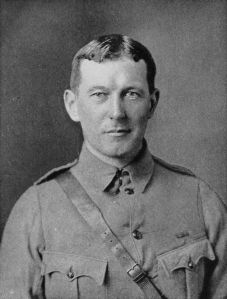
It is hard to believe that McCrae, a physician and Lieutenant-Colonel during World War I, was dissatisfied with his work and discarded it. He had to be convinced to submit the poem for publication. Yet he uses swift imagery to conjure a painstakingly forlorn scene of war and death, having written it after performing the funeral service for a fellow soldier and close friend, Alexis Helmer. No matter where we read this, we’re hit as though standing there in Belgium: poppies blowing in the wind on the burial site; guns booming in the distance; the keen sting of love and life, all extinguished by the horrors of war.

crae
Physician and poet Lieutenant-Colonel John McCrae. Photo: Wikimedia Commons.

I will freely admit that it’s almost impossible for me to read the poem without tearing up. What’s more, it has also been set to music, and the sombre melody combined with McCrae’s stark verse is even more emotional. I always cry when they sing it during the Canadian Remembrance Day ceremony in Ottawa, and I probably always will, because McCrae delivers empathy right to our doorstep. That is, of course the best storytelling – that which makes us feel things.

McCrae’s use of caesura in the second stanza, a halt with punctuation in the middle of a line, drives the point home: We are the Dead. Short days ago we lived … The dead speak to us in the poem, and we are accountable to them to live with honour and integrity as they no longer can. Those feelings of sadness are so well-preserved in the poem that they don’t dull down with time. Every reread reopens the wound – but justly so.

Processed by: Helicon Filter;
A poppy field in Flanders. Photo: Wikimedia Commons

Yes, it’s painful to grieve, but it is necessary. Remembrance Day is an ongoing process of empathy and an enduring resolution to defend honour. That is, after all, why we wear the poppy every year. It’s a symbol of our commitment, gratitude, and respect. Perhaps in remembering the contributions of our fellow citizens, whether by sacrificing their lives or through tireless and laborious efforts, we’ll also be wary of the sorrow that accompanies war and conflict. Lest we forget.

How Does History (Literally) Speak to You?

One thing we can’t glean from history prior to the invention of the phonograph is how people’s voices sounded. We may feel a profound connection with historical figures but can never hear how they spoke, a key aspect of their identity and personality. 

By Serena Ypelaar 

Historical figures are more than just pictures on a page. They are people who lived and contributed to their communities, and trying to imagine them doing so can be a challenge to historians depending on what evidence remains. We’re always searching for more insight into the key quality that truly brings a historical figures to life: their personality.

Just as we once had no photographs to see what people really looked like, so too did we once lack film evidence that people really lived and spoke in distinctive ways. In trying to get a sense of mannerisms and voice, we first had to rely on audio.

Why do I think voice is such an important aspect of connecting to those who have predeceased us? I’m going to use politicians as my prime example. Many politicians are remembered as great orators whose speeches have moved and influenced societies during major events, from celebrations to declarations of war. I believe our voices carry much emotion, therefore conveying an important aspect of who we are.

lutherking
Martin Luther King Jr. addressing crowds in Washington, DC. Photo: National Park Service

Think about it: how many times have you seen/met someone, and at first glance expected them to have a specific kind of voice (low, high, quavery, strong, accented)? And then they open their mouths and a completely different voice comes out! It changes your impression of them, doesn’t it? For instance, Daniel Day Lewis speaks in a higher pitch in the film Lincoln (2012), illustrating the surprising truth about former American President Abraham Lincoln’s high, reedy voice. It just goes to show how much the quality of one’s voice defines their presence.

Voices can be commanding or meek; soft or loud; rough or smooth; and all these sensory elements shape and cement identity, especially in public memory.

Take King George VI of Great Britain, and his speech of 3 September 1939 in which he confirms Britain’s involvement in World War II. This is the very same speech featured in the 2010 film The King’s Speech, as played by Colin Firth – and we can gain such a significant connection when hearing the King’s voice that it’s as if he’s in the room with us (such was the initial reaction to radio). If you listen to the real speech, you can hear George VI’s inflection and get a better impression of his presence, breaking an interpretation barrier that keeps him (and likewise, other historical figures) at a distance from us today.

Would Martin Luther King Jr.’s “I Have A Dream” speech (28 August 1963) be as rousing if we had read it on paper? Dr. King’s delivery of the speech is often remembered as an iconic capstone of the Civil Rights Movement, demonstrating the significance of voice and audio in preserving historical records. Similarly, former British Prime Minister Sir Winston Churchill’s characteristic drone is recognizable to many of us, and his famous WWII “We Shall Fight on the Beaches” speech (4 June 1940) has also been recreated in recent films such as Dunkirk (2017) and Darkest Hour (2017).

Charlie Chaplin, a British actor who was primarily known for his silent films, also understood the power of speech and voice in captivating and inspiring audiences. Taking advantage of the emergence of sound in film, his speech in The Great Dictator (1940) subverts Adolf Hitler’s acknowledged oratory skills and uses them for good in his own parody version of a wartime dictator’s speech.

dictator
Charlie Chaplin in The Great Dictator (1940). Photo: Wikimedia Commons

Still further, accents offer a whole different opportunity for biographical interpretation: for example, though former Canadian Prime Minister Sir Wilfrid Laurier was a Quebecois francophone, he learned English in New Glasgow and therefore spoke with a slight Scottish accent, something I could never learn from merely looking at photographs or silent film clips. Observations were written down, but without audio we can never hear them for ourselves. The first Canadian Prime Minister Sir John A. Macdonald’s accent is also in question, as he was raised in the Bay of Quinte/Kingston, Ontario, far from Glasgow itself (though the latter was his birthplace). American President John F. Kennedy’s Boston accent also defines his aura in our memories. If we can hear politicians speak, we can further understand their essence as people and their leadership qualities.

Is this post, then, a prolonged lamentation that I’ll never get to hear the voices of so many historical figures who captivate me? I’m not denying it – and I’m arguing that we could all do with taking some time away from our highly absorbing smartphones to be present. Listen to people’s voices, enjoy the timbre and cadence, connect with the emotions that shine through when people speak. We often take it for granted that we’ll get to hear their voices every day, but when they’re gone, all that will be left of them is our memory and the records we’ve kept.

Advice After the Fact: What Historical Advisors Do Best

Historical advisors make sure the era-specific details of television and film are portrayed authentically. Using Downton Abbey as a case study, we examine the various aspects they consider when recreating a time period.  

By Serena Ypelaar

The approach of fall, and later winter, inevitably means one thing: More time indoors = more television = more period dramas.

In mainstream media, historical television has gained traction in recent years, with shows like Downton Abbey, Peaky Blinders, Poldark, Mad Men, and The Crown gaining cult followings. As a historian, I love a good period drama, since watching a fictional recreation of an era is one of the best ways to learn about it. Of course, being a historian means I’m also hung up on accuracy.

Did you know there’s a specific job in which people ensure period dramas are accurate? Those magical people are called historical advisors.

Not every show has one, but I’d like to argue the importance of such a role. In the most miniscule ways, historical dramas give viewers a vivid impression of life in a specific era. The details simply provide a backdrop for the overarching narrative, but if incorrect, they undermine the story and realism of the series. I’ve highlighted five key elements a historical advisor must oversee to help interpret history for television and produce a credible period drama. In the interest of time, all examples come from Downton Abbey, whose historical advisor Alastair Bruce has spoken publicly about his role.

downton
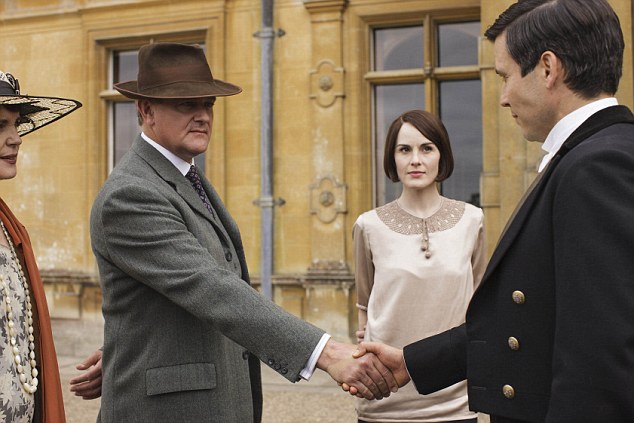
Ensemble cast of Downton Abbey, in Season 1 promotional image. From left: Jim Carter, Phyllis Logan, Siobhan Finneran, Lesley Nicol, Sophie McShera, Rose Leslie, Thomas Howes, Brendan Coyle, Joanne Froggatt, Rob James-Collier, Dan Stevens, Dame Maggie Smith, Hugh Bonneville, Elizabeth McGovern, Penelope Wilton, Michelle Dockery, Laura Carmichael, Jessica Brown Findlay. Photo: Flickr

Setting, set design, and technology 

Set in Edwardian England, Downton Abbey follows the aristocratic Crawley family and their servants in the eponymous great house. We’re treated with an (albeit rose-tinted) illustration of British society and its evolution from 1912 through 1926. It’s important that these shows capture setting in a way that transports viewers while avoiding anachronisms. Sets must be dressed with care, including items such as telephones, musical instruments, and furniture to highlight technological advances of the time.

Costuming, dress codes, and wardrobe etiquette 

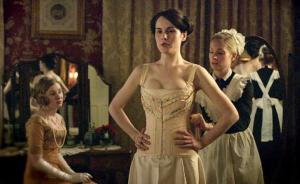
dressing
Downton Abbey capitalizes on portraying everyday aspects of life, such as dining or dressing, seen here. Source: Golden Globes

Perhaps the most universally enjoyed element of historical drama is the fashion. Historical advisors should ideally work with costume designers for accuracy, since clothing leaves a lasting overall impression. In an upstairs-downstairs series like Downton, the frequent act of the staff dressing their employers demonstrates how garments were worn. Alastair Bruce famously intervened in a scene in which newspaper man Sir Richard Carlisle shakes hands with Cora Crawley with his glove on. According to Bruce, gentlemen would always remove a glove before shaking hands.

Mannerisms, accents, and speech

Downton Abbey is located in Yorkshire, but you won’t hear the upper-crust Crawleys speaking with northern accents. Actress Michelle Dockery, who normally speaks with an Essex accent, had to adopt a measured drawl to convincingly play the aloof Lady Mary. Conversely, you’ll find the belowstairs staff using coarser dialects. Historical advisors must ensure consistency as well as monitor word choice in scripts, as some words weren’t commonly used yet. Physical mannerisms likewise illustrate character; the Crawleys and their peers would walk rigidly upright while the working class characters have a different gait, especially when relaxing “off-duty”. These details may seem insignificant to viewers, but when employed they can help teach us the nuances of how our forebears lived.

PBS_Alastair_Bruce
Downton Abbey’s historical advisor, Alastair Bruce. Source: Downton Abbey Wiki

Gender, race, sexual orientation, and class politics

Often, dynamics between people from different stations in life drive the tension in period dramas. Any good period drama will highlight change, usually in the form of innovation, social causes, and cultural shifts. It’s essential that historical advisors allow writers to capitalize on these changes without sacrificing legitimacy. In a series like Downton Abbey, where men and women of varying status and motivations interact in a large house, there are specific protocols which historically would have been followed – and which Alastair Bruce had to emphasize during filming.

Society, nationalism, trends, and overarching historical context

The wider historical backdrop is the linchpin. It shapes the characters’ outlook, values, and knowledge (How do they understand the world? What has happened at this point, and what is yet to come? Are they racist? Probably). National context, such as British sentiment during World War I, was crucial to understand while writing Downton. This is one area I feel Bruce and writer Julian Fellowes falter – not in the overall context, but in the mindsets of their characters. The Crawleys are astonishingly progressive for conservative landowners; certain characters exhibit a surprising lack of prejudice, which at times breaks the carefully crafted personas from their vantage point of a hundred years ago. Nevertheless, the motivation was undoubtedly to foster empathy, which in a television series is understandable.

thomas and the crawleys
So we’re supposed to believe that these wealthy conservative Britons living a hundred years before us have the same tolerant sensibilities of our time? Oooookay (but we love the outfits so we’ll suspend our disbelief, am I right?) Source: The Daily Mail

With prior knowledge of Fellowes’ planned storylines before each season, Bruce conducted preliminary research using specific case studies – in this case, country houses in England – to determine the aspects of life in a country estate like the fictional Downton Abbey. He then advised on the finer elements of the story’s execution.

As someone who writes historical fiction, I can relate. I’ve always found the storyline to be the core of a project – the steering wheel, so to speak – while the research, the actual historical facts, are the engine. The creator is the driver. In period television, the writer and historical advisor must copilot the vehicle if they are to arrive smoothly at their destination: a polished, realistic period drama that will appeal to laymen and historians alike.* Granted, Downton Abbey is certainly not without its critics (myself included when it comes to the later seasons), but the showrunners’ meticulous attention to detail does it credit.

*Fans of Downton Abbey will hopefully forgive me for my tactless use of a car metaphor – it just came to me as I went. Trust me, I know it’s a sore spot, as I myself haven’t quite gotten over The Incident from the 2012 Christmas special…

Historical Looks on Film: A Rant

Period dramas often fudge the accuracy of historical costumes, resulting in possible misconceptions and a flawed feel. But what happens when a series puts the work into capturing period-specific attire?

By Sadie MacDonald

Let’s talk about a trope I am resentfully fascinated by: inaccurate fashion in historical films. Many such films reflect the standards of attractiveness at the time they were made, often at the expense of historical accuracy.

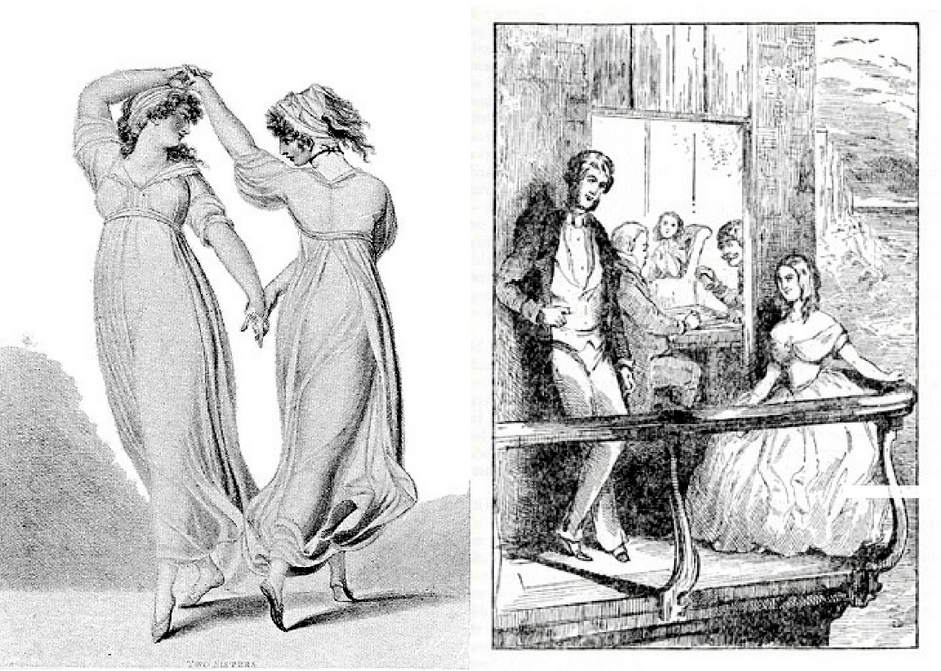
This trend isn’t new. William Makepeace Thackeray’s illustrations for Vanity Fair show the characters in contemporary 1840s fashion rather than Regency attire, as Thackeray claimed “I have not the heart to disfigure my heroes and heroines by costumes so hideous.”

Untitled design
On the left, apparently “hideous” costumes, and on the right, one of Thackeray’s… improvements. Photo Credit: Left, Sisters Dancing, Marino Bovi; right, A Family Party at Brighton, William Thackeray, scanned by Gerald Ajam.

Let’s start off our look at film examples with Disney. Snow White (1937) has a tidily-curled bob; the accentuated waists of Cinderella’s (1950) gowns evoke Christian Dior’s “New Look”; Ariel (1989) sports voluminous bangs and a wedding dress with sleeves that Princess Diana would approve of; Rapunzel’s (2010) side-part and gently-waved straight hair look very stylish for the late 2000s.

An example from the Golden Age of Cinema is Scarlett O’Hara in Gone with the Wind. While the costumes of the film revel in lavish stylings of antebellum American Southern dress, Vivien Leigh’s bright red lipstick and sculpted eyebrows belong more in 1939 than 1860.

It’s easy to see this convention in 1980s films. Check out the perm on the 1940s mother in A Christmas Story, or EVERYONE in Dirty Dancing, which is ostensibly set in the 1960s.

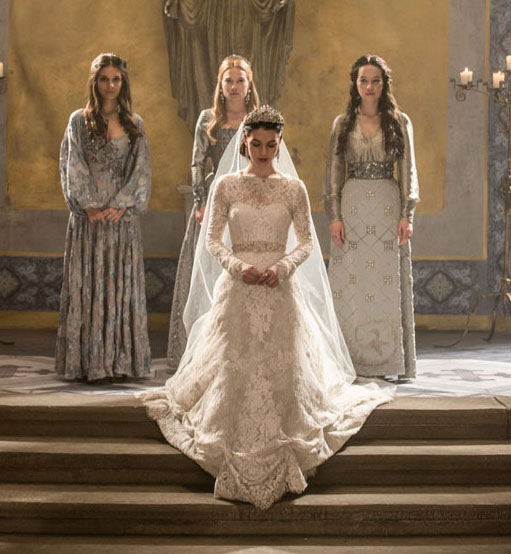
Recent films are also guilty. Pride and Prejudice (2005) is a major offender, as the Bennet sisters run around with wispy unsecured bangs and long, loose hair. It seems unfair for me to target The Tudors and Reign, as the dubious accuracy of those shows’ costuming has been endlessly lampooned, and neither show makes pretensions to historical accuracy.

Consummation
But it’s so hard to resist making fun of the show’s choices. Photo: Frock Flicks, which does a hilarious takedown of Mary’s wedding dress.

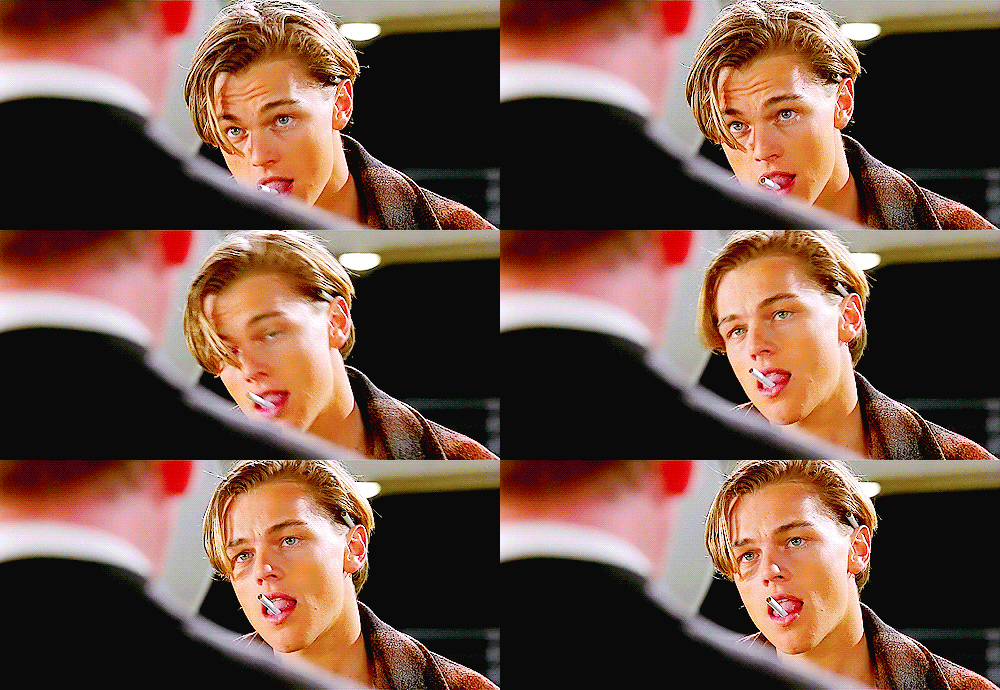
This trend is especially jarring when inconsistently applied in a film. The love interest in the 1996 French film Ridicule has straight hair, thick bangs, and simple make-up, but the unsympathetic characters of the French court look more accurate. A male example from the 90s would be Jack from Titanic, who has boyishly-floppy locks parted in the middle. Villain Cal, however, looks more period-appropriate. Clearly the film creators were okay with maintaining less-flattering historical looks for antagonistic characters, but not heroes.

dce7a58585be99ffc6c0bfa40472b303
Sometimes you gotta toss your anachronistic hair. Photo: Pinterest

This illustrates that anachronistic costuming choices are not necessarily borne from laziness. In addition to making main characters look attractive and sympathetic, inaccurate fashion can also help convey aspects of character. The titular character in Marie Antoinette (2006) owns a pair of Converse sneakers to emphasize that she is a childish teenager. A Knight’s Tale puts leading lady Jocelyn in punk-rock hairstyles to illustrate her rebelliousness.

Anachronistic fashion doesn’t have to be sloppy. But when accuracy is taken into account, the results are worth it.

Take the 1995 Pride and Prejudice miniseries. The tightly-curled hair might look funny at first, but it adds to the detailed Regency environment, the elements of which come together to bring Jane Austen’s world vibrantly to life.

Mad Men is a recent triumphant example. The actors are decked out in proper attire right down to their undergarments, as costume designer Janie Bryant understood how important this detail was to creating 1960s silhouettes. Here, historical accuracy is not exclusive with creativity, as costuming on Mad Men also reflect the characters’ personalities.

7ed92e6043e2640d19855ab5ceb84be0
Lookin’ good! Photo: Pinterest

These examples use costuming not to make the characters look attractive to modern sensibilities, but to fully immerse viewers in the period. If anything else, shouldn’t film be immersive?