Monument Men: Constructing Likenesses

Creating commemorative likenesses – statues, wax figures, paintings – is no easy feat. The way an individual is remembered could have repercussions for years to come, so how does creativity factor in?

By Serena Ypelaar

When we visit a wax museum, we’re usually prepared for a couple of duds that look nothing like they’re supposed to. Perhaps it’s due to the levity of such a space – after all, what purpose do wax museums serve apart from the fleeting amusement of seeing celebrities’ likenesses up close?

However, with commemorative likenesses such as statues, busts, or paintings meant to immortalize public figures, there’s a lot more to it. A grossly inaccurate portrayal could be damaging to a person’s public image, and depending on the nature of the commemoration, may be seen as unflattering or even disrespectful.

Take footballer Cristiano Ronaldo’s infamous bust, which was unveiled at Madeira Airport in Portugal last year. The bust was mercilessly ridiculed and made the subject of numerous memes, to the point that the artist had to redo it.

ronaldo
Portuguese footballer Cristiano Ronaldo was commemorated with this bust by sculptor Emanuel Santos in 2017. Public opinion ensured that it was replaced by a new, “more accurate” version, which can be seen below. Photo: Know Your Meme

Admittedly, famous individuals like these are exposed to these depictions by the very nature of their existence – they’re well-known, so people are going to make fun of them, whether it’s creating unflattering portrayals or vocally enjoying such parodies. That doesn’t make it right or excusable, especially if the public figure is a good person (if they aren’t, well, have at it!). Nevertheless, the fact remains that famous people lose the ability to regulate their public perception. The same goes for unauthorized biographies and the like – there isn’t much that can be done to prevent these interpretations unless someone wants to sue for libel.

standard
Photo: Bleacher Report

The new, sleek Ronaldo statue reflects what we’re conditioned to expect when it comes to commemorative statues, though – a public monument is no hokey wax figure. We seem to expect accuracy and a display of strength or nobility in these types of depictions, which is why more gutsy interpretations often get shot down. Yet we can’t pull the plug on artists’ interpretations altogether. To do so would be to rob artists of their style and create a mild form of censorship that could inhibit creative thinking. (Whether we want to foster “creativity” when it comes to portraying likenesses for public commemoration is another question altogether).

Still, that won’t stop me from expressing my dislike for what I call the “Paper Airplane Portrayal” of Canada’s longest-serving Prime Minister, William Lyon Mackenzie King. Cristiano Ronaldo is one thing – as an athlete, he doesn’t carry the same kind of significance that a former national leader might. So King’s statue on Parliament Hill in Ottawa seems even more bizarre to me, since I would expect him to look a bit less cartoony and more like the other statues on the Hill. Sculptor Raoul Hunter was aiming to convey King’s forcefulness as a leader, according to this page on the Government of Canada website explaining the interpretations of the statues. The other monuments on the Hill portray their subjects more proportionately, whereas King can only be described as abstract. His monument makes me laugh at him a little, which, applied in the context of public office, is surely a less desirable outcome.

king
You don’t need a picture of King to know that nobody is shaped so angularly. Nor did King’s head appear so oblong in life. I will add, however, that this statue was created in 1967 when this style was in vogue, which could raise another fascinating discussion about how aesthetic standards affect portrayals during a given era. Photo: Flickr

Of course, I’m sure it’s all a matter of personal opinion – I know people who like the King statue (above). And that 81-year-old Spanish lady who famously “touched up” Jesus’ face in the “Ecce Homo” fresco clearly thought his makeover looked fine…

Irrespective of whether we can gauge the accuracy of monuments beyond personal preference, discussing the issue tells us what we value as a society on a surface level. Commemorative monuments rely on context and setting to construct a noble or attractive memory of a person (often a man, statistically speaking) and their contributions in life. Let’s just hope that if we do anything noteworthy, the sculptor chosen to portray us won’t get too weird with it.

“I could do that. Even a BABY could do that!”

Seeing art that you feel you could have made can be a disorienting experience. The way art is critically acclaimed can be unfathomable to those of us who aren’t well-versed in art valuation and criticism.

By Serena Ypelaar

What makes art art?

Who gets to decide?

I’m sure many of us have experienced that moment in an art gallery when we are so bemused by a piece of art that we react as skeptically as the title of this blog post: I could do that. To which our inner voice might reply: But you didn’t. 

How much of art’s success lies in talent? Timing? Luck?

Does public appreciation elevate our work, or diminish it? Some artists would kill to be recognized in prominent art galleries worldwide, while others might be more commercially motivated and hope to make a living on their art. Still others might be repulsed by the notion that everyday people might appreciate their creations en masse outside of a venerated space like an art gallery.

When I was in London this past May, I had the privilege of seeing a play about one such artist, Mark Rothko.

evening-red
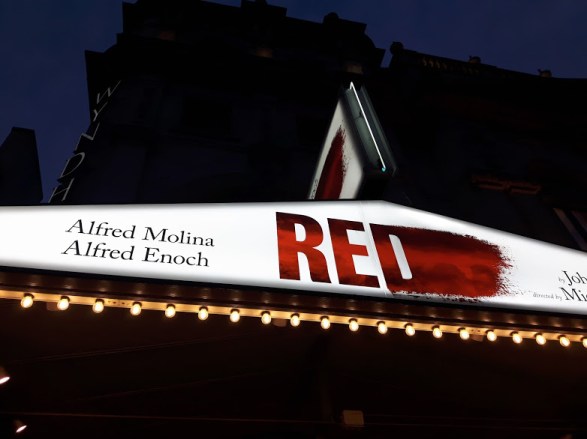
Alfred Molina, left, and Alfred Enoch, right, star in Red at Wyndham’s Theatre in London. Photo: Evening Standard

The play, Red, stars Alfred Molina (of Indiana Jones and Spiderman 2 fame, among more “artistic” films) and Alfie Enoch (Dean Thomas in the Harry Potter films; How to Get Away with Murder). Molina plays Rothko, the American painter who was known for his large red abstract paintings. Enoch plays his assistant, Ken, who, in contrast to his counterpart, praises the emergence of pop art from artists such as Andy Warhol.

Rothko rose to prominence during the abstract expressionism movement in the 1950s and 60s. Set in the twilight of this era, Red follows Rothko’s internal conflict after agreeing to paint commissioned works to hang in the Four Seasons restaurant, placing his art in a setting that he ultimately feels is pretentious and inappropriate. He must therefore choose between commercial success and his artistic ideals, causing tension in his understanding of his identity as an artist.

telegraph_red
Molina as Rothko and Enoch as Ken. Photo: The Telegraph

The 90-minute play raises an excellent dialogue on what constitutes art, what kind of recognition art merits, and who gets to truly define how we consume art.

This is where Alfie Enoch’s character shines – he starts as an unassuming apprentice, but by the middle of the play he’s firing off rebuttals against Rothko’s resistance to mainstream consumption of art.

Regardless of what you think about where art belongs, Red emphasizes the disparity from person to person. I might think that the pinnacle of artistic success is landing a coveted place in the halls of the Louvre, for instance, but someone else might think it a truer success to see their work all over town, enjoyed by more people and more frequently (like Banksy, for instance). There are unspoken hierarchies and beliefs about modern street art vs. the timelessness of being validated by art institutions.

And what makes art good, anyway? We’ve tossed around this idea for decades; centuries, even. Molina and Enoch discuss the issue too, but their characters’ disagreements in the play prove to us that the answer is difficult: I love classical art, particularly realism and/or landscapes, others love abstract art, others may not “get” contemporary art or consider it art at all, and so on.

svy-red
Outside Wyndham’s Theatre in London’s West End. Photo: Serena Ypelaar

In an effort to avert conflict, I’m tempted to say we should all just get along and like what we like, but it’s not as simple as that. The fact is that artworks’ supposed value (both from an artistic and commercial standpoint) has a very real bearing on institutions’ collections policies. Galleries have to decide what’s worth collecting, and curators base their acquisitions on research, market value, context, and more.

I don’t really specialize in that area of museum work, but I do know from my degree that an institution’s collections, and its acquisition decisions, deliberately reflect its collecting practice. Consider that the next time you think, I could do this – but don’t stop thinking that. The decision is yours to make. Whether or not you consider a work a piece of “art”, the fact that you decided by looking at the art and using your own critical perception is comfort enough for me.

“Canadian” is not a genre

As we near Canada Day, we question Canadian content standards and come up with some top playlist picks for the long weekend.

By Serena Ypelaar

I didn’t come up with the title for this post myself – it’s a slogan coined by Dine Alone Records, the Canadian independent record label based here in Toronto.

We can take some pointers from its message, as Canadian art is often dismissed – from literature, to visual arts, to music, and more. It’d be interesting to see what percentage of music in our libraries is Canadian – I’d wager most Canadians have 15% or less. But the fact is that there is so much Canadian music out there – and it’s good. 

9053598741_0e3efbb889_o
Canadian Indigenous singer-songwriter Buffy Sainte-Marie. Photo: Flickr

What is it about being Canadian that automatically garners less attention? We even have poorer-quality versions of American reality TV shows, and a terrible Netflix selection compared to our southern neighbours to show for it.

In our current political climate, feat. a tariff war with the United States (which, let’s be honest, flares up every so often like a chronic wound), why not support Canadian musicians and invest in some local talent?

Here are some concise, but by no means comprehensive, top picks for quintessential Canadian listening. Enjoy my quick recs below.

A Tribe Called Red: Essential Indigenous electronic/hip-hop; mandatory listening. Songs to Start With: “R.E.D.,” “How I Feel”, “Bread & Cheese”

Billy Talent: Political commentary & punk rock all in one. Crisp guitars; crisper lyrics. Songs to Start With: “Try Honesty”, “Devil in a Midnight Mass”, “White Sparrows”

July Talk: Jarring juxtaposition of vocals – guttural/masculine vs. soft/feminine. Songs to Start With: “Headsick”, “Blood + Honey”, “Picturing Love”

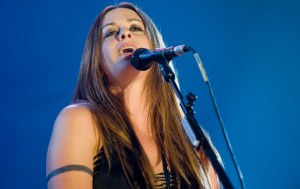
Alexisonfire: “The sound of two Catholic high-school girls mid-knife-fight”.* Songs to Start With: “Boiled Frogs”, “Get Fighted”, “Midnight Regulations”

*I can’t describe it any better than they already have…

City and Colour: Mournful lamentations nursed by Dallas Green’s voice. Songs to Start With: “Casey’s Song”, “Waiting…”, “The Lonely Life”

Arkells: Anthemic, buoyant daytime rock with a touch of motown. Songs to Start With: “Where U Goin”, “Cynical Bastards”, “John Lennon”

28521842711_254f6e659b_o
Mike DeAngelis and Max Kerman of Hamilton band Arkells, at WayHome Music and Arts Festival 2016. Photo: Flickr

Death From Above: Industrious duo at the junction of bass & drums. Songs to Start With: “All I C is U and Me”, “Crystal Ball”, “Romantic Rights”

Tanya Tagaq: Daring, innovative, and traditional Inuit throat-singing. Songs to Start With: “Uja”, “Sila”, “Retribution”

Mother Mother: Three-layered high-pitched vocals on a base of synth and strings. Songs to Start With: “Ghosting”, “The Stand”, “Infinitesimal”

Sum 41: Sprawling spitfire of classic punk rock with heavyweight choruses. Songs to Start With: “Still Waiting”, “Open Your Eyes”, “With Me”

USS (Ubiquitous Synergy Seeker): Lucid, lively electronica fuelled by lyrical emotion. Songs to Start With: “Damini”, “Vulcan”, “Freakquency”

Arcade Fire: A convergence of 6+ hipsters producing indie rock with accordion and keyboard at the fore. Songs to Start With: “Ready to Start”, “The Suburbs”, “No Cars Go”

Monster Truck: 70s style blues rock backed by organs. Long hair & denim required.   Songs to Start With: “Don’t Tell Me How to Live”, “Old Train”, “For the People”

Hollerado: Personable indie rock with a genuine sound and hard-hitting beats. Songs to Start With: “Too Much to Handle”, “So It Goes”, “Got to Lose”

Drake: No description needed for Toronto’s resident rapper… Songs to Start With: “Passionfruit”, “Over”, “God’s Plan”

Our Lady Peace: Low, crooning vocals replete with reassuring lyrics. Songs to Start With: “Innocent”, “All You Did Was Save My Life”, “Angels/Losing/Sleep”

Avril Lavigne: Do I even need to explain this? Songs to Start With: “Complicated”, “Sk8er Boi”, “I’m With You”

Cancer Bats: Gritty underground metal; shredding, cymbal-smashing oblivion. Songs to Start With: “Hail Destroyer”, “Beelzebub”, “Gatekeeper”

Three Days Grace: Bass-heavy garage-rock with brutally honest insights. Songs to Start With: “Just Like You”, “Never Too Late”, “Last to Know”

Sam Roberts Band: Even-paced alternative rock with laid-back guitars. Songs to Start With: “Brother Down”, “Them Kids”, “If You Want It”

Half Moon Run: Serene assertions on the human condition, featuring folksy acoustics. Songs to Start With: “Nerve”, “Trust”, “Narrow Margins”

Wintersleep: Guitars, synth, and experimental riffs with a sprightly rhythm. Songs to Start With: “Lifting Cure”, “Metropolis”, “Santa Fe”

alanis
Alanis Morissette. Photo: Wikimedia

Of course, there are also the Canadian classics, which you might consider revisiting for the long weekend. I’ve created a track-by-track vignette of essential Canadiana:

  • Rush – “YYZ”
  • Buffy Sainte-Marie – “Working for the Government”
  • Bryan Adams – “Summer of ’69”
  • The Guess Who – “American Woman”
  • Gordon Lightfoot – “Canadian Railroad Trilogy”
  • Shania Twain – “Man! I Feel Like A Woman”
  • Alanis Morissette – “Thank U”
  • Sarah McLachlan – “Building A Mystery”
  • Great Big Sea – “The Chemical Worker’s Song”
  • Neil Young – “Heart of Gold”
  • Joni Mitchell – “Big Yellow Taxi”
  • Leonard Cohen – “Treaty”
  • k.d. lang – “Constant Craving”
  • Celine Dion – “My Heart Will Go On”
  • Barenaked Ladies – “Canada Dry”
  • The Tragically Hip – “Bobcaygeon”

Obviously I omitted a bunch of bands/artists, mainly because I don’t listen to them enough to consider myself worthy of making thoughtful recommendations. Other Canadian artists are included below.

Shad, Lights, The Dirty Nil, Anne Murray, The Jerry Cans, Shawn Mendes, Sloan, Tegan and Sara, Michael Buble, Metric, Simple Plan, Young Empires, Joni Mitchell, Nelly Furtado, Bruce Cockburn, Jann Arden, The Trews, Corey Hart, Alessia Cara, Ron Sexsmith, Diana Krall, Stan Rogers, BROS, Feist, The Beaches, Moneen, The Darcys, The Weeknd, Justin Bieber, Said the Whale, Constantines, Marianas Trench, Silverstein, Broken Social Scene, Big Wreck, Nickelback, PUP, Dear Rouge, Blue Rodeo, Hedley, Fucked Up, Toronto, Great Lake Swimmers, The Rural Alberta Advantage, Teenage Head, Down With Webster, Thousand Foot Krutch, Matt Good Band, The Tea Party, The Sheepdogs, Hey Rosetta!, The Elwins, IllScarlett, Prism, I Mother Earth, Black Lungs, Chromeo, Japandroids, Whitehorse, Protest the Hero, The New Pornographers, Joel Plaskett, Northern Voice, Serena Ryder, Lost Cousins, Moist, Neverending White Lights, Platinum Blonde, Stabilo, Saint Asonia, Finger Eleven, Templar, Theory of a Deadman, Wolf Parade, Yukon Blonde, Born Ruffians, Black Bear.

Over the years, so much of Canadian identity has been built on what we’re not (namely, American). Let’s talk about what we are, for a change. It’s something Canadian music does well, if we only listen.

Look at this Art(icle)

By Serena Ypelaar

In all its abstraction, art somehow manages to reach the deepest parts of us. Art can make us feel understood; it can help us process complex emotions; it can foster empathetic reactions, or merely offer us some beauty to take solace in.

Our fourth and final theme on The Mindful Rambler, “On Art“, will explore how artistic works can give us something to relate to, and how artists achieve resonance through their craft. It’s always astounded me how artists can capture common elements of the human experience to make the viewer/listener/consumer feel that they can relate.

seurat
“A Sunday on La Grande Jatte” (1884), Georges Seurat. Photo: Wikimedia Commons

I shouldn’t generalize, but artists seem to summon something from within them to produce their art – whether it’s about loss, suffering, heartbreak, healing, comfort, or acceptance. Or even just an element of everyday life that they wanted to capture. These depictions offer us the opportunity to connect through shared experiences, despite probably never having met one another.

northernriver
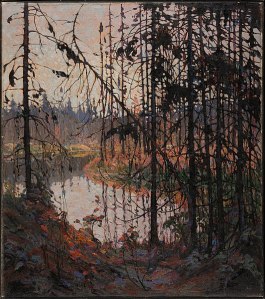
Tom Thomson’s “Northern River” (1915) reminds me of camping trips I’ve taken almost every year of my life, and seeing it makes me nostalgic. Photo: Wikimedia Commons

For instance, I’ve never met A.Y. Jackson (of Group of Seven fame) or Tom Thomson because they predeceased me, of course. Their paintings tap into the beauty of the Georgian Bay and the Great Lakes in Ontario. For me, such beautiful portrayals of the Canadian landscape spark countless childhood memories of camping trips in Ontario Parks, bringing up a sense of awe and nostalgia – in short, making me feel something.

I should define art more broadly. This column won’t just talk about paintings, drawings, photographs, sculpture, and other art you’d see in art galleries. When we talk about art, we also mean music, dance, drama, textiles, fashion, and that which is created as a form of self-expression. We can get into the minutiae of high art vs. low art later (a discussion that’ll hopefully contribute to a our interpretive mindfulness) but needless to say, we will discuss all kinds of art here.

What seems like commonplace art that we access daily, such as music, will also make up a significant part of this column – we’ll examine how it can connect to us emotionally, every day. The point of this column is to question our responses, and our desires implicit desires in consuming art. What do we hope to get out of art? How do we react to it? How do we express ourselves in response? Based on our expectations and needs, how do we decide whether we like a piece of art or not?

power plant
Kader Attia’s “J’accuse” (2016), on display at the Power Plant Contemporary Art Gallery in Toronto, Canada. How do you feel looking at this artwork? Would you feel differently if you feel if you walked through it in person? Photo: Serena Ypelaar

Next time you look at a painting/photograph or listen to some music or go to the theatre, think about these questions, because art, and the experience of interacting with it, may be more about the self than we realize.