Self-Fashioning and the Autobiography

The autobiography is a curious means of presenting one’s life story, one that allows for filtration and condensation into a story as engaging as the author (the self-biographer) desires. 

By Serena Ypelaar 

Lately, I’ve been thinking a lot about autobiographies, in which someone illustrates their own life by selectively exploring episodes of their past. There’s a certain kind of autonomy in fashioning one’s own life story for public consumption, in which we can filter out certain aspects like a sieve. Maybe we don’t want unflattering elements of our lives to reach the eyes and ears of others – but would that be as compelling a story?

If we don’t admit our failures, conflict, setbacks, surprises, embarrassments, and other negative experiences, what shadow of ourselves are we presenting? The phenomenon of “self-fashioning” is all the more relevant to us in the twenty-first century, since Instagram and other social media rule the day. Our Instagram pages are curated galleries of our identity, but they’re only the tip of the iceberg, an infinitesimal slice of our actual lives. They nevertheless create an impression that lasts, especially when we don’t often see someone in person. Short of communicating with them directly, we’re left with what they present to us on social media, a public front that one can’t call balanced. This controlled presentation is like a darkened room that only allows light through tiny cracks – the cracks being the posts we decide to share.
24516640148_5811a2514f_k
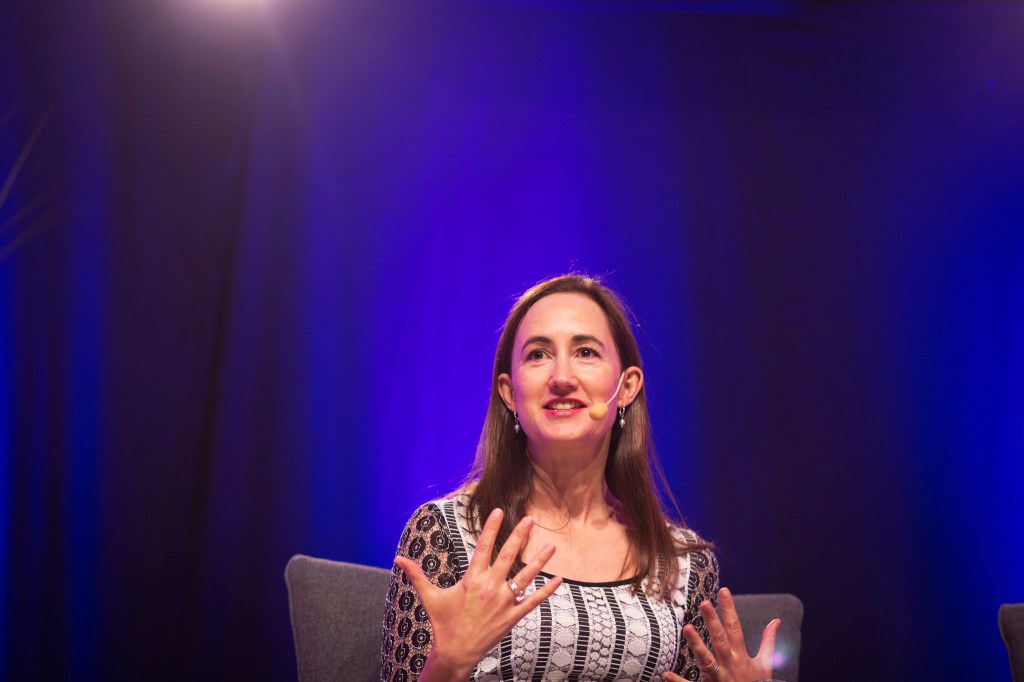
Author Sophie Kinsella writes authentic protagonists who own their mistakes and suffer embarrassing moments like all of us. Photo: Niklas Maupoix

British novelist Sophie Kinsella recently released a book titled My Not So Perfect Life (2017) which focused on the warped perceptions of our lives and others’ thanks to social media. Kinsella has encouraged readers to share less-than-perfect moments of their lives on Instagram and to celebrate them as a typical facet of the human experience. But the persistent insincerity of Instagram mirrors the ability of formal autobiographies to stretch, filter, and warp the truth. When publishing on social media, we’re sharing only the parts of ourselves that we want the world to see.

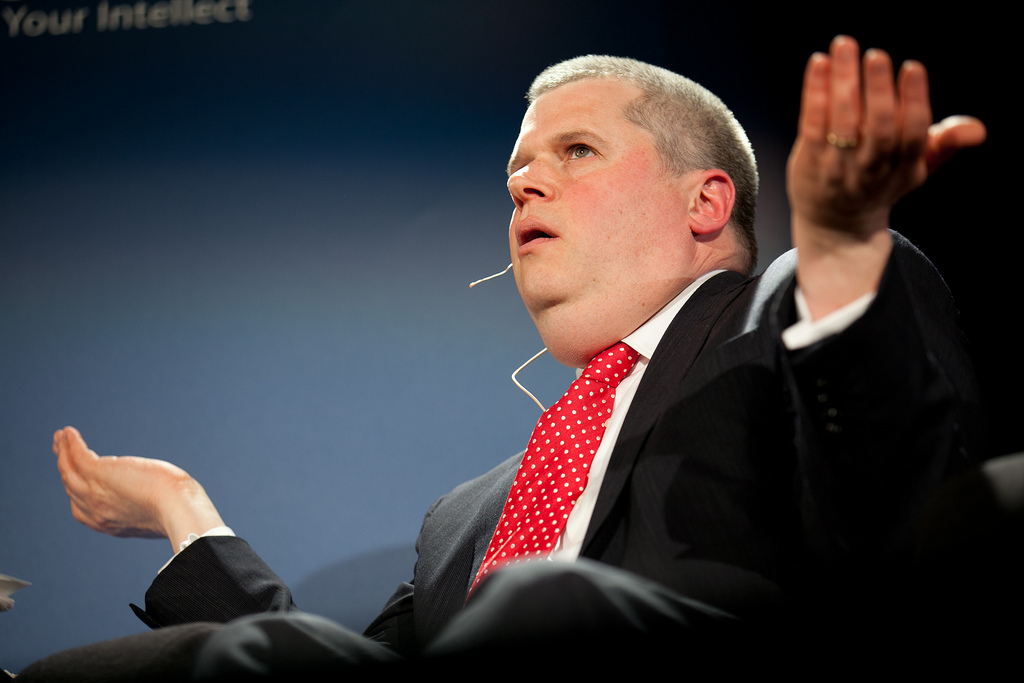
Lemony Snicket provides another, albeit exaggerated view into self-fashioning: his Unauthorized Autobiography (2002) is a dramatized example of how the autobiography is a tool of self-invention. Lemony Snicket is in fact a fictitious character (created by American author Daniel Handler) credited with chronicling the lives of the also fictional Baudelaire orphans. Likewise, Snicket’s autobiography represents the lengths that we can go to in order to construct and manipulate identity on a public platform.
handler
Author Daniel Handler, who also writes under the pseudonym “Lemony Snicket”, created the Unauthorized Autobiography to compile selected information about his fictitious alter ego. Photo: JD Lasica

Whether or not we’re actually writing a formal autobiography, we are authoring our identity every day, inventing our public face based on how we act and what we share. When documenting that identity, we can and should carry an awareness of how we will be perceived by others not only today, but in the future. In the practice of history, for instance, we try to understand people who have predeceased us based on records left behind; it’ll henceforth be interesting to see how historical analysis proceeds in the digital age.

The true self, the one we are when we are alone, only has one audience member: ourselves. Our true identity is beyond communicating with others because there are so many layers to such an identity; so we’re burdened with the responsibility of choosing how we present it to the world. The question is, will we favour authenticity or will we compete on the basis of concealing our very human flaws?

How Does History (Literally) Speak to You?

One thing we can’t glean from history prior to the invention of the phonograph is how people’s voices sounded. We may feel a profound connection with historical figures but can never hear how they spoke, a key aspect of their identity and personality. 

By Serena Ypelaar 

Historical figures are more than just pictures on a page. They are people who lived and contributed to their communities, and trying to imagine them doing so can be a challenge to historians depending on what evidence remains. We’re always searching for more insight into the key quality that truly brings a historical figures to life: their personality.

Just as we once had no photographs to see what people really looked like, so too did we once lack film evidence that people really lived and spoke in distinctive ways. In trying to get a sense of mannerisms and voice, we first had to rely on audio.

Why do I think voice is such an important aspect of connecting to those who have predeceased us? I’m going to use politicians as my prime example. Many politicians are remembered as great orators whose speeches have moved and influenced societies during major events, from celebrations to declarations of war. I believe our voices carry much emotion, therefore conveying an important aspect of who we are.

lutherking
Martin Luther King Jr. addressing crowds in Washington, DC. Photo: National Park Service

Think about it: how many times have you seen/met someone, and at first glance expected them to have a specific kind of voice (low, high, quavery, strong, accented)? And then they open their mouths and a completely different voice comes out! It changes your impression of them, doesn’t it? For instance, Daniel Day Lewis speaks in a higher pitch in the film Lincoln (2012), illustrating the surprising truth about former American President Abraham Lincoln’s high, reedy voice. It just goes to show how much the quality of one’s voice defines their presence.

Voices can be commanding or meek; soft or loud; rough or smooth; and all these sensory elements shape and cement identity, especially in public memory.

Take King George VI of Great Britain, and his speech of 3 September 1939 in which he confirms Britain’s involvement in World War II. This is the very same speech featured in the 2010 film The King’s Speech, as played by Colin Firth – and we can gain such a significant connection when hearing the King’s voice that it’s as if he’s in the room with us (such was the initial reaction to radio). If you listen to the real speech, you can hear George VI’s inflection and get a better impression of his presence, breaking an interpretation barrier that keeps him (and likewise, other historical figures) at a distance from us today.

Would Martin Luther King Jr.’s “I Have A Dream” speech (28 August 1963) be as rousing if we had read it on paper? Dr. King’s delivery of the speech is often remembered as an iconic capstone of the Civil Rights Movement, demonstrating the significance of voice and audio in preserving historical records. Similarly, former British Prime Minister Sir Winston Churchill’s characteristic drone is recognizable to many of us, and his famous WWII “We Shall Fight on the Beaches” speech (4 June 1940) has also been recreated in recent films such as Dunkirk (2017) and Darkest Hour (2017).

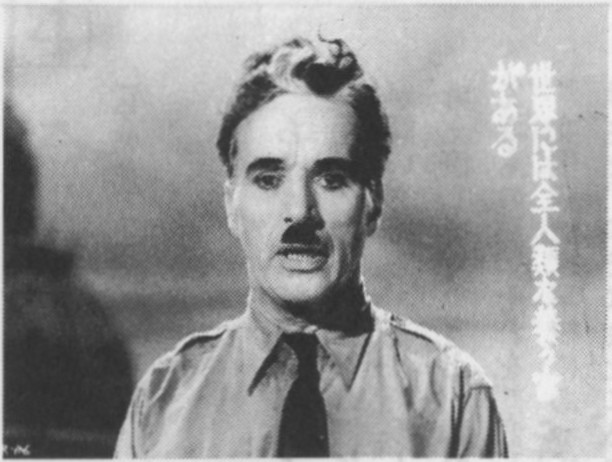
Charlie Chaplin, a British actor who was primarily known for his silent films, also understood the power of speech and voice in captivating and inspiring audiences. Taking advantage of the emergence of sound in film, his speech in The Great Dictator (1940) subverts Adolf Hitler’s acknowledged oratory skills and uses them for good in his own parody version of a wartime dictator’s speech.

dictator
Charlie Chaplin in The Great Dictator (1940). Photo: Wikimedia Commons

Still further, accents offer a whole different opportunity for biographical interpretation: for example, though former Canadian Prime Minister Sir Wilfrid Laurier was a Quebecois francophone, he learned English in New Glasgow and therefore spoke with a slight Scottish accent, something I could never learn from merely looking at photographs or silent film clips. Observations were written down, but without audio we can never hear them for ourselves. The first Canadian Prime Minister Sir John A. Macdonald’s accent is also in question, as he was raised in the Bay of Quinte/Kingston, Ontario, far from Glasgow itself (though the latter was his birthplace). American President John F. Kennedy’s Boston accent also defines his aura in our memories. If we can hear politicians speak, we can further understand their essence as people and their leadership qualities.

Is this post, then, a prolonged lamentation that I’ll never get to hear the voices of so many historical figures who captivate me? I’m not denying it – and I’m arguing that we could all do with taking some time away from our highly absorbing smartphones to be present. Listen to people’s voices, enjoy the timbre and cadence, connect with the emotions that shine through when people speak. We often take it for granted that we’ll get to hear their voices every day, but when they’re gone, all that will be left of them is our memory and the records we’ve kept.

Advice After the Fact: What Historical Advisors Do Best

Historical advisors make sure the era-specific details of television and film are portrayed authentically. Using Downton Abbey as a case study, we examine the various aspects they consider when recreating a time period.  

By Serena Ypelaar

The approach of fall, and later winter, inevitably means one thing: More time indoors = more television = more period dramas.

In mainstream media, historical television has gained traction in recent years, with shows like Downton Abbey, Peaky Blinders, Poldark, Mad Men, and The Crown gaining cult followings. As a historian, I love a good period drama, since watching a fictional recreation of an era is one of the best ways to learn about it. Of course, being a historian means I’m also hung up on accuracy.

Did you know there’s a specific job in which people ensure period dramas are accurate? Those magical people are called historical advisors.

Not every show has one, but I’d like to argue the importance of such a role. In the most miniscule ways, historical dramas give viewers a vivid impression of life in a specific era. The details simply provide a backdrop for the overarching narrative, but if incorrect, they undermine the story and realism of the series. I’ve highlighted five key elements a historical advisor must oversee to help interpret history for television and produce a credible period drama. In the interest of time, all examples come from Downton Abbey, whose historical advisor Alastair Bruce has spoken publicly about his role.

downton
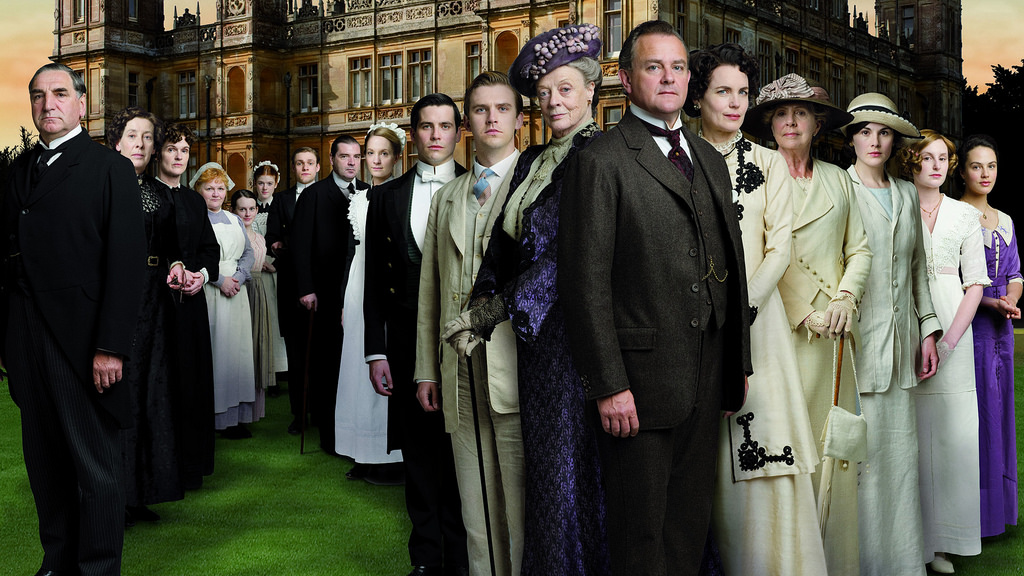
Ensemble cast of Downton Abbey, in Season 1 promotional image. From left: Jim Carter, Phyllis Logan, Siobhan Finneran, Lesley Nicol, Sophie McShera, Rose Leslie, Thomas Howes, Brendan Coyle, Joanne Froggatt, Rob James-Collier, Dan Stevens, Dame Maggie Smith, Hugh Bonneville, Elizabeth McGovern, Penelope Wilton, Michelle Dockery, Laura Carmichael, Jessica Brown Findlay. Photo: Flickr

Setting, set design, and technology 

Set in Edwardian England, Downton Abbey follows the aristocratic Crawley family and their servants in the eponymous great house. We’re treated with an (albeit rose-tinted) illustration of British society and its evolution from 1912 through 1926. It’s important that these shows capture setting in a way that transports viewers while avoiding anachronisms. Sets must be dressed with care, including items such as telephones, musical instruments, and furniture to highlight technological advances of the time.

Costuming, dress codes, and wardrobe etiquette 

dressing
Downton Abbey capitalizes on portraying everyday aspects of life, such as dining or dressing, seen here. Source: Golden Globes

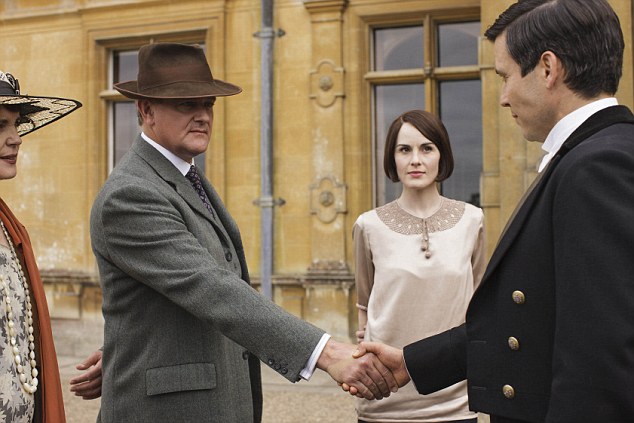
Perhaps the most universally enjoyed element of historical drama is the fashion. Historical advisors should ideally work with costume designers for accuracy, since clothing leaves a lasting overall impression. In an upstairs-downstairs series like Downton, the frequent act of the staff dressing their employers demonstrates how garments were worn. Alastair Bruce famously intervened in a scene in which newspaper man Sir Richard Carlisle shakes hands with Cora Crawley with his glove on. According to Bruce, gentlemen would always remove a glove before shaking hands.

Mannerisms, accents, and speech

Downton Abbey is located in Yorkshire, but you won’t hear the upper-crust Crawleys speaking with northern accents. Actress Michelle Dockery, who normally speaks with an Essex accent, had to adopt a measured drawl to convincingly play the aloof Lady Mary. Conversely, you’ll find the belowstairs staff using coarser dialects. Historical advisors must ensure consistency as well as monitor word choice in scripts, as some words weren’t commonly used yet. Physical mannerisms likewise illustrate character; the Crawleys and their peers would walk rigidly upright while the working class characters have a different gait, especially when relaxing “off-duty”. These details may seem insignificant to viewers, but when employed they can help teach us the nuances of how our forebears lived.

PBS_Alastair_Bruce
Downton Abbey’s historical advisor, Alastair Bruce. Source: Downton Abbey Wiki

Gender, race, sexual orientation, and class politics

Often, dynamics between people from different stations in life drive the tension in period dramas. Any good period drama will highlight change, usually in the form of innovation, social causes, and cultural shifts. It’s essential that historical advisors allow writers to capitalize on these changes without sacrificing legitimacy. In a series like Downton Abbey, where men and women of varying status and motivations interact in a large house, there are specific protocols which historically would have been followed – and which Alastair Bruce had to emphasize during filming.

Society, nationalism, trends, and overarching historical context

The wider historical backdrop is the linchpin. It shapes the characters’ outlook, values, and knowledge (How do they understand the world? What has happened at this point, and what is yet to come? Are they racist? Probably). National context, such as British sentiment during World War I, was crucial to understand while writing Downton. This is one area I feel Bruce and writer Julian Fellowes falter – not in the overall context, but in the mindsets of their characters. The Crawleys are astonishingly progressive for conservative landowners; certain characters exhibit a surprising lack of prejudice, which at times breaks the carefully crafted personas from their vantage point of a hundred years ago. Nevertheless, the motivation was undoubtedly to foster empathy, which in a television series is understandable.

thomas and the crawleys
So we’re supposed to believe that these wealthy conservative Britons living a hundred years before us have the same tolerant sensibilities of our time? Oooookay (but we love the outfits so we’ll suspend our disbelief, am I right?) Source: The Daily Mail

With prior knowledge of Fellowes’ planned storylines before each season, Bruce conducted preliminary research using specific case studies – in this case, country houses in England – to determine the aspects of life in a country estate like the fictional Downton Abbey. He then advised on the finer elements of the story’s execution.

As someone who writes historical fiction, I can relate. I’ve always found the storyline to be the core of a project – the steering wheel, so to speak – while the research, the actual historical facts, are the engine. The creator is the driver. In period television, the writer and historical advisor must copilot the vehicle if they are to arrive smoothly at their destination: a polished, realistic period drama that will appeal to laymen and historians alike.* Granted, Downton Abbey is certainly not without its critics (myself included when it comes to the later seasons), but the showrunners’ meticulous attention to detail does it credit.

*Fans of Downton Abbey will hopefully forgive me for my tactless use of a car metaphor – it just came to me as I went. Trust me, I know it’s a sore spot, as I myself haven’t quite gotten over The Incident from the 2012 Christmas special…

Monument Men: Constructing Likenesses

Creating commemorative likenesses – statues, wax figures, paintings – is no easy feat. The way an individual is remembered could have repercussions for years to come, so how does creativity factor in?

By Serena Ypelaar

When we visit a wax museum, we’re usually prepared for a couple of duds that look nothing like they’re supposed to. Perhaps it’s due to the levity of such a space – after all, what purpose do wax museums serve apart from the fleeting amusement of seeing celebrities’ likenesses up close?

However, with commemorative likenesses such as statues, busts, or paintings meant to immortalize public figures, there’s a lot more to it. A grossly inaccurate portrayal could be damaging to a person’s public image, and depending on the nature of the commemoration, may be seen as unflattering or even disrespectful.

Take footballer Cristiano Ronaldo’s infamous bust, which was unveiled at Madeira Airport in Portugal last year. The bust was mercilessly ridiculed and made the subject of numerous memes, to the point that the artist had to redo it.

ronaldo
Portuguese footballer Cristiano Ronaldo was commemorated with this bust by sculptor Emanuel Santos in 2017. Public opinion ensured that it was replaced by a new, “more accurate” version, which can be seen below. Photo: Know Your Meme

Admittedly, famous individuals like these are exposed to these depictions by the very nature of their existence – they’re well-known, so people are going to make fun of them, whether it’s creating unflattering portrayals or vocally enjoying such parodies. That doesn’t make it right or excusable, especially if the public figure is a good person (if they aren’t, well, have at it!). Nevertheless, the fact remains that famous people lose the ability to regulate their public perception. The same goes for unauthorized biographies and the like – there isn’t much that can be done to prevent these interpretations unless someone wants to sue for libel.

standard
Photo: Bleacher Report

The new, sleek Ronaldo statue reflects what we’re conditioned to expect when it comes to commemorative statues, though – a public monument is no hokey wax figure. We seem to expect accuracy and a display of strength or nobility in these types of depictions, which is why more gutsy interpretations often get shot down. Yet we can’t pull the plug on artists’ interpretations altogether. To do so would be to rob artists of their style and create a mild form of censorship that could inhibit creative thinking. (Whether we want to foster “creativity” when it comes to portraying likenesses for public commemoration is another question altogether).

Still, that won’t stop me from expressing my dislike for what I call the “Paper Airplane Portrayal” of Canada’s longest-serving Prime Minister, William Lyon Mackenzie King. Cristiano Ronaldo is one thing – as an athlete, he doesn’t carry the same kind of significance that a former national leader might. So King’s statue on Parliament Hill in Ottawa seems even more bizarre to me, since I would expect him to look a bit less cartoony and more like the other statues on the Hill. Sculptor Raoul Hunter was aiming to convey King’s forcefulness as a leader, according to this page on the Government of Canada website explaining the interpretations of the statues. The other monuments on the Hill portray their subjects more proportionately, whereas King can only be described as abstract. His monument makes me laugh at him a little, which, applied in the context of public office, is surely a less desirable outcome.

king
You don’t need a picture of King to know that nobody is shaped so angularly. Nor did King’s head appear so oblong in life. I will add, however, that this statue was created in 1967 when this style was in vogue, which could raise another fascinating discussion about how aesthetic standards affect portrayals during a given era. Photo: Flickr

Of course, I’m sure it’s all a matter of personal opinion – I know people who like the King statue (above). And that 81-year-old Spanish lady who famously “touched up” Jesus’ face in the “Ecce Homo” fresco clearly thought his makeover looked fine…

Irrespective of whether we can gauge the accuracy of monuments beyond personal preference, discussing the issue tells us what we value as a society on a surface level. Commemorative monuments rely on context and setting to construct a noble or attractive memory of a person (often a man, statistically speaking) and their contributions in life. Let’s just hope that if we do anything noteworthy, the sculptor chosen to portray us won’t get too weird with it.

Critiquing Harry Potter: Ethnicity & Representation

Some Harry Potter readers today assert that J.K. Rowling’s universe is not accurately diverse enough. Population research yields an interesting dialogue about the demographics in the series, but representation is an even more complex issue.  

By Serena Ypelaar

I’m about to do something which may surprise you: I’m going to criticize Harry Potter.

During my life I’ve spoken with many friends about my favourite book series, and in the last few years especially, the issue of diversity often looms large.

In Harry Potter the possibilities for discussing diversity are endless, from ethnicity, to LGBTQ+ inclusion, to gender, to species.

Today, I’d like to talk specifically about ethnic diversity. Why are there only, like, five* non-white kids at Hogwarts? (*Seven, but who’s counting?) The fact that there are so few minority characters isn’t ideal for the most popular book franchise of the twenty-first century so far. Even in the 1990s when the Harry Potter books are set, shouldn’t there be more diverse characters to represent the society the novels portray?

I definitely thought so … and then I embarked upon some research for this article and found this thread on Reddit, in which a fellow fan argues that the Harry Potter universe accurately reflects the ethnic demographic of the United Kingdom at the time. In the census for 1991, the year Harry Potter and the Philosopher’s Stone begins, 94.1% of Britons identified themselves as white, 5.9% as non-white.* (I don’t think the census asked about mixed ethnicity, since it was the first UK census to collect information about ethnic background.)

da_3
Dumbledore’s Army in the film adaptation of Harry Potter and the Order of the Phoenix. Photo: Harry Potter Wikia

With the 40 students in Harry’s year (5 of whom are non-white), that places the white population at 90% and the non-white population at 10%, which is actually almost double the proportion of non-white people in Britain at the time. What?!

Indisputably, Harry Potter is a product of its time. Though author J.K. Rowling’s illustrated demographic fits the temporal setting of the story, it doesn’t accurately represent its readers, who span the world over. Readers aren’t going to see the current population (of either Britain or the world) represented in the novels; they’re going to see the population of Britain 20 years ago. And with such a diverse present-day audience, we’re now left with a disparity in terms of ethnic representation.

I would therefore argue that the problem doesn’t necessarily lie in the number of non-white characters featured in the story, but rather the significance J.K. Rowling gives (or doesn’t give) them in the narrative. Let’s count the confirmed non-white students mentioned at Hogwarts in the books:

  1. Dean Thomas
  2. Blaise Zabini
  3. Angelina Johnson
  4. Lee Jordan
  5. Cho Chang
  6. Parvati Patil
  7. Padma Patil

How many of these students have a major part in the story? None, really.

cho
Cho Chang, as played by Katie Leung in Harry Potter and the Goblet of Fire. Photo: Warner Bros.

Cho Chang, Harry’s one-time love interest, features prominently in Order of the Phoenix but isn’t central to the other books. Rowling has received major criticism for her portrayal of Cho, with accusations of cultural ignorance in choosing her name, negatively depicting the only East Asian character in the books, and more.

Dean Thomas, who is Black, is consistently present as one of Harry’s friends; he shares a dormitory with Harry and Ron, and dates Ron’s sister Ginny for most of Half-Blood Prince. Dean has a rich backstory which was originally included in the books but didn’t survive the editor’s cuts. His story, in which he eventually learns his wizard father was killed fleeing the Death Eaters (Lord Voldemort’s followers), was omitted in favour of Neville Longbottom (a white character, interestingly) avenging his parents after Death Eaters tortured them into insanity.

kingsley
Kingsley Shacklebolt, played by actor George Harris in Harry Potter and the Order of the Phoenix. Photo: Pottermore

The whiteness of Harry Potter goes beyond Hogwarts, too. Kingsley Shacklebolt, a Black wizard who is a powerful Auror and future Minister for Magic, is praised throughout the last three books, but he’s still a fairly minor character. There are also no identified South Asian characters in the Harry Potter universe apart from the Patil twins, and Latin American characters are non-existent. And I haven’t even started on mixed ethnicity: as a half-Indian (Goan) myself, I’m no stranger to the erasure of mixed identities. In fairness, delving into the specifics of minor characters’ heritage might have been a bit technical for a 1990s children’s book series. Relating this back to demographic research, there are deeper-rooted issues regarding the historical exclusion of mixed ethnicities on censuses in general (which could fill a whole other post, I’m sure).

All the main characters in Harry Potter are white. We’ve gone over historical demographics, but we should be asking a critical question here: why didn’t Rowling write any of the main characters, or even the major supporting characters, non-white?

After Hermione was portrayed as Black in the broadway play Harry Potter and the Cursed Child (a play that was approved, but not written, by Rowling), the author stated on Twitter that she “loves black Hermione”. I personally feel that Rowling latched onto the casting to retroactively interpret her novels as more inclusive than they were when she wrote them. Yes, she seems to support diversity now, but my reading of Rowling’s character descriptions has me convinced that she never wrote Hermione as non-white.*

It’s easy to approve a casting choice and take credit for diversity, but it’s a pretty passive act. In terms of the heavy lifting, Rowling hadn’t originally made strides to portray ethnic diversity in her books. Given all we’ve considered, that seems fair since she wrote the books in the 1990s – even in 2001 when the first film was released, Britain was still 90.9% white. Nevertheless, the later films, made 15 to 20 years after the books take place, haven’t increased ethnic diversity in the casting despite the chance to broaden the demographic for a contemporary audience. And it doesn’t change the fact that none of the non-white characters were given major roles in the books.

Principal_cast_of_the_Harry_Potter_series
The main cast of the Harry Potter films (from left): Daniel Radcliffe, Rupert Grint, Emma Watson. Photo: Wikimedia Commons

Are questions of ethnicity more prevalent here in Canada (and the United States)? Possibly, since both nations were built on mass immigration. Does that mean North American readers scrutinize diversity more than those in Europe or worldwide? Maybe.

What do you think? Should the Harry Potter films have tried to reflect today’s population to bridge the gap between the whiteness of Britain in the 1990s and its current demographic? Should we throw the idea of accuracy out the window? Going forward, what should the cast of spinoffs like Fantastic Beasts and Where to Find Them look like? Are J.K. Rowling’s efforts at diverse representation tokenistic, or am I not giving her enough credit?

Who knows, maybe in 20 years we’ll get a remake that fulfills all its potential for representation, and the concept of a “diversity quota” will be so outdated that it’s laughable. Only time will tell.

This article is part of the Critiquing Harry Potter series. Read about gender representation in the Harry Potter franchise here.

____________________________________

FOOTNOTES
*As of the last census in 2011, 81.9% of the British population identified as White British.
*My reasoning regarding Hermione’s race, and my argument that J.K. Rowling is opportunistically interpreting her past work, is as follows:
  • “Hermione’s white face was sticking out from behind a tree.” This quote from Prisoner of Azkaban describes Hermione in a state of fear, and while it may be a turn of phrase for a stricken expression, it seems odd to describe a Black person having a white face no matter how bloodless or pale they’ve gone. There are countless other ways to describe fear or panic.
  • “… Ron looking incredibly freckly, Hermione very brown, both waving frantically…” Ron and Hermione have both just returned from holidays in sunny places; Ron from Egypt, Hermione from France. I’m certain Rowling is describing Hermione’s tan here, which implies that her “very brown” face is darker than her original skin tone.
  • Hermione appears as white in book covers. J.K. Rowling has the power to veto such a portrayal if it is inaccurate, and as Hermione’s race would be such a major difference, she would have noticed and corrected it.
  • Rowling approved white actress Emma Watson’s casting as Hermione for the films despite overriding other more minor character details (she told writers to remove a line where Dumbledore mentions a girl he once dated, since Dumbledore is gay!). She would have instructed casting directors re: Hermione’s appearance.
  • This sketch by Rowling, like all others by her, depicts Hermione with fair skin.

The Curse of Not Teaching Cursive

Some school boards won’t teach cursive writing anymore. The impact of this decision bears heavily on the ability to write and read handwritten documents, with possible implications for historical interpretation.

By Serena Ypelaar

In our increasingly digital age, what will become of handwriting?

I’ve always found it fascinating to see people’s handwriting, and I associate the way they write with their personality, almost. At least, it’s a part of their identity. Being able to recognize people’s handwriting is also useful when you’re trying to tell who wrote something (it’s always interesting that Santa seems to have the same penmanship as Mum or Dad…).

cursive
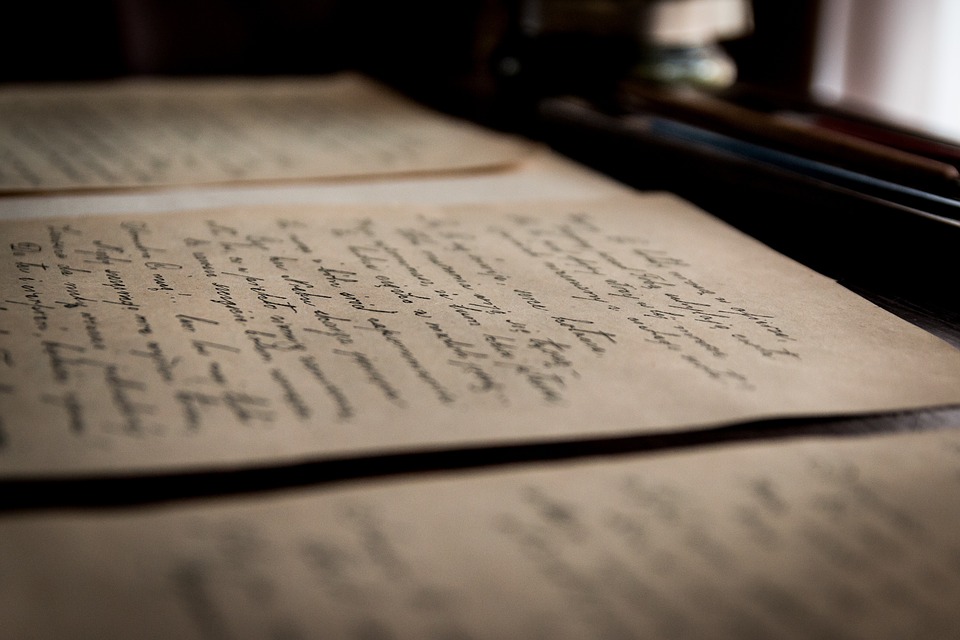
Photo: Michal Jarmoluk

Yet, with the domination of smartphones and laptops, we don’t have to hand-write notes or messages as often as before. As a lover of the written word, and a typography nerd, I feel a bit wistful reflecting on the disappearance of paper and pen.

One thing that strikes me is the choice of some school boards to cease teaching cursive writing to children. It’s something that’s happened in my own province of Ontario – kids are no longer going to learn cursive penmanship, meaning that they will have to resort to printing, in the case that they do write.

whitman
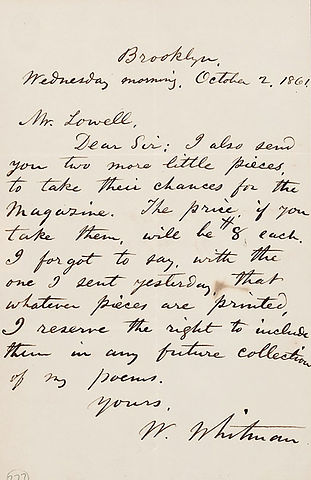
A letter handwritten by Walt Whitman. Photo: Wikimedia Commons

I myself write an approximation between printing and cursive writing, wherein I drag my pen to connect the letters (it’s much easier and quicker than printing, but it’s not by-the-book cursive). However, I know how to read cursive writing – but will the people of the future?

Take this letter from American poet Walt Whitman, for instance. We can probably decipher the text, as Whitman’s scrawl is fairly legible compared to countless other cursive letters, but we’ve also learned in school how to recognize the script (the letter “Q” in cursive always looked like a silly “2”, or a swan, but we get taught to recognize it – something our children won’t receive).

It’s difficult to say whether people who haven’t been taught cursive writing will be able to read letters like these. Whitman’s hand is one thing, but how about those who wrote much more sloppily in the past, or with a much steeper slant?

Writing woman a letter, with her maid, by Johannes Vermeer
“Woman Writing a Letter with her Maid”, Johannes Vermeer. Photo: Wikimedia Commons

Not too long ago, I was at the Thomas Fisher Rare Book Library at the University of Toronto, where I completed my master’s degree. I spent a few days reading through the correspondence of General James Wolfe, the leader of the victorious British forces at the fabled Battle of the Plains of Abraham (1763) which defined the colonial future of Quebec and ultimately Canada. Wolfe’s writing was quite elegant, but I often had trouble deciphering some of his words (I’d like to illustrate my point, but the original copies of his letters are protected in the library, so I don’t have photographs).

Letters like these, and early manuscripts, are extremely important documents to study, both in a literary and historical sense. In the humanities, we’re working with written documents all the time, and being able to read as much as we can is a necessity. Even just for leisure, being able to write and read cursive is a special and worthwhile skill. It’ll be interesting to see how reading evolves in the future when most of the documents we produce will be typed.

It’s a little ironic: I almost wish I could have handwritten this post for effect.

“I could do that. Even a BABY could do that!”

Seeing art that you feel you could have made can be a disorienting experience. The way art is critically acclaimed can be unfathomable to those of us who aren’t well-versed in art valuation and criticism.

By Serena Ypelaar

What makes art art?

Who gets to decide?

I’m sure many of us have experienced that moment in an art gallery when we are so bemused by a piece of art that we react as skeptically as the title of this blog post: I could do that. To which our inner voice might reply: But you didn’t. 

How much of art’s success lies in talent? Timing? Luck?

Does public appreciation elevate our work, or diminish it? Some artists would kill to be recognized in prominent art galleries worldwide, while others might be more commercially motivated and hope to make a living on their art. Still others might be repulsed by the notion that everyday people might appreciate their creations en masse outside of a venerated space like an art gallery.

When I was in London this past May, I had the privilege of seeing a play about one such artist, Mark Rothko.

evening-red
Alfred Molina, left, and Alfred Enoch, right, star in Red at Wyndham’s Theatre in London. Photo: Evening Standard

The play, Red, stars Alfred Molina (of Indiana Jones and Spiderman 2 fame, among more “artistic” films) and Alfie Enoch (Dean Thomas in the Harry Potter films; How to Get Away with Murder). Molina plays Rothko, the American painter who was known for his large red abstract paintings. Enoch plays his assistant, Ken, who, in contrast to his counterpart, praises the emergence of pop art from artists such as Andy Warhol.

Rothko rose to prominence during the abstract expressionism movement in the 1950s and 60s. Set in the twilight of this era, Red follows Rothko’s internal conflict after agreeing to paint commissioned works to hang in the Four Seasons restaurant, placing his art in a setting that he ultimately feels is pretentious and inappropriate. He must therefore choose between commercial success and his artistic ideals, causing tension in his understanding of his identity as an artist.

telegraph_red
Molina as Rothko and Enoch as Ken. Photo: The Telegraph

The 90-minute play raises an excellent dialogue on what constitutes art, what kind of recognition art merits, and who gets to truly define how we consume art.

This is where Alfie Enoch’s character shines – he starts as an unassuming apprentice, but by the middle of the play he’s firing off rebuttals against Rothko’s resistance to mainstream consumption of art.

Regardless of what you think about where art belongs, Red emphasizes the disparity from person to person. I might think that the pinnacle of artistic success is landing a coveted place in the halls of the Louvre, for instance, but someone else might think it a truer success to see their work all over town, enjoyed by more people and more frequently (like Banksy, for instance). There are unspoken hierarchies and beliefs about modern street art vs. the timelessness of being validated by art institutions.

And what makes art good, anyway? We’ve tossed around this idea for decades; centuries, even. Molina and Enoch discuss the issue too, but their characters’ disagreements in the play prove to us that the answer is difficult: I love classical art, particularly realism and/or landscapes, others love abstract art, others may not “get” contemporary art or consider it art at all, and so on.

svy-red
Outside Wyndham’s Theatre in London’s West End. Photo: Serena Ypelaar

In an effort to avert conflict, I’m tempted to say we should all just get along and like what we like, but it’s not as simple as that. The fact is that artworks’ supposed value (both from an artistic and commercial standpoint) has a very real bearing on institutions’ collections policies. Galleries have to decide what’s worth collecting, and curators base their acquisitions on research, market value, context, and more.

I don’t really specialize in that area of museum work, but I do know from my degree that an institution’s collections, and its acquisition decisions, deliberately reflect its collecting practice. Consider that the next time you think, I could do this – but don’t stop thinking that. The decision is yours to make. Whether or not you consider a work a piece of “art”, the fact that you decided by looking at the art and using your own critical perception is comfort enough for me.

The Backbone of a Good Biopic

Biopics offer a glimpse into another person’s life, but if presented poorly, a bad biopic can undermine the truth. So what makes a compelling biopic, then? 

By Serena Ypelaar

Biopics: we see them every year, covering all kinds of notable individuals and their lives. Put simply, a biopic is a film that interprets a person’s life and condenses it into a consumable feature-length story.

The biopic is a tool of remembrance which, done ethically, has the power to record and preserve the achievements of someone’s life.

We’ll be talking about biopics a lot in this column, but what makes a biopic successful? Here are three key elements creative teams highlight to execute a good biopic:

1. Uniqueness/Promising Talent/Struggle

The subject of the biopic usually has some kind of trait, talent, or struggle that sets them apart from others. This can come in the form of disability, a gripping dream or obsession, or a special talent. In The King’s Speech (2010), one of my favourite biopics, Bertie (the future King George VI of England and father of Queen Elizabeth II, played by Colin Firth) has a speech impediment, true to life. His speech impediment causes tension when he’s unexpectedly thrust into the role of monarch and must give speeches to the nation during World War II.

kingspeech
Colin Firth as King George VI and Helena Bonham Carter as Queen Elizabeth in The King’s Speech (2010) Photo: Wikimedia Commons

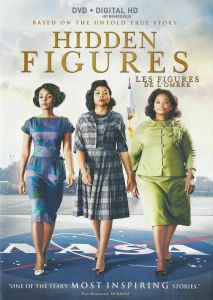
In Hidden Figures (2016), we follow Katherine Johnson (played by Taraji P. Henson), Dorothy Vaughan (Octavia Spencer), and Mary Jackson (Janelle Monáe), black female mathematicians working at NASA during the Cold War. They were trying to use their talents to serve a society that was prejudiced against them – not unlike Benedict Cumberbatch’s Alan Turing, The Imitation Game (2014), who was discriminated against for his homosexuality. By emphasizing their perseverance, filmmakers tell the story of marginalized individuals in a compelling light.

33642039333_695a5d0fe6_o
Janelle Monáe as Mary Jackson, Taraji P.  Henson as Katherine Johnson, and Octavia Spencer as Dorothy Vaughan in Hidden Figures (2016). Photo: Flickr

2. Emotional Outlook/Relationship with Society 

Perhaps the most central element of a biopic is raw emotion. Loss, heartbreak, poverty, abuse, and any kind of hardship can shape the subject’s emotional state and outlook on life, and these feelings resonate with us in some way or another, if depicted in a way that’s just abstract enough for us to relate to, but still precise in the plot of the movie (and in the greater scheme of the subject’s life).

People’s experiences influence the way in which they view and interact with the world, and we can connect to those feelings. A good biopic will manage to encapsulate a real-life public figure’s inner emotions accurately, while sometimes bending the narrative to foster emotional reactions.

3. Overcoming (or Failing to Overcome) Adversity or Discrimination

In The Theory of Everything (2014) there’s a scene in which physicist Stephen Hawking (played by Eddie Redmayne) slowly stands up, despite being paralyzed in a wheelchair. It’s a scene of his own wishful imagining, of course, but the image is so powerful that it moved me to tears.

When biopics stress the subject’s determination to overcome adversity or pain, they hit upon a commonality between all people: we all struggle with something in life. The intensity of struggle in biopics can often test limits, in a way that’s so dramatic that we are compelled to react and feel.

gandhi
Mohandas Gandhi, played by Ben Kingsley, in the multiple-Oscar-winning film Gandhi (1982). Photo: The Telegraph

Similarly, in Gandhi (1982), Mohandas Gandhi (played by Ben Kingsley, oddly) leads India’s non-violent independence movement after being thrown off a whites-only train car in South Africa in 1893, though he had a first-class ticket. The fight against injustice can carry a biopic and ensure it resonates with human empathy.

How can biopics improve? 

_TFJ0226.NEF
Benedict Cumberbatch plays Alan Turing, British computer scientist and logician who analyzed the Enigma code during World War II, in The Imitation Game (2014). Photo: Flickr

There are a lot of biopics about white men. If we had even more breadth and diversity in commemorating individuals, we could connect to even more people on a more representative level, and celebrate achievements that may be overlooked due to classism, racism, sexism, or inequality in general.

With the emotional threads I’ve outlined above, many biopics admittedly follow a structural formula – but for a good reason. It helps introduce us to people as human beings and forge connections with them on a personal level.

What do you mean, you’ve never judged a book by its cover?

The act of reading books in public is a performative art – we like to convey a certain image with what we’re reading. How we interpret people’s character by what we see them reading is another concern entirely.

By Serena Ypelaar

Let’s not lie to ourselves: we’ve all judged books by their covers.

Something about the imagery that first greets us is so immediately evocative that we’re instantly gripped by emotion.

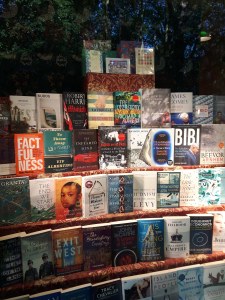
20180520_171854
So many covers to judge. Photo: Serena Ypelaar

Lurid, bright colours and strong graphics? I feel a bit cornered.

Clean minimalism? My mind feels vulnerable, laid bare but curious.

Elegant script on a damask background? I’m intrigued.

We all have our biases when taking in cover art, because stylistically, we know what we do and don’t like. In fact, when I first received Harry Potter and the Philosopher’s Stone at the age of six, I initially consigned it to the shelf because I wasn’t feeling particularly engaged by the cover. We all know how that ended: I was wrong. It turned out to be my favourite book in the world.

20180218_160756
Rereading Harry Potter and the Chamber of Secrets. Photo: Serena Ypelaar

There’s another dimension to the idea of judging a book by its cover that goes beyond the self, though. Perhaps it’s because reading is such an intimate pastime, but combine it with our inherent fear of judgement and you have an interesting social phenomenon on your hands.

I’m talking, of course, about reading on public transit.

As a commuter who routinely takes the subway downtown, I cover a lot of ground in reading. I’ve always got a book on me, and I’ve stubbornly rebelled against the e-book ever since its introduction. The result is that other people always see what I’m reading.

As one of my two majors, English lit will always own my mind and heart, so I’m naturally obsessed with 1) what others on the subway are reading and 2) what I must look like reading my books.

Maybe it’s self-absorbed and no one else ever does this, but I often wonder what image I convey based on what I’m reading. Every time I reread Harry Potter, I wonder, “what if someone thinks I’m reading this for the first time ever?” When I read YA (young adult) romances, I don’t tend to flaunt them. And when I read Keats, Austen, Shakespeare, or any classic lit, I hold my book proudly, feeling learned but also slightly disgusted with my self-consciousness.

Reading on the subway is a performative art; whether we register it or not, we’re displaying our interests for bored strangers to observe in an almost Sherlockian fashion. If a grungy hipster were to enter the train reading Nicholas Sparks, for instance, I’d admittedly be taken aback. It makes us somewhat uncomfortable to face up to our inward assumptions about people, which are often based solely on how they look and dress; but their choices in literature are arguably more revealing. We can deduce what kind of stories move them, what fascinates them, or how they react to books in question.

Sure, I bet there are people who can’t be bothered with random people’s opinions of them – but there’s got to be a reason I’ve seen so many middle-aged women reading Fifty Shades of Grey on a Kindle, right? My point is, e-readers can sometimes be a strategic choice, providing anonymity in the case of a controversial read.

napoleon
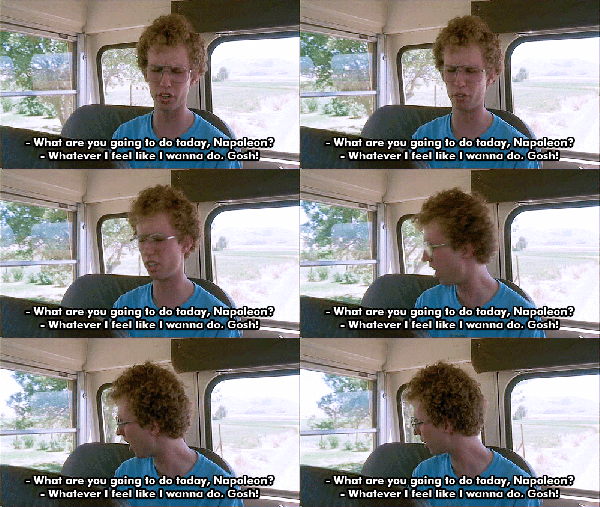
“What are you going to read today, Napoleon?” “Whatever I feel like I wanna read. Gosh!”

As much as we can dwell in others’ scrutiny, though, I believe we can use reading on the subway as an act of empowerment: read whatever we feel like reading, spectators be damned. After all, just because someone’s reading a book, doesn’t mean they approve of it. Regardless of what we’re reading, why we’re reading it, and what we think of it, no one will ever know anything about our experience beyond the book cover and our outward expressions. Those are all superficial assessments – so we might as well just enjoy our commute.

“Canadian” is not a genre

As we near Canada Day, we question Canadian content standards and come up with some top playlist picks for the long weekend.

By Serena Ypelaar

I didn’t come up with the title for this post myself – it’s a slogan coined by Dine Alone Records, the Canadian independent record label based here in Toronto.

We can take some pointers from its message, as Canadian art is often dismissed – from literature, to visual arts, to music, and more. It’d be interesting to see what percentage of music in our libraries is Canadian – I’d wager most Canadians have 15% or less. But the fact is that there is so much Canadian music out there – and it’s good. 

9053598741_0e3efbb889_o
Canadian Indigenous singer-songwriter Buffy Sainte-Marie. Photo: Flickr

What is it about being Canadian that automatically garners less attention? We even have poorer-quality versions of American reality TV shows, and a terrible Netflix selection compared to our southern neighbours to show for it.

In our current political climate, feat. a tariff war with the United States (which, let’s be honest, flares up every so often like a chronic wound), why not support Canadian musicians and invest in some local talent?

Here are some concise, but by no means comprehensive, top picks for quintessential Canadian listening. Enjoy my quick recs below.

A Tribe Called Red: Essential Indigenous electronic/hip-hop; mandatory listening. Songs to Start With: “R.E.D.,” “How I Feel”, “Bread & Cheese”

Billy Talent: Political commentary & punk rock all in one. Crisp guitars; crisper lyrics. Songs to Start With: “Try Honesty”, “Devil in a Midnight Mass”, “White Sparrows”

July Talk: Jarring juxtaposition of vocals – guttural/masculine vs. soft/feminine. Songs to Start With: “Headsick”, “Blood + Honey”, “Picturing Love”

Alexisonfire: “The sound of two Catholic high-school girls mid-knife-fight”.* Songs to Start With: “Boiled Frogs”, “Get Fighted”, “Midnight Regulations”

*I can’t describe it any better than they already have…

City and Colour: Mournful lamentations nursed by Dallas Green’s voice. Songs to Start With: “Casey’s Song”, “Waiting…”, “The Lonely Life”

Arkells: Anthemic, buoyant daytime rock with a touch of motown. Songs to Start With: “Where U Goin”, “Cynical Bastards”, “John Lennon”

28521842711_254f6e659b_o
Mike DeAngelis and Max Kerman of Hamilton band Arkells, at WayHome Music and Arts Festival 2016. Photo: Flickr

Death From Above: Industrious duo at the junction of bass & drums. Songs to Start With: “All I C is U and Me”, “Crystal Ball”, “Romantic Rights”

Tanya Tagaq: Daring, innovative, and traditional Inuit throat-singing. Songs to Start With: “Uja”, “Sila”, “Retribution”

Mother Mother: Three-layered high-pitched vocals on a base of synth and strings. Songs to Start With: “Ghosting”, “The Stand”, “Infinitesimal”

Sum 41: Sprawling spitfire of classic punk rock with heavyweight choruses. Songs to Start With: “Still Waiting”, “Open Your Eyes”, “With Me”

USS (Ubiquitous Synergy Seeker): Lucid, lively electronica fuelled by lyrical emotion. Songs to Start With: “Damini”, “Vulcan”, “Freakquency”

Arcade Fire: A convergence of 6+ hipsters producing indie rock with accordion and keyboard at the fore. Songs to Start With: “Ready to Start”, “The Suburbs”, “No Cars Go”

Monster Truck: 70s style blues rock backed by organs. Long hair & denim required.   Songs to Start With: “Don’t Tell Me How to Live”, “Old Train”, “For the People”

Hollerado: Personable indie rock with a genuine sound and hard-hitting beats. Songs to Start With: “Too Much to Handle”, “So It Goes”, “Got to Lose”

Drake: No description needed for Toronto’s resident rapper… Songs to Start With: “Passionfruit”, “Over”, “God’s Plan”

Our Lady Peace: Low, crooning vocals replete with reassuring lyrics. Songs to Start With: “Innocent”, “All You Did Was Save My Life”, “Angels/Losing/Sleep”

Avril Lavigne: Do I even need to explain this? Songs to Start With: “Complicated”, “Sk8er Boi”, “I’m With You”

Cancer Bats: Gritty underground metal; shredding, cymbal-smashing oblivion. Songs to Start With: “Hail Destroyer”, “Beelzebub”, “Gatekeeper”

Three Days Grace: Bass-heavy garage-rock with brutally honest insights. Songs to Start With: “Just Like You”, “Never Too Late”, “Last to Know”

Sam Roberts Band: Even-paced alternative rock with laid-back guitars. Songs to Start With: “Brother Down”, “Them Kids”, “If You Want It”

Half Moon Run: Serene assertions on the human condition, featuring folksy acoustics. Songs to Start With: “Nerve”, “Trust”, “Narrow Margins”

Wintersleep: Guitars, synth, and experimental riffs with a sprightly rhythm. Songs to Start With: “Lifting Cure”, “Metropolis”, “Santa Fe”

alanis
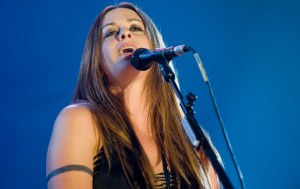
Alanis Morissette. Photo: Wikimedia

Of course, there are also the Canadian classics, which you might consider revisiting for the long weekend. I’ve created a track-by-track vignette of essential Canadiana:

  • Rush – “YYZ”
  • Buffy Sainte-Marie – “Working for the Government”
  • Bryan Adams – “Summer of ’69”
  • The Guess Who – “American Woman”
  • Gordon Lightfoot – “Canadian Railroad Trilogy”
  • Shania Twain – “Man! I Feel Like A Woman”
  • Alanis Morissette – “Thank U”
  • Sarah McLachlan – “Building A Mystery”
  • Great Big Sea – “The Chemical Worker’s Song”
  • Neil Young – “Heart of Gold”
  • Joni Mitchell – “Big Yellow Taxi”
  • Leonard Cohen – “Treaty”
  • k.d. lang – “Constant Craving”
  • Celine Dion – “My Heart Will Go On”
  • Barenaked Ladies – “Canada Dry”
  • The Tragically Hip – “Bobcaygeon”

Obviously I omitted a bunch of bands/artists, mainly because I don’t listen to them enough to consider myself worthy of making thoughtful recommendations. Other Canadian artists are included below.

Shad, Lights, The Dirty Nil, Anne Murray, The Jerry Cans, Shawn Mendes, Sloan, Tegan and Sara, Michael Buble, Metric, Simple Plan, Young Empires, Joni Mitchell, Nelly Furtado, Bruce Cockburn, Jann Arden, The Trews, Corey Hart, Alessia Cara, Ron Sexsmith, Diana Krall, Stan Rogers, BROS, Feist, The Beaches, Moneen, The Darcys, The Weeknd, Justin Bieber, Said the Whale, Constantines, Marianas Trench, Silverstein, Broken Social Scene, Big Wreck, Nickelback, PUP, Dear Rouge, Blue Rodeo, Hedley, Fucked Up, Toronto, Great Lake Swimmers, The Rural Alberta Advantage, Teenage Head, Down With Webster, Thousand Foot Krutch, Matt Good Band, The Tea Party, The Sheepdogs, Hey Rosetta!, The Elwins, IllScarlett, Prism, I Mother Earth, Black Lungs, Chromeo, Japandroids, Whitehorse, Protest the Hero, The New Pornographers, Joel Plaskett, Northern Voice, Serena Ryder, Lost Cousins, Moist, Neverending White Lights, Platinum Blonde, Stabilo, Saint Asonia, Finger Eleven, Templar, Theory of a Deadman, Wolf Parade, Yukon Blonde, Born Ruffians, Black Bear.

Over the years, so much of Canadian identity has been built on what we’re not (namely, American). Let’s talk about what we are, for a change. It’s something Canadian music does well, if we only listen.