Long Story Short, You Can’t Control Everything

Though storytelling is highly personal, it thrives on human interaction and the sharing of experiences, making storytelling and interpretation inherently collaborative processes.

By Serena Ypelaar

“You can’t control what others think, but you can control what you put out there.”

This idea is something a lot of people carry around, and it has a special relevance when we think of how we’re surrounded by stories. As we enter a brand new year of The Mindful Rambler, I’d like to reframe the discussion on storytelling and interpretation – and the methods of both processes – which we’ve been examining here on the blog.

In telling a story, whether it’s for entertainment, healing, documentation, critical analysis, or otherwise, there’s always a lot of pressure around how it will be received. Will people like it? Will they get it? Will they take from it the information you’re hoping to impart?

Shakespeare definitely distilled some information down when he wrote his history plays, inciting a multitude of different interpretations.
Photo: Giphy

I experience that pressure whenever I write something. Anything I write can be interpreted, misinterpreted, and reinterpreted, and the truth is that my writing won’t exist entirely under my control once it’s out there. Every person who hears a story brings their own unique experience to it, creating something new. Two people who read the same book, for example, might see it in completely different ways, meaning that the result – the experience of storytelling – actually becomes a hybridization, a meeting place between the “teller” and the “listener”. Storytelling is the act of bringing one’s story, through words, images, sound, and other sensory outputs, into being outside of one’s self.

To avoid delving too far into the abstract, I’ll use an example. If someone is describing a place while telling a story, they’ll describe it as best they can noting features they feel are important to the story or of personal value to them. The person listening to the story will then construct their own interpretation of the event, incorporating their past experiences, feelings, biases, and assumptions. In short, the story is changed by the listener’s reception of it. Every single person hearing that story will have a different conceptualization of it, and a different understanding.

It’s the same with novel writing. Writers describe a character, for instance, and we, the readers, each construct a mental image of that person (and then get angry when the film casting doesn’t match that). I don’t know how many people I heard, back in middle school, ranting about how they definitely, totally did not picture Robert Pattinson when they dreamed up Twilight’s Edward Cullen in their heads. There are also race-based biases toward literary characters which often become clear when a person of colour is cast as a character many assumed would be white (like the vampire Laurent from the same franchise), racial prejudices becoming evident with readers’ indignation.
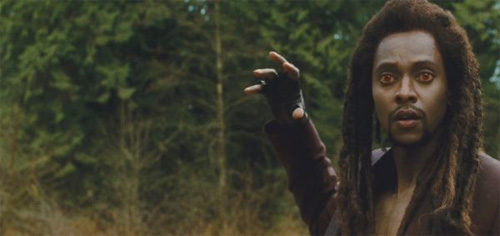
As demonstrated by their reaction to Edi Gathegi being cast as Laurent, Twilight‘s preteen fanbase did not want a diverse cast for the 2009 film adaptation… and, according to director Catherine Hardwicke, neither did the author (Stephenie Meyer) herself.

Irrespective of a story and its content, creators must become comfortable with the notion that each person who hears their story is going to see something different. There’s no way a storyteller can construct their tale in a way that guarantees uniform interpretation. Attempting to do so can result in over-describing something and alienating readers by unconsciously (or consciously) trying to harness control over their perceptions. It’s possible to use photographs to aid a visual picture, for instance, but these will still foster further imaginings on the part of the listener. Gaps in information will be filled independently – so the point is not to describe every single thing that is within you, but rather what is important to the story. That’s how we get such engaging stories, whether in literature, history, entertainment, art, memoir, or otherwise. Allow the listener to meet you halfway, and together you can share the experience while expressing trust in another person.

Maybe that’s why storytelling is so important to us – on an instinctual level, it allows us to connect with each other and find common ground.

What the Dickens? Christmas the Scrooge Way

Charles Dickens’ A Christmas Carol is a classic favourite when it comes to the Christmas spirit, and he entwines a fictional biography with class commentary.

By Serena Ypelaar

“In life I was your partner, Jacob Marley.”

This phrase from Charles Dickens’ well-loved Christmas novella cleverly establishes the intersection of life and death, as the ghost of Ebenezer Scrooge’s business partner comes to warn him off his cold-hearted ways. A Christmas Carol (1843) illuminates the importance of generosity during the festive season, but it also serves as an excellent form of fictional biography.

In the book, Dickens exemplifies the writerly adage “show, don’t tell” and spins a compelling illustration of a man’s life without resorting to long-winded character monologues. Where a lesser author might have their protagonist prattle on at length about their upbringing in a style that bores most readers, Dickens instead shows us almost firsthand how miser Ebenezer Scrooge became the person he is.

sim-everett.jpeg
Ebenezer Scrooge (Alistair Sim) watches events of his past as shown by the Ghost of Christmas Past (Michael Dolan) in the 1951 adaptation of “A Christmas Carol”. Photo: The Guardian

It’s a fascinating combination of realism and supernaturality, with the Ghosts of Christmas Past appearing to guide Scrooge (and us) through a revival of his past. Not a retelling, but a re-experiencing. But what does Dickens want from us when taking us through fictional Scrooge’s lifetime? An understanding of the character is the obvious answer, but it also goes a little deeper than that. He wants us to foster empathy for not only Scrooge, but those he deprives.

Scrooge is visited by the Ghost of Christmas Present, illustrated by John Leech. Photo: Wikimedia

From an interpretive perspective, the flashback device serves to place us directly in Scrooge’s shoes, therefore holding us accountable. By using Scrooge as an overarching symbol of avarice (especially during the holidays), Dickens warns against the danger of greed. In his customary fashion, he prompts us – through experiencing Scrooge’s life alongside him – to ensure we don’t repeat the same mistakes. Do we donate to those in need at the holidays? Many of us do, but many of us don’t. We fret about shopping and wish lists but fail to consider those for whom (like the Cratchits) a big family dinner would mean the world.

It’s fascinating to consider that Dickens predated the commercial bastardization of Christmas by almost century, as we now sit at a point where Christmas for many people is defined by dollar signs (or pounds, for that matter).

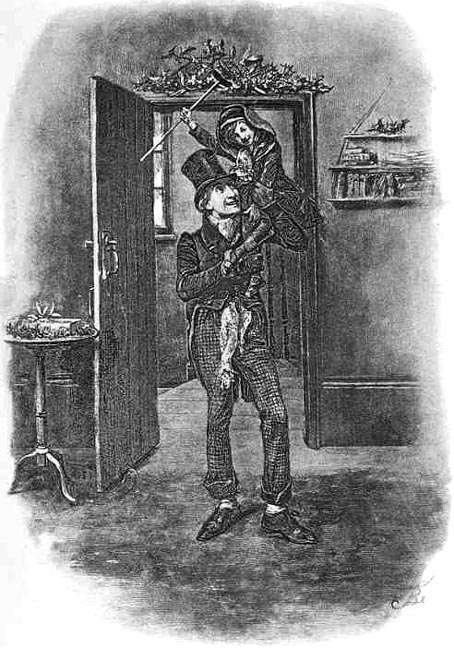
Bob Cratchit and Tiny Tim, who walks with a cane, as illustrated by Fred Barnard. The Cratchits cannot afford adequate medical care for Tim. Photo: Wikimedia

So when we read A Christmas Carol or watch an adaptation (my family and I favour the 1951 film starring Alistair Sim), we’re prompted to examine our own behaviour. In damning Scrooge for his constant refrain of “bah, Humbug”, are we ourselves really focused on the true meaning of Christmas? We can interpret Dickens’ work many ways, but the one immovable theme at the core is that Christmas calls us toward togetherness, kindness, and compassion. Dickens wishes us a Merry Christmas, certainly, but he doesn’t let us off easy when it comes to our own thoughtfulness. That much is clear when he stresses the final two words of Tiny Tim’s famous refrain: God bless us, every one.”

The world may be an unequal place, as Dickens knew well, but his works inspire us to do whatever we can to reset the balance and share what we have.

In parting, Merry Christmas, and thank you for reading The Mindful Rambler! Sending you all the best wishes – take care of each other.

Leaving you with a wonderful Dickens parody on the television series Quacks, starring Andrew Scott as the writer himself!

The pen is mightier than the sword, especially when it’s Jane Austen’s

243 years after Jane Austen’s birth, her words still loom large over the literary world – and in the dialogue about women’s rights.

By Serena Ypelaar

Today is Jane Austen’s birthday.

This time every year, I’m left reflecting on the legacy of that talented and incredibly smart woman, one whose voice speaks so loudly in both her contemporary era and our own. Despite living in a male-dominated society, Austen’s wit and wisdom has pervaded the literary world and she remains one of Britain’s most prominent authors.

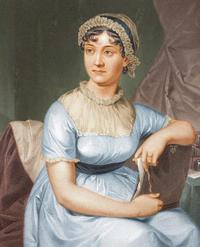
A colourized engraving of Jane Austen (1873).
Photo: Wikimedia Commons

So on her birthday, I’d like to recall the significance of her work as a canon that redefined feminism even at such an early point in time.

The author of Pride & Prejudice, Sense & Sensibility, Persuasion, Northanger Abbey, Mansfield Park, and Emma, among other titles, left an indelible mark on English literature as a writer who speaks from a distinctly feminine perspective in a patriarchal society.

“Men have had every advantage of us in telling their own story. Education has been theirs in so much higher a degree; the pen has been in their hands.”

Anne Elliot discussing gender inequality in Persuasion (1817)

To paint a brief picture, in Austen’s society only landowning men could vote; genteel women of the middle and upper classes could only retain or augment social standing through a successful marriage. Even then, influence was confined to that of one’s husband, a notion at odds with today’s circumstances. Failure to marry well would usually result in spinsterhood, living with one’s parents for the remainder of one’s life (which was extremely embarrassing back then) and a complete lack of independence.

Despite all this, Austen rejected the marriage proposal she received from one Harris Bigg-Wither and instead committed to reconciling the two seemingly disparate lifestyles I’ve just mentioned: autonomy as a single woman.

How did she do it, you ask? She did it through her words, as a woman writer. She wrote about genteel women’s experiences of Regency society, highlighting issues of income, class, personality, gender, and manners. She successfully sold her novels to earn money, making her quite entrepreneurial for a woman of her time. Her discerning assessments of the dynamic between men and women – despite being set 200 years before now – still resonate with us today, and her comments on the human condition have charmed readers of all genders and classes.

I have been open and sincere where I ought to have been reserved, spiritless, dull, and deceitful. Had I talked only of the weather and the roads, and had I spoken only once in ten minutes, this reproach would have been spared.

Marianne Dashwood describing the severe expectations of women in her society in Sense and Sensibility (1811)

Regardless of how I feel about today’s designation of “chick lit” as an excuse to dismiss female authorship, Austen owns her femininity unabashedly, delivering exacting jabs and insightful criticisms from the seat of an observer – each time a considerate and emotionally complex female character. What makes her so relevant today is that amidst the ongoing push for equal rights, people connect to her ability to find flaws in her society and propose solutions to them.

I hate to hear you talk about women as if they were fine ladies instead of rational creatures. None of us want to be in calm waters all our lives. 

Anne Elliot in Persuasion (1817)

Since her books achieved mass popularity, Austen has served as an inspiration to many, though she’s not without her critics (jealous haters). Mark Twain, Charlotte Brontë, and other writers claimed to find no brilliance in her work, but as The Mindful Rambler is by no means a neutral publication, I feel no hesitation in discrediting their criticisms. Austen is brilliant because she represents the everyday. What might seem to some the banalities of the well-to-do in the countryside in fact set Austen apart, through the minutiae of her social criticisms and her practiced understanding of others. We’ve all met a Mrs. Bennet, whether she is our own mother, a voracious aunt, or otherwise; we all want to meet a Mr. Darcy (or Mr. Tilney of Northanger Abbey in my case, but I’m sure we’ll get to that in a future post).

A woman, especially if she have the misfortune of knowing anything, should conceal it as well as she can.

Jane Austen employing her signature biting irony in Northanger Abbey (1817)

I write this from the perspective of a woman who loves writing too, and whose work has been shaped by two prominent female writers, J.K. Rowling and Austen herself. But while the former shies away from gender politics* in favour of the ideological, the latter champions her gender through representation and highlights disparities between men’s and women’s quality of life. Austen does this using a combination of cultural nuances and hyperbolic characters, stressing important themes while more subtly suggesting at other details. The result is a complex but convincing illustration of feminism in the early 19th century, one that we can use to inform our discussions of feminist literature today. And we have a well-educated, unmarried woman in Regency England who forged her own path – despite the restrictions of her society – to thank for that.

Learn more about Jane Austen and her portrayal of women here.

*This article was written before J.K. Rowling’s transphobic tweets and editorial piece were published. The Mindful Rambler does not condone transphobia (or trans-exclusionary radical feminism) in any form, whether the dismissal of a person’s gender and pronouns or otherwise. We stand in solidarity with the trans community.

Home for the Holidays

What does tradition tell us about the holidays? As Hanukkah is underway and Advent begins, we examine how collective rituals can unite us, both within and across faiths.

By Serena Ypelaar

What is tradition, really?  

It’s defined as the transmission of customs/beliefs between generations, and the nature of the word itself suggests its deep reliance on community. There’s a reason culture can be steeped in tradition – and a reason that there’s a stigma attached to solitude at the holidays. And that’s because tradition depends on sharing to survive. You can most certainly enjoy traditions on your own (I sure do), but the fact is that they don’t sustain unless they’re shared with other people and carried forward. Since we as humans are mortal, they obviously wouldn’t live past just us. 

Not unless we share them.

As we kick off December I wanted to take a look at the nature of community and its integral significance in holiday rituals. So here we go: a brief but hopefully interesting look that will prompt us to reflect and help us cherish the people that make the traditions great. 

Christmas | Christian tradition

Christians celebrate the birth of their saviour Jesus Christ by attending a mass or church service to have communion, as well as partaking in a feast and gift-giving. However much mass consumerism may exploit the togetherness of Christmas to sell more products, the holiday itself dwells in generosity, regardless of money spent.

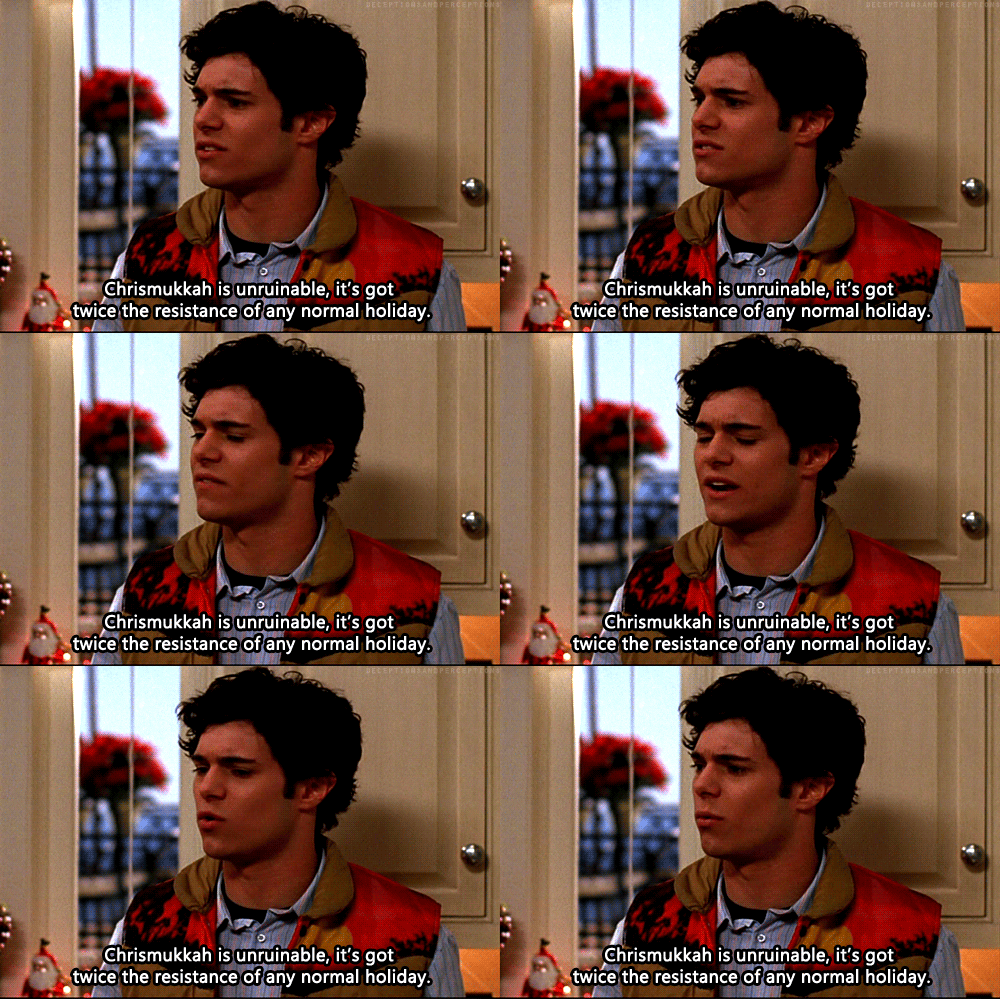
Seth Cohen from the OC discusses how Chrismukkah has twice the resistance of normal holidays because it's half Christmas, half Hanukkah.
As the son of a Jewish father and Christian mother, Seth Cohen from the O.C. was a staunch supporter of “Chrismukkah”, getting people on board to sustain the hybridized traditions.

Hanukkah | Jewish tradition

Hanukkah is celebrated for eight nights to symbolize the successful rebellion of the Maccabees against the Seleucid empire. At the dedication of the Second Temple, the menorah burned for eight days even though there was only enough oil for one. Jewish observances also include playing dreidel and gathering to eat oil-based foods such as latkes.

Winter Solstice | Cree Tradition

Among Cree nations in North America, the winter solstice allows an opportunity for rest and renewal. As the shortest, darkest day in the year, the solstice sees Cree people reflecting on the past year and their connections with plants and animals by looking at the stars. Specifically, the Seven Sisters constellation, or “the hole in the sky” prompts Cree people to come together and reflect on their ancestors.

Kwanzaa | African-American tradition

Kwanzaa celebrates African-American heritage in the United States. Children are included in the observances, and respect is paid to elders and ancestors, concluding with feasting and gift-giving. Families also decorate their homes with African art and colourful African cloth such as kente.

Sinterklaas / St. Nicholas Day | Dutch tradition

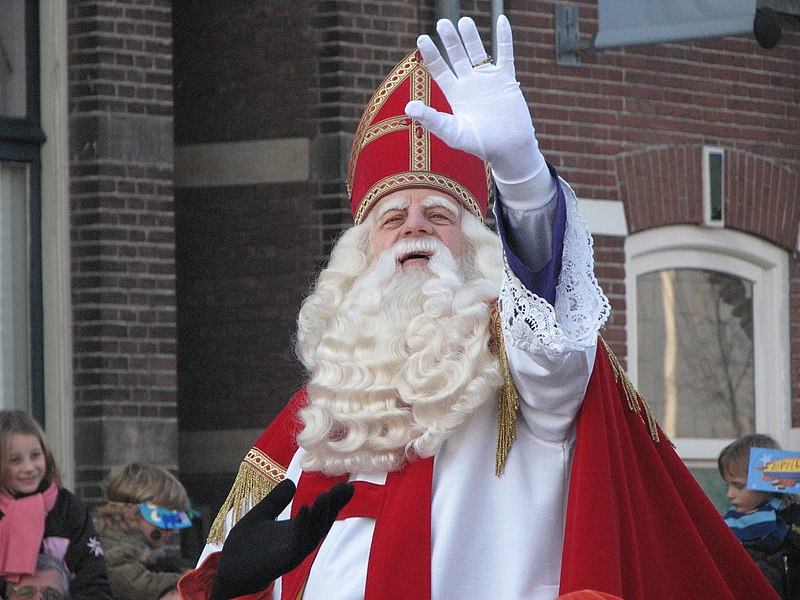
Sinterklaas arrives in the Netherlands from Spain.
Photo: Wikimedia

Celebrated in the Netherlands, Belgium, parts of France, and former Dutch colonies, Sinterklaas Day celebrates the Feast of St. Nicholas, in which Sinterklaas returns from Spain. Children put out wooden clogs on the night of December 5 and awake to chocolate letters, ginger cookies such as speculaas and kruidnoten, and oranges in the clogs. The Sinterklaas parade is also a well-attended event among families in Holland.

Ōmisoka | Japanese tradition

Toshikoshi soba.
Photo: Flickr

Ōmisoka signifies the end of the year, and is celebrated on the final day – December 31. A few hours before the year ends, Japanese people join together for parties and eat toshikoshi soba or toshikoshi udon, long noodles which symbolize passing from one year into the next. From midnight, the first hours of the day are spent at a shrine or temple, and greeting one another. 

Tradition is an instrument of community. As we’ve seen, one person can practice rituals, but it takes many to sustain traditions for years to come. It’s interesting to imagine, with the rise of digital technology and its new prominence in our lives, the new traditions we may create and carry forward – and those which may falter. Nevertheless, one thing has endured throughout: our human craving for connection. 

Interpreting the Zapruder film

55 years after the assassination of U.S. President John F. Kennedy, we still have much to learn about the famous Zapruder film, which captured the incident in Dallas.

Warning: contains mention/images of graphic violence and may be disturbing for some readers.

By Serena Ypelaar

November 22, 1963. John F. Kennedy greets the public in the presidential motorcade as he heads toward Dealey Plaza and the Texas School Book Depository. As the car turns off of Elm Street, onlookers gathered along the side of the road cheer, clap, and wave to the President and his wife, Jacqueline.

The next few seconds would drastically change the future – and believe it or not, they were caught on film.

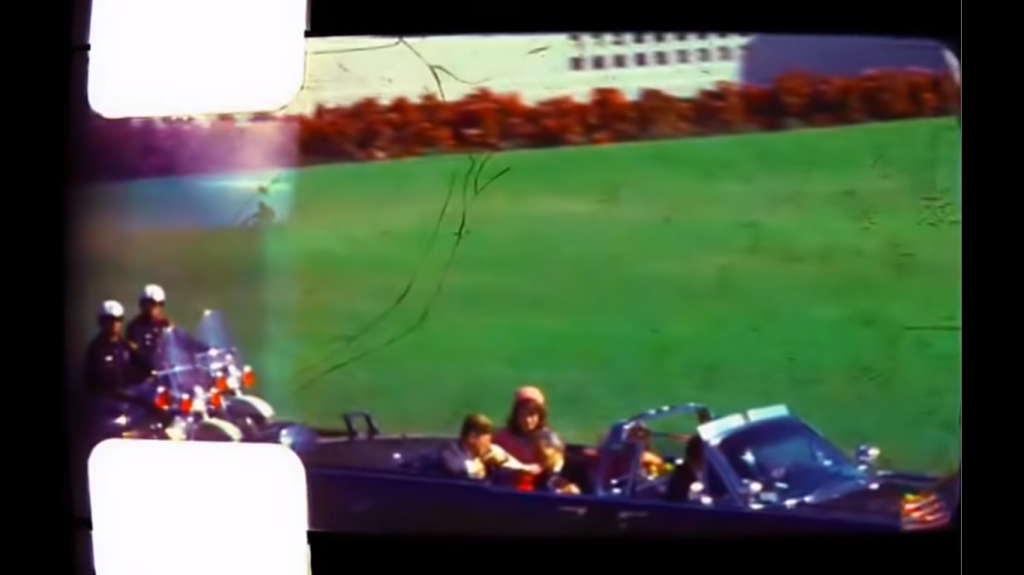
The Zapruder film (graphic content) preserves those moments when JFK was fatally shot, and it’s hence been scrutinized closely for decades. Abraham Zapruder was an ordinary U.S. citizen who happened to be in the right place at the right time, unknowingly documenting a tragic event that would go down in history.

zapruder2
Screencap taken from the Zapruder film.

You might think there’s nothing of value to gain from watching the murder of a political leader, but in this context that couldn’t be further from the truth. Zapruder wasn’t to know that the U.S. government would seize his short film when the Warren Commission was launched to investigate the assassination – he was merely recording the event for himself, on a Bell & Howell home movie camera.

There are others who filmed the assassination, but I want to focus on Zapruder’s close-range footage for its interpretive value.

zaprudercam
Abraham Zapruder’s camera, which is now held in the U.S. National Archives. Photo: Wikimedia Commons

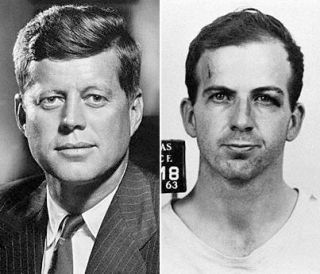
I mentioned that viewing the murder was crucial rather than gratuitous – and now I’ll explain why. JFK’s suspected killer, Lee Harvey Oswald, was shot dead by nightclub owner Jack Ruby before he could be extensively questioned or tried for the murder. This turn of events spawned boundless conspiracy theories, including ones in which Oswald was not the shooter, or that government(s) or other third parties were behind the assassination.

Oswald is alleged to have fired the shots from the sixth floor of the Texas School Book Depository. His own whereabouts and location have been intensely analyzed in order to place him at the scene of the crime: the source of the gunshots. To find and prove the source, the Zapruder film is an invaluable piece of evidence.

jfkoswald
President John F. Kennedy and Lee Harvey Oswald. Source: Psychology Today

Analysts and scientists have hypothesized on the trajectory of the bullets entering and exiting President Kennedy’s body. While many have opposing views on their path and therefore their source location, the point is that without Zapruder’s film, the investigation would have relied instead on subjective witness testimony.

However, discrepancies were perceived between witness testimony and the film’s contents. In an editorial for the New York Times in 2007, Max Holland and Johann Rush assert that Zapruder’s film was initially misunderstood because it seemed to show only two of the three shots believed to have been fired:

The majority of witnesses in Dealey Plaza heard three shots fired. Lawmen found three cartridges in Lee Harvey Oswald’s nest … Yet Zapruder’s film captured only two shots clearly. As a result, the film has been scoured for evidence of another shot, presumably the first one fired at the president. Research has yielded contradictory findings.

But what if Zapruder simply hadn’t turned on his camera in time?

Holland and Rush state that Zapruder commenced filming but turned off his camera when waiting for the President’s limousine to come into view. They suggest that he didn’t turn it back on again until after Oswald had fired his first shot. Viewing the film as incomplete therefore answers a question that loomed large over the Warren Commission investigation: why did Oswald miss the closest shot but prove such an accurate sniper in the two shots following (at 190 and 265 ft. respectively)?

“About the time the car got near the black and white sign, I heard a shot,” a key witness, Amos L. Euins, had said. Holland and Rush argue that it was the sign itself that blocked Oswald’s view of Kennedy. Sure enough, in watching the Zapruder film we lack the first shot but see the next two – after the President passes near a large sign. Startlingly, of the three shots fired, Zapruder managed to document the two that found their target.

The film, we realize, does not depict an assassination about to commence. It shows one that had already started.

The Zapruder film is central to the historical record of Kennedy’s assassination, as is careful analysis. The angles from which one can interpret the film prove that despite its overwhelming value to those trying to understand the event, it provides only a limited (though crucially significant) slice of what happened that day, contingent on a man’s choices of when to record … and his inability to know what was about to happen.


It’s Raining Men in the Harry Potter Franchise

With the release of the newest Harry Potter film, Fantastic Beasts: The Crimes of Grindelwald, we take another look at representation in author J.K. Rowling’s works in this installment of the Critiquing Harry Potter series.

By Serena Ypelaar

“Strong women” is a phrase we hear a lot, especially regarding film and literature. The desire to see strong women in entertainment (and the misunderstanding of what a “strong” woman actually is) sets up unrealistic standards for female characters and their real-life counterparts. Irrespective of these confining notions, empathy and vulnerability are traits that make women strong, not weak. A profound emotional complexity encapsulates what it means to be human, to live, and to persevere through adversity.

J.K. Rowling has promoted female complexity to an extent through Harry Potter characters such as Hermione Granger, Ginny Weasley, Nymphadora Tonks, Luna Lovegood, Cho Chang, Fleur Delacour, Angelina Johnson, Minerva McGonagall, Lily Evans, Molly Weasley, Narcissa Malfoy, Bellatrix Lestrange, and even Lavender Brown, all of whom have diverse personal attributes that make them uniquely human. Some are leaders, some are learners, some warriors, and some nurturers, but all of them feel. So do men, of course – yet male emotion is sadly suppressed as weakness in our society.

nlt
Brothers Theseus (Callum Turner) and Newt Scamander (Eddie Redmayne) interact while Leta Lestrange (Zoë Kravitz) looks on. In J.K. Rowling’s latest spinoff, men still dominate the story, women are supporting characters, and non-binary characters aren’t included at all. Photo: Entertainment Tonight

Critically examining all aspects of Fantastic Beasts would take days, so keep in mind that I’ve tried to confine the scope of my analysis to gender here. Given that J.K. Rowling is a woman writing in the 21st century (though her latest story is set in the 20th), I’d expected her to feature a female lead this time around. Despite the many complex female characters in the Harry Potter books, Rowling never struck me as going all the way to give women full representation. The majority of the major characters are men, after all, and the few women who are given significant roles are almost all white. In today’s political climate, the time is ripe to focus on feminism and gender equality. Some might argue that it’s Rowling’s responsibility as an influential woman to present more female role models, and I won’t even get started on non-binary characters because that evidently seems too much for Rowling to consider. Ezra Miller, who is a queer actor, does play Credence Barebone in Fantastic Beasts, but Credence is referred to as male in the films – we don’t have any evidence that Rowling understands or wants to include the lived experience of genderqueer individuals. Instead, Rowling safely elected to feature Newt Scamander, widely acclaimed Magizoologist – and a dude.

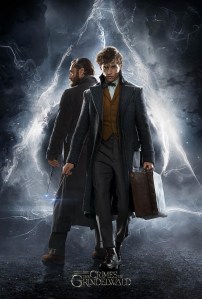
fb
An early promotional poster for Fantastic Beasts. The core three characters of this film – Dumbledore (Jude Law), Newt (Eddie Redmayne), and Grindelwald (Johnny Depp) are male. Photo: Flickr

If the secondary characters were all female it might be less of an affront that Rowling went with a story about another man, but I can’t really defend her there. Just like Harry, Ron, and Hermione, Newt is surrounded by other male leads. In The Crimes of Grindelwald specifically, we have No-Maj (Muggle) Jacob, Newt’s brother Theseus, Credence, and then the big ol’ showdown between future Hogwarts Headmaster Albus Dumbledore and European powerhouse tyrant Gellert Grindelwald, the darkest wizard on the world stage before Lord Voldemort’s time. As you can see, lots of testosterone floating around.

Of course, the Goldstein sisters Tina and Queenie figure into the storyline, this time alongside Leta Lestrange and *SPOILER ALERT* Nagini (to whom I’ll probably devote a whole other post in the future). It’s not that the women are there, however, that checks the proverbial box of so-called gender parity; as I argued in my article on ethnicity, it’s what they do that matters. In the first Fantastic Beasts film, Newt and Jacob were the top-billed characters in the plotline, with Tina and Queenie playing supporting roles. Likewise, we know that the Dumbledore-Grindelwald relationship takes centre stage now. J.K. Rowling could just as easily have chosen a witch to work with Dumbledore for this spinoff series, but she didn’t, and men are still at the centre of the action. It strikes me as a bit disingenuous for a self-declared progressive female author, but I suppose our society influences our implicit expectations. All I can say without spoiling the film is that our girls Tina, Queenie, and Leta’s storylines heavily feature men and aren’t explored as in-depth as I would like.

There’s one possible upside apart from Newt’s own emotional vulnerability: Dumbledore and Grindelwald’s confrontation and the unravelling of their past. Such an interplay could do much to highlight LGBTQ2+ representation and men’s emotional depth if it’s properly explored. It is a shame that the only gay relationship we may see is an abusive and manipulative one, but nevertheless, this franchise will be very telling as to whether J.K. Rowling truly believes in diverse representation or is just trying to ride the wave.

So far she’s demonstrated a shocking hesitancy to give female, non-binary, or trans individuals representation, and I doubt we can expect anything that doesn’t feature a male lead from her soon.* For now, even as far as women – complex, wonderful, and important as they are – are concerned, I’m not convinced Rowling’s in it for the long haul. If she is, I’d like to see more action and agency from her non-male characters front and centre.

After all, actions speak louder than words, and Rowling’s approach to gender isn’t quite loud enough for me.

This article is part of the Critiquing Harry Potter series. Read about ethnic representation in the series here.

____________________________________

FOOTNOTES
*Just take a look at her Cormoran Strike novels under the penname Robert Galbraith, which also feature a male character.

We shall not sleep, though poppies grow

One hundred years after the World War I armistice, we continue to remember – and feel – the sacrifice of those who have served in armed conflict. 

By Serena Ypelaar

Trying in dismay to ignore the declining number of poppies I’ve seen on people’s lapels this year (all of theirs probably just fell off, right?), I of course wanted to pay tribute to our fallen soldiers, surviving veterans, and all those affected by war ahead of Remembrance Day.

And what better way to do so on a literary/historical blog than to revisit the famed rondeau poem In Flanders Fields (1915) by Canada’s very own John McCrae?

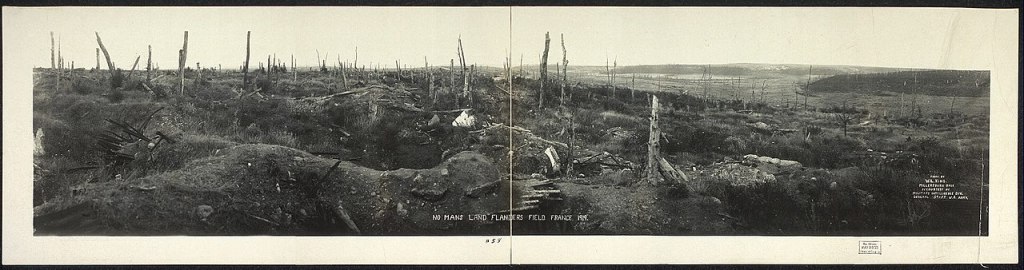
1280px-No-man's-land-flanders-field
Trenches and No-Man’s Land at Flander’s Fields. Photo: Wikimedia Commons

From an interpretive perspective, the strength of the poem lies in its profound ability to foster empathy. Most of us probably haven’t been in the trenches or known what it’s like to fight in a thankless conflict while watching countless friends die. Those of us who haven’t are extremely lucky – yet In Flanders Fields paints such a visceral picture of sacrifice that we get an almost firsthand glimpse of the devastation.

In Flanders fields the poppies blow
Between the crosses, row on row,
That mark our place; and in the sky
The larks, still bravely singing, fly
Scarce heard amid the guns below.

We are the Dead. Short days ago
We lived, felt dawn, saw sunset glow,
Loved and were loved, and now we lie
In Flanders fields.

Take up our quarrel with the foe:
To you from failing hands we throw
The torch; be yours to hold it high.
If ye break faith with us who die
We shall not sleep, though poppies grow
In Flanders fields.

It is hard to believe that McCrae, a physician and Lieutenant-Colonel during World War I, was dissatisfied with his work and discarded it. He had to be convinced to submit the poem for publication. Yet he uses swift imagery to conjure a painstakingly forlorn scene of war and death, having written it after performing the funeral service for a fellow soldier and close friend, Alexis Helmer. No matter where we read this, we’re hit as though standing there in Belgium: poppies blowing in the wind on the burial site; guns booming in the distance; the keen sting of love and life, all extinguished by the horrors of war.

crae
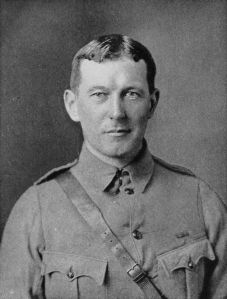
Physician and poet Lieutenant-Colonel John McCrae. Photo: Wikimedia Commons.

I will freely admit that it’s almost impossible for me to read the poem without tearing up. What’s more, it has also been set to music, and the sombre melody combined with McCrae’s stark verse is even more emotional. I always cry when they sing it during the Canadian Remembrance Day ceremony in Ottawa, and I probably always will, because McCrae delivers empathy right to our doorstep. That is, of course the best storytelling – that which makes us feel things.

McCrae’s use of caesura in the second stanza, a halt with punctuation in the middle of a line, drives the point home: We are the Dead. Short days ago we lived … The dead speak to us in the poem, and we are accountable to them to live with honour and integrity as they no longer can. Those feelings of sadness are so well-preserved in the poem that they don’t dull down with time. Every reread reopens the wound – but justly so.

Processed by: Helicon Filter;
A poppy field in Flanders. Photo: Wikimedia Commons

Yes, it’s painful to grieve, but it is necessary. Remembrance Day is an ongoing process of empathy and an enduring resolution to defend honour. That is, after all, why we wear the poppy every year. It’s a symbol of our commitment, gratitude, and respect. Perhaps in remembering the contributions of our fellow citizens, whether by sacrificing their lives or through tireless and laborious efforts, we’ll also be wary of the sorrow that accompanies war and conflict. Lest we forget.

The Pain of Nostalgia

Nostalgia hurts us. Reliving past joys causes us pain, but why? And why does this nostalgia translate to media we enjoyed at a different time in our lives?

By Serena Ypelaar

Have you ever felt inclined to revel in the past but found that it just hurt too much?

Last night, The Wizard of Oz (1939) was on TV and I felt instinctively drawn to it. Why? Because The Wizard of Oz was my favourite film as a kid, from when I was about three or four. It’ll always have very strong sentimental value and I’ll always feel quite attached to it. It’s also an excellent film for its time, a cinematic masterpiece that makes a big impact even now.

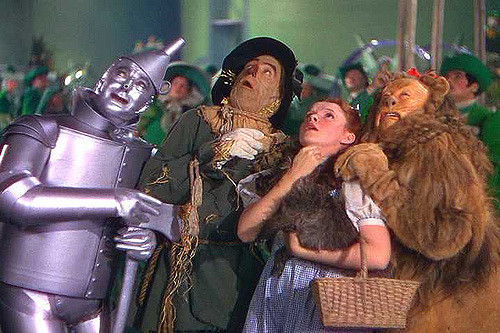
But when I tried to watch the film yesterday (admittedly after a very long and trying day), I almost physically couldn’t handle it. Instantly, I found myself on the verge of tears, regardless of what was happening in the story at any given time. (For the record, it was the part in which the Scarecrow (Ray Bolger), Tin Man (Jack Haley), and Cowardly Lion (Bert Lahr) infiltrate the witch’s fortress trying to rescue Dorothy (Judy Garland). Dorothy was calling for her Auntie Em in the crystal ball as the hourglass trickled down, and I was done for.) I felt that familiar clenching in my chest that strikes when I feel intense nostalgia (or interestingly, when I feel anxious). But this pain seems the most potent when I’m thinking about good days gone by, and how far removed I am from them now.

oz
The Wizard of Oz (1939). Photo: Flickr

My childhood is a safe haven which in times of difficulty I sometimes crave. While I won’t be short-sighted enough to assume this is the case for everyone, I want to examine nostalgia as a common element of the human experience, whether it’s for one’s childhood or a different time in one’s life.

Why couldn’t I watch the film without experiencing physical and emotional pain? Because nostalgia is so powerful that we feel victim to it, and any past emotions we felt are felt again – this time accompanied by loss. We’re not in that moment anymore and we can never be again. We’ve learned in The Great Gatsby (1925) that “you can’t repeat the past”, and trying to recreate it can cause intense suffering. But nostalgia gives us so much deeply rooted longing that we’re often gripped by it unexpectedly.

One of my favourite TV series, Mad Men, uses the concept of nostalgia to great advantage in the final episode of its first season. When Don Draper makes an advertising pitch for the newly patented Kodak carousel slide projector, he delivers a presentation so moving that one of his colleagues runs from the room in tears.

Nostalgia – it’s delicate, but potent. Teddy told me that in Greek, “nostalgia” literally means “the pain from an old wound.” It’s a twinge in your heart far more powerful than memory alone … it takes us to a place where we ache to go again.

Mad Men 1.13, “The Wheel” (2007)

Knowing that nostalgia is supposed to hurt may not mitigate our tumultuous experience, but it can offer some shared comfort as we all navigate the inevitable passage of time.

The question is, do we choose to brave the pain and relive our wonderful memories, or do we stuff them away to avoid the emotional turmoil? The second option is arguably worse for emotional health in the long run – though it’s admittedly hard to look back on a golden age from a new and learned perspective.

But then again, aren’t our good memories worth it?

No Mere Mortal Can Resist

Every October, Michael Jackson’s Thriller resurrects itself. Thriller’s sensory aspects transport and captivate us time and time again, making our hair stand on end even though we know we’ve heard the track before. 

By Serena Ypelaar

Hallowe’en is days away, which means I’ve had one particular track on repeat: Michael Jackson’s “Thriller”. Due to my strong personal convictions, I think this is one of the best tracks ever recorded, both as a standalone work of art and as a Hallowe’en staple. As I was listening for the umpteenth time, I decided I wanted to pay tribute to the masterful storytelling MJ demonstrates in the title track of his 1982 album.

thriller
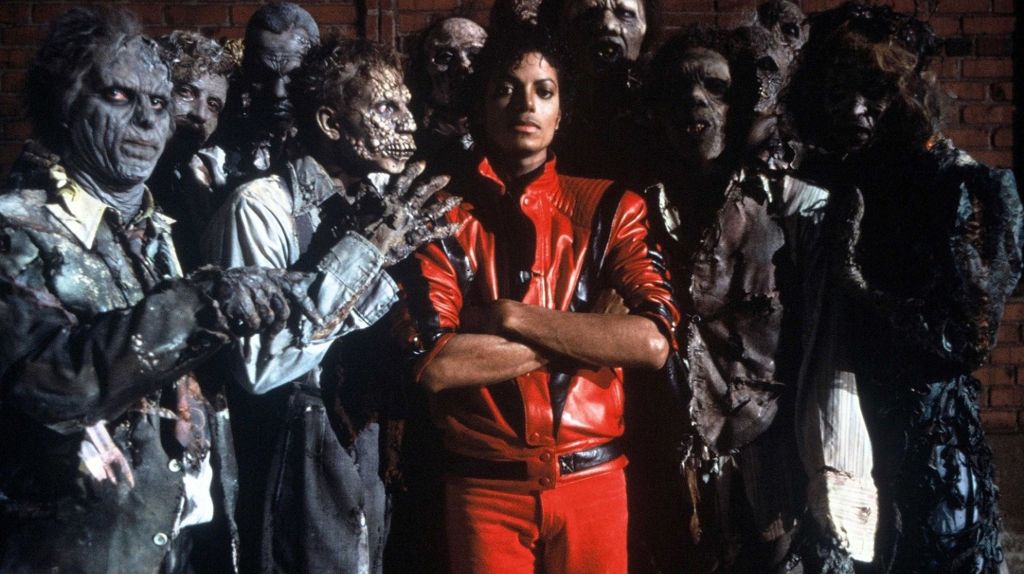
Photo: BlogTO

I personally feel that everything about this song is unparalleled, for one key reason: “Thriller” weaves a scary story solely through audio (we’ll get to the video later). Visuals are a key element of our imagination, but “Thriller” harnesses the many possibilities of sound to prompt our own dreadful visions. How else does Jackson (along with producer Quincy Jones, songwriter Rod Temperton, and actor Vincent Price) use terror to allure us every time? Let’s break it down.

Sound & Senses

From the outset, the track’s many layers pull us into the King of Pop’s rich paranormal world. A coffin* opens. Wind blows and thunder crashes. A wolf howls in the distance. Footsteps fall …

The various sounds trigger our own associations based on what we’ve experienced and imagined in the past – each of us responds to these prompts in some way, with fear, amusement, or something else.

The soundscape is the backbone of the track. Sound effects support it throughout, littering the immersive narrative with sensory stimuli. The interlude in which Vincent Price reads a spoken word “rap” is overlaid with organ music, amplifying his deadly drawl. Evil laughter swiftly ends the song, and we hear the supposed coffin (or door) slam shut. All of these sounds combine to create a tapestry of horror, transporting us unwittingly into a haunted space of our own design.

* To me it sounds quite heavy, like a coffin being opened from within. But to you it may sound differently, like a creaky door. That’s what’s so wonderful about the track: we’re the ones building the setting based on the audio prompts we’re given.

Writing 

Rod Temperton’s lyrics strike listeners with vivid imagery that resurrects all manner of horrific creatures to shock you. I don’t know about you, but the diction makes me feel transported to a graveyard setting or similar. Such exacting language, written in the 2nd person point of view, situates us directly in the setting (“you try to scream … / you start to freeze …). We are the potential victim navigating the frightening landscape as we listen along.

The foulest stench is in the air
The funk of forty thousand years
And grisly ghouls from every tomb
Are closing in to seal your doom

Voice & Performance

As Jackson performs the lyrics, he dances around (no pun intended) the actual identity of the monsters of whose malice he warns. In doing so, he dwells in the fear of the unknown. We “hear a creature creeping up behind” but we don’t see it, just like we don’t see anything when listening to the track. We are just as blind and helpless as Jackson tells us we are, left to picture the lyrical demons in our own minds.

vincentprice
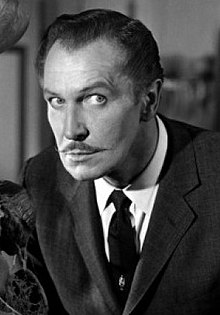
Vincent Price. Photo: Wikimedia Commons

If Jackson was threatening us with the imminent presence of evil, Vincent Price’s deadly voice is practically condemning. His chilling delivery does something Jackson’s higher-pitched voice could never achieve: it scares us senseless. If you didn’t think Price’s voice was sinister enough in speech, his diabolical laughter seals the entire track. The illusion is so carefully constructed that we are well and truly immersed – I still get chills.

Visuals

As much as I’ve praised “Thriller” the song for its auditory accomplishments, it would be a cardinal sin to overlook the 14-minute epic that serves as the music video. My mother reminisced that the 1983 premiere on MTV was such a big event that people skipped classes to watch it. It provides a visual narrative sequence with a surprising levity which somewhat offsets the audio, as well as the iconic “Thriller” choreography. However, you could argue that watching the short film detracts from the sonic experience I’ve just described – it’s a real treat to listen to the disembodied sounds/music and picture our own mélange of ghoulish chaos and fear. After all, seeing the video means that the darkness of the unknown is now illustrated, losing some of its mystique. But the music video is a spectacle in itself and deserves to be recognized.

michaeljacksonpopcorn
Michael Jackson’s iconic music video for Thriller is timelessly entertaining. Photo: Giphy

Whether you choose to watch the video or listen to the track, you’re guaranteed an interpretative masterpiece. But I stand by my veneration for the song in particular and its talents in transporting listeners without the need for visuals. Jackson’s “Thriller” isn’t just spectacular; it’s interactive. It’s both a trick of the mind and a treat to listen to. And that’s why it will thrill us for years to come.

And though you fight to stay alive
Your body starts to shiver
For no mere mortal can resist
The evil of the Thriller

At the Movies, Music is the New Sports

The recent proliferation of superhero movies leaves us with specific associations regarding blockbusters. Sports films had their heyday in the 1990s, but does the imminent release of Bohemian Rhapsody and Rocketman signal a resurgence of music biopics?

By Serena Ypelaar

Is there a sports team that everybody likes? No way.

Are there bands/musicians that (nearly) everybody likes? I think so!

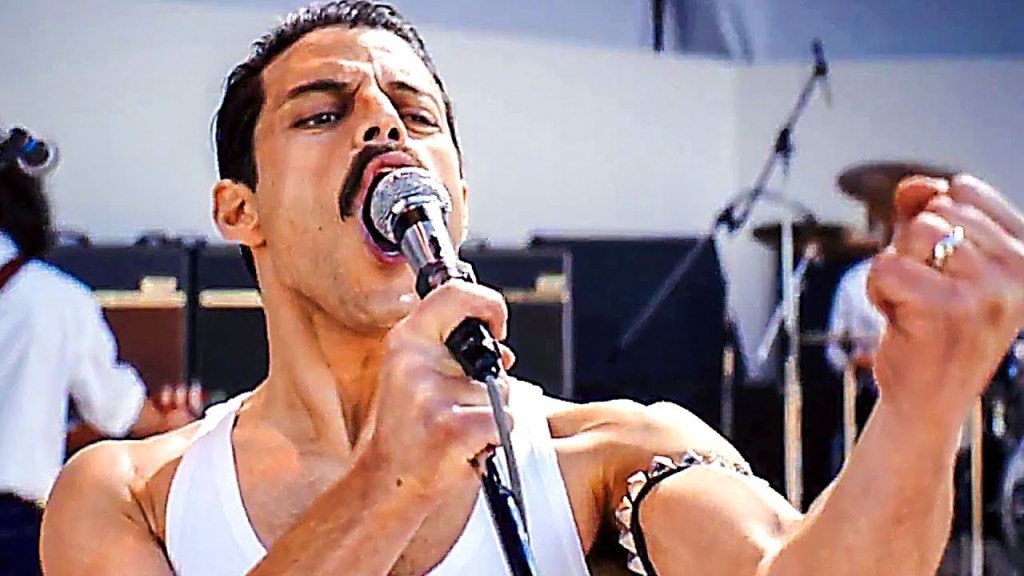
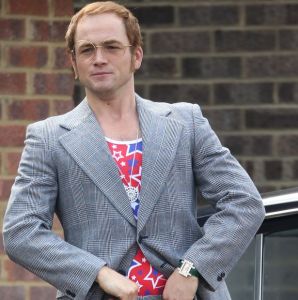
Why am I asking these questions? Mainly to posit a recent theory of mine that music biopics are the future of the film industry. The upcoming release of movies like Bohemian Rhapsody (2018), in which Rami Malek plays Freddie Mercury of the rock band Queen, and Rocketman (2019), starring Taron Egerton as Elton John, got me thinking about the marketability of popular cinema genres these days.

ramimalek
Rami Malek as Queen frontman Freddie Mercury in Bohemian Rhapsody (2018). Photo: YouTube

Ever since the Harry Potter films were finished (which in my completely unbiased opinion set the standard for franchise/adaptation blockbusters), I’ve felt like there haven’t been as many blockbusters that don’t wear thin. The creative industry of Hollywood seems increasingly stale with its endless superhero reboots. I feel sorry for the dead horse that is the Marvel franchise – it’s taken so many beatings over the last few years (Infinity War is aptly named). Just when you think nobody wants another superhero flick, people still flock to the theatres without fail.

taron
Taron Egerton as Elton John in Rocketman (2019). Photo: IMDb

Marvel keeps making the movies because people keep watching. Movies are creative, but they also have to sell, which is where formulas come in. With the ever-pressing need to make more high-grossing films, it looks like we might be in for an oncoming surge in music biopics.

Why do I think music flicks are so universally marketable compared to, say, sports? Well, for starters, I know from experience that sports are highly emotional, and at times, controversial.

  1. Not everyone likes sports. Nearly everyone likes music of some kind (correct me if I’m wrong).
  2. Of those who do like sports, they have a team/athlete they love, and teams/athletes they HATE. Just look around during the World Cup or the NHL – people are at each other’s throats over sports teams.
  3. The competitive nature of sports (win/draw/lose) is much different than the non-discrete, creative nature of music – it’s possible to like many genres without needing to “beat” others (award shows aside).

endofrelationship
Sports disagreements can loom large; there’s a deep sense of loyalty to one’s team that doesn’t hold as much emotional tension in music preferences. Unless you are Nickelback. Photo: Gifer

Maybe my evidence is anecdotal, but there’s a certain type of community that comes from music. There are songs that seem exempt from hatred, and it’s this phenomenon that I think makes music flicks much more viable than sport flicks. Not that there can’t be good sport films, but in terms of mass marketing, making a film about a timeless and popular band has a higher chance of box office success than a movie about a given sport, team, or athlete who has a smaller group of fans.

For instance: one of the most timeless songs of the twenty-first century so far is The Killers’ “Mr. Brightside”. I’d be hard-pressed to find a single person in my generation who couldn’t/wouldn’t belt out the lyrics at a moment’s notice (COMIN’ OUT OF MY CAGE AND I’VE BEEN DOING JUST FINE) upon hearing the opening chords. I wholeheartedly expect a Killers biopic in thirty years’ time titled Mr. Brightside, because what better way to bring in the masses than by using a tune that’s instantly recognizable and which personifies the band itself?

killers
Swimming through sick lullabies, choking on your alibis… Photo: WeHeartIt

It certainly seems to be the strategy that the teams behind Bohemian Rhapsody and Rocketman have employed. Based on the widespread popularity of both these musical acts, I almost wonder if the storyline even needs to be stellar, as long as the cast puts on a good show musically (just ask Mamma Mia!). The film industry is under pressure to deliver some fresh takes, but that doesn’t mean it won’t draw upon timeless old classics in a new light. After all, classics are guaranteed popularity.

Perhaps, based on the success of Bohemian Rhapsody and Rocketman, music flicks will take off – I certainly wouldn’t mind. May they pack a more satisfying punch than the exhausted superheroes can muster.