Returning to a classic, we examine the titular character of Mary Shelley’s 1818 gothic-horror novel Frankenstein and how his behaviours and actions have resonance today.
A personal goal for 2021 is to read more. I figured I’d start this adventure with a classic, and personal favourite, Mary Shelley’s 1818 Frankenstein.
Why Frankenstein? It has been a decade since I first picked up the novel for an assignment in my first year university English class. I have such vivid memories of this enthralling and harrowing tale so I needed to see if my memory held up. It did.
If anything, 10 years of lived experience between readings has given me a more mature point of view on the events of the novel.
Illustration of Victor Frankenstein at work in his laboratory, from the 1922 publication of the novel Source: Wikimedia Commons
Fellow TMR contributor Adriana Wiszniewskawrote back in 2018 that Frankenstein is a story with which we all have some familiarity, whether it be from reading Shelley’s novel or being subjected to the Hollywood adaptations and their associated images. Not only that, but Adriana writes that the story of Frankenstein is one we continue to come back to, so I feel it is appropriate to give the novel another look. This time, looking at the titular character and his motivations, his downfalls and his ultimate demise.
We are introduced to Victor Frankenstein, the child of an upper class Genevan family in the 18th century. His upbringing is one of privilege. He demonstrates intellect, compassion for his family and an eagerness to go to university to advance his studies and expand his mind. All good intentions.
Now, I have historically been critical of Victor. Upon rereading, these feelings toward him do not change. Victor is motivated by his own ego and self interest. He chooses to create a living creature to prove that he can. He chooses to make it at a behemoth proportion for his personal ease. He chooses to abandon the creature instead of accepting his parental responsibilities. He chooses to remain silent while his closest friends, family members and confidantes die at the hand of the creature. Not only all of that, but he’s so self-absorbed that when the creature remarks he will come after Victor on his wedding night, Victor naturally assumes it will be his death at the hand of the creature.
While we can rag on Victor as the true villain of this story, his actions (and inactions) are what lead to his ultimate demise. But what are the lessons here? I can’t help but feel if Victor was honest with his family and friends about the creature, the outcome would have been drastically different for everyone involved. And are we so harsh as to not sympathize with Victor and his personal fear of failure? His family’s expectations of him seem to allege that he is a golden child who cannot do wrong or misstep in any way. Is there not a societal and familial pressure that could drive one mad, independent of the external appearances he feels he must keep up?
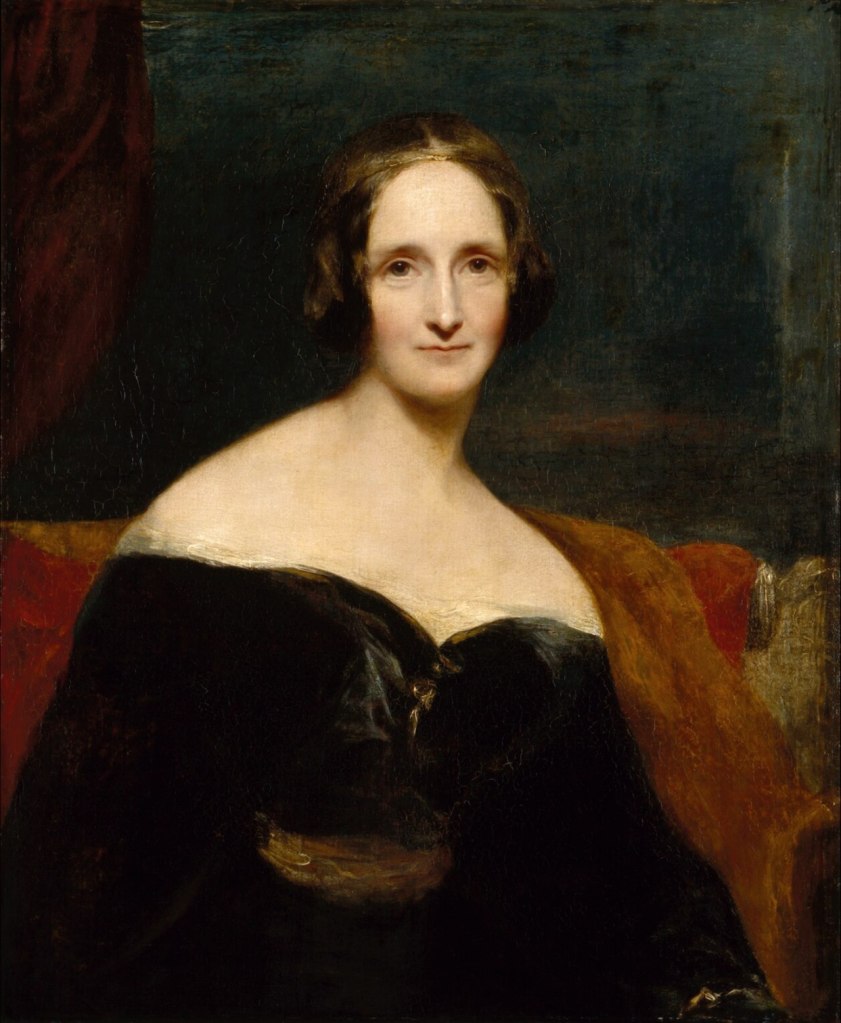
Portrait of Mary Shelley by Richard Rothwell. Source: Wikimedia Commons
It is recorded that Mary Shelley’s idea for this novel came out of a dream she had. While a looming creature given life by the hands of an ambitious and green young adult conjures up frightening imagery, the novel clearly explores fears around adulthood, responsibility and accountability – universal anxieties I feel many of us have experienced to some degree.
While I hope no one is attempting to be a modern Prometheus in this day and age, I do think we can stop, take a minute to breathe and sympathize with the fact that the future is uncertain. Change is constant. And while we might be frightened by the “creatures” in our shadows, perhaps being frank and honest about them will benefit everyone.
As 2020 winds down, one of Canada’s alternative rock mainstays looks back – but only for the purposes of moving forward. As Our Lady Peace prepares to release Spiritual Machines II, the follow-up to their seminal 2000 album, it’s worth examining how the original holds up after twenty years.
By Bennison Smith
Age of spiritual machines 10 – 15 billion years ago, the universe is born
– “R.K. Intro”
Ray Kurzweil’s tinny narration kicks off the Spiritual Machines album – and appropriately so.
Our Lady Peace’s fourth record is loosely based on Kurzweil’s non-fiction book: The Age of Spiritual Machines: When Computers Exceed Human Intelligence (1999). The popular futuristic work inspired the Canadian band to churn out this concept album a mere year after the release of their third record, Happiness… Is Not A Fish That You Can Catch (1999).
They did so with Kurzweil’s blessing, as well as his input. Kurzweil (credited as “R.K.”) recorded several passages from his book as brief spoken-word excerpts for use on the album. The excerpts serve as eerie connective tissue between the album’s ten musical tracks.
The panic of the future rears You dig, you jerk You find another way – “Right Behind You”
Spiritual Machines is a lot of things.
Artistically, it takes Kurzweil’s vision of a digital future populated by machines that think, feel and pray – and then runs with it.
Considering its futuristic themes, the album’s release in the first year of a new millennium was a timely one.
As well, the album served symbolically as the end of an era for Our Lady Peace.
It is the last OLP album produced by Arnold Lanni, the producer who guided the band creatively beginning with their grunge origins on the Naveed (1995) album. Shortly after the release of Naveed, the band was catapulted into sustained commercial success.
Lanni produced all four of their early records and departed after Spiritual Machines. His replacement on the Gravity (2002) album was one Bob Rock (a name which never fails to provoke a reaction across the OLP fandom).
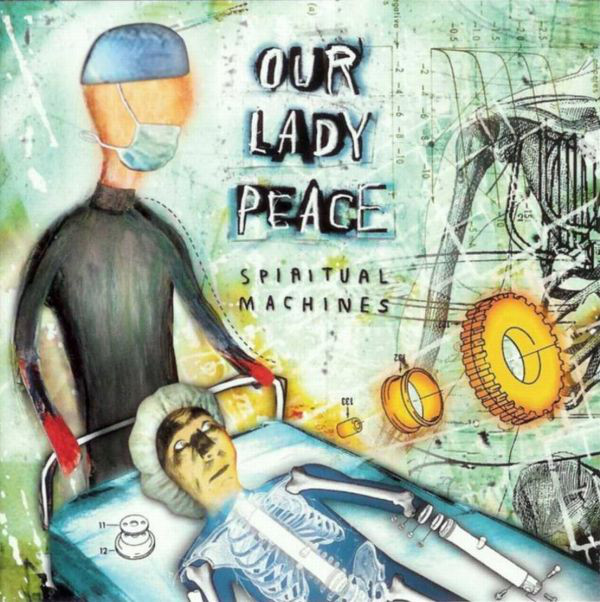
Album cover for Spiritual Machines (2000). Photo: Wikipedia
Save for a few tracks on Gravity, Spiritual Machines is also co-founder and lead guitarist Mike Turner’s last contribution to the band – for now, anyway.
Turner’s understated approach, along with his ear for melody and timing, helped to elevate the record to a creative high the band hadn’t realized up until then – and arguably hasn’t quite realized since. Listeners should pay attention especially to the penultimate track, “If You Believe” for an excellent example of Turner’s technical wizardry on the guitar.
Spiritual Machines represents the “old” Our Lady Peace, before the band chose another direction. And for that old OLP, it’s hard to think of a better send off than this record.
It’s also very interesting that the band, featuring an almost completely different lineup save for Raine Maida and Duncan Coutts, has chosen to embark on a sequel record with the upcoming Spiritual Machines II.
Like a machine, I’ll fix you from the start – “In Repair”
It is impossible to have a conversation about OLP without mentioning lead singer Raine Maida. Inevitably, such a conversation will turn to the topic of his voice.
Bassist Duncan Coutts recently acknowledged on an episode of Canadian Music Podcast that Maida’s voice is simultaneously the group’s “gift and curse.”
It is a gift because his distinctive vocal register can be instantly recognized by a listener, regardless of the style or tempo of the song Maida is performing.
For the same reasons, his voice is also a curse when the band is attempting to branch out creatively and seek new audiences.
Over his career, Maida has famously sung up and down the vocal range. Depending on the song and the record, he will sometimes sing in a deep, resonant baritone. Sometimes he will also sing in a falsetto so pronounced that the lyrics will become virtually unintelligible.
For an effective blend of both ends of the Maida scale, listeners can simply listen to his baritone and falsetto layered on top of one another in the verses of “In Repair.”
And how many times has your faith slipped away? Well is anybody safe? Does anybody pray? – “Life”
Despite being a record about robots, Spiritual Machines brims with life.
“Life” is, of course, also one of the album’s big singles and a classic OLP radio anthem.
The life of the album begins with an urgent declaration of solidarity on “Right Behind You” and reaches its apex with “The Wonderful Future,” a song featuring bass and percussion that are evocative of a slow, but persistent heartbeat.
“The Wonderful Future” is a track with interesting subtext, which will be discussed in a moment.
I’m drowning inside your head – “Are You Sad?”
For all its futurism, Spiritual Machines is still very much a product of the 1990s (i.e., on “Everyone’s a Junkie,” the lyrics contain a slightly dated reference to “endless television”).
The themes of the record, however, remain universal.
In the face of a seismic change, the record’s central narrator struggles to maintain their grip on their relationships to those closest to them. They offer solidarity (“Right Behind You”), support (“In Repair”), comfort (“Are You Sad?”) and express regret for what they couldn’t do (“Middle of Yesterday”).
The themes on the record are effectively conveyed by some of Maida, Turner and Coutts’ most proficient musical work – not to mention the work of then-drummer, Jeremy Taggart, whose distinctive performances behind the kit underpinned much of the band’s early success.
She needs to know I’m alive, but I’m flesh and I tear – “The Wonderful Future”
The burden of caring for other people, when their problems become your own, permeates tracks early on the record.
Caring for other human beings is a worthy cause. But it also takes a toll.
Meanwhile, by the end of the record, the narrative presents a contrasting vision with “The Wonderful Future” and its aforementioned subtext.
The song’s narrator seems to have begun a relationship of some sort with a spiritual machine. The relationship described in the song seems ethereal, maybe even vapid.
Where there were human bonds holding the narrator back earlier in the record’s narrative, they instead seem elevated by the bond they have formed with this machine, whether it be one of simple friendship or something else.
On “Middle of Yesterday” the narrator was full of regret for doing wrong by another person they once cared for. At that midway point of the album, they seemed to be hopeful for a resolution of some kind. But on “The Wonderful Future” they don’t seem to care anymore now that an angelic machine of some sort is in their life instead.
How we, as listeners, are supposed to feel about this narrative development is naturally open to interpretation. But it’s a significant note to end the album on before the last Kurzweil spoken word track (“R.K. and Molly”) is slipped in for good measure.
Does the album’s narrative imply that society itself is headed on a parallel path to the narrator regarding its relationship with technology, digitization and artificial intelligence?
And does that path represent an ascension as a society?
Or perhaps a downward spiral?
We will have to see if the band is up for tackling these questions – and more – on Spiritual Machines II in 2021.
Bennison Smith is a budding Our Lady Peace superfan. One of the highlights of his fandom so far was being asked multiple times to “please sing a little quieter” by fellow audience members at an OLP concert. Bennison’s fandom for OLP began in earnest with the Burn Burn (2009) album and has only grown since. He was pleased, but not terribly surprised, to be recognized by the Spotify algorithm for placing in the top 0.5% of Our Lady Peace listeners on their platform.
Bennison’s conclusive rankings of all things Our Lady Peace:
Favourite OLP album: Spiritual Machines (2000), of course Least favourite OLP album: Healthy in Paranoid Times (2005) Favourite OLP song: “Blister” Favourite Raine Maida look: the long-haired days of the “Fear of the Trailer Park” tour circa 2002/2003
Both Queen and Christopher Nolan have used the theory of relativity as a foundation for storytelling in surprisingly similar ways. Their ventures show how science can be used to tell human stories.
I don’t think that everyone is aware of the song “39” by Queen. This underrated gem sounds like a folksy shanty with its lyrics about ships and seas, but it’s not what it seems.
“39” was penned by Brian May, who put his astrophysics studies on hold to pursue his career as lead guitarist of Queen (as one does). With that fact in mind, the song becomes very different from what its genre initially implies it to be.
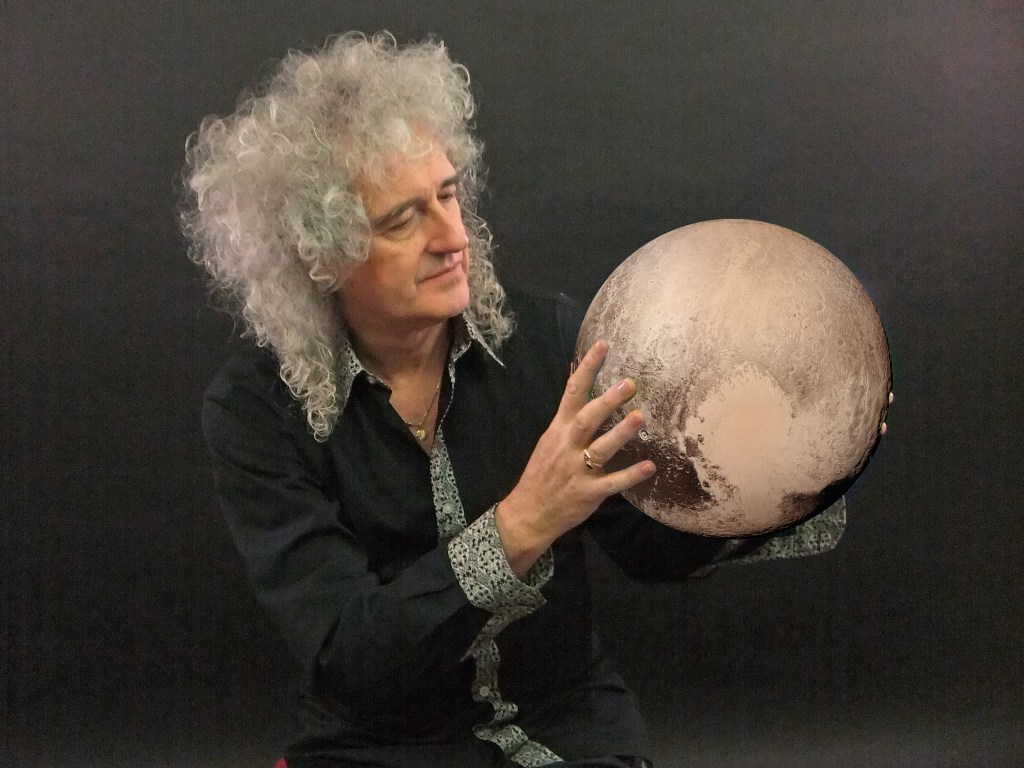
Dr. Brian May eventually did finish his Ph.D in astrophysics thirty years after starting it! Photo: HuffPost
The song’s “ship” is a spaceship, and the “milky seas” refers to the Milky Way. The “world so newly born” is another planet that offers hope for an “old and grey” Earth. Some lyrics in the song are strange: the chorus mentions “the land that our grandchildren knew” and the narrator observes in the final verse that “so many years have gone though I’m older but a year.” He addresses someone mournfully, saying “your mother’s eyes from your eyes cry to me.”
It’s a science fiction story. It’s the story about someone who goes away and leaves his family and because of the time dilation effect, when you go away, the people on earth have aged a lot more than he has when he comes home. He’s aged a year and they’ve aged 100 years so, instead of coming back to his wife, he comes back to his daughter and he can see his wife in his daughter, a strange story.
Essentially, “39” is about the human effects of the theory of relativity. I had too much of an arts education to explain relativity properly, but what’s important to this discussion is that time is relative; it will not pass at the same rate for all observers, and can be distorted. Some causes for extreme time dilation include black holes, which can distort the fabric of space-time itself, and light-speed travel (the closer something gets to the speed of light, the slower time will pass for it). For the traveller in “39,” only a year has gone by, but much more time has passed back on Earth, and the person who wrote him “letters in the sand” is no longer alive when he returns.
If you’ve seen Christopher Nolan’s 2014 film Interstellar, this might sound a little familiar.
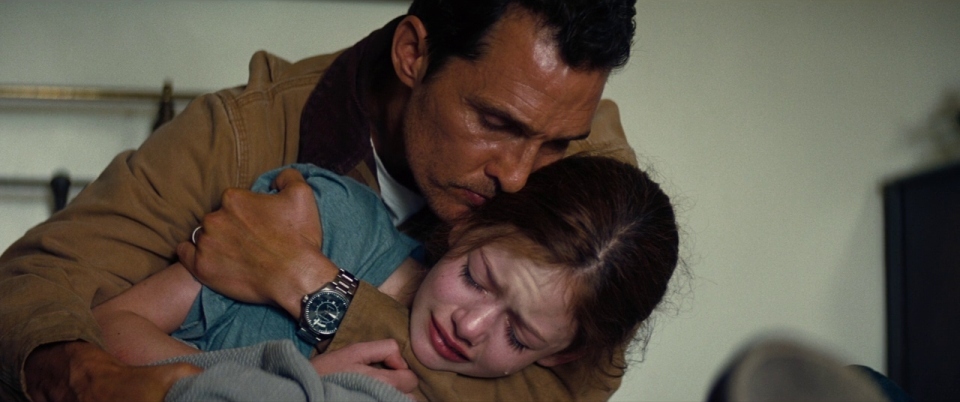
Matthew McConaughey as Joseph Cooper in Interstellar. Photo: FilmGrab
To sum up (and spoil) Interstellar: the film is set in a future where the Earth is a dying dust bowl and its population is at risk of extinction. NASA sends explorers into space to find a planet to serve as a new home. Protagonist Cooper is one reluctant explorer, leaving his children in hopes of giving them a future. Near the midpoint of the film, Cooper arrives on a planet where time is so dilated that while a few hours pass for him, 23 Earth years go by, as he discovers when he returns to the ship to find recorded messages left by his aging children. By the end of the film, his daughter Murphy is an old woman, and Cooper reunites with her on her deathbed.
When I saw Interstellar’s trailers, I wondered if it was connected to “39”, and after watching the film, I felt certain of it. As far as I’m aware, though, Nolan never confirmed if “39” inspired Interstellar. There are several key similarities. Both feature explorers leaving a failing Earth in a spaceship in search of a new world. Their quest is ultimately successful, but at huge personal – and temporal – cost to the explorers and their loved ones. Time acts as a destructive force that irrevocably disrupts the natural lifespans of those involved, but it is also a precious resource for the protagonist, who gets to see his daughter in her old age.
Cooper saying goodbye to his daughter Murphy as he leaves for his mission. Photo: FilmGrab
These stories show that science fiction can be intimately human. Both “39” and Interstellar use physics to tell stories of love, loss, and hope. Cooper realizes that his and Murphy’s love for each other is “the key” to transmitting the data that will save humanity, and the narrator of “39” promises his partner he will return to Earth. Interstellar ends optimistically, but the narrator of “39” laments that “all your letters in the sand cannot heal me like your hand / for my life still ahead, pity me.” Scientific discoveries and saving Earth’s population is not enough to make up for what was lost on a personal scale, but love endures nonetheless.
Science fiction, though often maligned, offers unique opportunities to explore human relationships and emotions in technologically fantastic settings. These elements have been tied to the genre since its beginnings in Mary Shelley’s Frankenstein, and have endured up through Star Trek and Carl Sagan’s Contact. We could use more marriages between science and storytelling. As Dr. Brian May himself says, “I think we all realize ourselves best by opening up both sides of our intellect… artistic and scientific.”



 The Mindful Rambler
